

Felipe Cama
Felipe Cama is a visual artist and designer. His work investigates themes such as consumption, perception, and the distribution of images, and explores the influence of technology on these processes. In a very broad way, Felipe observes the contemporary world and seeks to represent actions and ideas in unexpected ways, taking different paths to discover social processes and events. In the interview, Cama offers a fascinating insight into his creative process and the ideas that drive it. Check it out.
Felipe, thank you for taking the time to talk to us. To begin with, could you introduce yourself?
I’m Felipe Cama, I live in São Paulo and I’m a 53-year-old visual artist. I’ve been working with visual arts for a few decades now (laughs). I also work as a graphic designer, in a parallel career with art. I came to understand this recently, because I used to clearly separate the two professions. When I think in terms of graphics and the plastic arts, I realize that a little bit of each profession is reflected in the other, something I used to deny.
Considering the relationship between graphic design and the plastic arts, would you say it’s more of a conceptual or material influence? How do you perceive this connection?
Eu pesquiso imagens. Como consumimos imagens, como produzimos imagens, como a nossa cultura produz e consome imagens, como acontece essa distribuição de imagem e, principalmente, eu nasci em 1970, então eu vivenciei essa transição do analógico para o digital e, como ocorria antes, através das mecânicas, dos meios impressos, pela TV, vídeo, e como essa transição para o digital e principalmente você ter primeiro num computador o desktop e depois na palma da mão, como ocorre esse consumo diferente, essa percepção diferente. Tudo isso me fascina muito, e muito do meu trabalho é uma pesquisa a respeito desse tema.
(Translation: I research images – how we consume images, how we produce images, how our culture produces and consumes images, how this distribution of images happens. I was born in 1970, so I experienced the transition from analogue to digital and, as happened earlier, through the mechanics, the printed media, TV, video. Also, how this transition to digital, and especially from having the desktop first on a computer and then in the palm of your hand, how this different consumption occurs, this different perception. All this fascinates me a lot, and much of my work is research into this subject.) From a visual arts point of view, my work involves a lot of geometry and drawing, and I like to explore the question of abstraction and figuration. This is very much linked to what I do in graphic design, and vice versa, since my work in graphic design is also influenced by art, with many artistic references. You could say that there is a way of thinking in aesthetic and symbolic terms, and my choice of themes, that in both areas permeates everything I do.
In your artistic production, you use a variety of materials to present your ideas and concepts. What comes first for you, the idea or the interest in the material?
The idea comes first, then I think about the best way to convey it. For me, everything has a concept. If you choose to present an image as a photograph or as embroidery, you’re already inserting meaning there in the choice of medium. You’re communicating and expressing the idea not only through the image, but also through the medium you’ve chosen. When I have an idea, I usually spend some time reflecting on it. This time can sometimes be years. I have projects and ideas that I keep thinking about and sometimes they lose their validity, become irrelevant, and I don’t continue with them. For others, there comes a time when it’s right to materialize the idea. I start thinking about how I’m going to express it artistically and what medium I’m going to use, whether it’s a video, marquetry, a methacrylate print, a painting, or even hiring someone to do it. It’s all part of the work – I have contributed to my message. However, clearly expressing what I want to say is a big challenge, because people’s interpretations can vary and change over time. all in all, it’s part of what I’m trying to express.
And thinking about the connection with graphic design, I believe that art requires this openness to interpretation, this absence of an end point.
Although there are similarities between art and graphic design, such as the presence of geometry and aesthetic choices, I believe they are different things. In graphic design, my task is to create visual identities for entrepreneurs, companies of all sizes, packaging and so on. Here, I’m solving a problem. There is always a specific demand to be met. In art, on the other hand, the demand comes from me. It’s about what I feel the need to express. At the moment, I’m really interested in artificial intelligence. I have a feeling I’m going to develop a work involving it, perhaps using AI or questioning it, for example. Nothing has come out yet, it takes a while to materialize, but it’s something I’m incorporating into my graphic design work. This makes me reflect on what I mentioned earlier, which is the basis of the work: how we consume and produce images. You know, when social media came along, we started producing and consuming images with a simple swipe of the finger, which is something I joke about. That was new and I brought that newness to my work. I thought I needed to comment on it. Today, artificial intelligence is an everyday reality. I use it a lot, depending on the project I’m working on. So this whole idea of it being a fabricated image or an image, let’s say, original to nature, I think is a bit naive. That’s because when you make a painting, in the history of art, you always choose a cut. The painter puts on a light, an expression, whether it’s a portrait or a landscape. This is already a manipulation of reality. The same goes for photography. The photographer will choose a frame that interests him, that he wants, and will put a “filter” on it. In this way, you are already making a choice, an option. Today, there is an interesting function in Photoshop that uses generative image technology and artificial intelligence. Instead of the photographer cropping an image, Photoshop does the opposite: it takes that same image and reconstructs what would be around it. You can use a photo you’ve taken yourself, or even a photo you’ve found on the internet, and Photoshop will reconstruct the surrounding environment. But where does the environment it reconstructs come from? It comes from a gigantic library of images available on the internet.
Yes, it’s interesting to note that even at the beginning of photography, montages were already common, in which photographers chose the best “parts” of different negatives.
Yes, there are many examples like that. In Brazilian modernism, but more recently, we have Geraldo de Barros, who cut out images and made collages with the works in his cut-outs. He would take cut-outs such as a person’s face and what was around it, and then reconstruct that, creating a third image. This new image isn’t what he photographed initially or what he used straight away, but something he took years later, these leftovers, and reconstructed.
When we think of manipulating images to create something, classical paintings are a great example. Everything is carefully chosen and edited. Today, we see similar production work in digital content created “with a thumb”, but in reality there are many creators and a team behind it to create that image or video we see.
I think this discussion about originality and image production is a bit naive. After all, this has been part of art history since the beginning. I think AI is just another tool, and over time we’ll start to recognize that. I was recently sent a text which, when I read it, I realized looked like something written by ChatGPT. The person sent it as if they had written it, but since I use ChatGPT a lot, I can already recognize the language. I think that, over time, people will start to understand when a text has been produced by a program or system, and not by a human being.
When we talk about resistance to technological change in art, it’s natural. Just like when the Impressionists started painting outdoors, I imagine that the artists in the studio were confused. I often say that the biggest generational or stylistic changes occur because of technology. In art, we can think of pop art with woodcuts, video art, and photography as examples. The question is how artists deal with these changes.
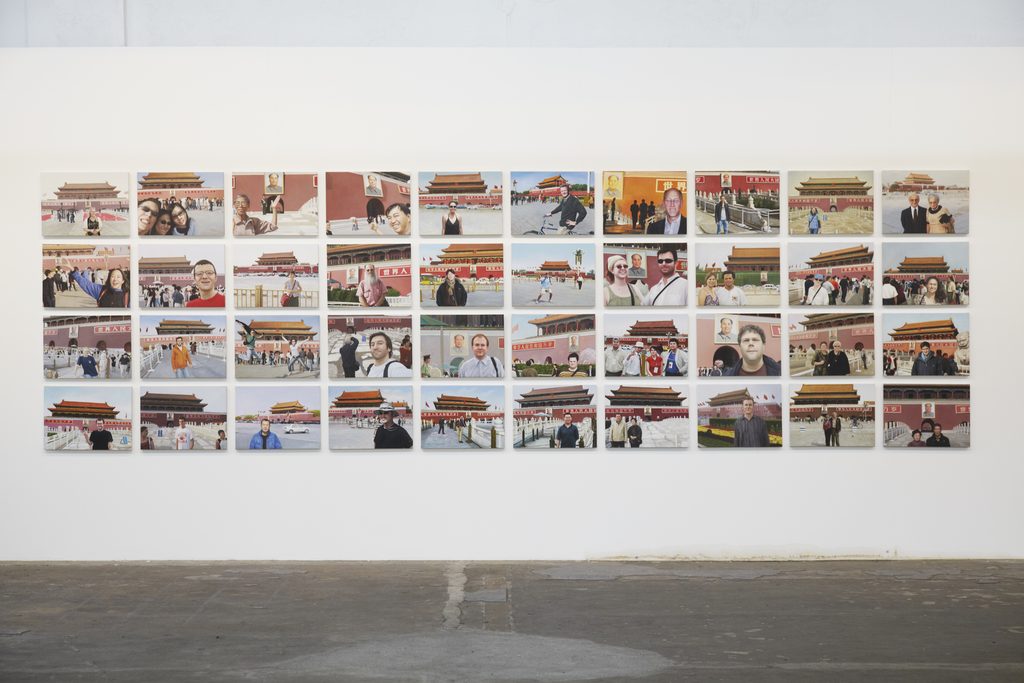
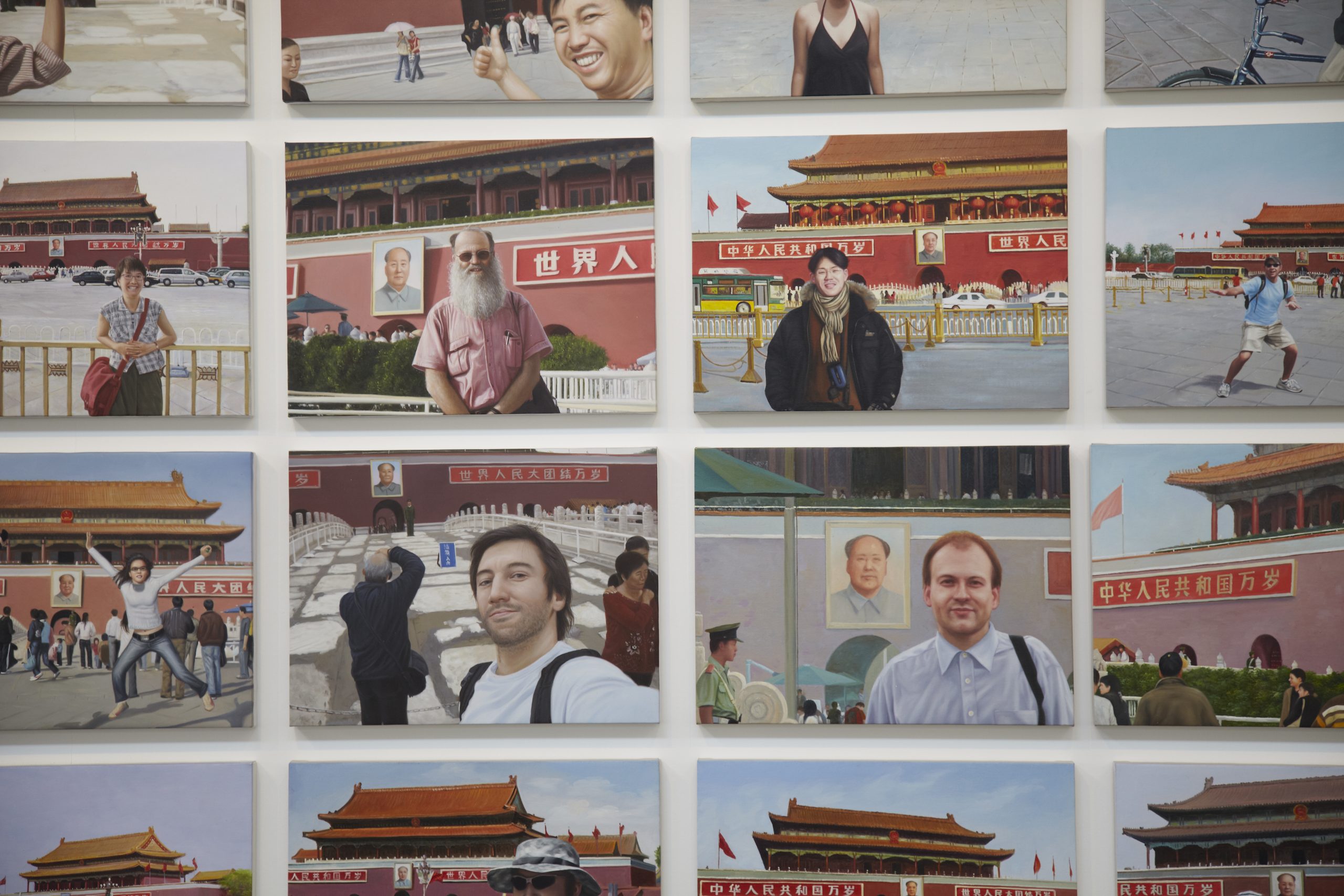
I totally agree. Technological advances go hand in hand with art. Today, we see a tendency to return to classic production techniques, such as photography, in a kind of nostalgic revival of a time we didn’t live through. I did a piece of work while travelling in China, where I was impressed by the culture, population, consumption, and work ethic. The project is called “News from Nowhere” and deals with technology, production methods, and artistic issues such as originality, authorship, and appropriation. I took several photos of the gate to the Forbidden City. The place itself is very interesting. It was once an empire, went through a revolution, and, today, is like an amusement park that symbolizes all of this. I photographed people taking their own pictures, each trying to take away a memory of the place. When I returned to Brazil and started searching for this type of image on the internet, I found hundreds of photos identical to the ones I had taken. I began to put together my images and those of other tourists in a folder. It got to the point where I couldn’t tell which photos I’d taken myself and which I’d appropriated. Then the challenge of production arose, because I wanted to work on it and tell the story, but I didn’t want it to be just printed photos. I wanted to add another layer. That’s when I discovered a website about a Chinese village that reproduces works of art. I did this work about 15 years ago. Then, in 2013, a documentary about this town appeared on Netflix. At first, I was in contact via email with a sales representative from a kind of Chinese co-operative. They have a center that takes orders, and you can order any kind of painting, from any artist you like, from an imitation of Picasso, Van Gogh, or Monet, to a portrait of a family member, or a landscape. I sent them the images and I could tell from the subtle differences in the strokes and brushstrokes that they were done by different artists – some with more refined strokes, others not so much – and each had their own way of understanding light. But the painting was very homogeneous and close to the original photos I sent. I made a point of including all this in the work because, after all, this is the work. I’m discussing the production of these paintings, talking about China, about the consumption and production of images. I’m approaching the same themes through prop as diverse as a methacrylate print of paintings made in China, through to video and photography.
Felipe, regarding your creative process, we can perceive a strong conceptual weight in your work, but once you’ve developed a series like “News from Nowhere”, how do you deal with these ideas? Do you revisit them afterwards? Does the series come to an end and, once the work is finished, you then move on to the next project?
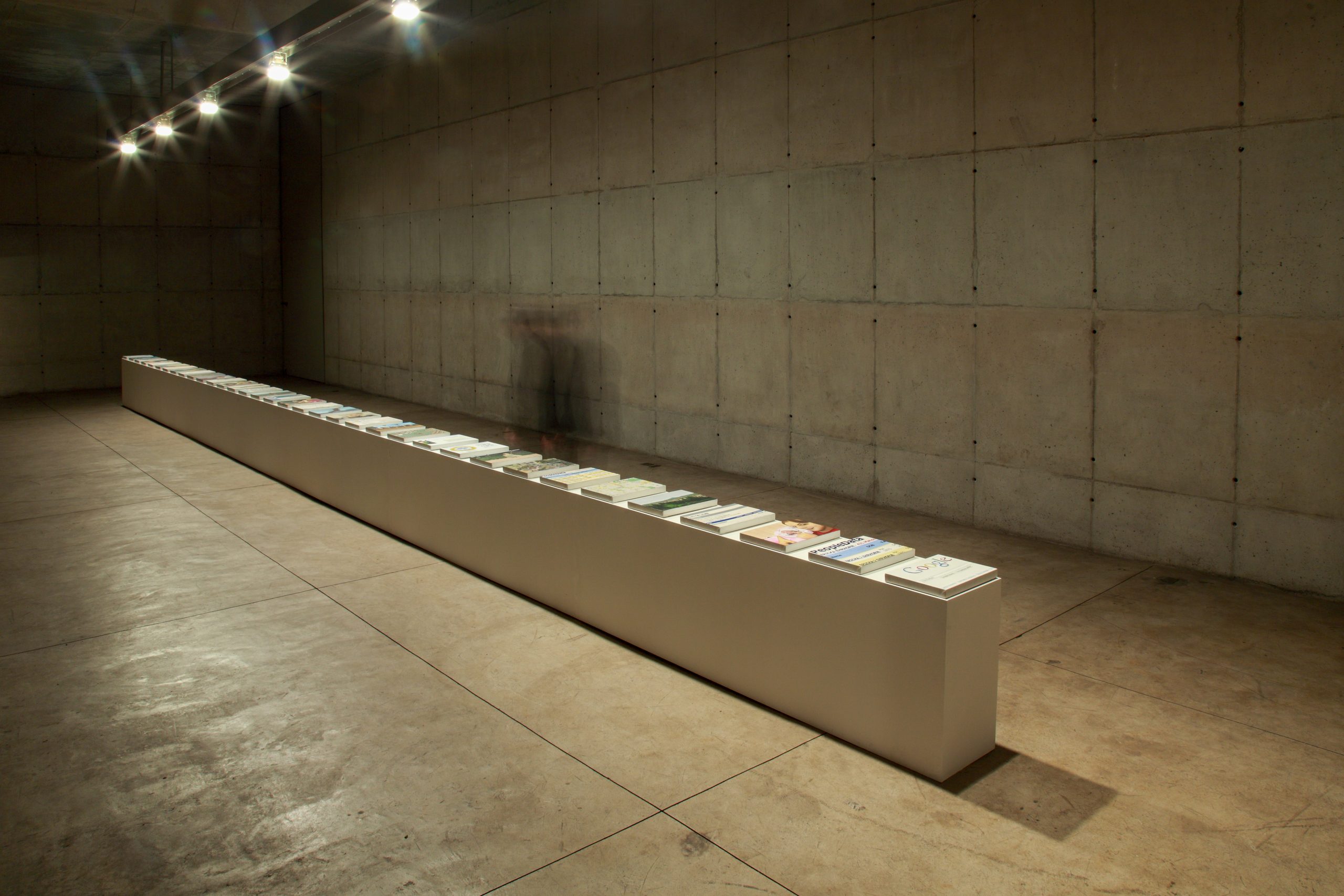
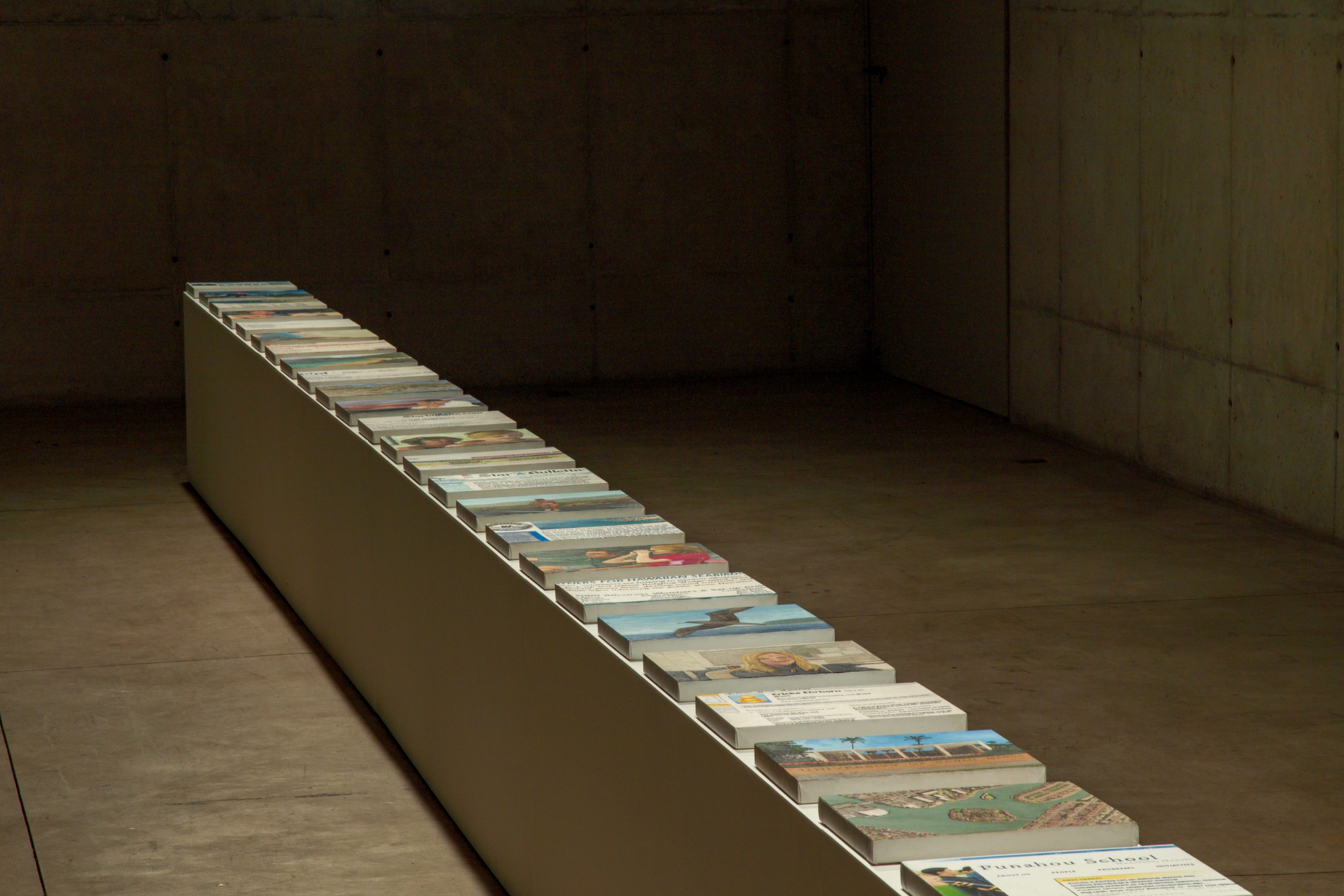
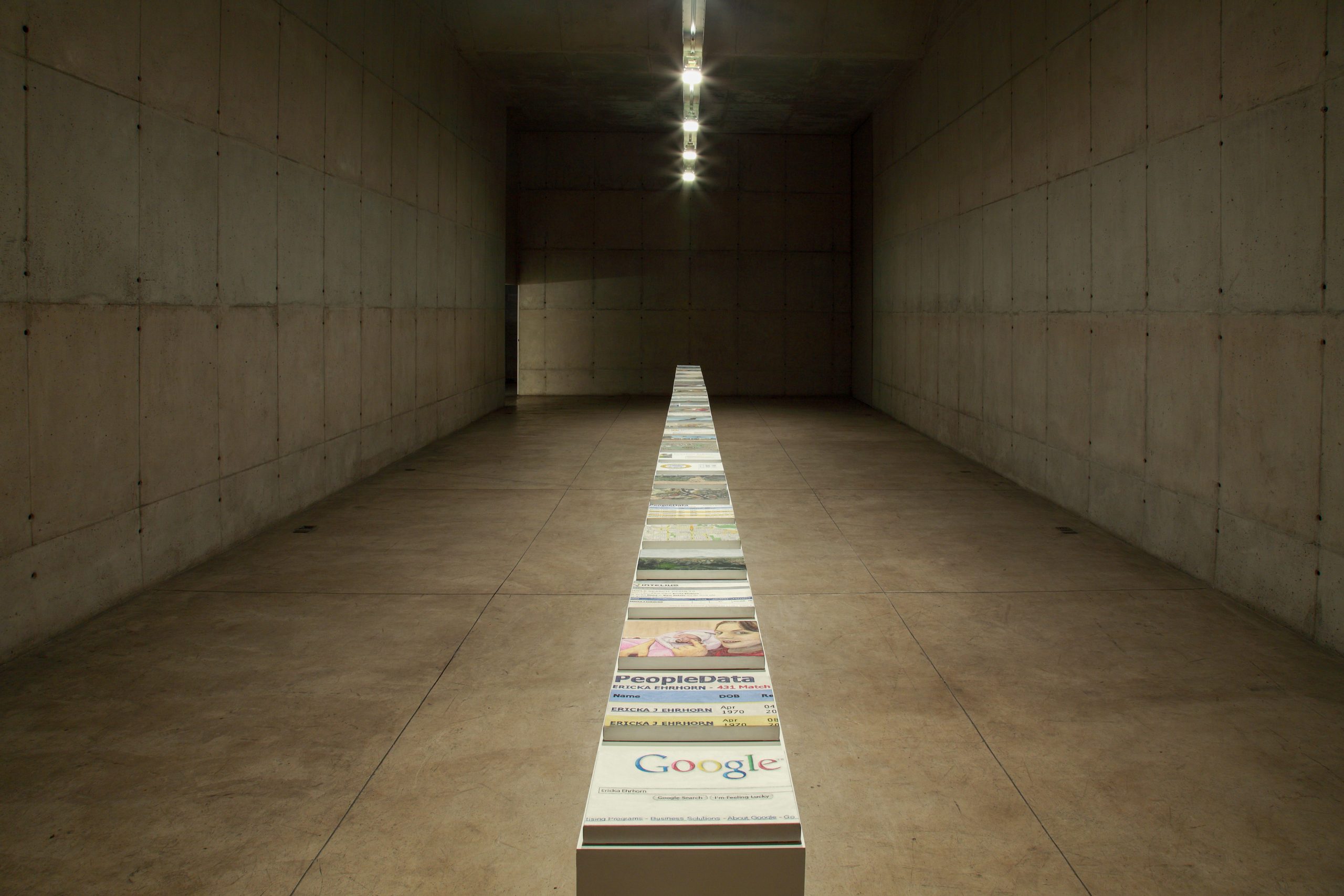
Yes, it’s settled into that. Although it’s practically the same theme, we’re talking about different aspects that change over time. With a 30-year career, everything changes: the way you are, the place you live. That’s why I no longer talk about e-mail as I used to, nor about the novelty of digital imaging. What interested me was understanding the nature of the image. I had another work, for example, at a time when the social network Orkut was booming and Facebook was just beginning. I wanted to understand how the internet could tell the story of a life. Nowadays, this is connected to the concept of fake news, which didn’t even exist back then. I spent a year researching and reading, and that’s when I started collecting information about the lives of people I knew or had had contact with, but lost. For two years, when I had accumulated enough information to tell a story, when the internet provided me with a narrative about this life in other words, that’s when I made the painting. In this case, I chose to paint. I wanted the work to come from the non-digital, and painting would be the least digital option. The work is called “Search Ericka”, after a person I had contact with 20 years ago. I’d lost touch but I found a piece of paper with her name and address on it, which was ideal. She lived in Hawaii, which is a small place where everything makes the news, so it was easy to find lots of information about this person. I found all kinds of news, from obituaries to marriages, information on education and profession, all documented on the internet. I spent almost two years collecting this information and, again, I was faced with the question: how do I use it to tell a story? I don’t consider myself a painter, but I decided to approach it in a simple and unpretentious way. What interested me in this work was precisely that: building a narrative without having direct contact with the person, based only on the information I could find on the internet. Once again, I’m talking about image consumption, image production and image distribution.
The interesting thing is that, in a way, you can tell that the paintings were made from photographs or other materials. This is because there is a distance, a certain disconnection from what is observed.
It was deliberate. I took a screen shot of the content and reproduced the texts and details of the pages and photos as I found them. I wanted people to see the format and proportion of the computer screen
I imagine this question has already been asked a million times, but did Ericka find out about the work?
Yes, she knows (laughs). The first time I exhibited this work was at Galeria Leme – today it’s part of the collection at MAM Ibirapuera in São Paulo. The work had been on display at the gallery for over a month when I got a call from someone who worked there. She told me: “We received a call from someone who seemed to be a foreign collector, asking about the work on Ericka. Thinking she was a collector, I mentioned that the work was available, but she actually identified herself as Ericka. I was surprised, but I knew it might happen. I was even expecting it, but not so quickly. I didn’t want to get in touch after 20 years to ask questions or clarify. If I were to explain the whole story, I would end up discovering things about this person during the conversation with them. In fact, the research for the job ended when I discovered that she had opened a Facebook account, which at that time was still a novelty, and I started planning the next steps. After finding out about the work, she sent me a message on Facebook and said she was scared because she didn’t understand much about it, and she even thought I was crazy (laughs). Over time, she understood that, if I had told her from the start, it would have ruined the work. We exchanged a few other messages, but we haven’t been in touch for over 15 years. There are artists who do residencies to create a work, who travel, who interview a scientist or do a PhD on a botanical subject, for example. I was researching, but my main interest wasn’t in that specific person, but in the story that was being told.
In relation to a more recent work, your “Corrompidas” series from 2019, does the opposite. It approaches abstraction to make us reflect on Bolsonaro’s speeches from a different perspective.
I have some works that straddle the line between abstraction and figuration. This is a work that goes down that road, and the image itself ends up becoming almost an abstraction. This question of digital interests me a lot. I started this work when Bolsonaro took office in January. After perceiving the issues around information manipulation, I decided to create something. During Carnival 2019, there was the case of the video involving the golden shower, when they rescued this video and posted it on their social networks, claiming that it represented Brazilian Carnival. I already had a work in which I used the code of the image before, so I opened the code of this image and worked with the binary code. I took the text from Bolsonaro’s post and randomly inserted it into the image code. Then I saved it and asked Photoshop to open the file, and out came this truncated image, almost an abstraction. Me and a group of 20 friends founded a carnival street band known as Acadêmicos do Baixo Augusta, which is now 15 years old. I’m responsible for the band’s visual identity, which always has a specific theme, so carnival is a very important subject for me. To see an individual manipulating all this history, this culture, made me indignant. I decided to choose some striking images from that year’s carnival. We had five images, five stories that ended up becoming abstract. The images, which at the time were almost iconic and widely seen and publicized in these stories, became abstractions. I appropriated these photos and inserted this text into them, almost like a virus, corrupting them. It was a corruption, not necessarily in the financial sense, but in the sense of corrupting an idea, like carnival has been usurped and devalued.
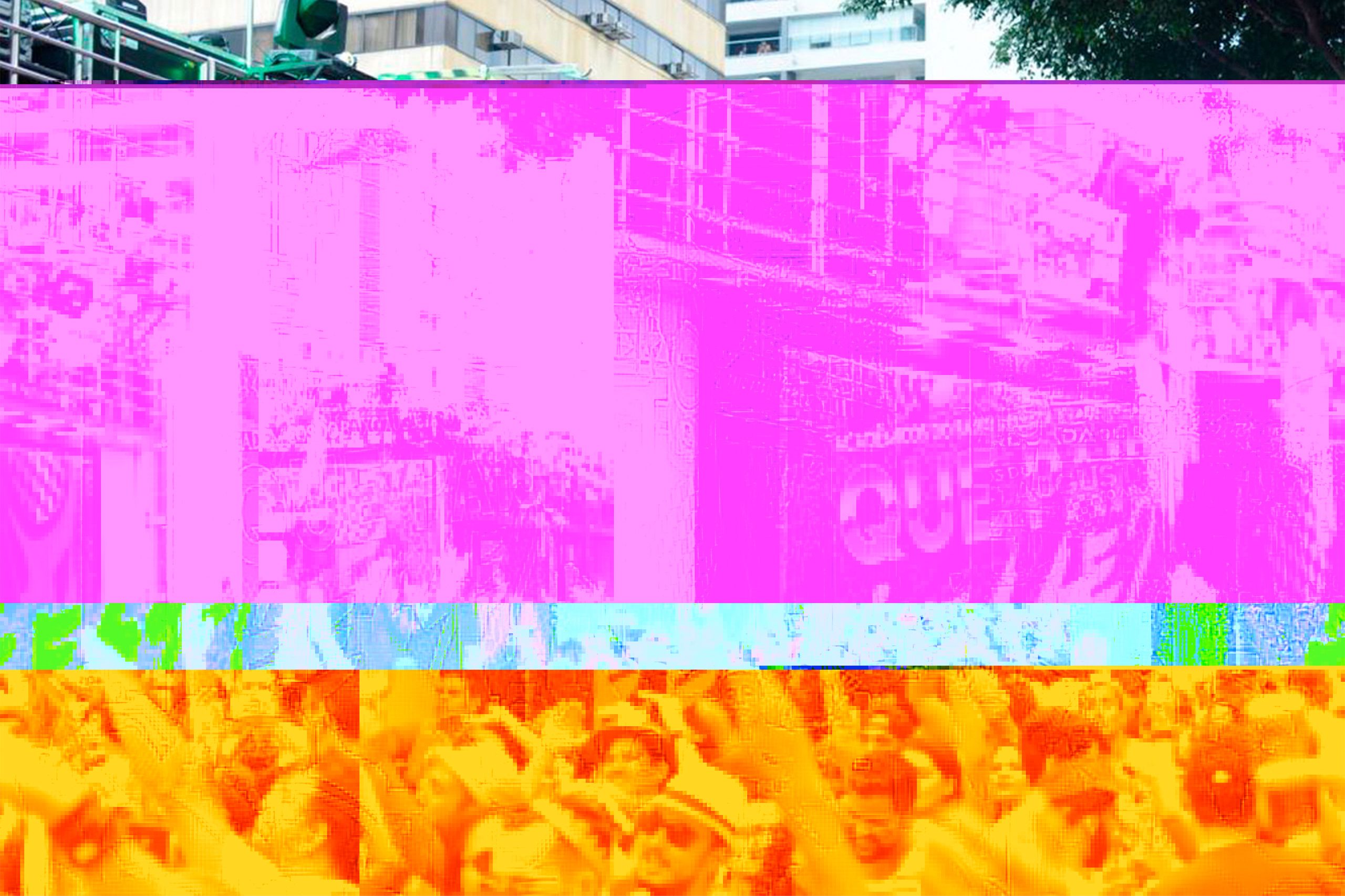
Felipe, I see that many of your works have a strong performance presence. Even if it’s not obvious, performance has a big influence on the final result. In the work about Ericka, for example, the research and monitoring process is already performative. The same happens when you insert Bolsonaro’s speech into an image. The performance isn’t just about building the image, it’s an event in itself. Would you agree?
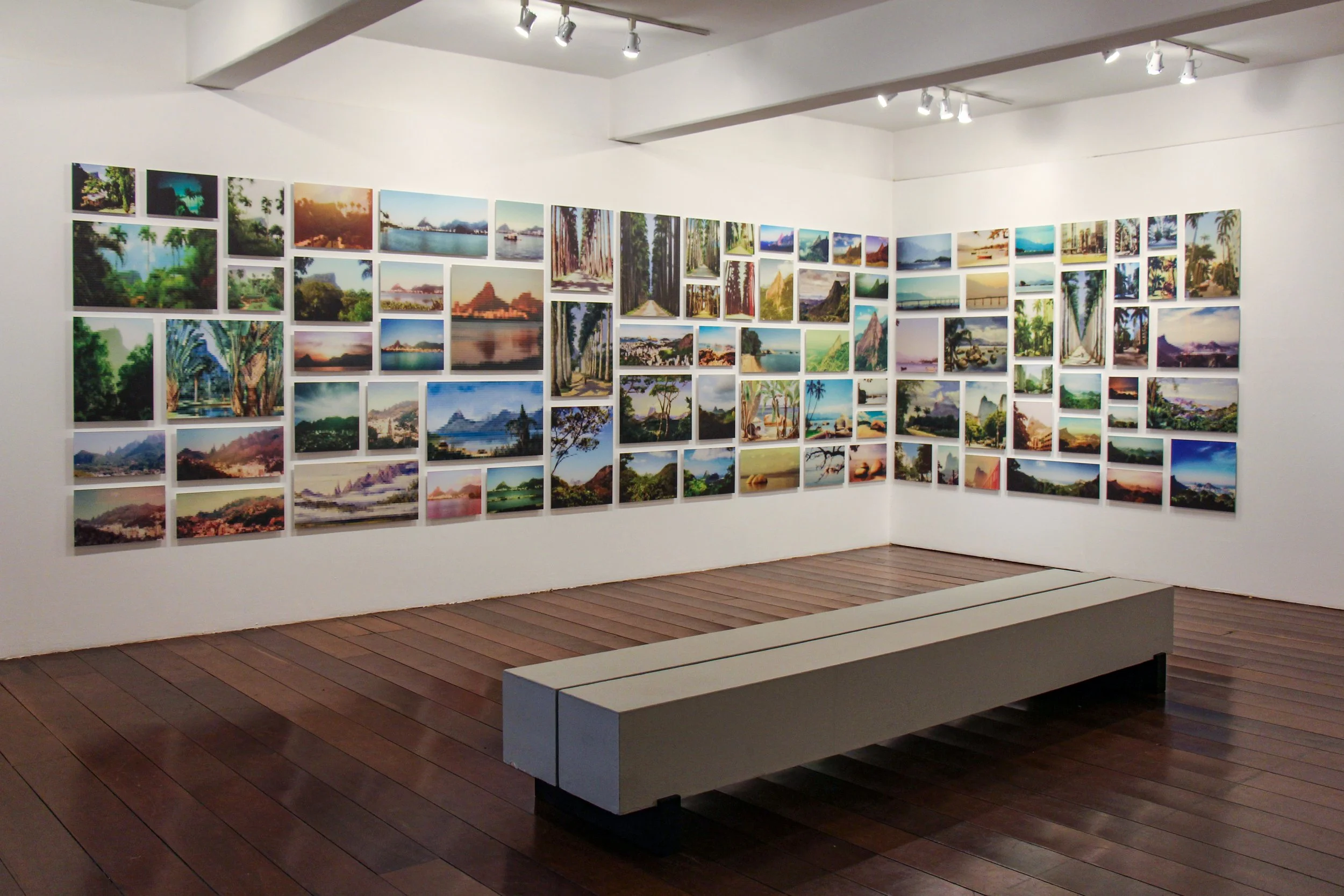
I’ve done some “crazy” things to achieve certain results. However, these actions remain silent. The story I told about Ericka, for example, the research is not part of the text of the work, it’s a parallel story. I didn’t bring this part into the work, unlike the work on China. I don’t consider it part of the work itself. It’s like a painter – he’s in his studio, painting, performing, but, unlike Pollock, whose painting process is important to see. I have another work that subverts this notion of performance, taking the person to a completely different place. It’s Brazilian landscapes, works made to look like marquetry. They symbolically represent Brasilia, everything it means to us, a Brazil that should be one thing but has become something else, or perhaps still is what it was before. There’s a story we were told at school about Brasilia, about a movement towards modernism, a Brazil that was evolving from a rural and extractive economy, with the coffee and rubber cycle, towards industrialization. This involved the construction of a planned and rational city, “the work of communists”. When I was in Berlin, especially in the eastern part, it felt like I was in Brasilia. The blocks of planned buildings follow the same logic. However, this only lasted a short time because the military coup took place and Brasilia became a military city. In other words, the initial plan didn’t materialize as expected. If you know Brasilia, you probably know how the superblocks work: they designed the blocks and each group of blocks had a shopping street. In the original plan, this shopping street was supposed to have different businesses so that people could go about their daily activities, such as buying bread, going to the pharmacy or the butcher, without needing a car. But what has actually happened is that if you need to buy electrical equipment, you go to the specific superblock, because there the whole street is dedicated to electrical equipment. Each street has its own characteristic, but not all of them have everything – some don’t have a pharmacy at all. For me, this is a metaphor for how we have built our country, reflecting what has been on paper since colonization. On one occasion, I photographed Brasilia and was very affected by all these stories. I stayed there for a few days doing the work, taking photos and making videos. I used these images of Brasilia – the superblocks, the incredible, geometric, communist public buildings that ended up in the hands of the military right – for a project. Just as I did with the work on Bolsonaro, I corrupted the image code. That’s why, if you look at the images of the ministries, you’ll see these glitches, these mistakes. At that time, in the 1950s and 1960s, marquetry work was common in Brasilia. There was marquetry with images of Araucaria, Paraná, Rio de Janeiro, mountains, beaches, Sugar Loaf Mountain. There was a tradition. In my marquetry, I don’t use natural wood, but Formica with a wood print. I used the photo I mentioned and set off a vector program. Then I took it to a place that does laser cutting. I went to the joiner and made the frame, which is a box. I even added a hinge to make it look like those marquetry boxes you buy but this box, which is the frame, doesn’t open. I cut it to make it look like it opens, but it’s a fake box, so it’s a fake marquetry made by machine, computer, and laser cutting, and not by the craftsman’s stylus, cut by hand and glued together. It’s totally “fake”.
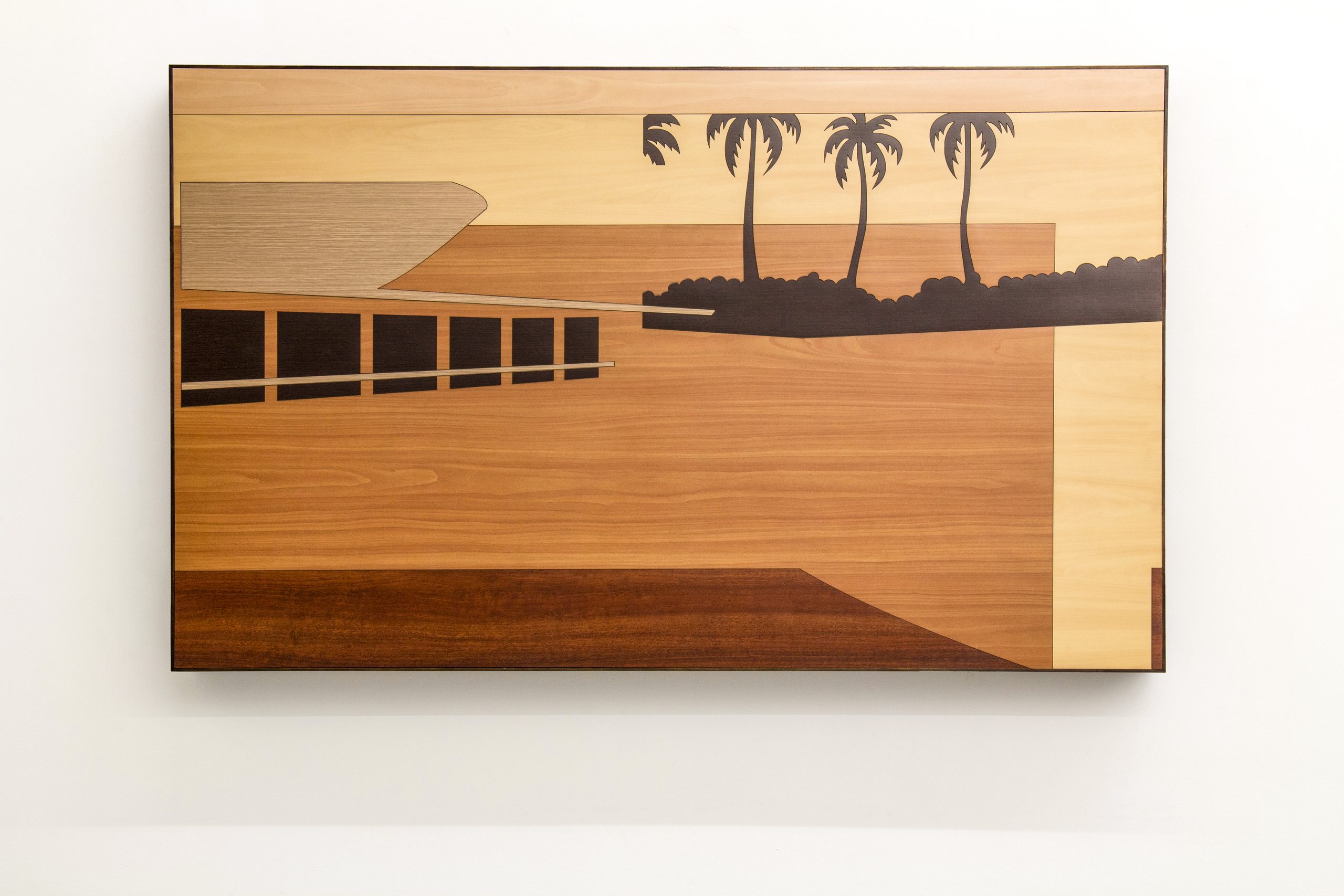
It’s interesting to consider these constructions and ideals. The idea of Brasilia, for example, represents goals that sometimes don’t come to fruition, but there was an attempt, nonetheless. In art, there is also a yearning to achieve this ideal. This is visible in the works with the perfect laser cut, in the well-made box by the cabinet maker that doesn’t open – it doesn’t fulfil the expectations of a box, just like Brasília as a city.
Yes, it contains irony. This quest for perfection. The original image is corrupted. People’s reactions are very interesting. It’s not a naïve view – on the contrary, it’s a comment on this desire to look perfect, even though we know it’s not perfect, with the added understanding that it’s difficult to achieve.
When we were discussing working in graphic design and the points of connection with art, I was reminded of a story by Dan Flavin. He said that he would never put one of his lights on the ceiling because then it would just be an ordinary light. The act of removing it from the ceiling is the artistic act. In graphic design, the artist’s action is precisely this displacement.
I have another series called “Statistical Self-Portraits”, which flirts a lot with graphic design because they are graphs, and with the limits between abstraction and figuration that we talked about, becoming a more abstract, geometric art. This series of graphs has some that I simply appropriated from my blood tests over the course of 10 years. If it’s on the laboratory’s website, it’s a hemoglobin graph, a triglyceride graph. I took it out of context and so it became a work that talks about my life, a self-portrait, abstract, figurative. This has a bit of Duchamp in it, who was perhaps the first to do something like this.
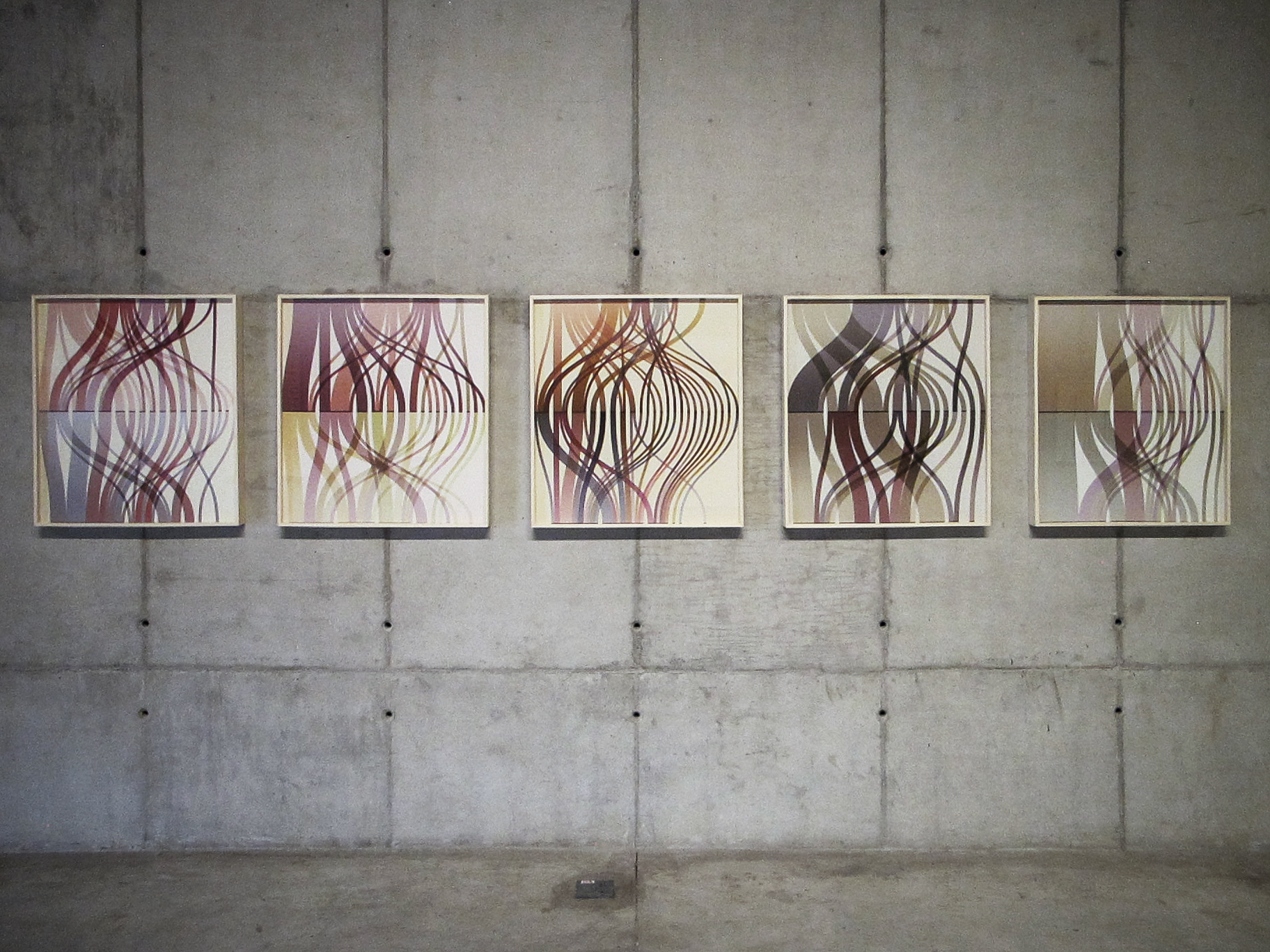
This is one of the great triumphs of contemporary art: it allows us to see information and facts from a different perspective.
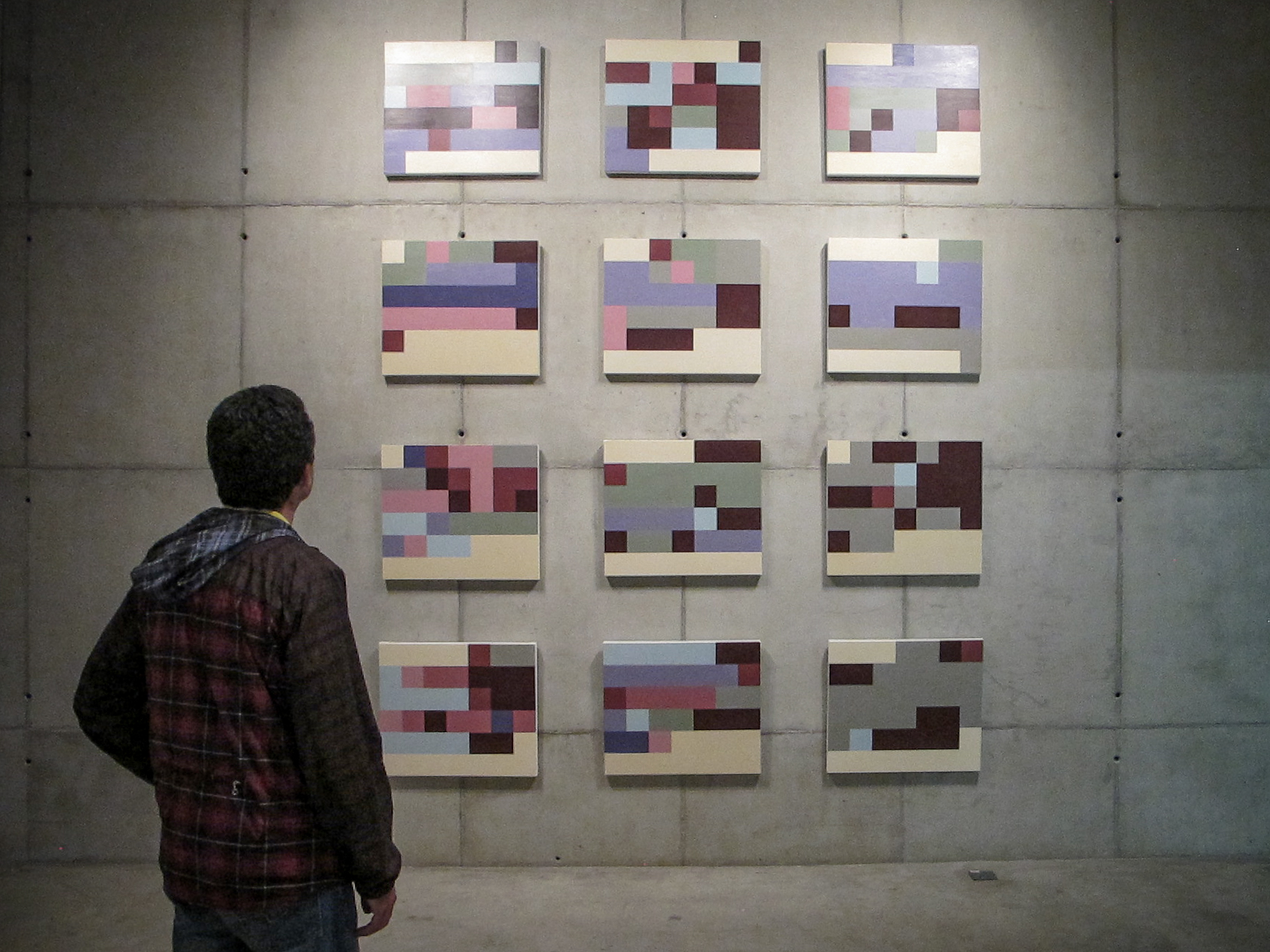
I was reflecting on that as I spoke. I’m involved in several projects at the moment, working with color perception and digitalization. I’m exploring how we perceive colors and our desire for control. I’m working on a series of paintings called “Ledo engano”, which addresses this desire for control and our communication difficulties. The series also talks a little about the subject of fake news, of color, which involves various fields: psychology, art history, perception, health, medicine. In Photoshop, for example, there is a button that reduces thousands of colors to just 256, known as safe colors. It’s a curious name, because these colors don’t necessarily convey a sense of safety. They’re called that because, supposedly, any device can reproduce them perfectly, since each device reproduces color in a different way. The idea of safe colors came about in the days of PCs, when it was still difficult to be accurate with colors. Nowadays, with advanced technology and sophisticated monitors, this is no longer a concern. I take a color gradient with all the specifications, ranging from blue to pink, yellow to whatever, press a button and it gives me a super geometric design. It’s a very performative job. I paint all these colors trying to reproduce them like a machine, a printer, exactly as I see them, knowing that I’ll never be able to replicate them perfectly. If I paint in natural light, I’ll see one color, but if I use artificial light, I’ll see another. Also, if the light is cold or warm, it will alter perception, just as the time of day can affect how my eye perceives colors. I’m dealing with all this and I’m almost telling a lie, a simple mistake. Without realizing it, I reproduce this lie, as if it were make-believe. It reminds me of our conversation about control, this deluded desire to control, even though we know it’s impossible. We talk about painting, about color, but in reality, I’m dealing with the same subjects that I discussed in my work in Brasilia.
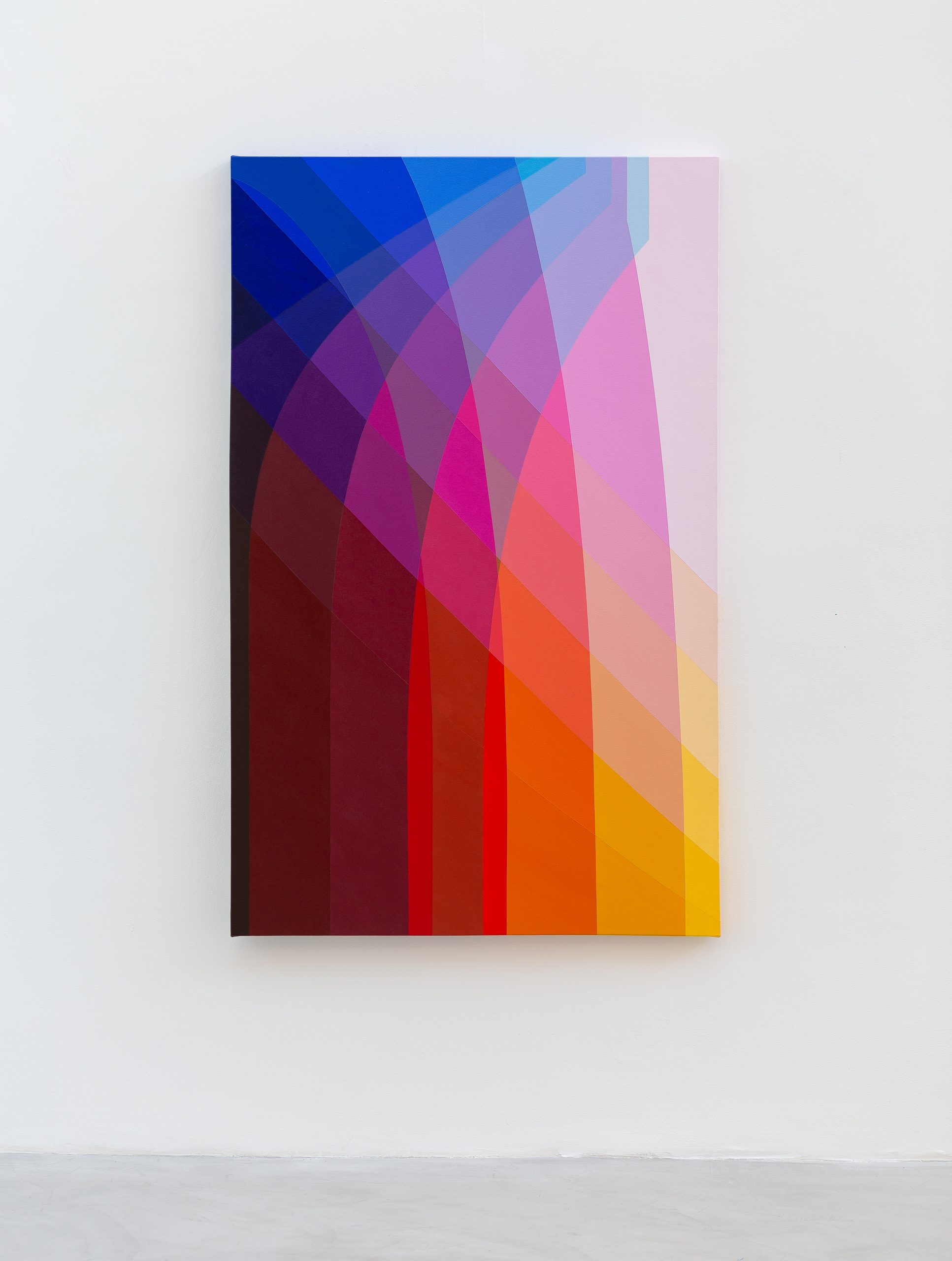
Even if you try to control and reduce the colors to safe colors, they’re not that safe, or easy to manipulate. It’s like trying to capture a simple blue, but it’s impossible. It reminds me of the work Perfect Lovers by Félix González-Torres, in which two synchronized clocks end up losing sync with time.
I really like all his work. This project with the clocks is of incredible simplicity and minimalist aesthetic economy, and the whole story, everything behind what we’re discussing. There’s this endeavor to achieve perfection, this security, but sometimes there can be a small mechanical defect that causes a clock to run late.
And maybe from that we can get to the opposite, which is to observe the painting and appreciate it aesthetically, becoming close to those colors for what they represent to you, rather than trying to identify or control them. This applies to painting and allows you to appreciate them for what they are, also bringing a certain freedom.
It’s a mistake to think that people will interpret your work the way you want, or imagined. In reality, the work goes out into the world and no longer belongs to the artist. It depends on the context, on the person who appreciates it, on how they received it. It’s also interesting to see the artist’s detachment from the ethics of the work.
Interview conducted on 17th November 2023 remotely via Zoom.
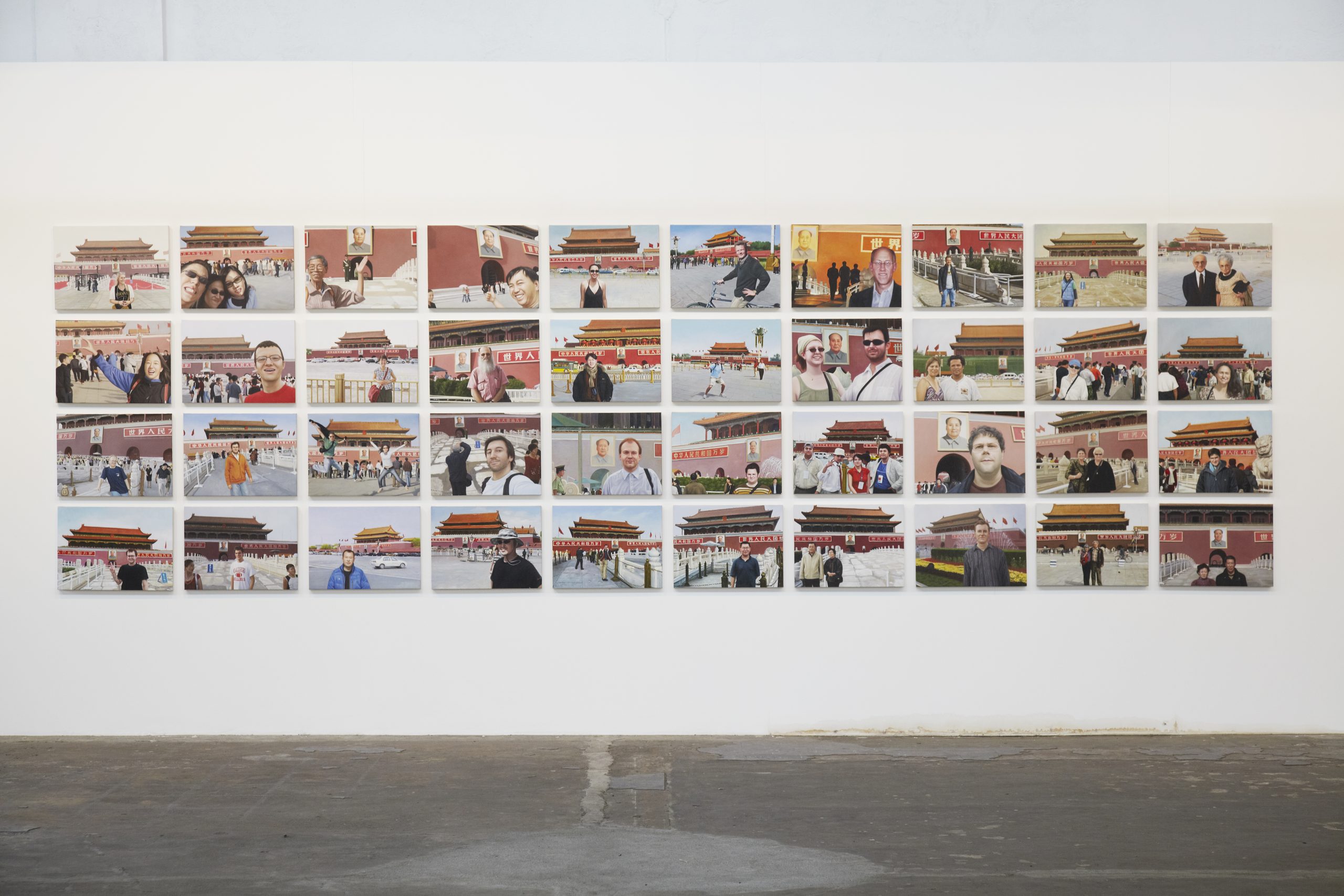
40 oils on canvas
14.5 in x 19.6 in (each)
Photos: Rogério Miranda
2010
Laser cut melamine laminate (Formica)
33.5 x 55.3 in
Photos: Ding Musa
2013/2014
Corrupted digital imaged printed on cotton paper
17.7 in x 17.7 in
2019
Inkjet print on cotton paper + artist book
27.6 x 25.6 in (each)
2012
12 acrylic paintings on canvas + artist’s book
0,60 x 0,70 m (each)
2012
Photos: Lucas Cimino
2020
35 oils on canvas
11.8 x 15.7 in (each)
Photos: Rogério Miranda
2009
Print on methacrylate and print on cotton paper
Dimensions variable
2010/2015