

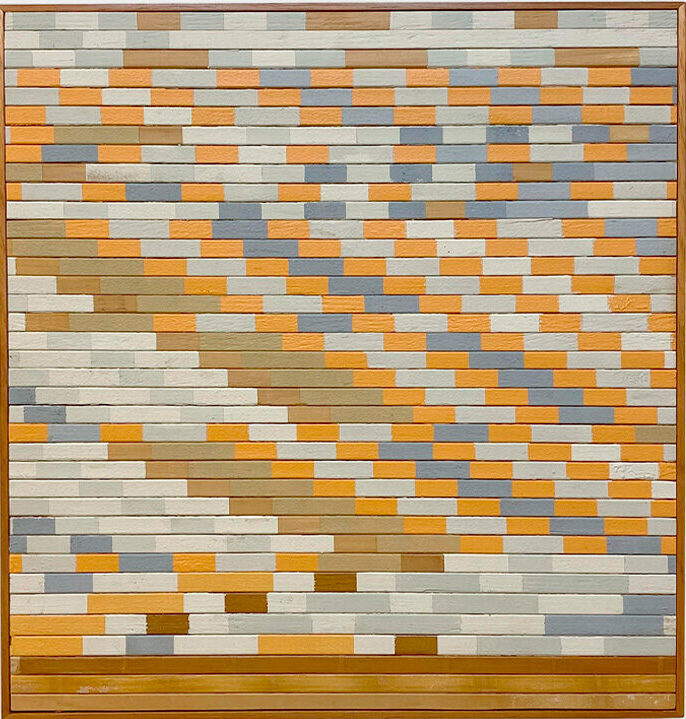
Marcelo Macedo
Marcelo Macedo (Rio de Janeiro, 1983) discovered his passion for art at an early age. He started drawing and making sculptures as a child; in his youth, he came into contact with street art and the various forms that contemporary art can take. In this interview, the artist from Rio de Janeiro shares his trajectory, from his first drawings to his transition to street art and graffiti, which led him to explore different cities and to work with a variety of materials and techniques. Marcelo also discusses how his art has evolved over time towards making more abstract works that arise from an introspective gaze. Check it out:
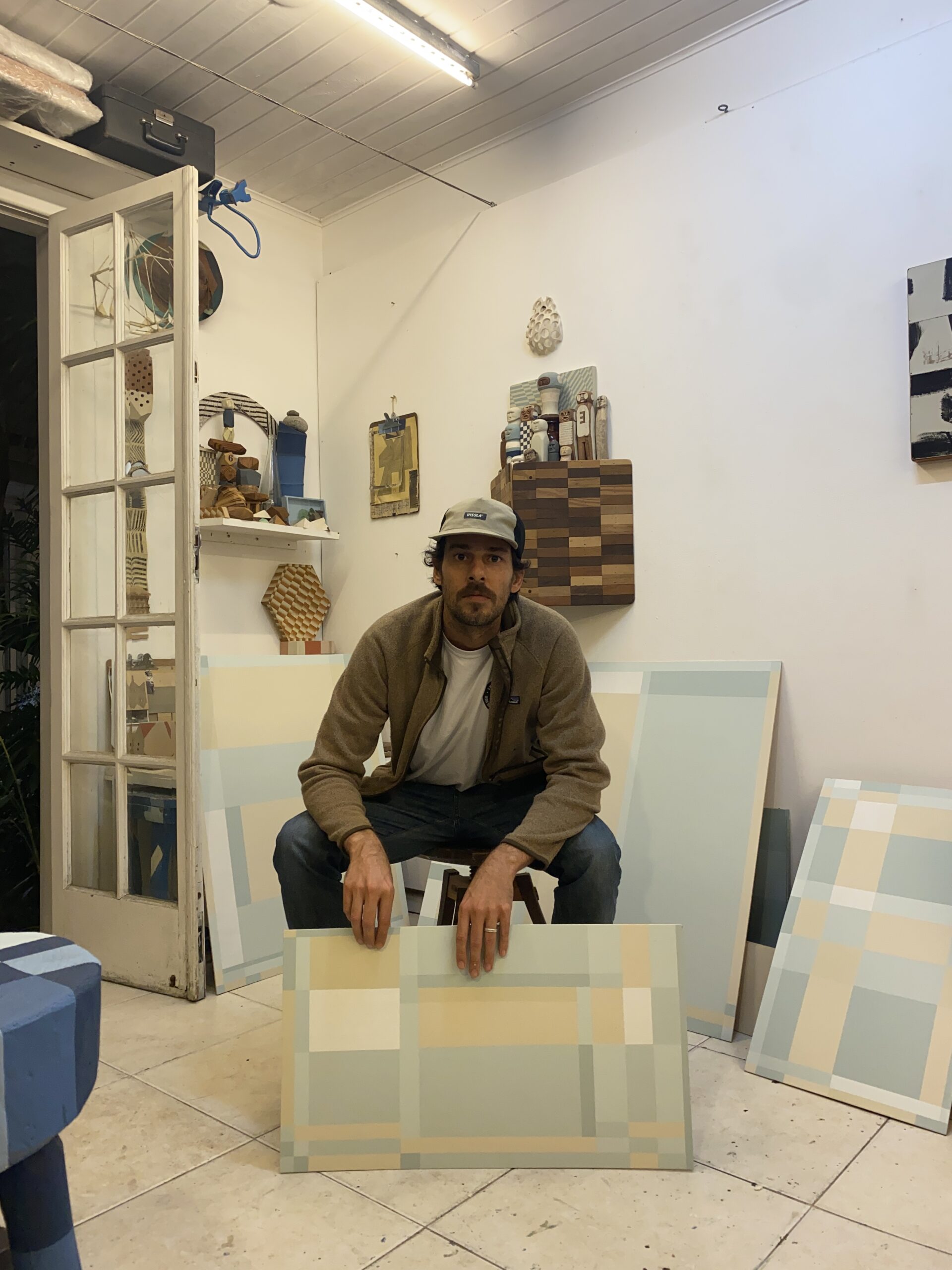
Marcelo, I’d like to start by thanking you for your participation in the project and asking you to introduce yourself to an audience that may not be familiar with your work, in any way you see fit.
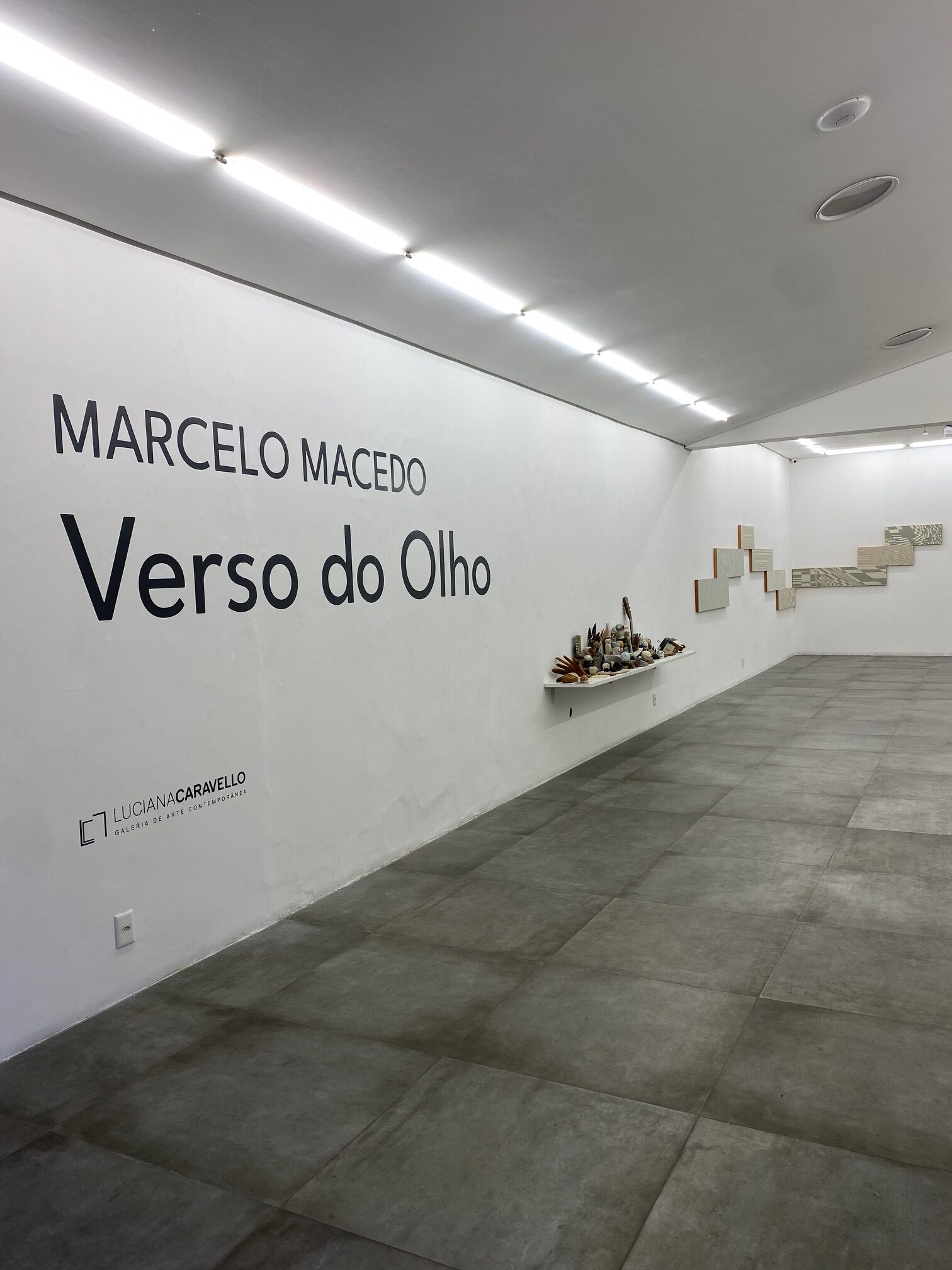
When I was five or six, I told my grandmother that I was going to be an artist. My grandmother – my father’s mother – had a big influence on me. Although she wasn’t a professional artist, she studied fine arts and used to create artistic activities for me and my siblings. I discovered very early on that art was a way of calming me down, a way of organizing myself internally and dealing with the world, and school. At the time, I was struggling with literacy. I started drawing a lot at school and everywhere that I went. Even with math problems, or exams, I solved everything by drawing. My grandmother realized this and started to encourage me even more, giving me ceramics and soapstone with which to make sculptures. I remember some of the work I kept – mainly drawings and clay sculptures. In my class, I was the student who drew the cover of the newspaper and did the illustrations for our group work. When I was 18, I witnessed the street art boom in Rio de Janeiro. I walked down the street and was very impressed by everything that was happening. This movement of people painting on a large scale, without permission from the town hall, using their own materials, was democratic and belonged to everyone. It inspired me to explore. However, the internet was only just beginning so I started looking for information in a more “marginalized” sphere, asking people how they painted in the street and where to buy cans of paint. At the time, all the cans were made from domestic materials, and were very different from “gringo” materials. Almost automatically, I began to venture out into the street. I started going to the Baixada Fluminense, where we’d come together in the slums of Rio. I was very interested in this collective work, where a group of graffiti artists got together to color, and bring culture to, the community. It was guerrilla art, without earning anything from it, and was more about the relationship between people and the city. As a result, I began to see the city in a different light. I recognized the social problems there and I saw people acting on these problems in a different way than the state did. They were guerrilla forms of action, and that enthralled me. Every Sunday, I’d be on the street making a big mural. At the same time, I studied graphic design in order to become a professional. During the graffiti boom, big projects emerged, and they started looking for artists who until then had been marginalized and didn’t make any money. This didn’t just happen to me, but to my whole generation. In my studio collective, there are two artists I’d been following for a long time and whom I met on the street. Today, they are more active in the field of institutions, collections, and at fairs and galleries around the world, and I’ve been professionalizing myself to get to that same place. In 2012, I had an exhibition at a gallery in Leblon, which is when I started to enter the art circuit in Rio de Janeiro. I started producing prints and multiples, becoming more interested in this new space that was opening up. I really wanted to feel how the work was transformed by these transitions, and not just existing on the streets. I needed to expand, so I decided to open a studio in Mangueira – a magical place for me – near a samba school. I started producing and many opportunities arose, including my first exhibition outside Brazil, which was in Berlin. I toured Munich, Berlin, and other cities. After the exhibition in Rio, I was invited to Berlin and then to New York. The gallery in New York was small, but the curator had a keen eye. Other artists who exhibited there, such as Zéh Palito, Antonio Bokel, Mateu Velasco, and Demian Jacob, are now in major collections and museums. In New York, I painted a large mural in the street with Zéh. We stayed for a month, with very little money and had a lot of fun. We were very determined, wanting to make things happen. Since then, I haven’t stopped exhibiting. I went to Portugal and had an exhibition in a really cool place. They have a culture program for people in mental institutions at a psychiatric hospital that has a shed with a beautiful project involving patients with a predisposition for art. It’s very similar to what Nise da Silveira and Lygia Clark did in Brazil; they were both interested in the combination of psychiatry and the visual arts. In Brazil, I’ve worked with three galleries, but now I’m with Luciana Caravello in São Paulo, where we’re opening a solo show [the exhibition opened on 8 November 2023]. I also have an exhibition at the Getúlio Vargas Foundation, a newly opened space in Rio de Janeiro, called “The fourth constructive generation in Rio de Janeiro” [the exhibition took place between September and November 2023]. It was a great honor to participate with Paulo Herkenhoff, one of Brazil’s greatest curators, and to be mentioned in his book. This very interesting book says a lot about Rio de Janeiro and the foundational generations. Paulo is a great scholar and I have great admiration for his studies, which have also become a source of fuel for me.
You mentioned your transition to street art and graffiti, coming from a more “formal” art experience with your grandmother. Was this change from the “formal” to the “informal”, which is characteristic of guerrilla and street art, a natural transition? Did you continue to draw and make sculptures alongside your street work?
Back then, when I visited a museum, I felt distant from the art. I remember seeing Yves Klein’s work, with its all-blue canvas, and thinking: “No way, that’s just the background. This guy is lazy” (laughs). There was resistance on my part. My grandmother didn’t introduce me to art in a very formal way. She introduced me to exercises and what she learnt at the gym, but in a playful way. It was really free art territory. Over time, I began to realize that what was in the museum interested me less than what I saw in the street. I began to be interested, even more so at a young age, in transgression and rebellion and in the idea of self-affirmation in the face of society. I’m going to present my vision of what art is, whether you like it or not. I’m going to go where it’s abandoned and I’m going to paint it, and it’s going to invade your vision. There’s an aggressiveness in this idea of destroying and building, of vandalism, transgression.
Yes, it’s interesting how various artistic movements, such as Dadaism and Pop Art, originated from ideas of transgression and rebellion. By removing the social elements attached to the work and placing it on the perfect white wall of the museum, something is lost. It’s interesting to consider street art as an artistic movement that possesses all these qualities. Although it doesn’t, as far as I know, have a manifesto or a formal organization of its participants. It is a movement that also loses something when it is transferred to the museum.
When I’m on the street, it’s a different experience. I have to deal with improvisation, with the people passing by at that moment, with the police. It’s much more real. The museum, on the other hand, has an interesting element of treating the work as something sacred, inside the white cube. I feel that some of my works grow when they go into that white cube. Although it would be possible to place these works in the street, they could get lost in the chaos of the city. In the street, working on a large scale makes a lot of sense to me – painting in large dimensions. However, when I’m in the studio, I produce many small works, but I put in the same energy that I use to paint a monumental mural.
It’s fascinating, this transfer of energy from one environment to another and how each one influences and molds the work created in the other. It’s not one that overpowers the other, but both growing together.
I realized that, for example, I came from graphic design, but I didn’t really fit in at university. I thought it was too commercially orientated, too client-orientated, too outward looking and I was looking for something more introspective. In that area they were thinking about trends, whereas I was always looking for that inner dive. On the one hand, I didn’t become a good designer, but today I incorporate many design tools into my research and artistic practice. The same goes for graffiti.
O grafite me deu confiança, me deu uma capacidade de improviso e foco. Na rua, você é parado, o tempo inteiro precisa ir e voltar. No ateliê, não, você está lá o tempo inteiro e pode ir direto. O grafite me deu a resistência para manter o foco, e na hora que preciso parar, consigo ir e voltar rápido. É dinâmico.
(Translation: Graffiti has given me confidence, improvisation, and focus. On the street, you’re stopped, you have to go back and forth all the time. Not in the studio. You’re there all the time and you can keep going straight. Graffiti has given me the stamina to stay focused, and when I need to stop, I can get back and forth quickly. It’s dynamic.) Often, when I go out on the street, I don’t go with spray paint, but with a brush or piece of paper to stick up, so one practice influences the other.
Based on everything you’ve described, I imagine that your ideas would manifest themselves in a painting or artistic production that is comfortable with figuration. However, your works are the opposite; they have a lot of abstraction, and maybe even a bit of design. How did you arrive at abstraction?
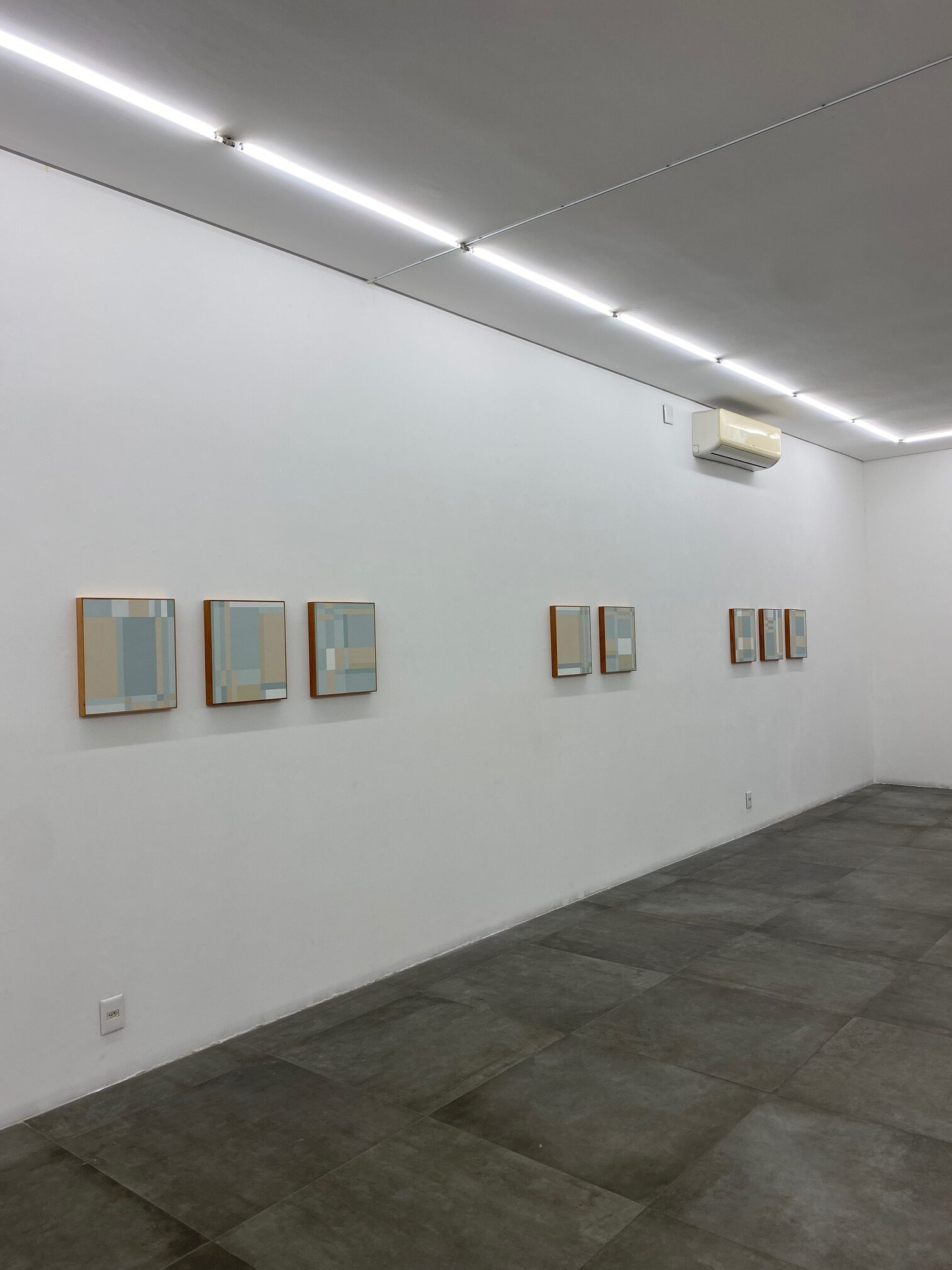
Abstraction is a process related to this inward plunge. When I draw a face, a hand, or a figure, it feels like I’m giving everything away immediately. I’m not saying that’s a bad thing. I have work that involves figures and I still utilise them, and I have collages and sculptures with figures that also look like faces. But I started to want to see beyond that. I come from the world of graffiti, which is influenced by cartoons and pop art, and in a way, it delivers a lot. When I insert a figurative scene, I don’t leave as much room for the viewer to imagine.
In a way, it’s a different approach. An artist like Invader, for example, started out in Paris with Pac-Man pieces and is now present all over the world. It’s the kind of street art that’s almost like a punch in the face. It needs to catch and hold your attention.
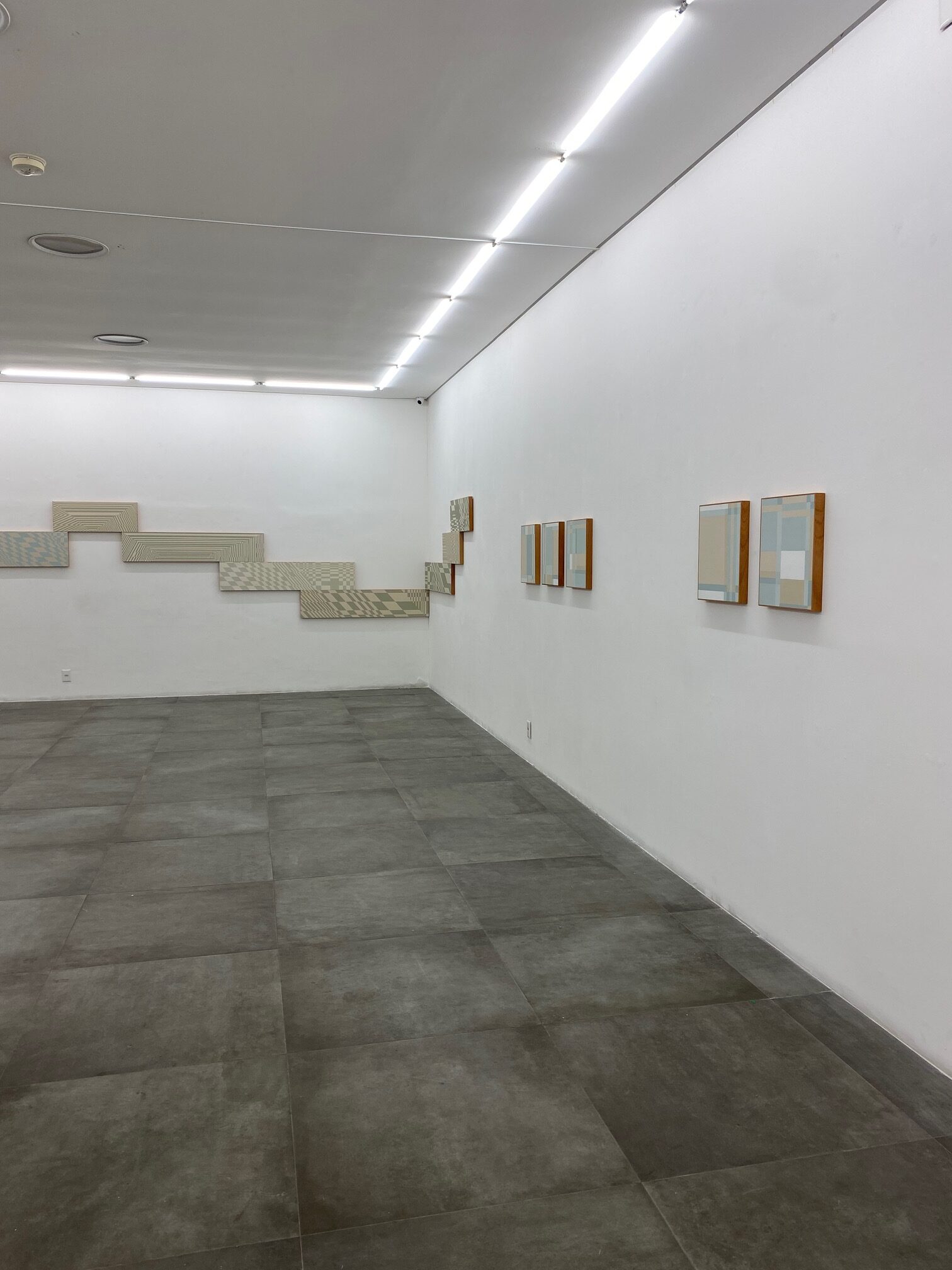
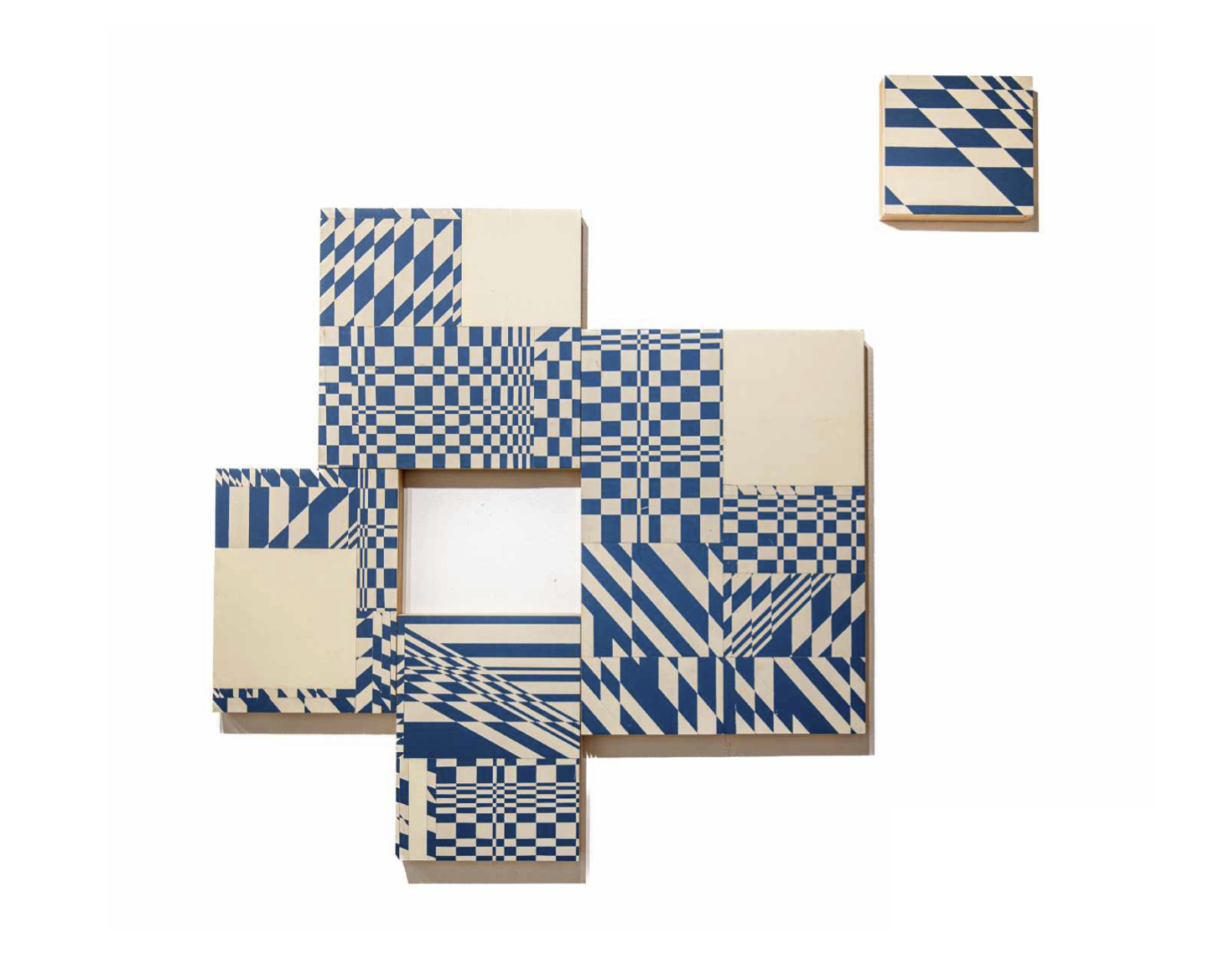
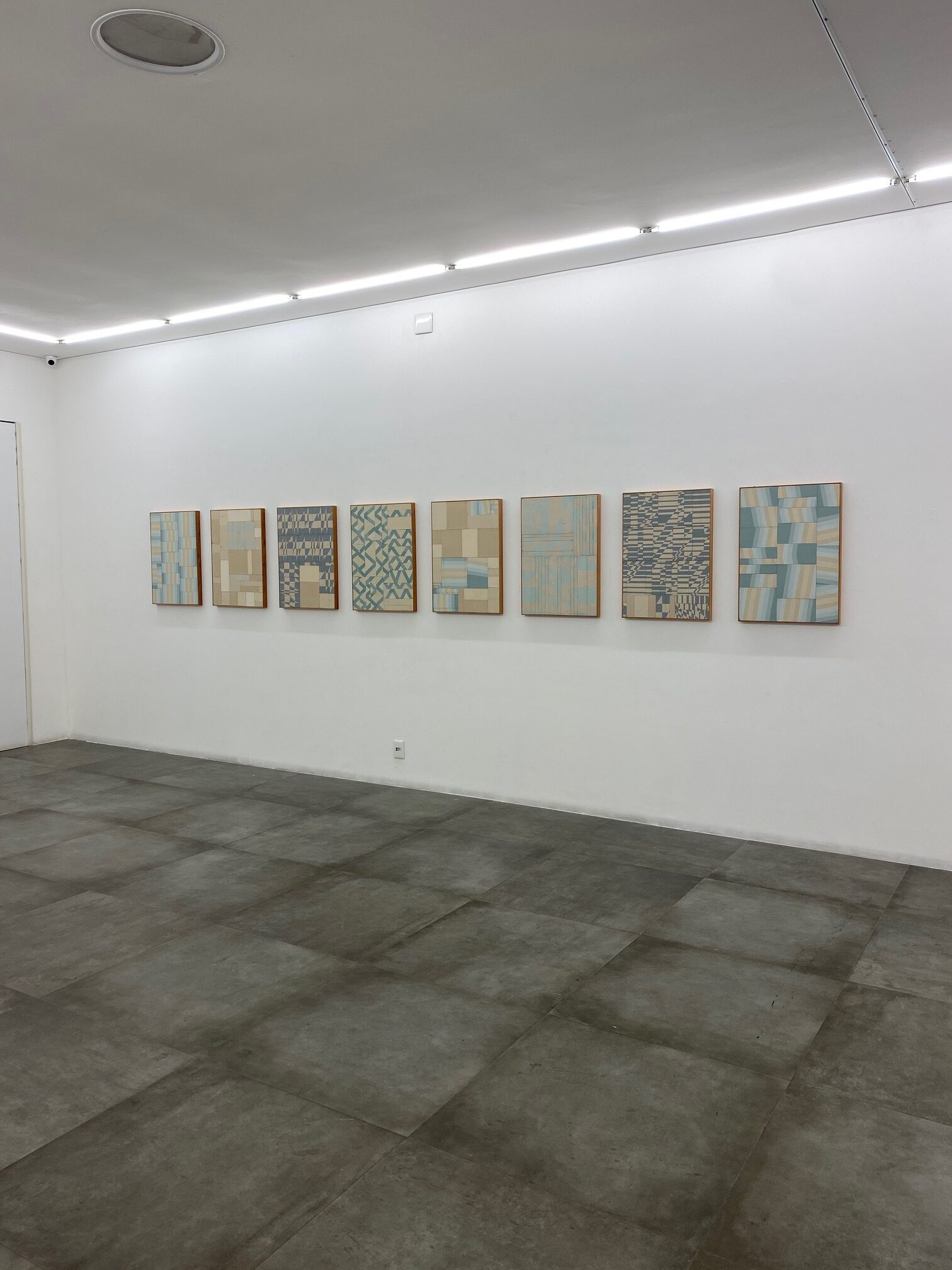
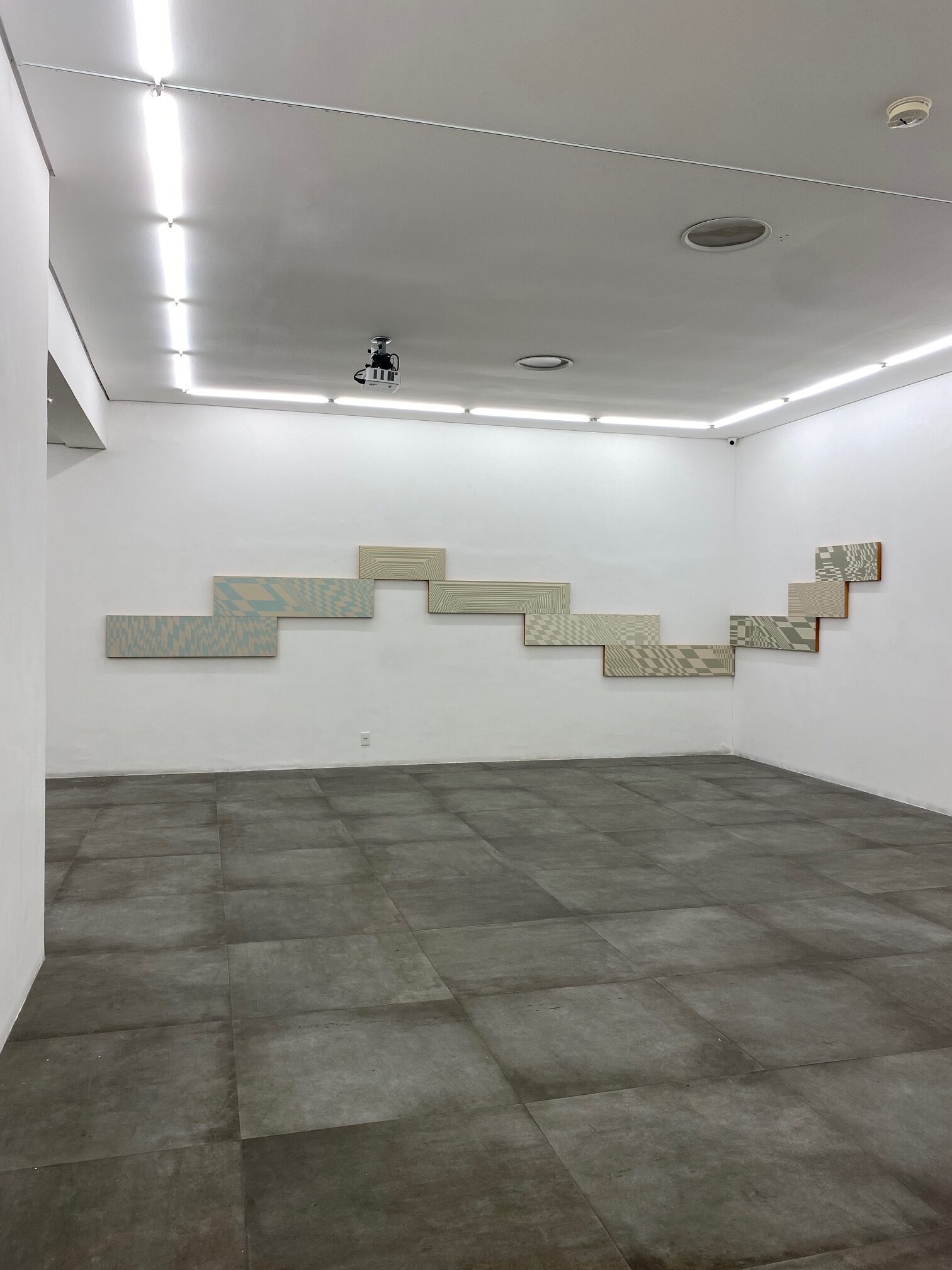
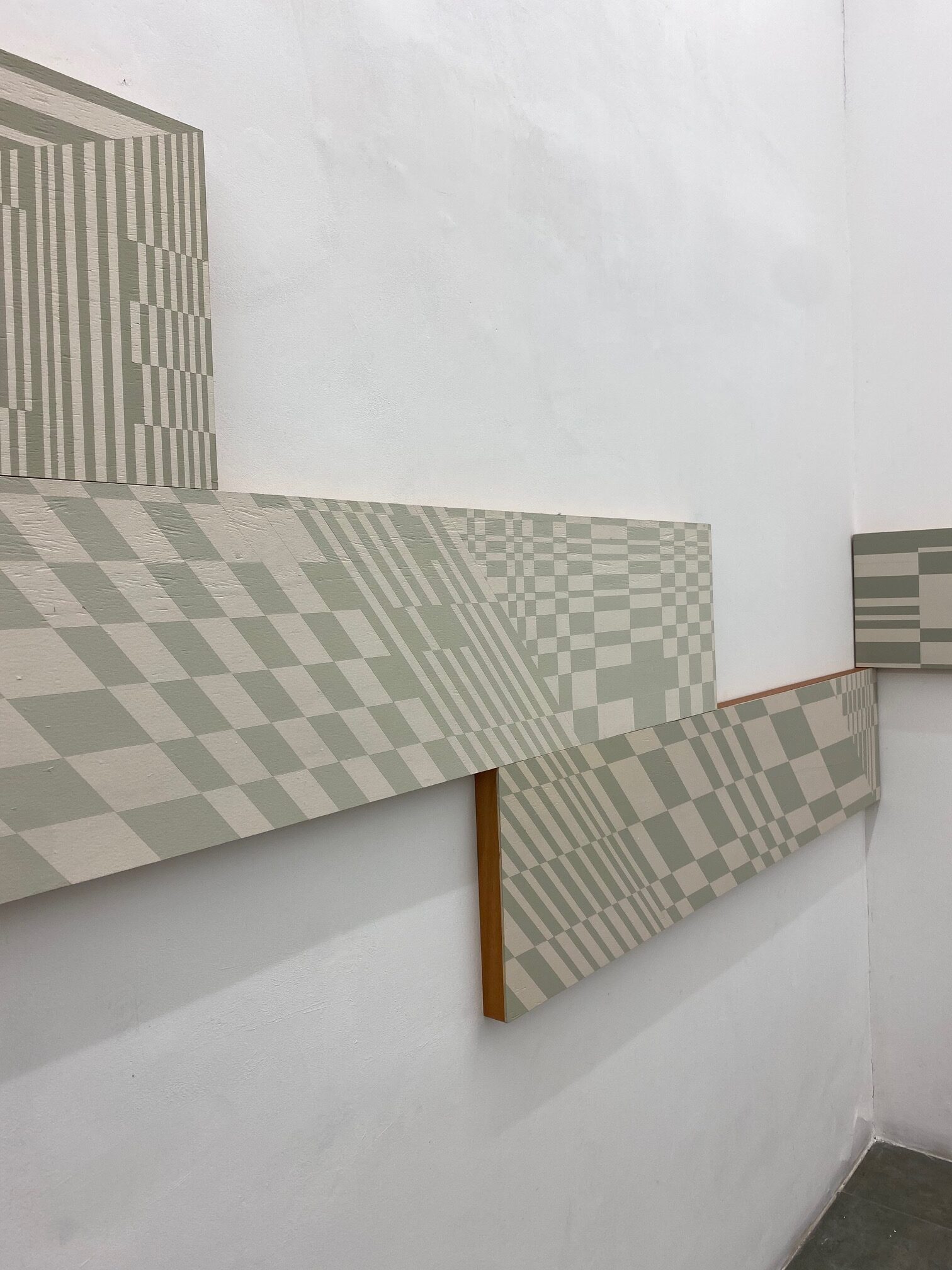
É sobre retirar o que você não quer, o que não precisa, o que é excesso. E eu fiquei nesse lugar. Eu fui mergulhando, retirando os excessos. O que sobrou foi essa malha quase alucinógena. Gosto dessa coisa de enganar o olho. Quando você engana um olho físico, consegue abrir uma porta para imaginar. Então, ultimamente, a pesquisa está muito voltada para trabalhos que tendem para o óptico.
(Translation: It’s about removing what you don’t want, what you don’t need, what’s excessive. And I stayed in that place. I immersed myself, removing the excess. What remained was this almost hallucinogenic mesh. I like this thing about fooling the eye. When you trick the physical eye, you can open a door to imagining. So, lately, my research has focused on works that tend towards the optical.) It’s a repetition of a pattern that starts with vertigo, and you see it and think: “What is painted and what am I imagining?” I find this place interesting – opening a door for the viewer to think. It’s an invitation to dive in too.
This is in line with the objective of street art, but it follows a different, more abstract, path. Not just from the point of view of the image itself, but also conceptually, through introspection rather than external manifestation in the city. I’d like to ask you a bit about your techniques and materials. I know that you tend to use materials sourced from different places, but at the same time you work like a craftsman, creating sculptures. What’s that negotiation like? How do you decide what the material will be and where it will come from for your next work?
With regard to materials, one thing ends up influencing the other. When I was painting in the streets, I began to notice discarded objects in rubbish dumps or at flea markets. These objects caught my attention, like a wooden plaque, or a peculiar, discarded object. I started collecting them, believing that they could be transformed into something new. I felt that these objects, in my hands, could be given a new life, a new chance to exist in the world, while at the same time preserving their stories and memories. I appreciate this quality of objects that bear the marks of time, and traces of where they have been. I started collecting these items and turning them into a collection that grew more and more. When I realized what I was doing, I felt a bit crazy. My mum even said: “Man, there’s something wrong, you’re hoarding rubbish.” Over time, these objects began to transform and the first thing that transformed was a totem. When I inserted a figure – a face and a hand – those old wooden “stumps” became a sculpture. I needed to name what I was creating. I thought: “The figure is defined, but what comes with it? What world is beginning to emerge? That’s how I began to build this world, which is linked to abstraction. These abstract works are like signposts pointing to this world.
We can discuss these aspects from a religious or cultural perspective, whereby various cultures start with small interactions between an object that becomes animate and an object that becomes figurative. This evolves into faith, or religion, and the power that these objects have before and after they are possibly modified.
Isso é uma informação que não se aprende. Isso já está dentro do nosso corpo, em nosso código, como se fôssemos um computador. Algumas pessoas acessam, e esses são os artistas. Eles acessam essa memória que está lá como um fiozinho que conduz toda essa informação.
(Translation: This is information that can’t be learnt. It’s already inside our body, in our code, as if we were computers. Some people access it, and those are the artists. They access this memory that is there like a little thread that leads to all this information.) This is evident in the culture of native peoples, where you see many similarities. It’s surreal. I recently discovered that a tribe here in Acre has developed a game called “Jogo da Onça” that has a beautiful geometry that resembles backgammon but is different. It’s a game with pieces of a single color and several different ones, and the different colored piece represents the jaguar. With the help of the internet, they researched and found a very similar game in Indonesia called “Tiger Game.” The geometry is the same and only the rules are different.
We’ve talked a bit about the figurative, but if we consider the abstract, like in Islamic art which doesn’t have figurative representation, they represent the divine through geometry and colors. This influences the viewer to experience the divine. It’s a way of thinking about it, always returning to these human experiences that accompany us, but from a different point of view. In your work, you end up dealing with these two different ways of producing the art object, whether figuratively or abstractly.
When you talk about religion, you seem to have got it right. Something seems to have been realized. There’s something sacred about this action. In my studio, the shelf starts to become an altar. I don’t know if this is an influence, but my mum used to take me to church until I was 15. I never liked it because I always found it strange. However, certain aspects, such as the hymns when everyone sings together, create a flow. This is very much linked to the geometric pattern work I do. It’s something that is repeated over and over again until it transcends, until it seems three-dimensional. Everything is flat, but to the eye there seems to be a contraction and expansion of the painted mesh. These little squares cause this vertigo. In the chant, you do this with sound alone. Everyone praying together in a flow is also powerful. There are various tricks that religious groups develop to allow for transcendence, to access this intuition, this imagination, which the artist seems to access all the time. Even if they just think and doesn’t materialize anything, they seem to be connecting.
In a way, we can consider the artist to be responsible for capturing the strength of religion and society, stripping away the superficial layers and getting to that essence. They look for what makes a person look at a canvas and really see themselves or open a door inwards. We can learn about ourselves in a social environment, such as sitting at a pub table with friends. But how can we facilitate this same process of self-knowledge in an encounter with an inanimate object? How can we find the essence of this encounter?
I often come across as overbearing when I say that my work is an invitation for you to imagine and access this world, and that makes me uncomfortable. However, when I dive deeply into these ideas and materialize them, I see that they have an impact. I notice that people often bring up reflection that connects with the work, as you mentioned regarding religion. I’m creating a visual code, a language of communication. It’s an expression that, at the end of the day, is my attempt to communicate. But during this dive, the most important thing for me is the tranquility and framework I find, as well as self-healing. My main interest is to find myself in the world. The claim of reaching out to others, I see as a consequence. Often, after completing a piece of work, I ask myself: “How did I do that? Where did it come from?” When I have the feeling that I myself didn’t do it, that’s when I believe the work is good and going in the right direction. When there’s too much of me, it feels wrong. It’s the ego, like some addiction. A shaman in the forest, for example, works in a similar way. He uses a medicinal plant to go into a trance, to go to the invisible place and come back with a cure, a remedy, an intuition.
There’s a wisdom and honesty that are hard to separate, but which relate to the moment when you see a work and think: “No, this isn’t complete, there’s still a lot of me in it.” It’s interesting to hear that, because it really is about getting to the essence of something that perhaps expands possibilities. Influence on others is a consequence. The more you try to cause an effect, the greater the chance that you won’t achieve it, and you’ll end up forcing the situation.
Exactly. When it’s forced, it doesn’t work. It’s born inside, not outside…
Don’t you think design can offer new tools?
Yes, it does. For example, if I’m organizing an exhibition I need to create invitations, take good photos, edit the images, price the work, and discuss its presentation too. This goes a little into the design side of things and takes us away from the image of the romantic artist isolated in his studio, who doesn’t even want to attend his own exhibition, believing that his work should speak for itself…
I also see this as a myth because every artist, good or bad, needs to be organized in order to deliver on time. The romantic view doesn’t really apply. At the end of the day, everyone has deadlines to meet.
This is a complex question: how do you set a deadline for something that comes at any time, without being able to control it? My answer to this is to maintain a daily studio practice. It’s like I’m sharpening a sword, like a samurai. I keep sharpening the sword. When the day comes or when something needs to materialize, everything is ready. The sword is sharp and I’m trained to handle it. In the studio, I follow a research sequence, which is this inward plunge, and I follow and unfold the research into various series. When a gallery, institution, or collector comes along, I think about the space they have to offer and see what part of my research can fit there, can enhance the space and have a dialogue with it.
Interview conducted on 25th October 2023 remotely via Zoom.
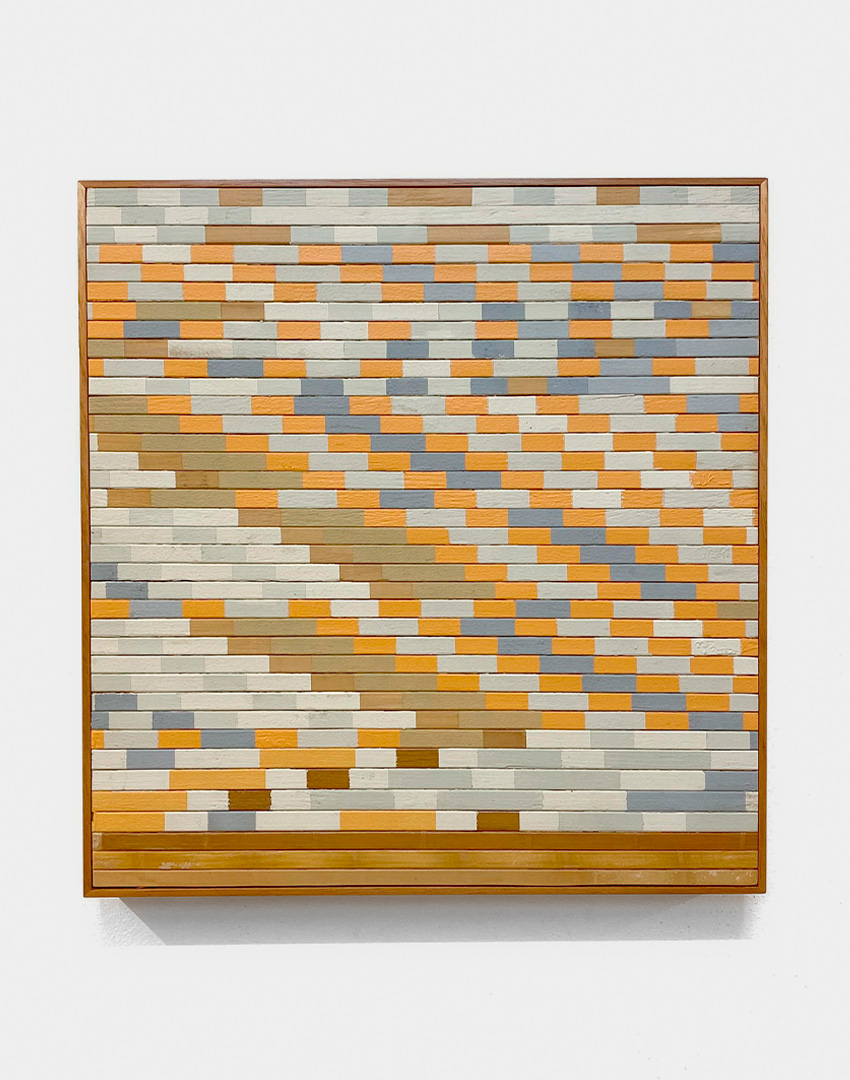
Acrylic on wood
| 40 x 40 cm
2025
Acrylic on wood
160 x 161 x 5,5 cm | 35,5 x 37,5 x 5,5 cm
2024
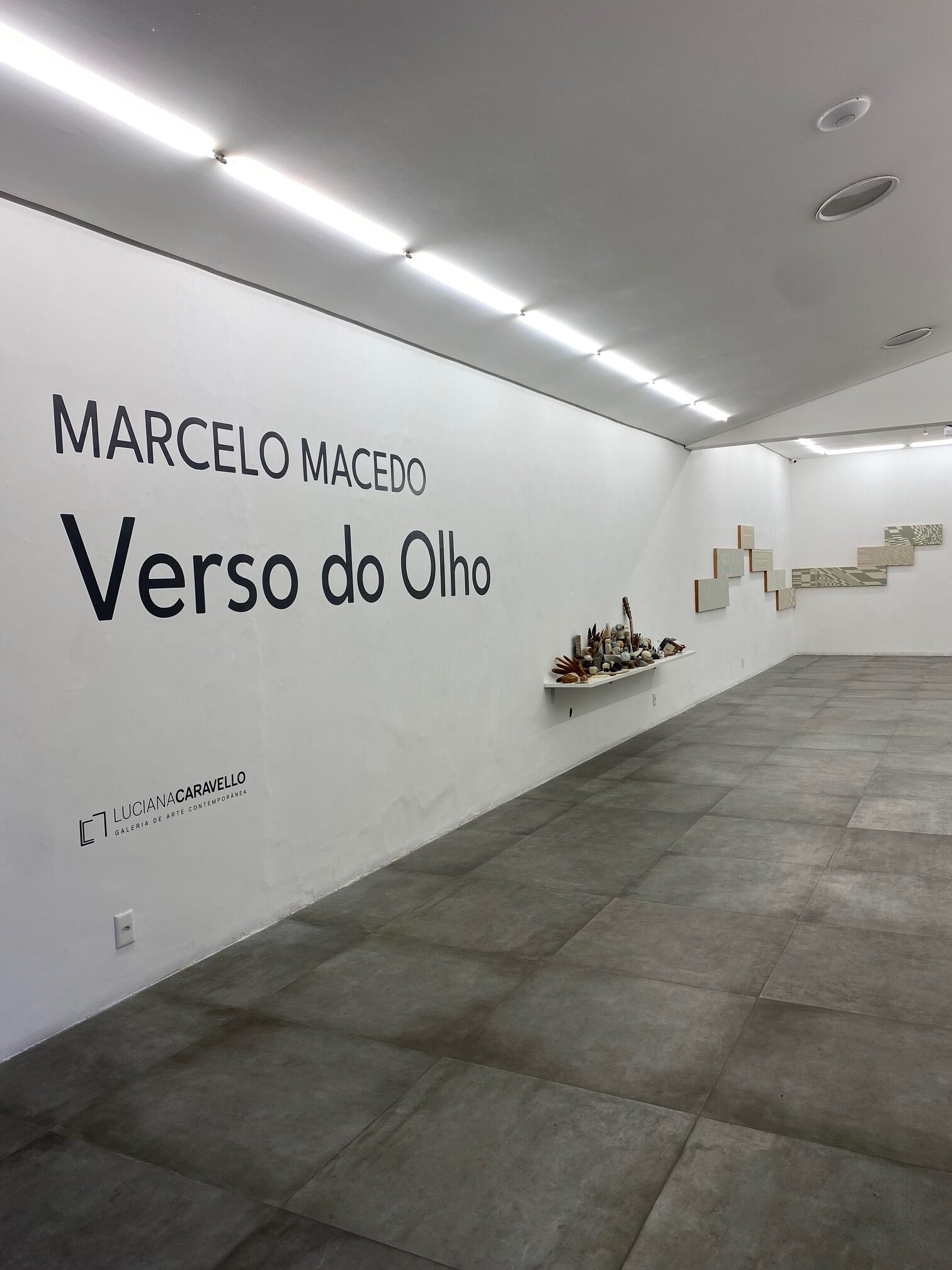
2023
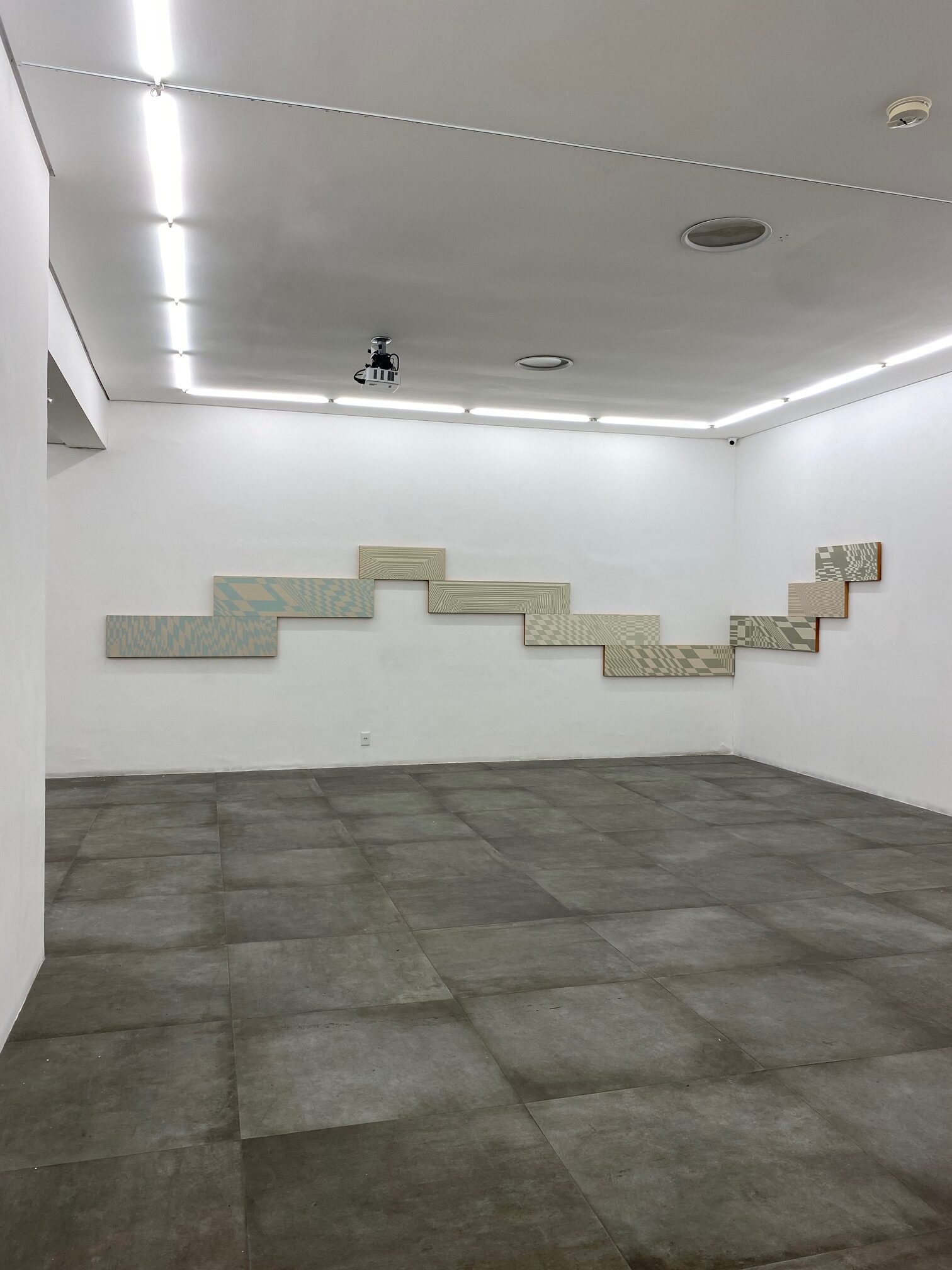
Acrylic on wood
Variable dimensions
2023
Acrylic on wood
Variable dimensions
2023
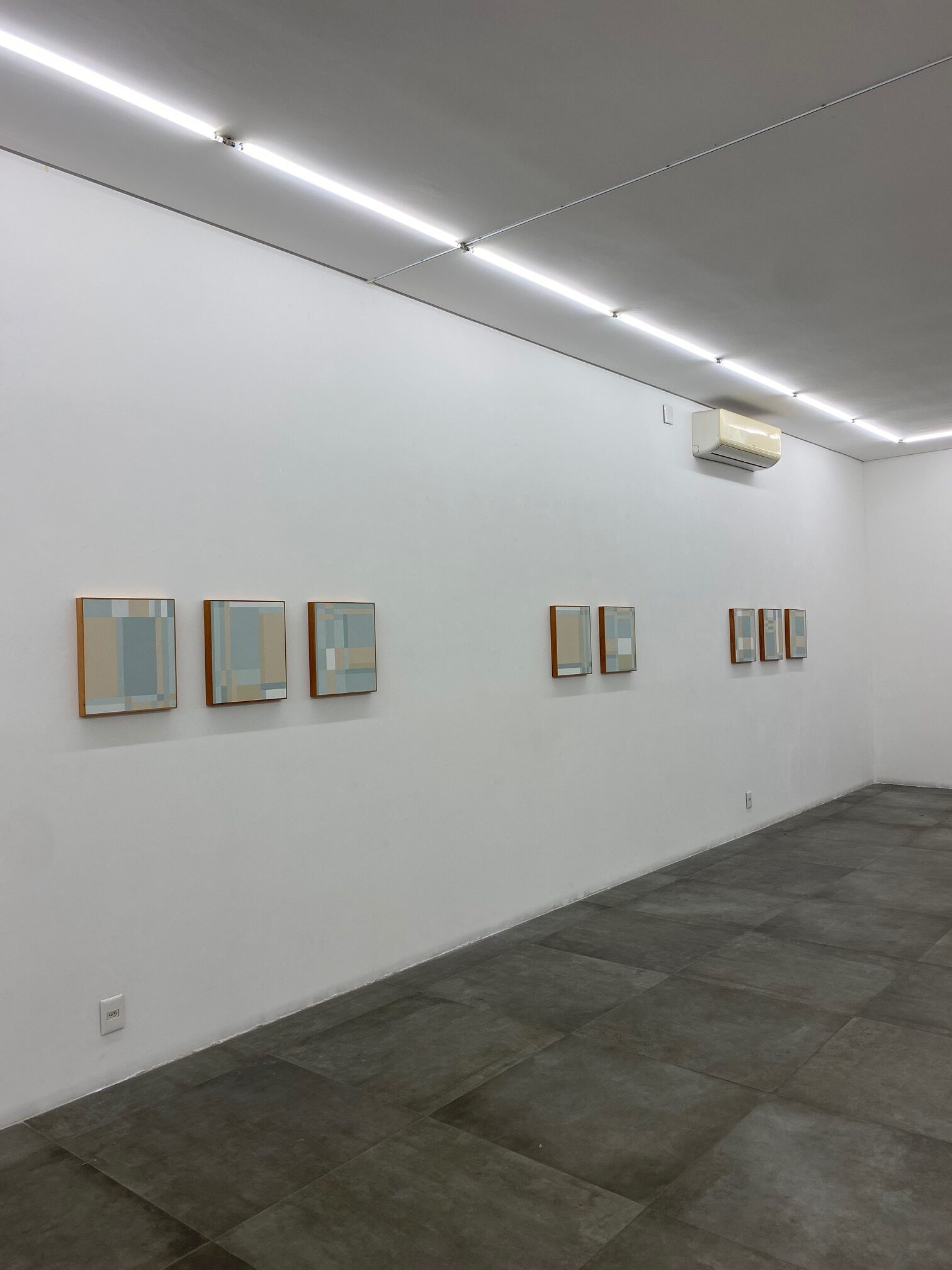
Acrylic on wood
| 39,5 x 35 cm
2023
Acrylic on wood
| 70 x 50 cm
2023