

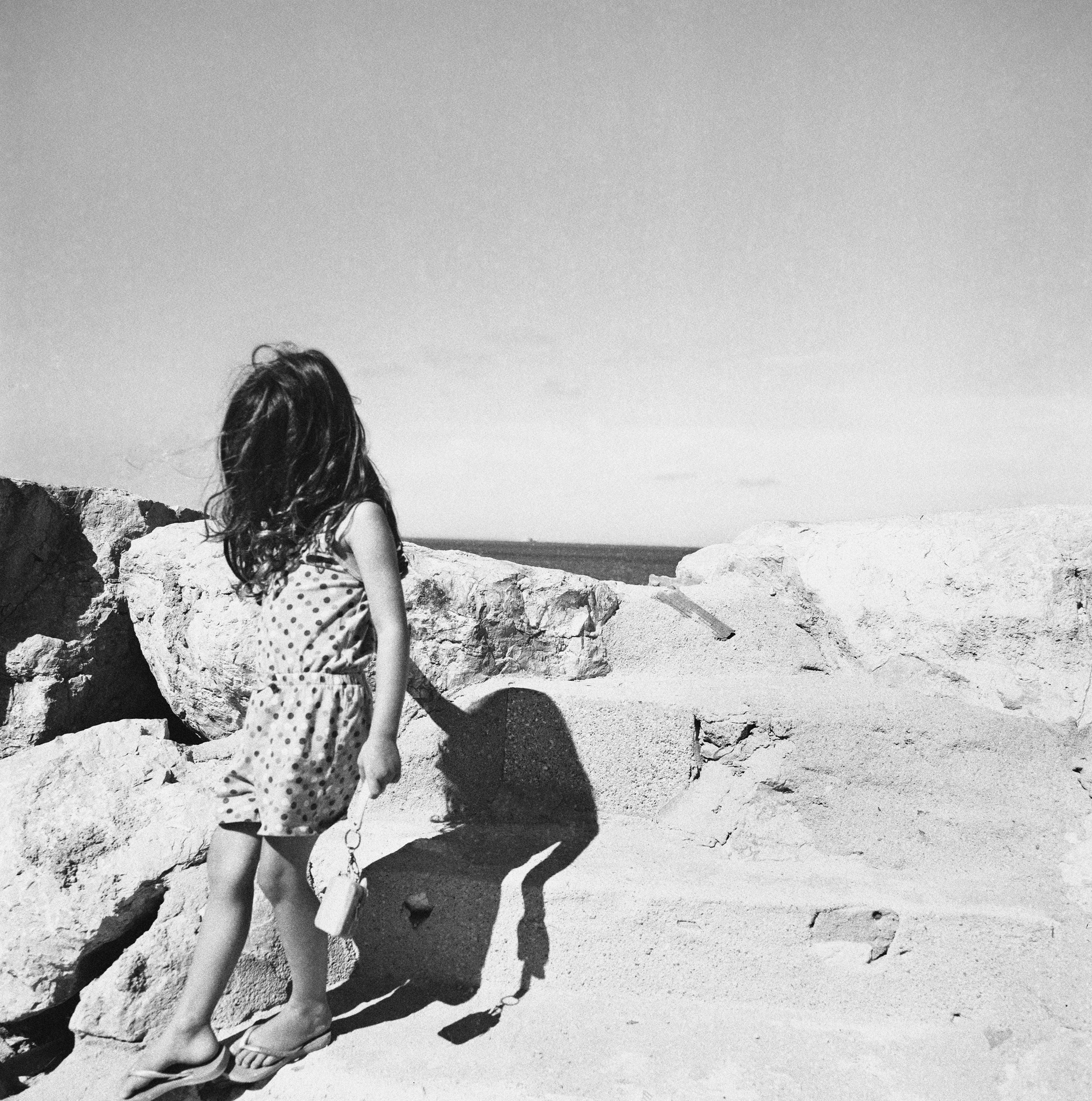
Luiza Baldan
Brazilian visual artist Luiza Baldan doesn’t limit herself to capturing images that portray the city and its complexities, but is also dedicated to delving profoundly into the stories and people that make up the places she photographs. In our interview, she emphasizes both the importance of personal experience in her work, and how each project is motivated by a personal interest or curiosity that leads her to research a place and its community. For Luiza, photography has become a consequence of her encounters and experiences, a means of expressing the rich stories she discovers through her forays and experiences. Check it out:
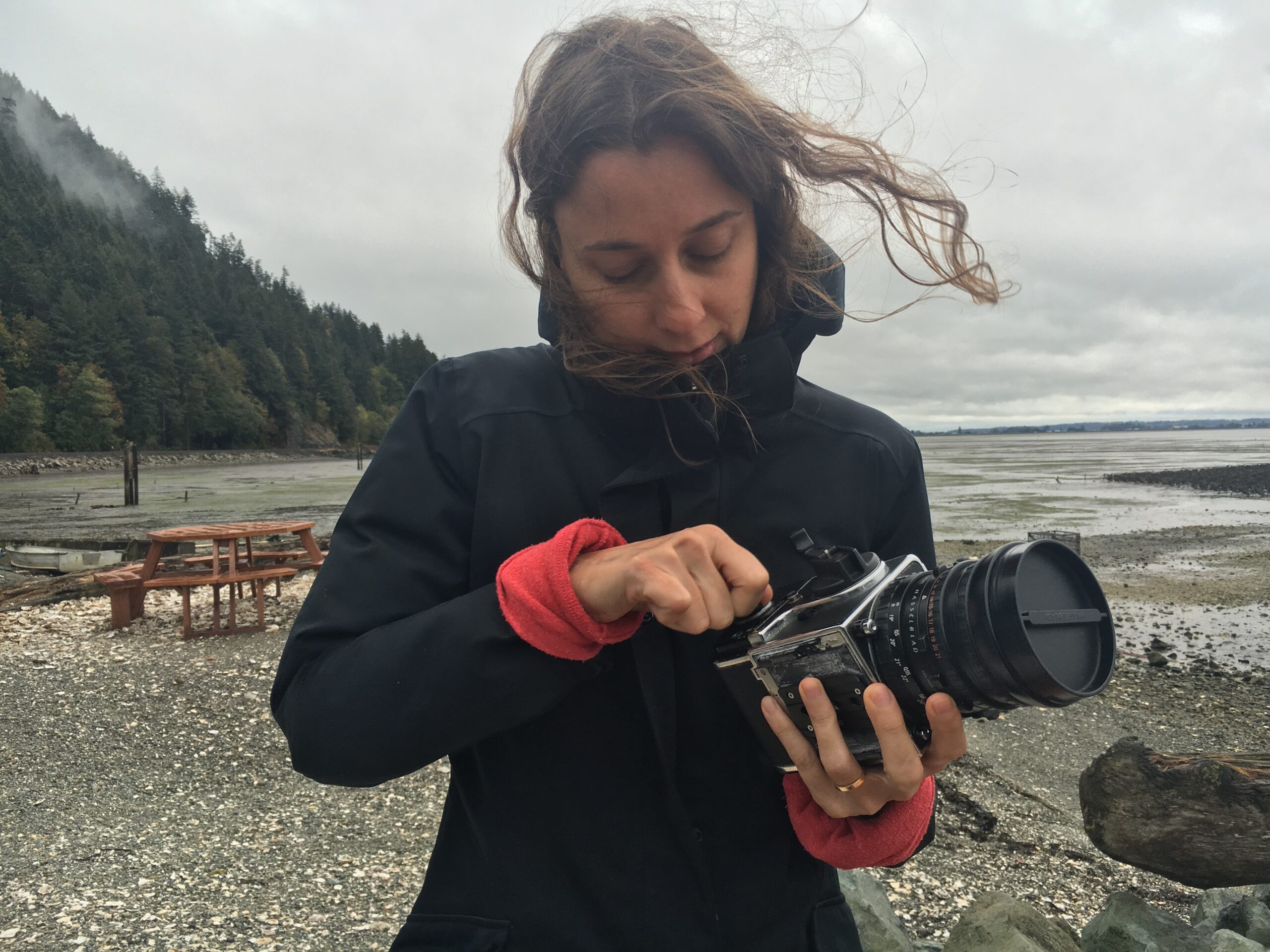
Luiza, firstly thank you for accepting our invitation to talk to you today. We’d like you to introduce yourself, sharing any information you think might be relevant to someone who doesn’t yet know you as an artist.
I’m Luiza Baldan, born in Rio de Janeiro, in 1980. I didn’t plan to be an artist as a child but, looking back, I realize that some seeds were planted without me knowing. In Brazil, if you’re not one of those talented children who draws well, you’re rarely encouraged to pursue an artistic career, either by your family or at school. Throughout my life, I’ve flirted with various areas that are now intertwined in my artistic practice. These include architecture, literature, and the social sciences. I began my studies in the social sciences, which was the first faculty I chose. I tried to study communications, but it wasn’t really what I wanted. I then went on to study social sciences, but its lack of creativity led me to leave university. I felt the need to work on my writing, so when my brother, who lives in the United States, offered to help me, I took up the opportunity. I started studying literature, but it was all in English. By chance, I ended up working in a photo lab. My work was more administrative – like going to the bank, doing the accounts, and so on – but it was in this environment that I got close to photography. Although my brother, who is 20 years older, is a photographer, I wasn’t attracted to photography. That all changed when I had access to discounted film, learning how to develop photos, and tinkering with cameras. This sparked my interest and led me to buy my first camera, and, at university, I ended up switching to photography. This change was quite spontaneous, which is a good thing. However, it’s sad to come to understand the big difference between the educational opportunities offered in the United States and Brazil; not in terms of quality, but in the opportunities generated within the university. Right at the start of university, I became a volunteer in the black and white photography lab. I dedicated many hours to this work, was shortlisted for an award, and won a scholarship that covered a large part of my university fees. This was a great incentive; not only financially, but also because of the recognition that came from the university itself. After a while, I left the United States and lived in other countries, first moving to Spain, then returning to Brazil in 2005. That’s when I really began to connect with Brazilian art. Until then, my knowledge of it was pretty much what the university in the United States had taught me. Basically, it was down to Tarsila do Amaral, Hélio Oiticica, Lygia Clark and just a little more. I arrived there completely raw. During my time in Spain and the United States, I worked in production and curatorial assistance, collaborating with museums, galleries, and bookshops. It was my way of supporting myself, as I wasn’t yet making any profit from my artwork. I even sold a piece in the United States during my graduation exhibition, which was exciting [laughs]. However, it took a long time for this to happen on a more regular basis. In 2005, when I went to Brazil to work in production, I ended up working in a gallery. It was almost like doing a postgraduate degree, as I began to study all the artists in the gallery and connected with a scene rich in talent. There were incredible artists, some of whom became close friends, such as Marcos Chaves, Lúcia Laguna, and Amanda Bonan. It was a great learning experience and helped me realize that I no longer wanted to work in production. I needed to dedicate myself to my career as an artist and, possibly, as an educator, since in parallel I also give courses and assist other artists. Since then, I’ve had the opportunity to study for a master’s degree and a doctorate at UFRJ’s School of Fine Arts, which has been very important for the contacts and people who have stayed in my life.
When reflecting on your artistic practice, I understand that it has a strong basis in research and photography. From the outset, were you interested in delving deep into these stories before creating the images, or was it just the photography? How did you arrive at this practice that is so focused on, and committed to, research?
It all started with photography. I had an idea for a project, but I didn’t have much research, I just had what I now understand as a “geographical excuse.” This “excuse” was just the initial pretext, a starting point that sparked my interest in investigating further. I usually call it an “excuse” because the project isn’t limited to that initial point. It starts from that trigger and then expands to unpredictable places. It’s the process itself that guides me. The first project I did, while still at university, was to photograph various alleys in South Beach for two years. If you close your eyes and imagine South Beach, you probably think of colorful streets, flamingos, luxury shops, hotels, anything but a black and white alleyway. At the time, I worked at the Wolfsonian Museum on Washington Av. and lived in South Beach. I always took the same route home from work and the entrance I used was through an alley at the back of the museum. This route through the alleys made me realize that I could develop a great exercise in observation. This is very much based on observing everyday life, the small transformations that occur every day.
Eu sempre falo sobre isso, sempre uso essa espécie de imagem, de você estar andando, tem aquele caminho quase automatizado, e de repente vem algo que rompe aquela monotonia. E aquilo que rompe, que não necessariamente é visual, pode ser qualquer estímulo, um som, um cheiro, qualquer coisa que faça você parar e olhar para aquela cena que você vê todos os dias de uma forma diferente. O exercício de observação, na verdade, é você ter uma outra atenção para aquilo que parece ser sempre o mesmo.
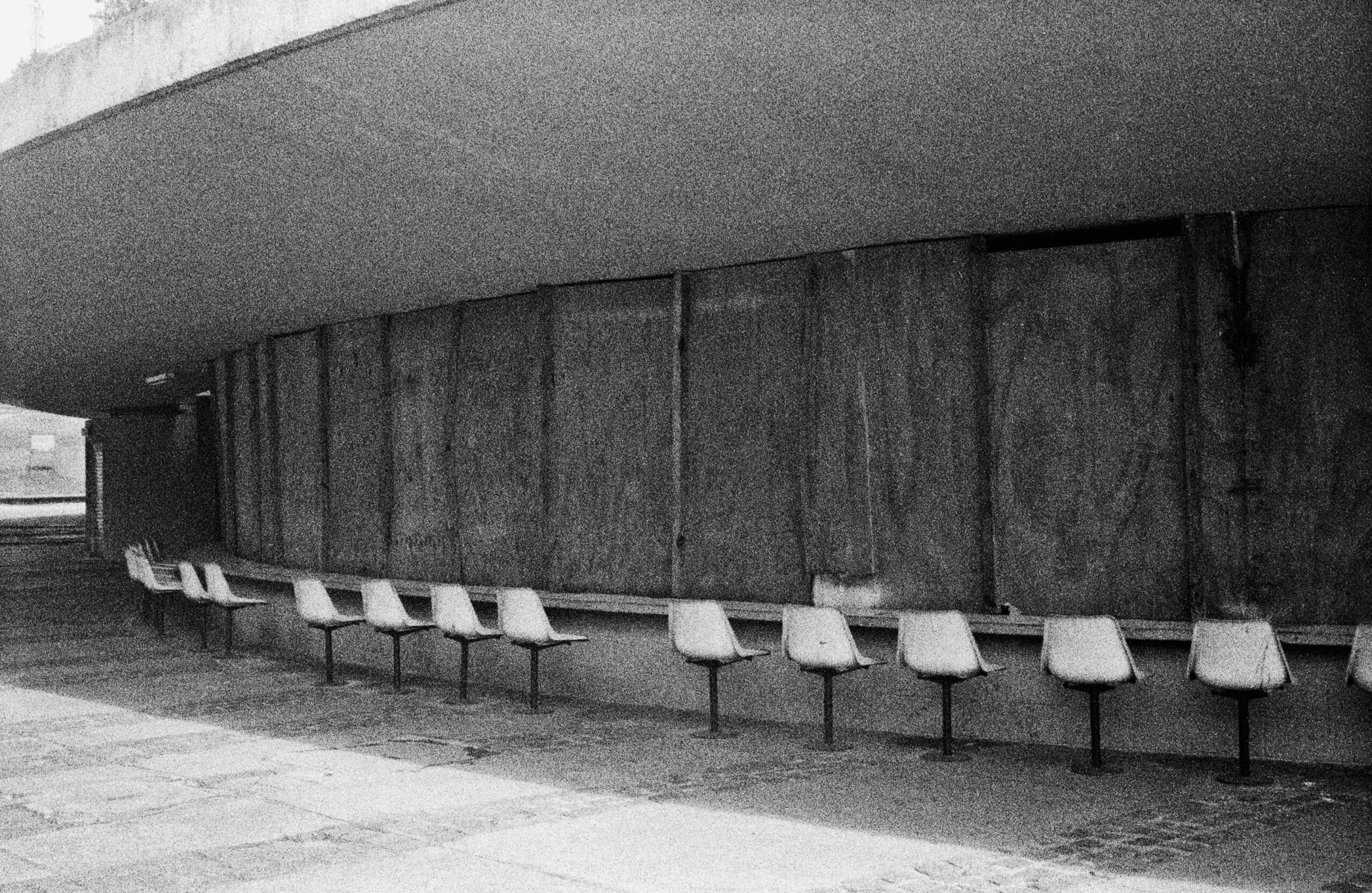
(Translation: I always talk about this, I always use this kind of image, where, when you’re walking along, you have an almost automated path, and suddenly something comes along that breaks that monotony. What breaks it, and which isn’t necessarily visual, can be any stimulus; a sound, a smell, anything that makes you stop and look at that scene you see every day in a different way. The exercise of observation, in fact, is for you to take another look at that which always seems to be the same.) I think that’s how the longer projects come about. In the beginning, everything was photography, until I realized that photography wasn’t the goal, but rather the result of this observation. When I lived in Miami, I went of places by bicycle and I had a different kind of mobility. When I moved back to Rio de Janeiro, everything changed dramatically. I was used to shooting at night, alone, with a tripod, using long exposures and film. But when I arrived in Rio, in 2005, I had to deal with security issues, access to equipment, among other things that made my practice more complicated. The first project I did, apart from the one-off photographs I was taking, was in the Jockey neighborhood of Rio. The Jockey was a place where I could stay at night, surrounded by people, and with a certain amount of protection while I walked around with my camera. The alleys of the neighborhood had characteristics that attracted me, such as its large, colorful scene, and all the less visible parts, the service and invisible parts, the movement and permanence of those who work and maintain the place. There’s a whole operational side that, though it’s not in public view, is no less symbolic or representative, it’s just out of the spotlight. And that’s exactly what interested me. At the Jockey, I saw that there were a series of grandstands. Horse racing takes place there at weekends, and on some weekdays, but it doesn’t have the glamour of yesteryear; at least not on weekdays, that’s for sure. At that time – 2005-06, when I got involved with this project – I was drawn to some stands that were half-abandoned. It was a dark and interesting place, because of both the architecture and the lighting. Inside, there were huge spaces of silence, while outside you could hear people running around and talking. It was as if I were in a bubble, almost suspended. The photographs very much portrayed this state of suspension between things. Some people called me, “the girl who likes to photograph empty spaces, ruins”, but that’s not really it. It’s not an empty space, it’s where I’m directing the camera. I’m almost looking for that gap, that space between things, between acts, between moments. This is something I’ve pursued for a long time, also being influenced by other people who worked with photography before me, and by cinema, and painting. These spaces spark your imagination because they offer you few elements. There isn’t a person there or big events, but rather an insinuation of possibilities, including formal issues that I was looking for in the image, such as in the composition of doors. This is evident in my series called “Sobre umbrais e afins”, which speaks to the possibilities of crossing within the image itself. It’s as if there were another image insinuated from the image I’m displaying. It’s as if I were compressing a scene, a story, into a single, two-dimensional image, but that image is full of dreams, full of things. This has always been my great interest in photography.
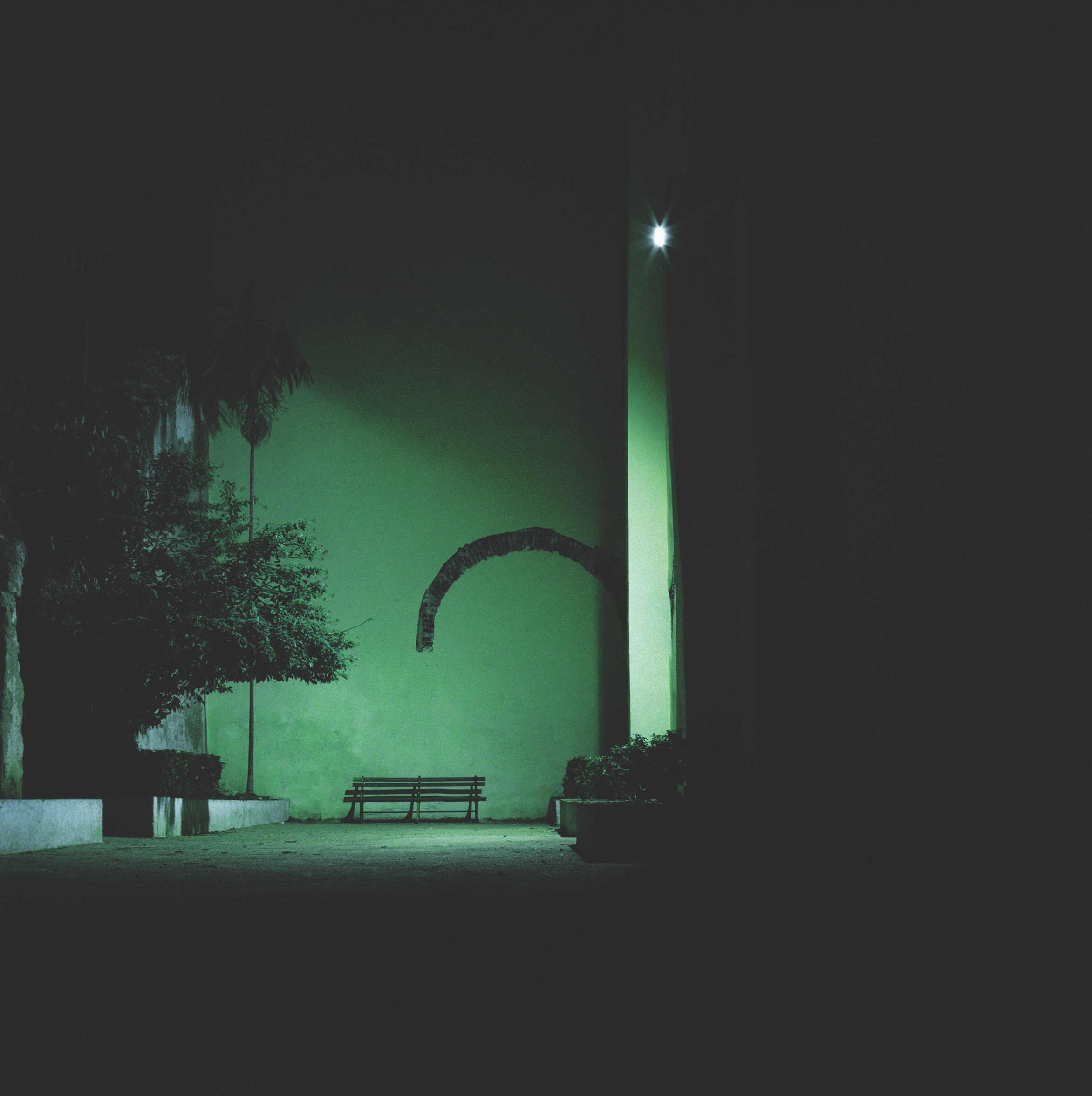
Considering these images and architectural spaces, there always seems to be a human trace. Even if we don’t see people, we comprehend that these are not just spaces for contemplation, but places of transition, movement, transport, living and functionality. They are there because they need this liminal space, which is physical but which, in a way, also becomes social.
I think the concept of ruin is a good example. When I started photographing ruined places, one thing was very clear to me: it wasn’t about the romantic ruin. It wasn’t just about contemplating something in disuse that was there to be admired. I was more interested in spaces that, even when in ruins, served as shelter. This is reflected in the “Tugúrios” project, in which people break into houses and live inside them. Even if the property has been condemned, it still offers the possibility of shelter. It seems multifunctional, but at the same time I’ve always seen great beauty in this re-use of spaces. It’s as if the stories overlap, ans one doesn’t erase the other. For example, there’s a project, a series I did in the old Carandiru in Rio de Janeiro. The was an abandoned shed near the Novo Rio bus station, connected to the old Leopoldina station. It had served as a workshop and train car park but was no longer in use. Samba schools that used to parade in Madureira occupied the site. Due to its proximity to the bus station, the site had a variety of activities going on, such as popcorn and soft drinks stalls. Some families even lived there. Many used the place as a dumping ground for the props of the special group samba schools, recycling what was left over from the previous year to create the floats for the next carnival. It used to be a fantastic place, which has unfortunately been destroyed by the Porto Maravilha project, but it shows us that we can find diverse and interesting stories anywhere. In the world of photography, when these stories are so evident, they take on another dimension. This has always been something that has piqued my interest.
You mentioned the interesting point of themed stories. How do you decide which stories you want to focus on and develop? What’s that process like for you?
When I talk about a “geographical excuse”, I understand that there are macro and micro aspects of this. I only delve into the micro once I’ve started investigating the macro.
Para mim, não adianta trabalhar com arquivos puramente. Posso até trabalhar com alguns arquivos, mas, para mim, a experiência de corpo presencial é fundamental. Pode até ser um termo mal gasto hoje em dia, mas eu sou uma pessoa de afetos. Não só me afeto, mas também afeto os outros, enfim, e o trabalho lida muito com isso. Isso fica cada vez mais evidente quando começo a lidar com pessoas.
(Translation: For me, there’s no point in working purely with archives. I can work with some archives but, for me, the experience of the body in person is fundamental. I’m a person of affections. Not only do I affect myself, but I also affect others, in short, and my work deals with this a lot. This becomes more and more evident when I start dealing with people.) This becomes more and more evident when I start interacting with people. In 2005, I moved to Rio and had to adapt my working method. I think this adaptation began with the first residency I did in the Minhocão, in Pedregulho, in Rio de Janeiro. There, I began to work with the idea of housing and everything that involves living, inhabiting, being together, al the concessions, everything that makes us live in society, but in a micro way. This perception has continued ever since, and I think it became even more poignant after I became a mum.
Porque para mim fica muito claro que, a cada dia que passa, eu me interesso muito mais pelas complexidades e maravilhas do ser humano, apesar de toda essa “maluquice” do mundo. É o que eu tenho para aprender de cada pessoa sobre aquele lugar que me interessa, porque um lugar sem a pessoa, para mim não faz mais sentido. Me interessa muito conhecer o lugar, mas de alguma maneira introduzida ou como eu falo, contaminada, afetada, literalmente, pelas histórias, pelas conversas, pelas fofocas, pelos conflitos, mas muito pelo que as pessoas do lugar têm para dizer sobre o que é aquilo.
(Translation: Because it’s very clear to me that, with each passing day, I become much more interested in the complexities and wonders of the human being, despite all the “craziness” of the world. It’s what I have to learn about that place from each person that interests me, because a place makes no sense to me without the people. I’m very interested in getting to know a place, but in some way being introduced to it, or as I say, contaminated, affected, literally, by the stories, the conversations, the gossip, the conflicts, but very much by what the people of the place have to say about what it’s like.) Of course, there is a point of view that is mine, because I also have experiences that are valid, regardless of the time I spend in a particular place, or the research I’m doing. Photography is not the goal in itself, but rather a consequence of that. Photography happens as a result of these encounters. A photograph also comes very much from the desires of the person I’m talking to, what they want to express, what they want to show. In fact, it’s a great encounter, because it’s a sum of experiences.
Hearing you talk about being there, observing and interacting, makes me think about the exercise of observation – thinking about architecture, politics, and city planning. It’s as if you’re testing, and wanting to understand, how people use space, how a community organizes itself and responds to change. It’s almost like sociological research.
I think one aspect that distinguishes me from sociology, or any other discipline, is that I don’t follow a pre-defined agenda. When I start a job, I just know that I want to visit a certain place. At the moment, I’m working in a place near Lisbon, where the Tagus meets the Atlantic, in a community called Cova do Vapor. The history and particularities of this place are fascinating. To give you an example, when I first encountered Cova do Vapor, I was living in Berlin and coming out of a very difficult experience, marked by the pandemic and personal losses. When I arrived at this beach, I felt an indescribable emotion when I saw the landscape, felt the wind, and stood on that small dune. After all, apart from the people, the sea had always been something I missed a lot while living in Berlin. It was a feeling of home, of comfort and I felt like I was being embraced by the place. It was such an enriching experience in every respect that I began to visit the place frequently. Whenever I needed to feel something, needed a swim in the sea, even if I could go to a nearer beach, I chose to go to that one. This beach created a dimension within me that is indescribable, and that’s not linked to the history of the place, or political issues – none of that. Rather, it’s my personal connection with that place, and I realize that I’m not alone in that. When I talk to other people, I understand that it gives me a feeling of a special place. I find myself carried away by this feeling, starting to take a keen interest in the history of the place. I’ve discovered things I never imagined. But of course, research brings much more interest to the work. It’s one thing to talk about what pulls me there, but it’s another to do a piece because I got goose bumps when I first stepped foot on it. I went looking for the history of the place, and when I arrived to actually work there, and met the people who happened to be there, the work took on another dimension – an emotional dimension. Now, there are people who welcome me into their homes, offer me a place to sleep, feed me, look after me, want to know and tell me, to meet me. It’s so beautiful that I often say we’re inventing a new place together [laughs]. But how do you express all this? Each work will share some of this. The work itself is the encounters, which will determine how they are resolved as a project. There’s no pre-defined expectation or obligation of a final result. It’s entirely about the process.
After all this research and conversation, is it important to you that the result is something tangible for those who see the work, or visit the exhibition?
When I began these residencies, I also started writing. Before, my work was exclusively photography, without even a title. But since 2009, with the start of these projects, I’ve started working more with video, sound, and text. The project has taken on new bodies.
E o texto é onde acabo falando de uma forma polifônica. Porque falo em primeira pessoa, mas falo com outras pessoas, outras pessoas entram no texto. Falamos sobre essa informação sampleada, como se fosse uma grande colagem. E isso é um recurso que me interessa muito, porque de alguma forma representa o que acontece nesses projetos, é uma grande colagem.
(Translation: The text is where I end up speaking in a polyphonic way. Because I speak in the first person, but I speak with other people, other people enter the text. We talk about this sampled information as if it were a big collage. This is a resource that interests me a lot, because in some way it represents what happens in these projects; it’s a big collage.) Unlike in a more rigid discipline, I develop casual conversations in which someone tells me a story that intrigues me and ends up leading to new contacts and more stories, and I develop my work through these dialogues and discoveries. It’s like a ball of yarn, somehow unravelling. Photography often has certain characteristics based on my gaze. When I turn to the text, it’s an opportunity for other things to emerge, such as voices, encounters, and detours. Sometimes, the text becomes part of a video, or a video that is actually a photograph, but with time, like a still video, a single frame, that has time and sound, and dialogues in the background. It has taken on a greater dimension, which often, just by the way it is presented, already conveys what is needed.
Thinking about this dedication, engagement, and affection that you mentioned, when do you decide to take a break from work? After all, since it involves stories and people, you could devote a lot of time just to talking about a subject. What is this process of distancing yourself like?
In my doctoral thesis, “The image at the end”, I discuss an ending that is open, an ending that is not necessarily an end. This concept of the end is very Western, very much from our culture. For example, in my work at Pedregulho, I still keep in touch with people. Even though the residency has ended, I still have emotional contact with them, not just professional contact. I organize meetings and, when I return to Brazil, I feel as if a chapter of the project is closing. For example, right now, in this Cova do Vapor project I’m working on, I’ve agreed that I’m going to hold a meeting in Brazil, which will bring a stage of the project to a close. And next year I’ll be back, but it will be cold, literally, because it will be winter. The city changes a lot with the seasons. As it’s a holiday town, when winter comes there’s a cooling down, both literally and of the people, which ends up cooling down the work as well. When I return, I know there are things I still want to do, but sometimes I feel that something, although special at that moment, is coming to an end. It’s a mixture of feelings and the realization that certain subjects are running out of steam. Life takes us in other directions, and we end up splitting up. However, I don’t usually put deadlines on things. I often set a deadline to finish a piece of work because of a scheduled exhibition or a specific need, but this doesn’t mean that the project ends there. It can remain open to new interpretations and possibilities. I have projects that have been exhibited and documented in books, but there are still countless files on the same theme that have not been worked on. For example, for the Architecture Biennale in Venice, I had some images that I had never used, which were taken ten years ago. We eventually selected six unpublished photos of the same theme, so I’m able to create a totally different exhibition using material from the same source.
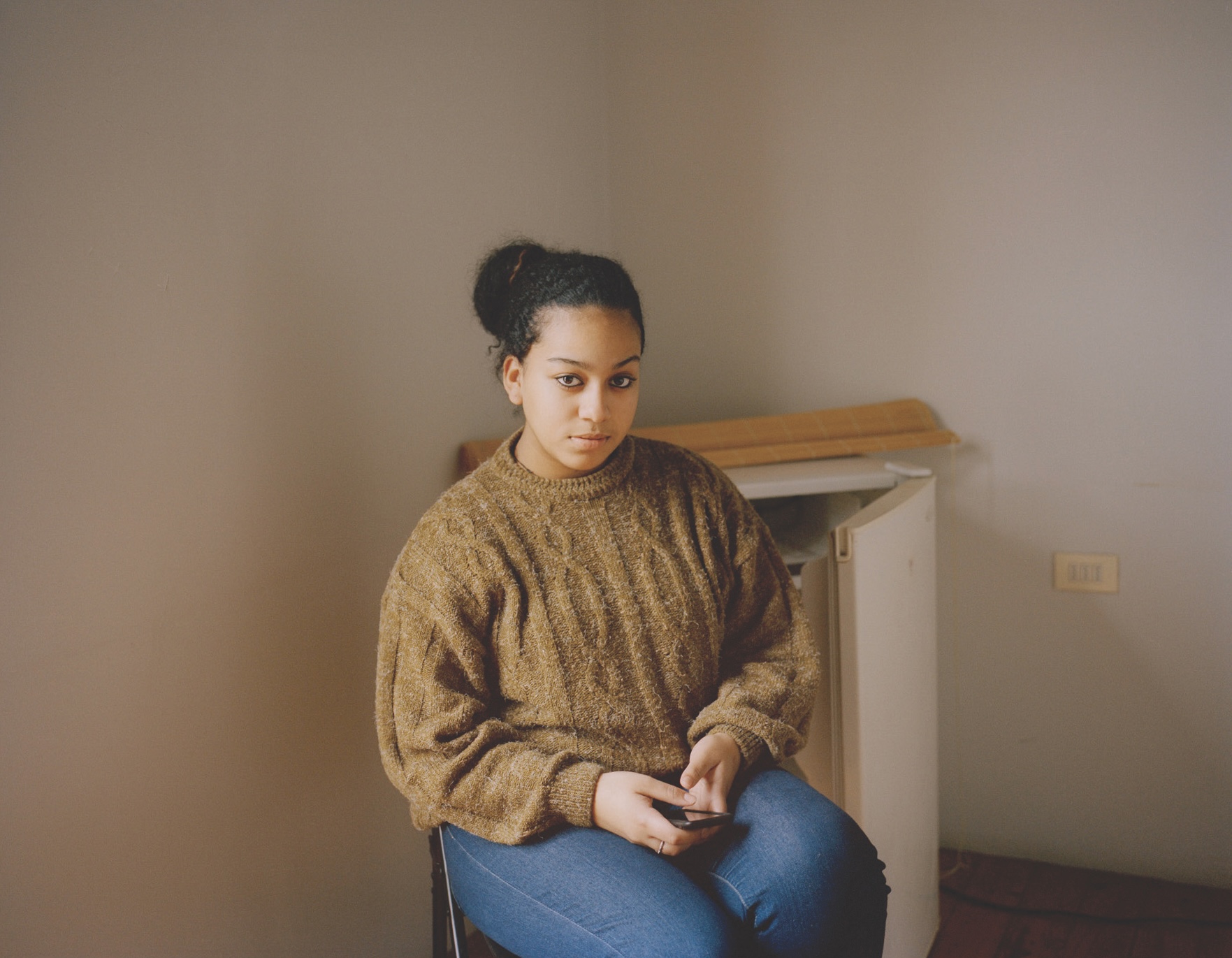
It’s almost like anti-documentary. The general public believes that classic documentaries have a definite beginning, middle, and end, but, in reality, the director can follow several stories, choosing only those with an interesting outcome, or discussion. It’s this attempt to fit real life into the structure of story consumption that we know. In your case, the idea is to capture the moment, and still have that opening to go back and see what’s changed, since things are constantly changing. A never-ending story, as you mentioned.
Yes, this change is not only in location, but also in our perception of the place, of what catches our eye. In my work, I can arrive at a place full of ideas. In a project I’m working on, the starting point was to photograph houses that had been mechanically relocated from one point to another to escape the advancing sea. It’s almost like stilts, but without the idea of being on the edge of a river, but on the edge of a beach with more than 2 kilometers of sand. With the advance of the sea, some houses were lost, while others were built and transported by people and ox carts to other locations. There are still people living in these houses, which today blend into the landscape due to urban growth. My initial interest was to find and photograph these houses. I met the person who lives in one of these houses and discovered the story of an 80-year-old woman who began frequenting this place when she was just 15. This makes me wonder: what is most fascinating about this story? Is it the house where she lives now, or is it the whole of this person’s incredible life story, which goes far beyond this place? These multiple life stories go beyond what I could have imagined about that place.
Eu não quero ficar presa ao que entendo como interessante quando chego a um lugar que sequer conheço. Quero ser surpreendida pelas coisas que as pessoas têm de melhor para dizer e o que para elas é de fato importante. Então, a partir do que elas acham relevante, nesse contexto histórico, isso entra em cena junto ao que passou a ser interessante para mim, porque elas me mostraram essa possibilidade. É esse cruzamento, esse caldeirão de coisas que vão sendo colocadas e que de alguma forma vão criando um “saborzinho” extra. É a capacidade de juntar pessoas tão bacanas, e eu acho que isso é uma característica do trabalho que eu faço.
(Translation: I don’t want to be stuck with what I think is interesting when I arrive in a place I don’t even know. I want to be surprised by the best things people have to say and what is really important to them, based on what they consider relevant in this historical context. This comes into play alongside what has become interesting to me, because they have shown me this possibility. It’s this crossover, this melting pot of things that are added and that somehow create an extra “flavour”. It’s the ability to bring together such great people, and I think that’s a characteristic of the work I do.) I can’t define whether it’s due to my approach, dedication, or the care I put into what I do, but, somehow, we manage to create a connection and a familiarity. I take care to give the photos back to the people who took part, because without them none of this would happen.
This closeness to the work avoids nostalgia. In research and documentation work, the artist can distance themself from the subject, leading to nostalgia, perhaps because they think they’re living in a superior culture. This can be seen as the pitfalls of the distance between the artist and the local subject, or the person being interviewed. How do you know when to distance yourself from the subject, temporarily or permanently? Or does it never happen?
I think it depends, because there are specific situations in which the work is definitely finished. For example, I did a project in São Paulo called ‘Perabé’, which started from an artistic residency I did at Copan. That experience was quite intense for me. I spent a month at a residency I invented, sleeping on a mattress on the floor of a flat with Niemeyer’s original windows, in the cold. Until I started being invited to take part in residencies, that was how I invented them. There was a lot of this concept of building a home, of establishing myself as a resident in a certain place. During this process, I faced some challenges, such as burglaries, things that were out of my control and that made me question to what extent it was worth continuing. The residency gave me a deadline for things to happen, as I would be there for a set period of time. That would be the time to make observations. Copan was almost the last project of its kind and there I found geographical excuses for the next project I decided to do, ‘Perabé’. One day, someone told me that it was possible to see the sea inside the city of São Paulo and I was fascinated. I decided that I needed to find this place, and, in this search, I ended up discovering much more. After all, the project was much more than just the place. I was able to prove that it really was possible to see the sea, but that still wasn’t the job. In the end, the project turned into a million other things. It was incredible in 2015, when I sent this project to the São Paulo Cultural Centre. I explained that I was travelling from São Paulo to Baixada Santista in search of this landscape. I made it clear that I didn’t have a defined result or a fixed deadline for completion, but they still accepted. That’s rare, as you usually expect some kind of result from a project. I remember vividly that I completed the last walk on 7 September, on the banks of the River Ipiranga. I knew I was going to have an exhibition at the São Paulo Cultural Centre and I already had a lot of material. That’s when I decided to stop. Each project has its own dynamic. I have another project that I started in Chile, where I lived for a while. When I moved to Portugal, I took some photographs and videos from those walks. I invited people who hadn’t been to those landscapes in person to take this procedural material and give it an end point. Without direction or a script, each person took these images and made something unique. I’ve created a pilot here in Lisbon with two video versions and I’ve already submitted the project to calls for proposals, as I have more than six collaborators. Among them are Simone Cupello, who would edit the images to create a sculpture, and Gisele Camargo, who was invited to make a series of paintings from the images. We also have dance professionals creating choreography inspired by the images. In this way, we created different editing possibilities from the same material.
When thinking of your proposal, with no deadline or conclusion, perhaps we can link this to the poetry present in the work. It might even be related to the literature you mentioned at the beginning – this freedom in not having a predefined objective, or a motivation.
Yes, or an expected result. It doesn’t necessarily have to be something. It can take many forms, and what it is today can be revised and transformed into something completely different in two years’ time. This is because it has a broad repertoire and enough information to unfold into different interpretations, depending on the approach. For example, if you look at Pedregulho, you can take a more architectural view, look at the portraits, or look at fashion, taking into account the clothes that mark a certain era. In other words, the work is very open. This highlights another aspect of the work when it actually becomes an exhibition. For example, in 2017, I had a show at the Anita Schwartz gallery in Rio of a project in Guanabara Bay. This project, which began in partnership with Jonas Arrabal, was initially editorial, with the aim of becoming a book. To achieve this, we had several procedures planned. We were going to launch an object called a “drifter” (a term used by oceanographers). This object moves with the tide and studies this movement. Normally, the drifter has a GPS inside, but we adapted it to be a pinhole camera, so we were able to photograph drifting. The aim of the book was precisely that: to photograph drifting and talk about Guanabara Bay. This resulted in a conversation between myself, Jonas, and some guest collaborators. To bring this about this, we planned eight boat trips in Guanabara Bay, which were included in the budget. In the process, I discovered that someone I knew, an oceanographer, was working on a project in Guanabara Bay during the clean-up and maintenance for the Olympics. I got the opportunity to join her on a visit every morning. They followed a fixed route around Guanabara Bay, observing and reporting on the location of the rubbish so that a team could remove it from the surface of the water. I went out with this team at least three times a week and it was always the same people, so we became work colleagues. We spent the whole morning there, from 7am until 1pm. I began to notice places I’d never seen before, apart from the Rio-Niterói ferry route. That’s how I began to really get to know Guanabara Bay, feeling that I was part of that place. This sense of belonging made me want to get closer, made me more interested, and led me to discover things that, if I had been sitting on the beach, I might not have noticed. Being there in the middle, everything started to make sense. I really believe that when we dedicate time, attention, and care to any subject in life, it takes on a whole new meaning. The Guanabara Bay project turned into a solo exhibition, which was no longer the work I did with Jonas, but the work I did in the Bay, beyond the project, with Jonas. That was the moment to put all these pieces of the puzzle together. With all this in hand, I asked myself, “what am I going to do with this story?” You have to give it a context, an outline. So, I created a video installation, and photogravures, and there was also a text. It was a beautiful exhibition, a very special project. There were almost no photographs of people but, at the same time, I was in Guanabara Bay, where an incredible 14 municipalities in the state of Rio de Janeiro are bathed by that gigantic water. There’s universe of stories, lives, deaths, tragedies, and beauties, because it is all there. This section, which I’ve somehow concluded, at least in an exhibition project, is also very interesting because of the way we’ve sewn these ends together.
Connecting with the beginning of our conversation, we can also consider the sea in the bay to be a “non-place”; it’s simply a sea. There may be some architecture in the sea, like the boats, or even the structures they build inside the bay, but in the end it’s an undefined place. There’s no architectural concern as in the city, but at the same time it’s a space where stories develop and people connect. Life in the city is still influenced by the bay, so there is a connection with this liminal space.
The idea of “non-place”, taken from Marc Augé’s classic definition, refers to spaces in which there seems to be a lack of identity, history, or connection. I always ask: have you ever thought of an ordinary place, like an airport, as a non-place? Yes, it’s a place of passage, people don’t stay. They repeat themselves in various places, giving this false sense of familiarity when, in fact, you don’t know it. But now, let’s switch to the micro. Think of the person who works at the airport. She’s there every day, opens and closes a shop, has a transport routine. She met someone from another shop and started dating. This created a story, a relevance. The way she relates to that airport will never be the same, because she created a story there. What I mean is that, when we talk about places with ambiguity in terms of functionality, there are always elements that contribute to this ambiguity. They present themselves as the possibility of a place. I’m looking at a photo I took inside a power station. It’s an empty place, with parallel lines, a very orthogonal photo, but I remember that I visited this place because my father-in-law worked there almost all his life. When I look at it, I realize that it wasn’t the lines or the spatial conception I see in the photograph that led me to this place. I’m not saying that this is a rule, or that it will always happen. However, I do sense that, in the midst of this explosion of images that registers on us these days, a real photo carries a lot of weight for me. I use my mobile phone a lot for photography – I love Instagram – but when I take a real photo, it has an importance. It connects to a place, even when it doesn’t look like it. For example, Guanabara Bay. Every detail there has a meaning, a purpose, a relevance.
Reflecting on this, I was reminded of a contemporary theory about immigrants called the “connected immigrant.” According to this theory, these immigrants are not totally anchored in either their country of origin or their current country. There is an intermediate, social space where they don’t seem to belong to either place. On the contrary, it argues that a third place is created. They still maintain ties with the place they came from, adapt to the place they are in and create this third space.
Which is survival [laughs]. It’s basically our way of continuing to live, because it’s really challenging to fully integrate into a new culture. Some manage it, but it’s very difficult. Here in Portugal, I meet artists and people who have come from Brazil, mainly because of the political change since 2013. Many say they can’t see themselves returning to Brazil because they feel like they’ve been expelled from home. But they also feel that Portugal isn’t exactly their home, so they stay in this middle ground, which isn’t really a place. It’s an “a-place.” An in-between situation. It’s hard to accept that you can’t have the best of both worlds. I would venture to say that the artistic work I’m doing is a big step, especially since this is the first project I’ve done since leaving Brazil. Even the work I did in Chile, I started when I was still in Brazil. Then I went to Chile, but there was still a certain closeness that is no longer so strong. This project I’m developing now, I believe, represents that “third place”. And it’s my hope to find a certain comfort through my work. Not just in terms of creation, which is very important to me, but also because I’m a mum. My daughter is 6 and now I’m starting to have a bit more energy to mentally and emotionally reconnect with work. It’s a period of transition. I’m especially happy because I’m passionate about this project. I’m very involved and it’s something that really fills me with good things. Despite facing problems and dealing with extremely complex situations, complicated life stories and everything else, the pleasure I get from interacting with these people is immense. It’s not just about connecting with Brazilian immigrants, or identifying with foreigners, but interacting with people from another generation – most of them elderly. It’s marvelous to be able to connect with that human being who isn’t totally lost and who still exists in this dog-eat-dog world we live in.
Interview conducted on 21th November 2023 remotely via Zoom.
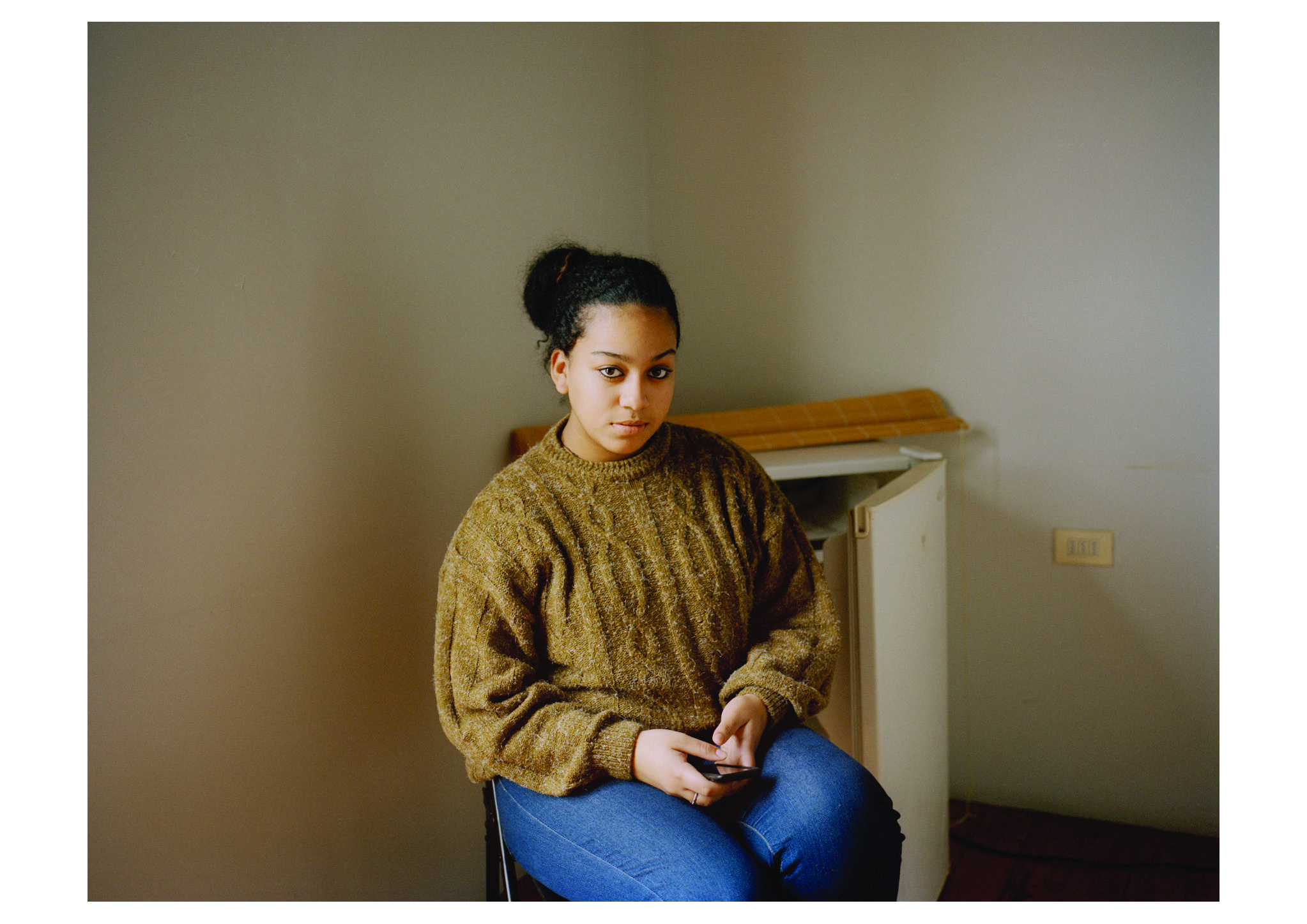
Mineral pigment ink print on cotton paper
70 x 90cm
2012
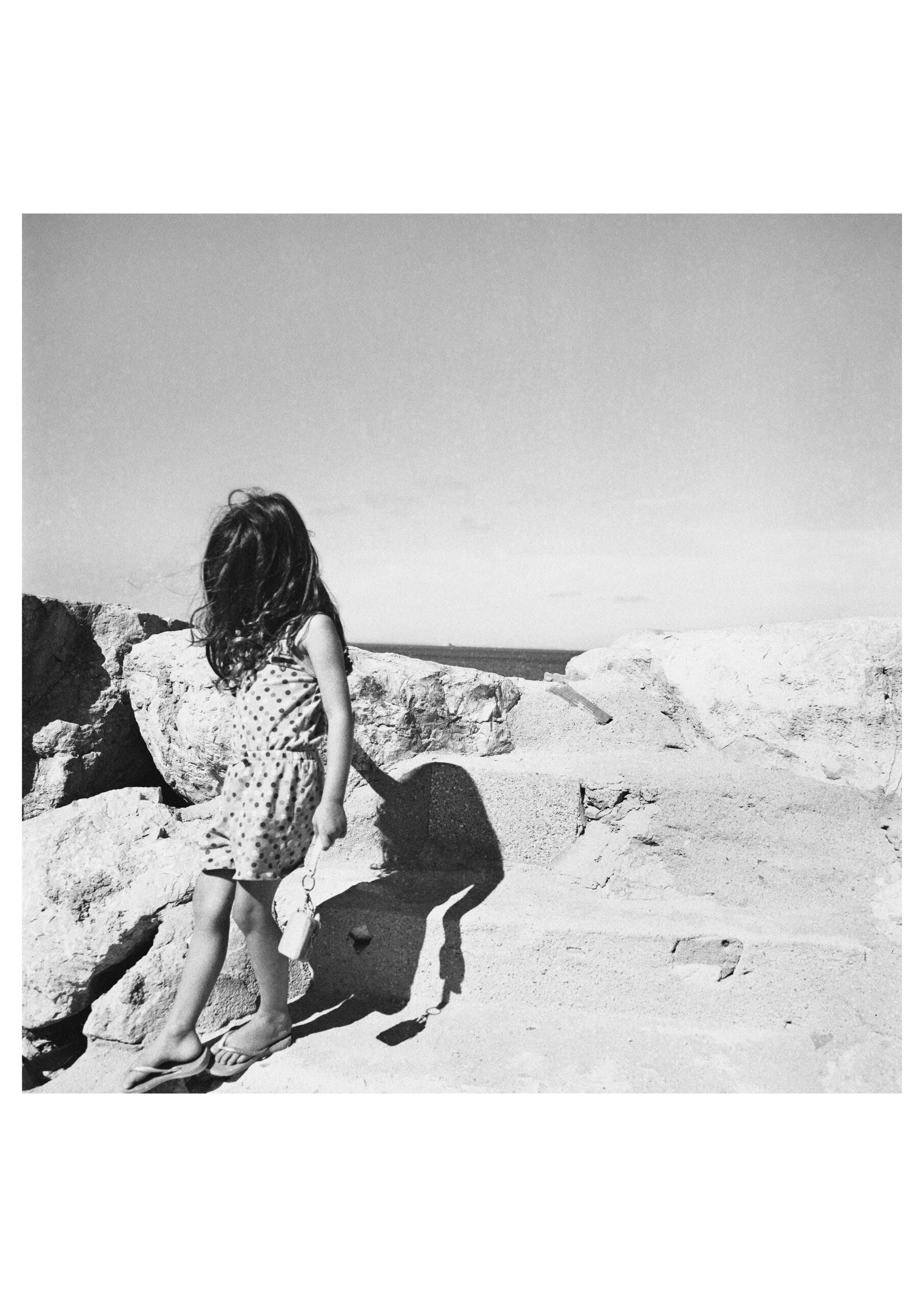
Mineral pigment ink print on cotton paper
40 x 30cm
2023
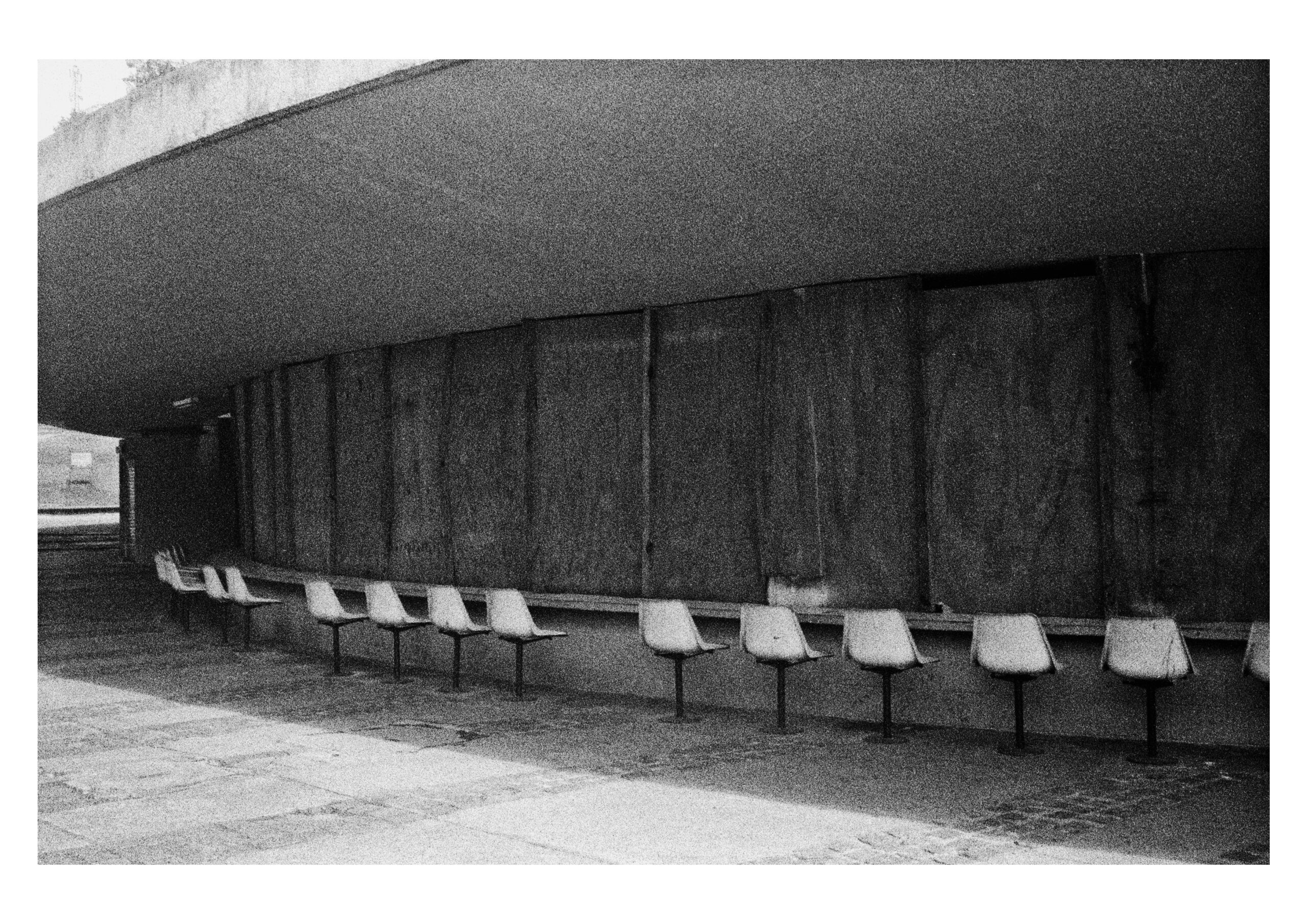
Mineral pigment ink print on cotton paper
110 x 170cm
2015
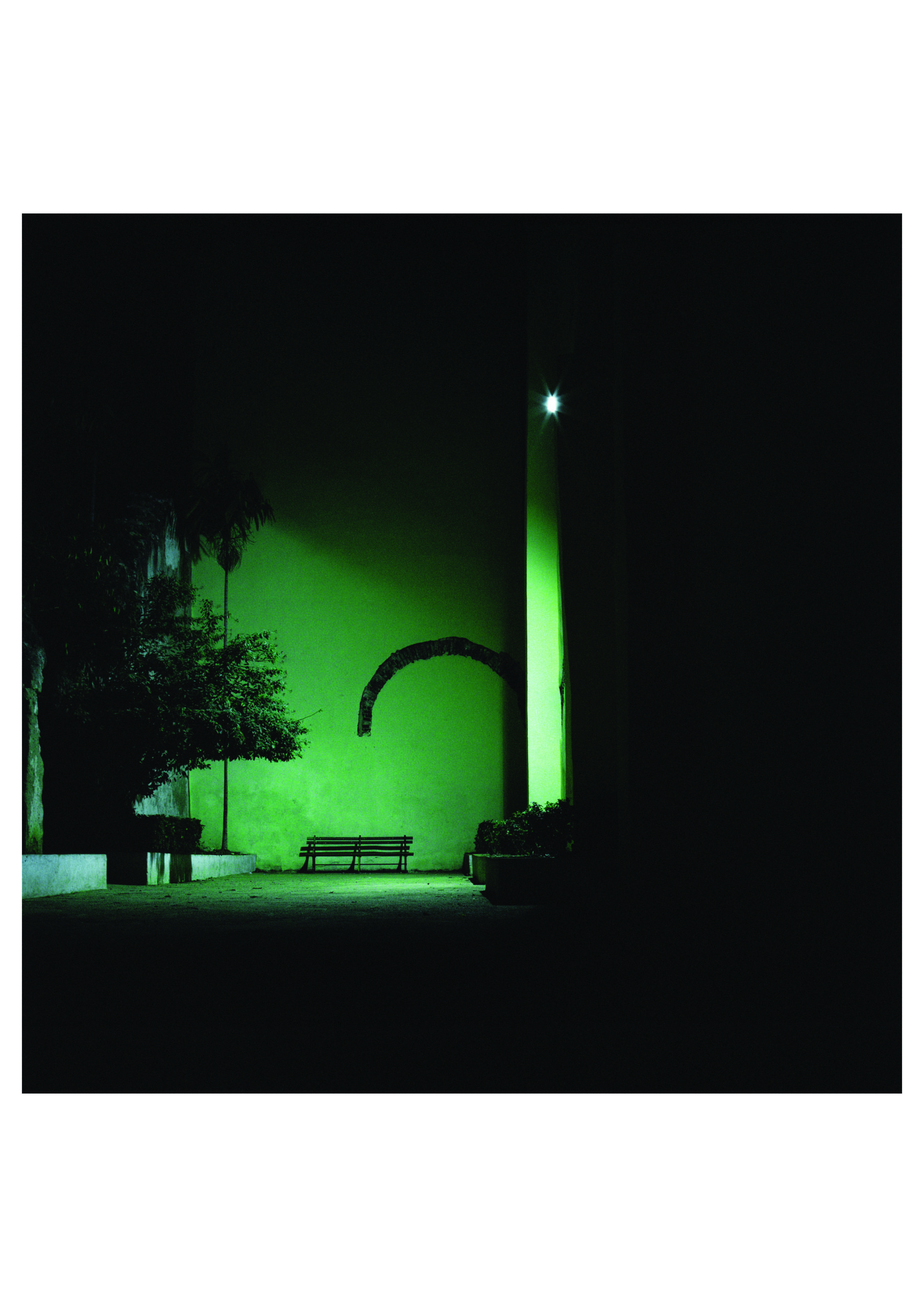
Mineral pigment ink print on cotton paper
100 x 100cm
2005