

Bernardo Glogowski
The artist Bernardo Glogowski (São Paulo, 1984) is dedicated to painting and incorporates photography and journalistic research into the construction processes of his works. His research focuses on the boundaries of memory, forgetting, and trauma, exploring the known and unknown meanings in an image, such as using newspaper images as a starting point, in which the viewer’s knowledge of the news becomes relevant. In our interview, Glogowski discusses his fascination with images that carry traumatic and ambiguous histories, such as those of accidents, wars, and massacres, and how he works with these images through painting to explore the ambiguity and ephemerality of memory. Check it out:
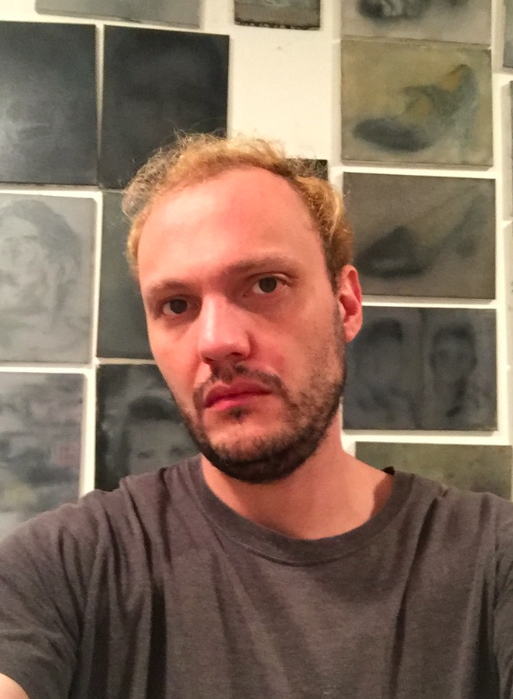
Bernardo, thank you for your time and for being here with us. I’d like to start by asking you to introduce yourself with any information you consider relevant to an audience that doesn’t yet know your artistic practice.
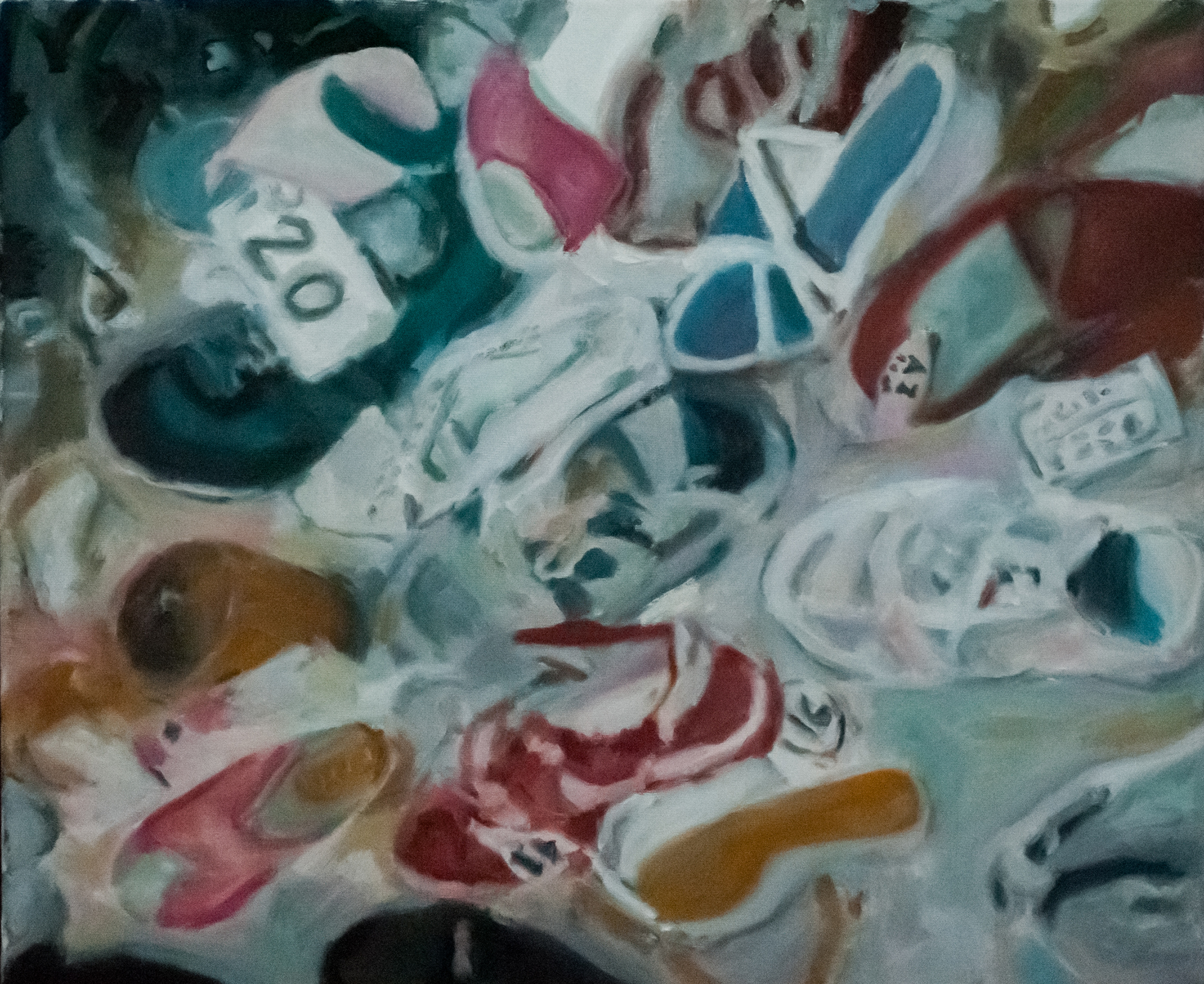
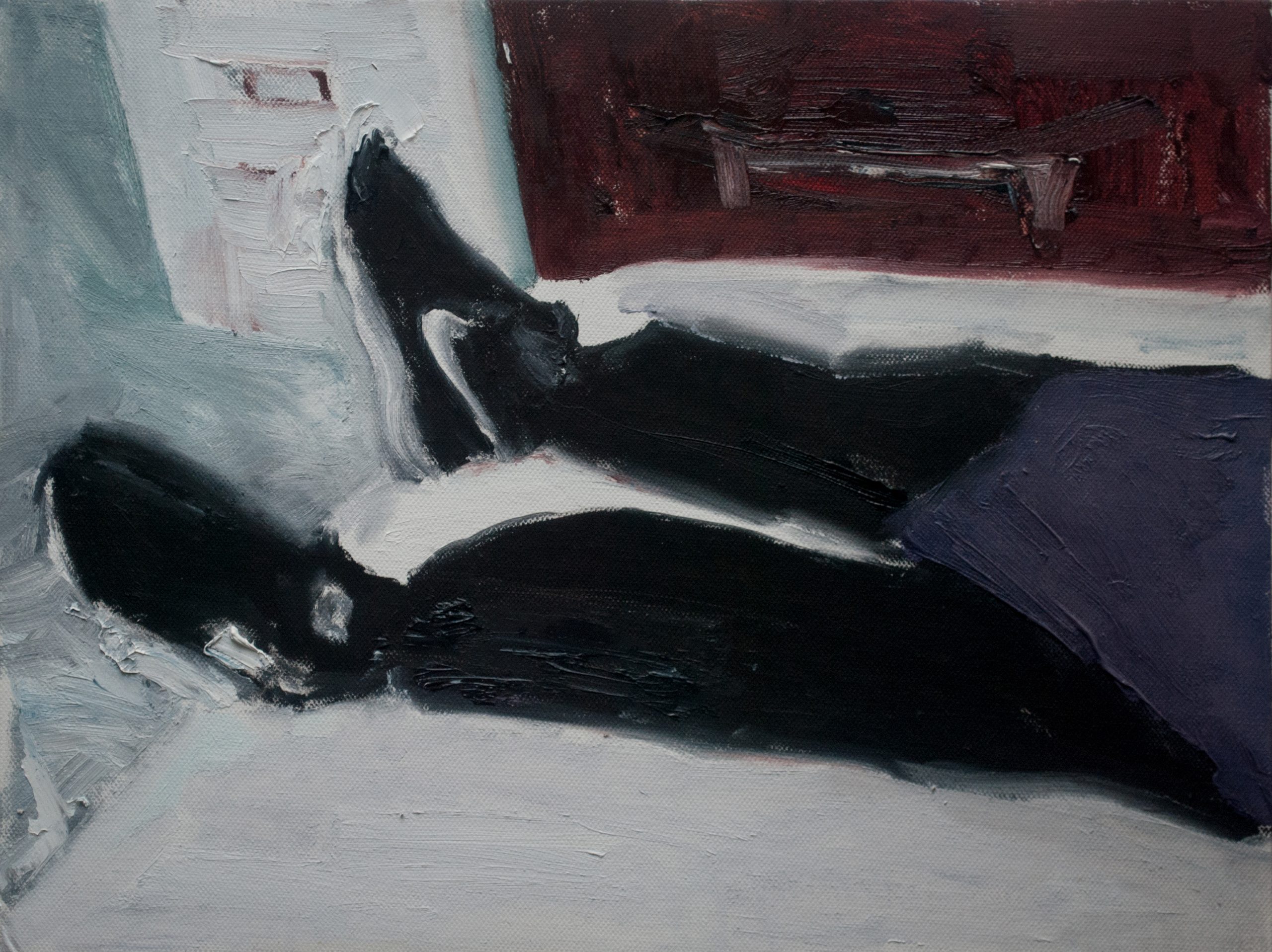
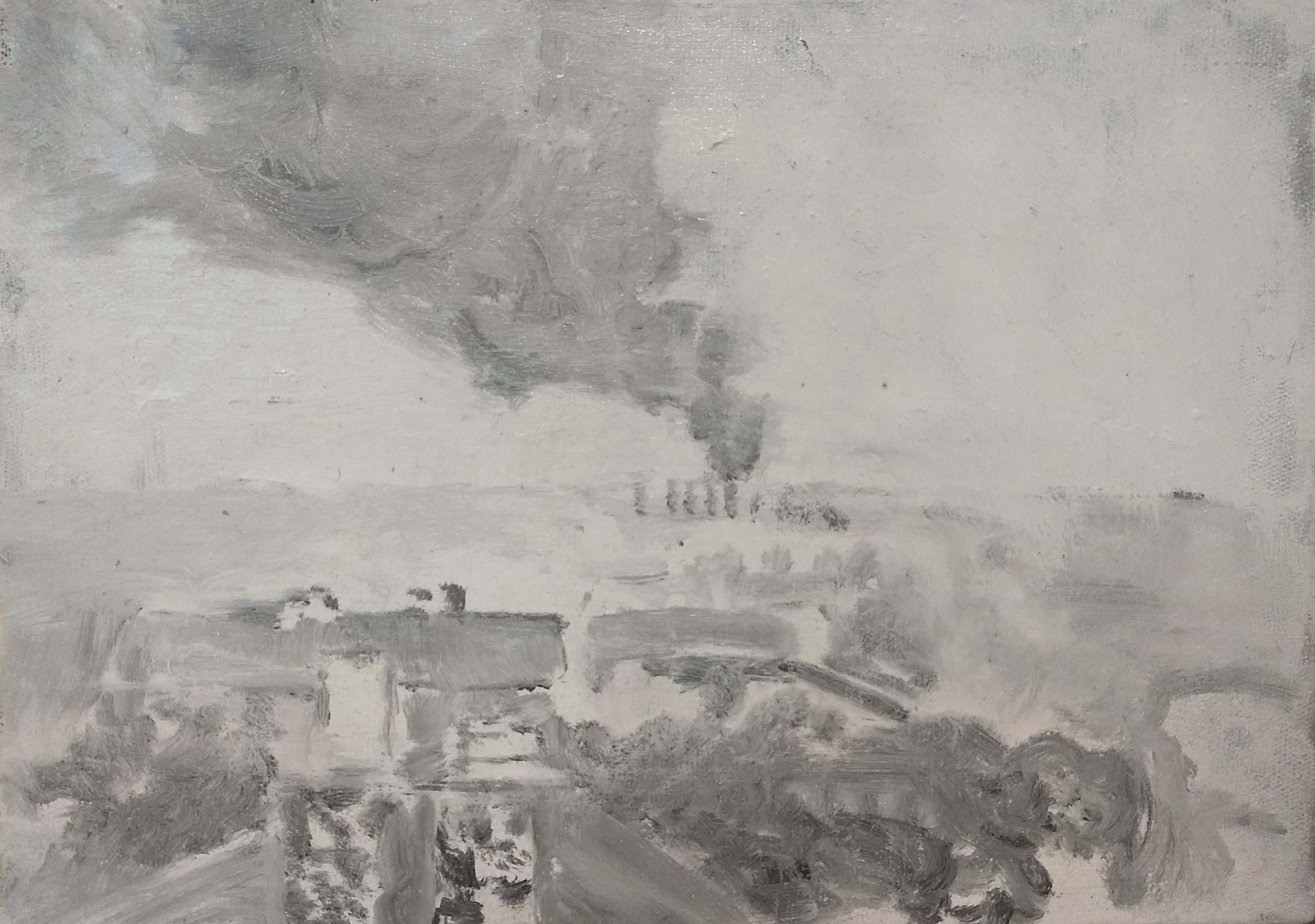
I’m Bernardo Glogowski, I’m a visual artist, and I’ve been working mainly with painting since 2007. My work revolves around appropriated images, often taken from newspapers. I have a strong influence from journalism and archives. I’m very attracted to themes of difficult and traumatic memories, such as accidents, wars, and massacres. However, I try to explore in my painting the ambiguity of these images, which can sometimes represent something terrible, but at other times something trivial. Somehow, in the world of the printed newspaper, and now on the internet, images often carry the same weight and are easily forgotten and discarded. Painting, as a medium that historically seeks to preserve the image – even if I would question this – also comments on painting itself. That’s why I like to bring images that have been somewhat forgotten, are obscure, or even ambiguous. I created a series of smoke paintings that had a lot to do with this. Often, when we see smoke, we don’t know where it comes from – it could be from industry, which is problematic given the current climate issues, or it could be a bomb, or a fire. I like the idea that whoever sees the image can reflect on it and create their own story. This happens a lot, especially when I work in a series, because many viewers end up inventing a story to fill in the gaps. This is very interesting to me because, sometimes, it says more about the viewer than the work itself. As well as bringing in themes of violence, I’ve also included some images which have more the feel of advertising. I did a series on women’s shoes – the shoe is an object that fascinates me a lot. They have an erotic flavor, but also remind me of the shoes of victims, such as those seen in air disasters, or the Holocaust. Sometimes, depending on what I put next to them, the interpretation can vary. It could just be an old advertising image that doesn’t mean much, apart from making you think about consumption itself. It can also refer to a fetishistic universe, either in the sense of commodity fetishism, or sexual fetishism.
In this appropriation of the image, when you recontextualize it, do you want to take the story behind it with you? Or does this recontextualization change not only the image, but also the meaning of the theme?
My parents are journalists. My mum worked as an editor and my dad as a photojournalist, so these images of tragedies, accidents or even social columns were part of my childhood universe. Many of these images come from old memories or things I watched on television, for example the Heaven’s Gate case in ’97, which I became totally obsessed with. I think a lot about trauma, so no wonder I’m studying Kiefer and Boltanski. It’s not part of my artistic work, it’s theoretical, but I think it relates to my work. Trauma, though imprisoning, also liberates and, through art, can be reinvented. In a way, Kiefer is trapped by his traumatic memory, which is inherited even, as he didn’t experience the war. However, he is always rebuilding ruins and, at the same time, constructing something new. Regarding your question, it’s something I think about a lot when it comes to history. I often avoid inserting a story because I like that ambiguity but, on many occasions, I include it in the title. Generally speaking, I try to include it in exhibition texts. Or when someone writes, I talk about including this origin, which usually carries a universe of traumatic, violent, or tragic events in some way. I did a series in which there were various types of victims, from wars to the Aids epidemic; it’s a theme that really fascinates me. They are all victims in some way. I also painted Amarildo at a time when he seemed to be almost a martyr. I used wood, with a touch of medieval painting. The idea of a martyr in art history has always caught my attention. Sometimes I name the victims, but not always. Often the paintings are untitled, which makes everything even more ambiguous.
Considering this relationship with trauma and the events reported in the newspaper and on TV, there also seems to be an interest in shared trauma, in social pain. It must be interesting to see people of different ages, some possibly identifying themselves because they also saw it in the newspaper at the time it was on the news?
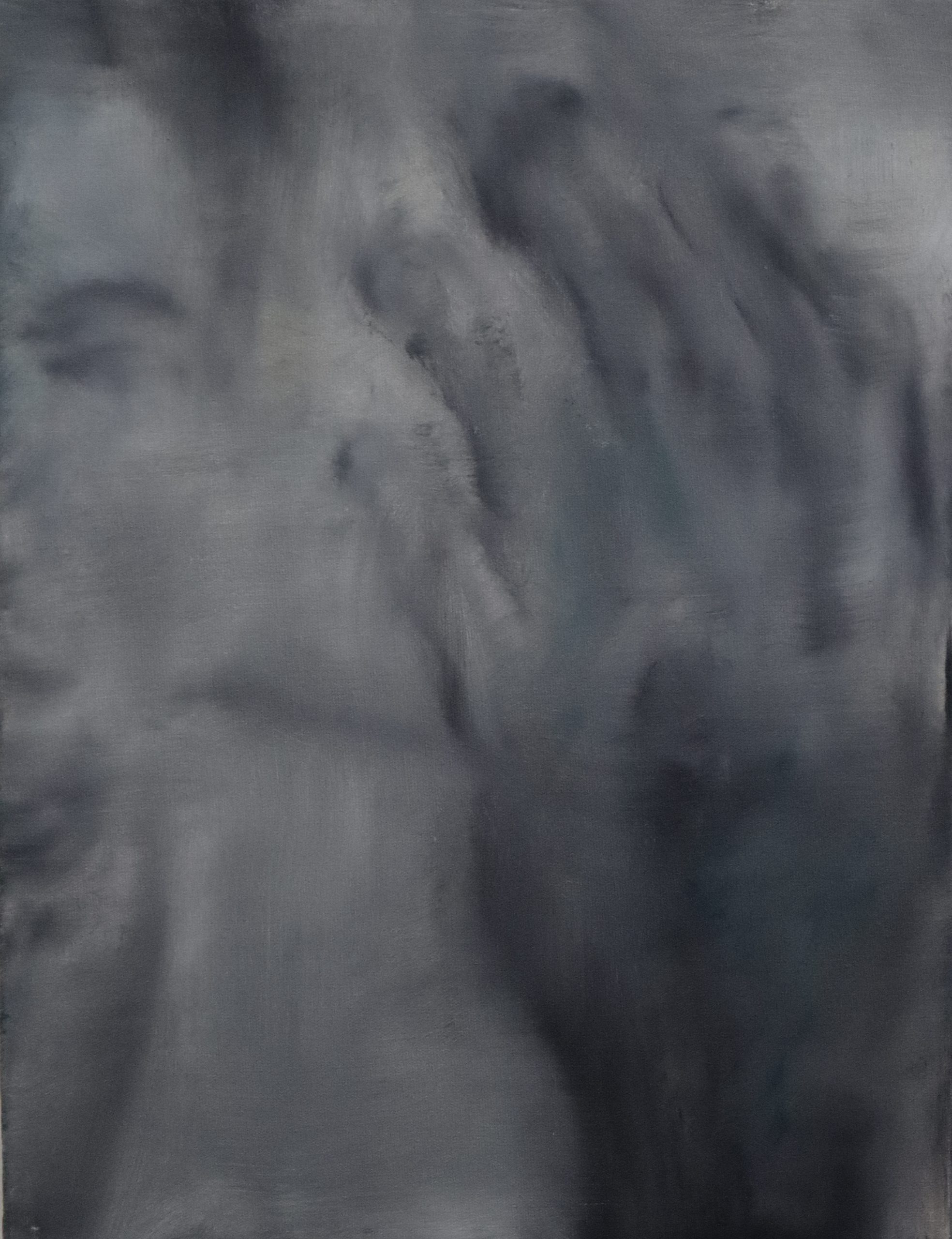
That happens a lot. I did some paintings of injured or sick hands, and one of them was about the caesium-137 incident in Goiânia. I wondered if I should give it a name. The curator, who is younger, didn’t know the story, but another, older curator remembered the incident because she read about it in the newspaper when she was a child. Sometimes, the images remain a mystery. Some images, however, are quite trivial and don’t have any trauma associated with them, but people still feel a certain tragic atmosphere. I like that space. I believe this happens because of shared traumas, whether historical, commemorated, or inherited. Even if the person hasn’t experienced the trauma, they remember a collective or inherited trauma.
In the past, the dissemination of images happened, in general, on a more ad hoc basis. We had a group of journalists who would go to the scene and take photos that were used extensively by various media outlets. For example, 11 September, for which we all have the same set of images in mind, repeated all over the world. Nowadays, this is less the case. Taking the Gaza conflict as an example, there are so many images…
Yes, sometimes the image is from 2014 or 2009, during another conflict in Gaza. Very recent themes that are still happening, like the Amarildo case, which affected me deeply, are difficult for me to work with. I feel they are still very present, so I look more to the past in my work. If I were to make a painting of Gaza, it would be a different story. I think that the very notion of trauma, at first, is a little silent, difficult to express, and then, little by little, it reveals itself in some way.
It seems to me that your selection of images and themes is inspired by an almost personal relationship between you and journalism.
At first, yes, but it’s a lot of research. It’s a type of image that I think has some kind of aspect to it, because I also don’t like coming across an image that is violent and graphic. I think it fits in better with the slightly indicative aspect. For example, I painted several shoes that were from an airplane crash. It’s a painting that, when you look at it, you don’t immediately identify its terrible aspect, but you can suspect it. I ended up naming this work after the flight, rather discreetly. I wouldn’t dedicate myself to painting explicitly terrible scenes, like a beheading. That’s not my interest. In fact, many of my images come from childhood memories and stories told to me by my parents. My father even took a photo in Carandiru, something that could perhaps inspire future work. These are events that happened before I was born. My mum told me about the fire in the Joelma building, an episode that I also depicted in a painting. So there’s a mix of remarkable events and a lot of research. From time to time, while exploring archives, I find something that attracts me to portray it. However, the choice of subjects is complex, because part of the strength of the work lies in subtlety or ambiguity. I’ve been told that my painting is heavy and macabre.
Eu não quero estetizar a tragédia, quero pintá-la de uma maneira que ela apareça. Minha pintura tem isso de ser muito turva, muito borrada. Além de uma influência óbvia de Gerhard Richter, pintor alemão que eu amo (risos), tem a ver um pouco com essa questão da memória e do esquecimento, daquilo que já está sendo esquecido ou que é difícil de lembrar, enxergar, ou de lidar diretamente.
(Translation: I don’t want to aestheticize tragedy; I want to paint it in a way that makes it visible. My painting has this thing of being very murky, very blurred. As well as an obvious influence from Gerhard Richter, a German painter I love (laughs), it has to do a little with this question of memory and forgetting, of what is already being forgotten or what is difficult to remember, to see or deal with directly.)
Looking at your work, there is an aesthetic that identifies you as an artist. However, in some of them, the technique and choice of colors change subtly. When you choose an image or theme, how does this impact on the color palette and painting technique?
Sometimes there’s an exploration of materials. There was a period when I worked a lot with still life, but these were images that had an origin, like a crime scene, for example. That’s a secret I won’t reveal to anyone (laughs). Although it comes from the same source, it’s a still life, something apparently innocent. I opted for a more classical, less nebulous style of painting. The object itself required a different technique. The choice of colors involves a lot of black and white, since many of the images are in black and white, which I like a lot. However, even when in black and white, I like to apply a touch of color, working with soft tones. If you look closely, you can see some greens and yellows, resulting in gentle color. In some situations, I choose to paint in color to enhance an already colored image. The file sometimes has its own aesthetic – perhaps it’s from VHS, the texture of which can be slightly perceived, or a photo that tends towards magenta and only reveals itself a little. Television has a specific color, which ends up showing through in a certain way. However, it’s often entirely up to me to decide how the image will work best. As for the variation in technique, I get tired of always doing the same and I’m constantly looking for new things. Even in painting, which has been my favorite medium, I’ve started experimenting with other media. Although I’m a painter, I don’t want to limit myself to that. I see myself as a contemporary artist who sometimes needs other media. Painting is 90% of my production, because it’s a medium I love.
Are your paintings always on canvas, or on another medium?
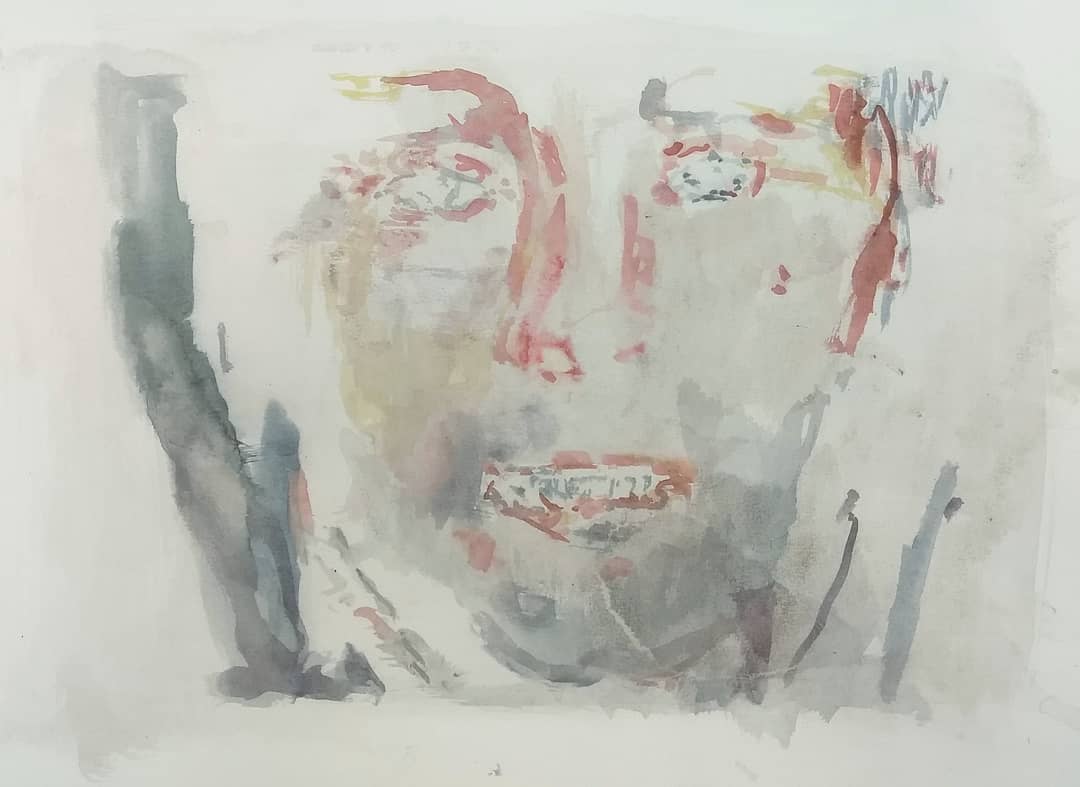
I almost always work on canvas. Recently, I’ve been working a lot with oil on paper, a thicker type of cardboard, and also with watercolor. During the pandemic, I used a lot of gouache. Sometimes they’re just studies, but sometimes they’re complete works. But it’s mainly oil on canvas. That’s what I like.
You mentioned series of paintings. Where did your interest in this format come from?
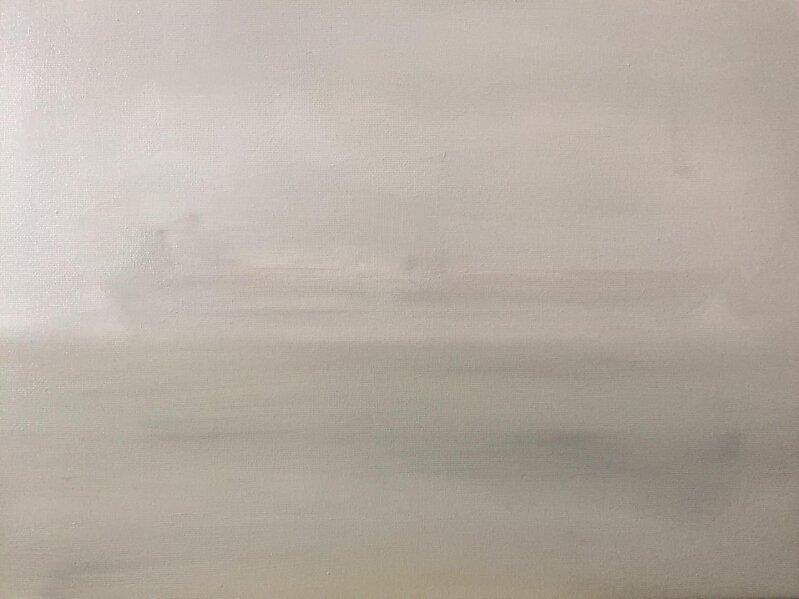
That’s a bit chaotic. During university, I did a lot of experimentation, which I don’t consider to be finished work. My first more “consistent” work was for my final exam. I made a series based on a video, which contained several frames of that content. It was a little difficult to capture what was happening because there was a kind of chase. It was precisely when this happened that I realized there were 14 paintings. It was also around this time that people began to see it as a film. I found it interesting that the gap was sometimes even more intriguing than the painting. Somehow, it seemed participatory, or at least thought-provoking. Since then, I no longer work in the same way, with series that come from the same place. I prefer to call them recurring obsessions (laughs). For example, the shoe paintings I’ve done – one, two, three, four paintings, as well as several portraits that ended up becoming a series. So sometimes the series is formed, even months or years apart. It’s like a recurring theme, almost an artist’s obsession with an object. You always want to go back and explore more, so it ends up looking like a series. From time to time, elements emerge that don’t fit perfectly and, who knows, maybe they’ll appear more in the future, or not. Series can form almost involuntarily, but I enjoy the repetition of an object, theme, or subject. They end up appearing unexpectedly. When it comes to exhibiting, for example, the gallerist I work with wanted to put together a series of paintings I did of ships. There was nothing particularly tragic about these. I was more interested in the optical effect of Fata Morgana, in which the ship appears to be floating. I didn’t see these works as a series at first, but he liked the idea and it ended up becoming one.
Thinking about these gaps, these voids open to interpretation, this is reflected not only in the image, which can be a little uncertain and not at all obvious, but also in the relationship between the viewer and the work. The interesting thing about the car accident series, for example, is that from the title and the image, we can initially identify parts of a car. But, after a while, the image starts to become abstract and a little blurry. As time goes by, other shapes begin to appear and, in the end, we have this particular vision of the painting.
I have a certain interest in the limits of vision and perception within the painting itself. For example, in the painting about the accident, I used more detail and a very specific car model, which perhaps made it easier to recognize. My work often involves constructing and deconstructing the image. Sometimes, I have to ask someone, “does anyone else see what I see here?” because I definitely do. I also realized that it’s possible to be more abstract in portraits, as faces are easier to recognize. However, I wanted these victims to appear anonymous, or difficult to identify. This car crash painting is called Crash! and doesn’t specify the type of accident. I usually prefer to leave it up to interpretation.
There is an allusion to the event, but not a direct link. This can be intriguing, because it creates the space where anyone who sees the work can think of any kind of accident. Perhaps someone sees it and remembers an accident they witnessed in the street, or experienced.
It’s something linked to memory, to a kind of erasure. It also makes me think about the circulation dynamics of newspaper images. For example, an accident that shocks everyone that day and the next day, as my parents used to say, the same newspaper is used to wrap fish. What happened to all that pain? It passes, it’s forgotten.
No ciclo jornalístico, no ciclo da informação, tudo meio que some e pode ser esquecido. Então, para mim, é um pouco de colocar no suporte e de falar sobre essas coisas que estão pairando, e sobre esse passado que pode ser difícil ou trivial, mas que está ali um pouco desfocado.
(Translation: In the journalistic cycle, in the information cycle, everything kind of disappears and can be forgotten. So, for me, it’s a bit of putting it on the support and talking about these things that are hanging around, and about this past that may be difficult or trivial, but which is a little blurred there.)
I think it also has something to do with our fascination with accidents. When I think of plane crashes, for example, I remember the Mamonas Assassinas. There’s an intense curiosity surrounding these events. Painting, on the other hand, is almost the opposite. It involves a beauty in construction and has the role of eternalizing these fascinations. Painting is usually something open, exposed. So this contrast with the newspaper, with its quick and ephemeral consumption, is quite interesting.
Yes, this fascination is part of journalism; it’s not just about reporting the news, it’s a momentary fascination. Sometimes, I avoid the Mamonas accident, for example, because it’s too obvious, too impactful. There’s a limit there that doesn’t arouse my interest, it’s too “dog-eat-dog”, too Notícias Populares. However, there is this flight that fascinates me, for example: it was a Korean plane that was shot down because the Soviets thought it was a military aircraft. It wasn’t exactly an accident, but it was shot down, a rather surreal situation in the midst of terror and war.
You mentioned that your parents were journalists. Does this source of images come from your personal archive, or that of your family?
Yes, but there are some images I haven’t used yet. For example, my father’s greatest trauma was entering Carandiru after the massacre of the prisoners. He took a photo after the bodies had been removed, and the floor was still covered in blood. He told me he couldn’t sleep for three days after the event. Normally, a photojournalist develops a certain resistance to such situations, and the camera offers a certain protection as he concentrates on his job of taking pictures. But the grotesque violence of this event traumatized him. However, this photo is probably the most important of his career, as very few people managed to enter the site and he was one of the first. There are very few records of this event, and it’s this aspect of recording that denounces violence. This is an image from his archive that I’m sure I’ll make one day, but I’m not ready yet. It’s so challenging that I haven’t yet managed to determine how it will appear. It’s still a trauma for him, and perhaps for me. I’m in the process of organizing my father’s archive, a project we’re doing together. There are some things that caught my eye, but they’re less violent. I still want to paint this image of Carandiru one day.
Considering the image as a whole – the space, the prison, the crime – there’s no margin for it not to be seen as non-violent. There’s no ambiguity, like in photos of concentration camps, for example. The signs of violence are permanent in these spaces.
I have a painting called Smoke, which represents a concentration camp, but in a more subtle and distant way. You only see the smoke. The work is called רויך (roykh), which means “smoke” in Yiddish, so the meaning is somewhat hidden, but people understand.
Yes, because both in the newspaper and in photography, the focus is always on what comes next. This is also linked to the idea of gaps. When we have an image in the newspaper, it needs to complement the text and illustrate everything that is described. If we bring this to art and painting, these gaps reopen.
Exactly, the images talk to each other. There’s a certain ambiguity, as if two paintings were relating to each other. I never like to show a painting on its own and, when I talk about series, I mean the idea of presenting the paintings together. There’s something about the coexistence between them.
When you think about the challenges of producing the work and incorporating your vision and interests into the work, what would you say are the biggest challenges?
I think that’s a complex question. The question of archives is a very enjoyable one for me. It’s a challenging type of research, but I really enjoy it. Personally, the biggest challenge was getting into the market and joining the artistic circuit. It was a different experience, because I didn’t follow the traditional route of graduating and starting to have exhibitions. I lived in Berlin for a while, but as I didn’t know anyone, luckily, I found a gallery and things started to look up. Even so, the challenge of exposing myself to the market was the most significant, as it took me a little longer to break into the circuit, which, in my opinion, wasn’t necessarily a bad thing. Of course, there were times when desperation struck, so my biggest challenge was actually getting seen and getting on the circuit. I’d say my personality had a bit of an influence, as I’ve never sought to be a careerist. I decided to move to Berlin to experience different things, but I realized it was quite difficult. After a few years, I was told that it was better to build an audience in São Paulo first and then in Berlin. After all, if you don’t have an audience in your hometown, it gets more complicated. In any case, it’s never easy, but in the end it all worked out. I’ve also always wanted to pursue other activities besides painting. I can’t stop painting, but I also love studying and I’m interested in academia. I love photography and moving around in other theoretical universes, because they all talk to each other. I’m not one of those artists who limit themselves to doing just one thing. I’ve even ventured into journalism and written a few articles. One of the challenges is to reconcile all my interests while still painting a lot.
Do you think these interests shape your painting?
Yes, it all connects a lot. Painting, for instance, allows me to see theory in a different way, and everything enters into dialogue. Theory, photography and painting are interconnected. I create a lot of links, whether creative, theoretical, or references, which helps a lot. In addition, I try to be an artist who doesn’t settle, who is always looking for something new. I’m not the type who changes every month – there’s a line that permeates everything, but there’s always a search within my obsession, asking myself how far I can go.
Interview conducted on 29 November 2023 remotely via Zoom.
watercolor
20 x 42 cm
2021
oil on canvas
30 x 40 cm
2022
oil on canvas
27 x 35 cm
2023
oil on canvas
60 x 50 cm
2020
oil on canvas
40 x 30 cm
2020
oil on canvas
27 x 19 cm
2021