

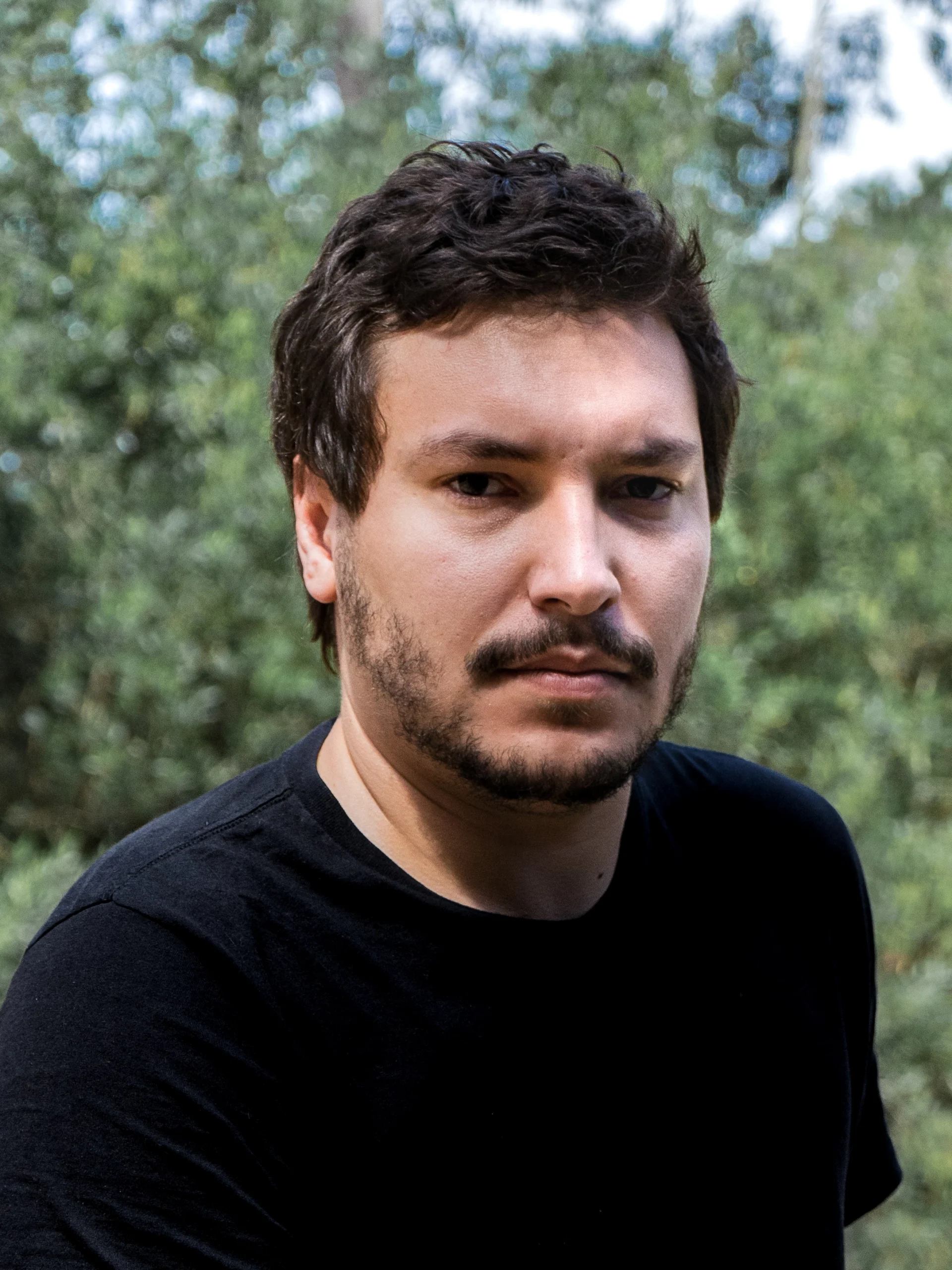
Eduardo Hargreaves
In his artistic practice, Eduardo Hargreaves (Juiz de Fora, 1994) investigates the relationship between landscape, territory, and memory. His work often incorporates elements of cartography, geological aspects, and local narratives. Although his inspirations come from his native Minas Gerais, Hargreaves’ research transcends the regional, serving as a starting point for exploring different facets of erasure in places, histories, and peoples. In the interview, the artist reveals a creative process based on the dialectic between presence and absence, erasure and alterations of memory, exploring the transformations of both the territory and the memories associated with it. Check it out:
Eduardo, I’d like to start by asking you to introduce yourself, with any information you think is relevant, thinking of an audience that may not yet be familiar with your practice.
My name is Eduardo Hargreaves and I’m a visual artist. I was born in Juiz de For a, in 1994, and have lived practically all my life in Belo Horizonte, where I graduated from UFMG (Federal University of Minas Gerais) at the School of Fine Arts. I studied there from 2013 to 2017 and my training began with engraving, but I eventually studied drawing, which I graduated in. Along the way, I became interested in different practices and ended up going into drawing and leaving printmaking, precisely because it’s a qualification that offers a greater variety of ways to work. I felt that most of the Fine Arts qualifications, such as printmaking, painting, and sculpture, were very focused on technical improvement and directing practice. At the time, I evolved into drawing as a conscious choice, choosing a pathway and a studio in which drawing was more of a way of thinking. Drawing as a process of thought and not just drawing with practical technique. As a result, I was able to work with different techniques and use different materials to find possible solutions for a work, without being tied to one way of making projects.
Along this path, I moved a little towards photography and a little towards digital arts. Some installation projects took years to come to fruition, but they came as a result of issues that arose during the course, especially between 2015 and 2017. I feel very strongly that my research in the plastic arts must be engaged with the wider issues I’m also researching and reading about. It’s an understanding of the work as a project, which sometimes hinders the process. This concept is also closely linked to the presence of charcoal in these works as a form of drawing, but also as a material in itself.
I also began a process that lasted a few years, which was very much focused on thinking about territory, the city, urbanism, landscape, ways of representing or structuring, bringing in some things from maps and working with overlaying different visions of the relationship between peoples and places.
Eu tinha um interesse grande, e que continua assim na minha pesquisa, de pensar uma relação entre a paisagem e o território com a memória e como enxergar esse território e as transformações dele como justamente uma transformação dessa memória no tempo. Como esse território vai mudando, essa paisagem vai mudando e como essas memórias, sejam elas parte dessa memória coletiva, desse lugar, mas também as memórias pessoais, podem se espelhar nesse território de alguma forma, como essas memórias se tornam perdidas ou vão sendo apagadas ao longo do tempo e transformadas.
(Translation: I had a great interest, which continues in my research, in thinking about the relationship between landscape, territory, and memory, and how to see this territory and its transformations as precisely a transformation of this memory over time. How this territory changes, this landscape changes and how these memories – be they part of this collective memory, of this place, but also personal memories – can be mirrored in this territory in some way, how these memories become lost, or are erased over time and transformed.)
How is this individual memory reflected in the cartography, or how is this cartography interpreted?
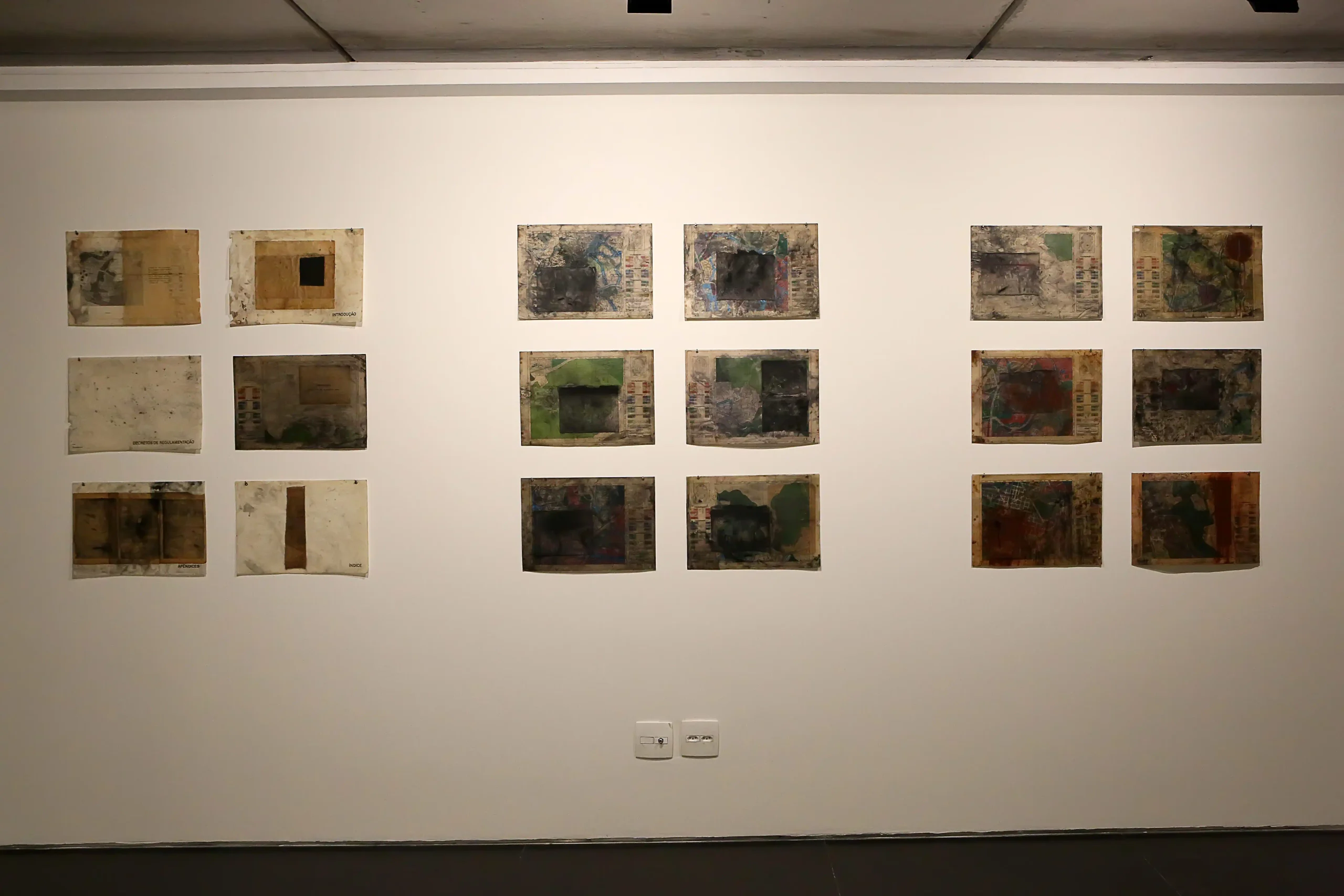
Thinking along both those lines, I go, in part, on the slightly more direct side, and specifically to this thinking about cartographic representation, in works that unfold in series, such as Decretos de regulamentação (2018), Desenhos topológicos (2021), and Esses pedaços de ti, América (2018). These are different works for which I used cartography as a basis, whether in drawing, sculpture, or installations, but they were cartographies, dated city plans, plans from different eras – the 1960s, the 1980s – projects for a future that doesn’t exist, a future that, once it has arrived, isn’t what was drawn. I began to work precisely with the superimposition of these images, thinking about this temporal dissociation of representation and, at the same time, in continuation with other works, how this was also presented as this relationship between the subject, a personal memory, and collective memory.
Tell us a bit about the working process of the Topological Drawings series, from 2021, and how they connect to this research.
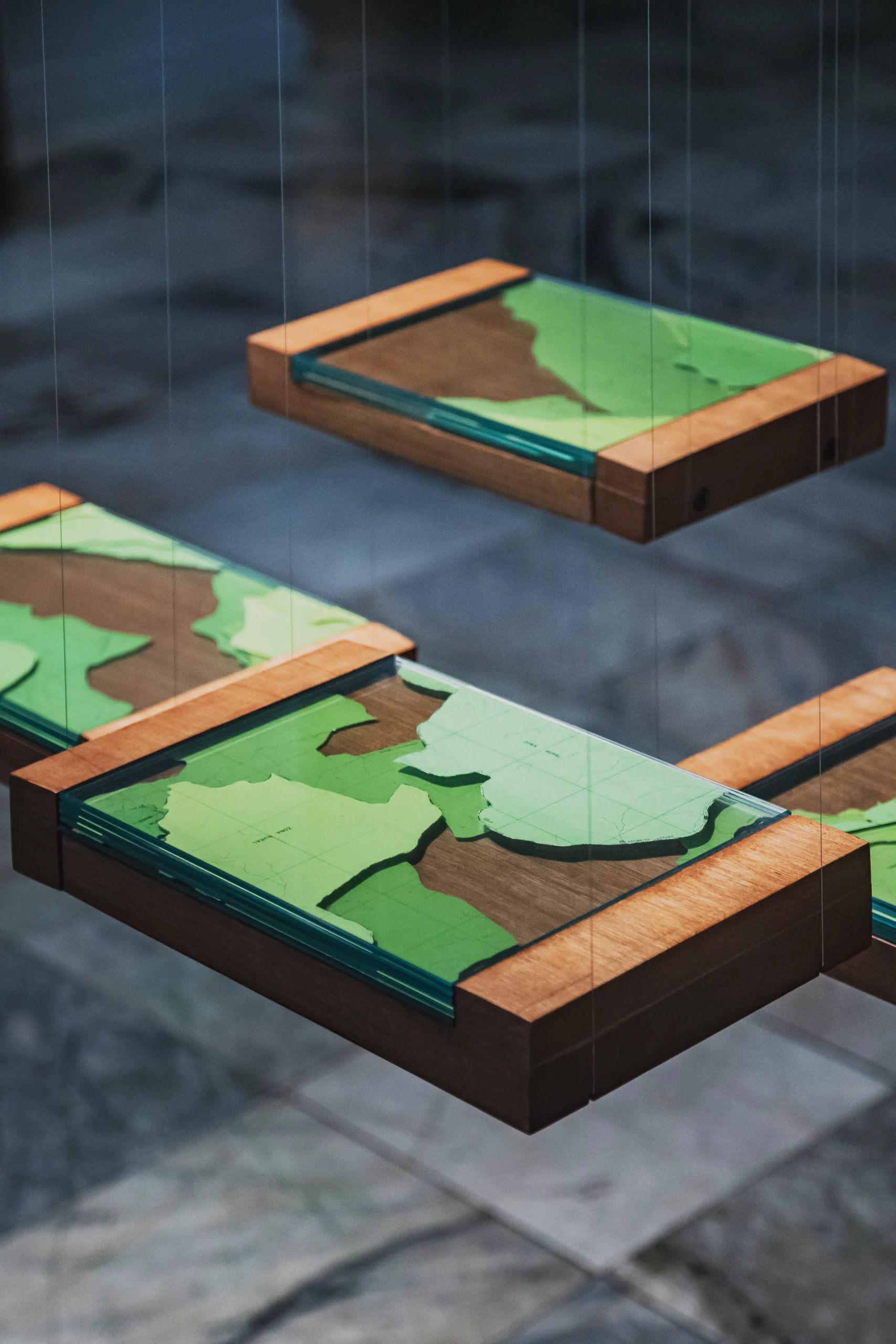
The Topological Drawings present precisely part of these plans, these maps. I cut out the blank paper inside these maps, which are what I call the “areas of disinterest” in the maps. The publication which this work is based is a Belo Horizonte land use and occupation law from the 1980s, in which everything that is outside the city, everything that is on the border – neighbouring towns, Nova Lima, Ibirité, Contagem etc. – appears as blank areas within a grid of latitudinal and longitudinal lines. I began to extract these areas of disinterest, these planes, which were absolutely devoid of content, and superimpose these sheets, initially as a kind of collage. Then I ended up making work that happened a few times in my research, which I think has an almost narrative background in the way I compose the materials. Not a narrative that tells a story, nor a narrative in the sense of an explanation, but a narrative in the relationship between the different materials that make up the object, and which can give meaning, but is not necessarily something that I need to be clear about.
I started to think about how these cities that surround the state capital, where the main source of the economy is mining – also, historically and culturally, this is the centrepiece of our history as miners (even the name of the state carries this) – the satellite cities of Belo Horizonte to be precise, have these same very strong mineral resources to this day: they are where most of these mining companies are located; these dams, and so on. The work was constructed as sheets of these layers that go deeper and deeper, five or six layers of glass interspersed with sheets of paper. At the bottom, there’s an iron plate that closes the set, which is attached to a wooden base, a kind of conversation with that wedge base by Lina Bo Bardi (1914-1992) that is a similar solution, which locks these pieces together. I think of the question of narrative a little like the relationship within this landscape, which has a horizontal depth, in the case of a view from a distance, but can also refer to a higher topographical view, precisely because of the map, and the wood, which somehow represented for me these sleepers through which the water from the saw drains.
Are the Topological Drawings a series that you continue to produce, or is it this group of works?
I started the series in 2018, if I’m not mistaken. It was conceived for the exhibition “Cartas para um lugar” [‘Letters to a Place,’ an exhibition presented in the BDMG Cultural Cycle of Shows, from 15 September to 25 October 2018], which was my first solo show at BDMG Cultural, as part of the BDMG Shows award. At the time, I made nine or ten of these objects, which was what I could manage financially, and I left another set prepared, but without being able to assemble them. In 2023, I completed the series with another 11 objects. From 2021 to 2023, I continued with another set of Topological Drawings suspended on steel cables, which works with another section of these same pages that show the rural areas represented in green, which would have been protected or agricultural areas, though they no longer exist, that were later transformed into neighbourhoods. So there are some fold-outs that have occurred from this series, but this first set is somewhat closed. In any case, there are some works that we feel could be opened up in another condition, as an unfolding, not necessarily as a continuation of the same set.
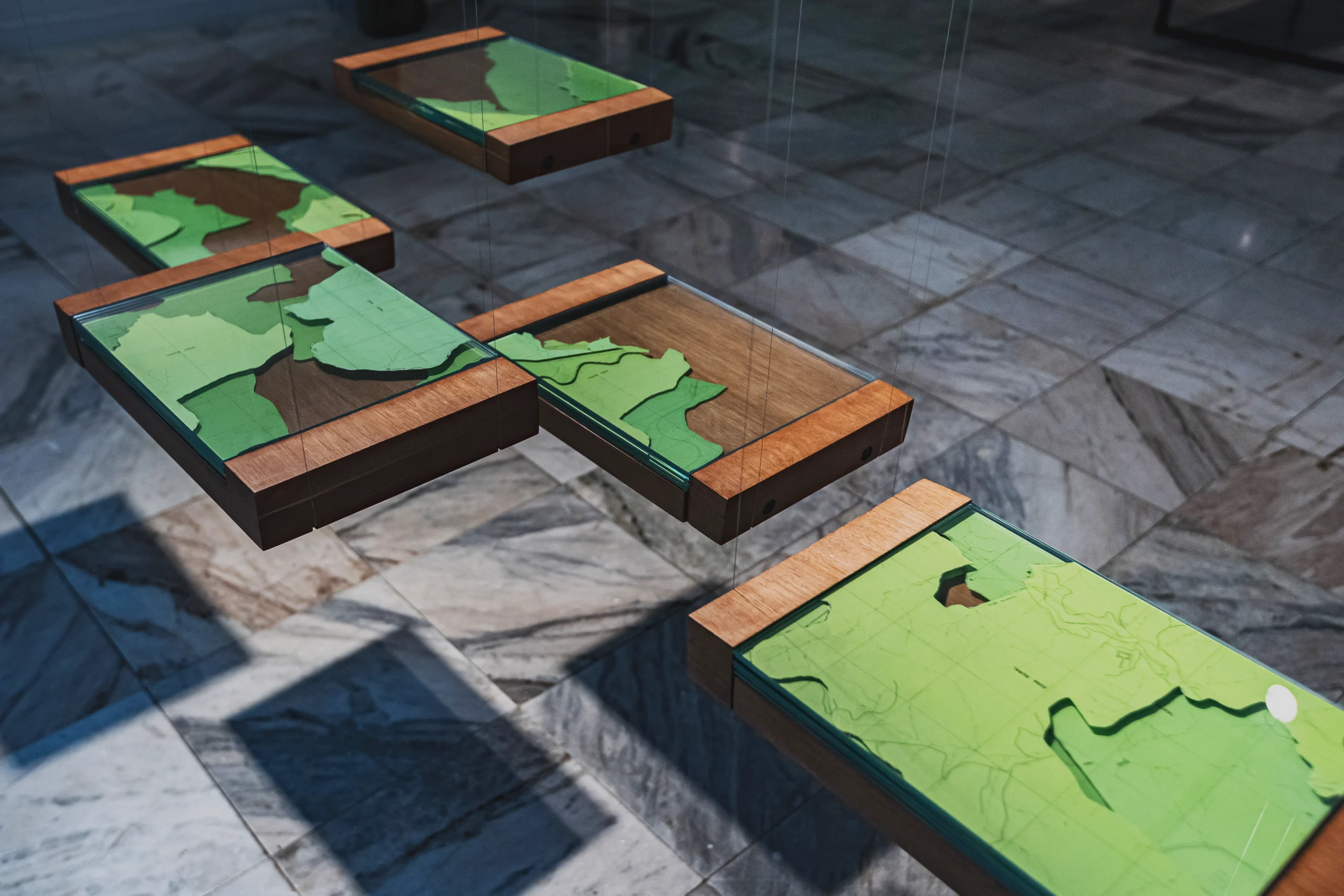
Along these lines, I wanted to ask you about the work Anima, mina (2018-2019), which uses the element of charcoal.
This is a work that, in a way, started a stage in my research that ended up resulting in my second solo show, “Brasil, Hy-Brasil” [Exhibition presented at the Palácio das Artes in Belo Horizonte, from 15 March to 28 May 2023], in the Décio Noviello Visual Arts Prize. Anima, mina is a process work in the studio. It’s part of a set of works that I’ve been developing and that I end up leaving in the drawer for a while, sometimes for a few years, and then return to as a slightly renewed piece of work. I develop the work plastically, but sometimes it’s not clear to me what that work is – if it’s cohesive, coherent, if I can really give it a final solution. Sometimes, the only answer is to put it in a drawer, forget about it and then open it up again.
Anima, mina began as a trial run that later became the series Dormentes (2018-2021), which are these large images, also in charcoal. They are landscapes of mined mountains that I made on fabric, but before I came to the fabric, I had first made a work on paper of the same scale, which was 2.5 x 1.5 metres. Once it was finished, I realised that I had a huge problem, that it would be very difficult to complete this work, to have a solution of assembling, which, for me, is always part of the work’s thought process. In the case of objects, it’s precisely the materials, the forms of presentation, but in drawings, in other more two-dimensional works, the framing and assembly solution is also important to me. So I cut up the work, put it away and, when I came back to it was precisely when I began to realise how the way I work with charcoal drawing is very important in my thinking.
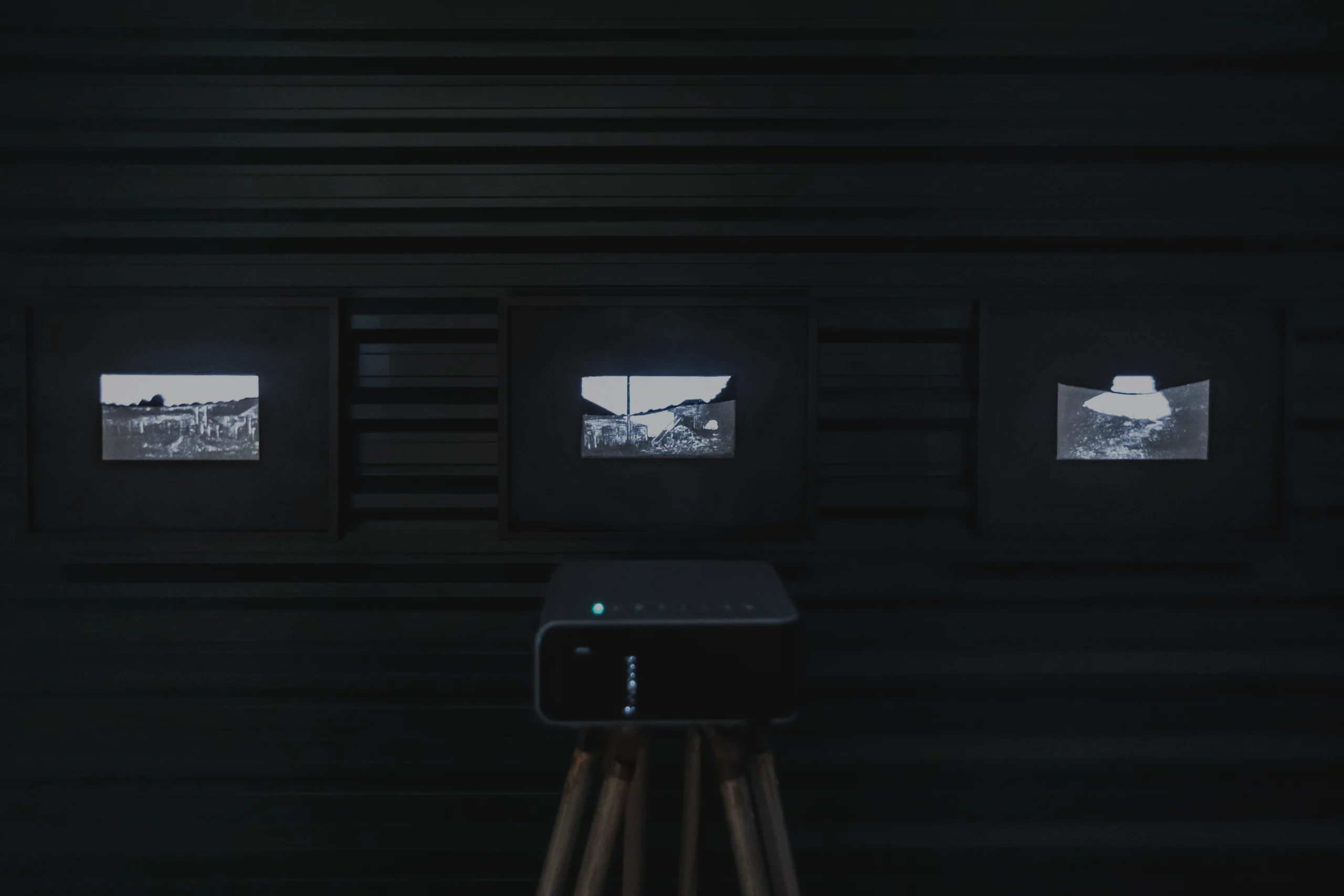
I ended up choosing to work with charcoal because it’s a material in which you have this game of addition and subtraction. I fill in the sheet and then I extract this material, almost like a parallel form to the imagery of this mineral universe and memory. The drawing is made by removing this load to see what’s left and, finally, with a layer of writing with the eraser, the rubber removing the material to add information. For me, this then became the guiding thread of the exhibition, these different forms and procedures that connect to the general concept of the “Brasil, Hy-Brasil” project, which was this idea of thinking about the territory and these multiple “Brasis” in an imaginary parallel where you have this condition, which is not only physical, of a state of extractivism. I always end up returning to Minas Gerais at that point; although I’ve been abroad, I’ve never left here in any way. A bit of the same procedure as in Anima, mine happens in the action of the video-performance, with these large charcoal drawings of the mining areas, on textile, suspended over sleepers literally extracted from the railways, and in the animations that I later made in A coisa fria também chamado memória (2020-2023), also animations by extraction, frame by frame, in which I dissolve the drawings until I’m left with a landscape marked by a large white band that is, in fact, the drawing that has gone away.
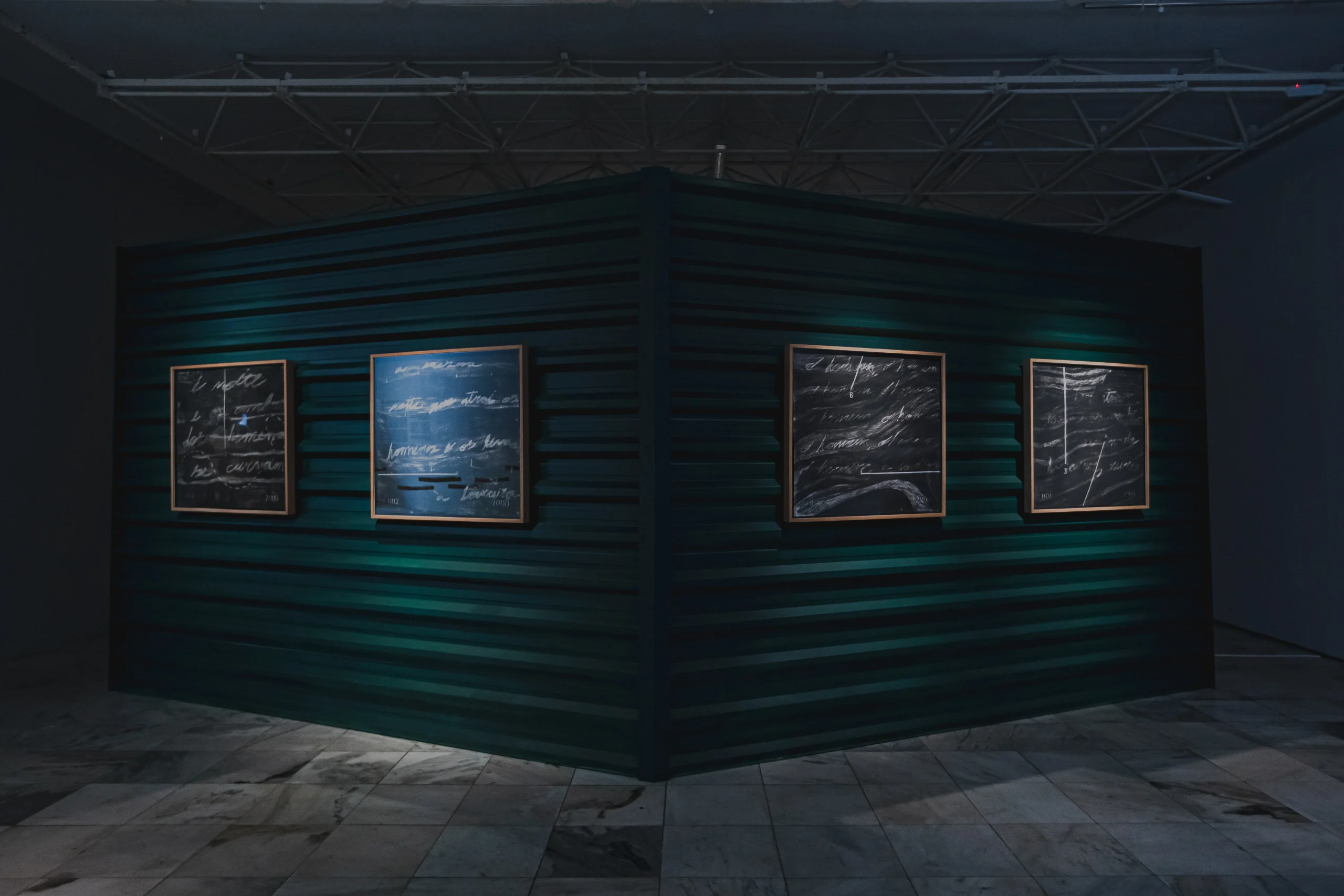
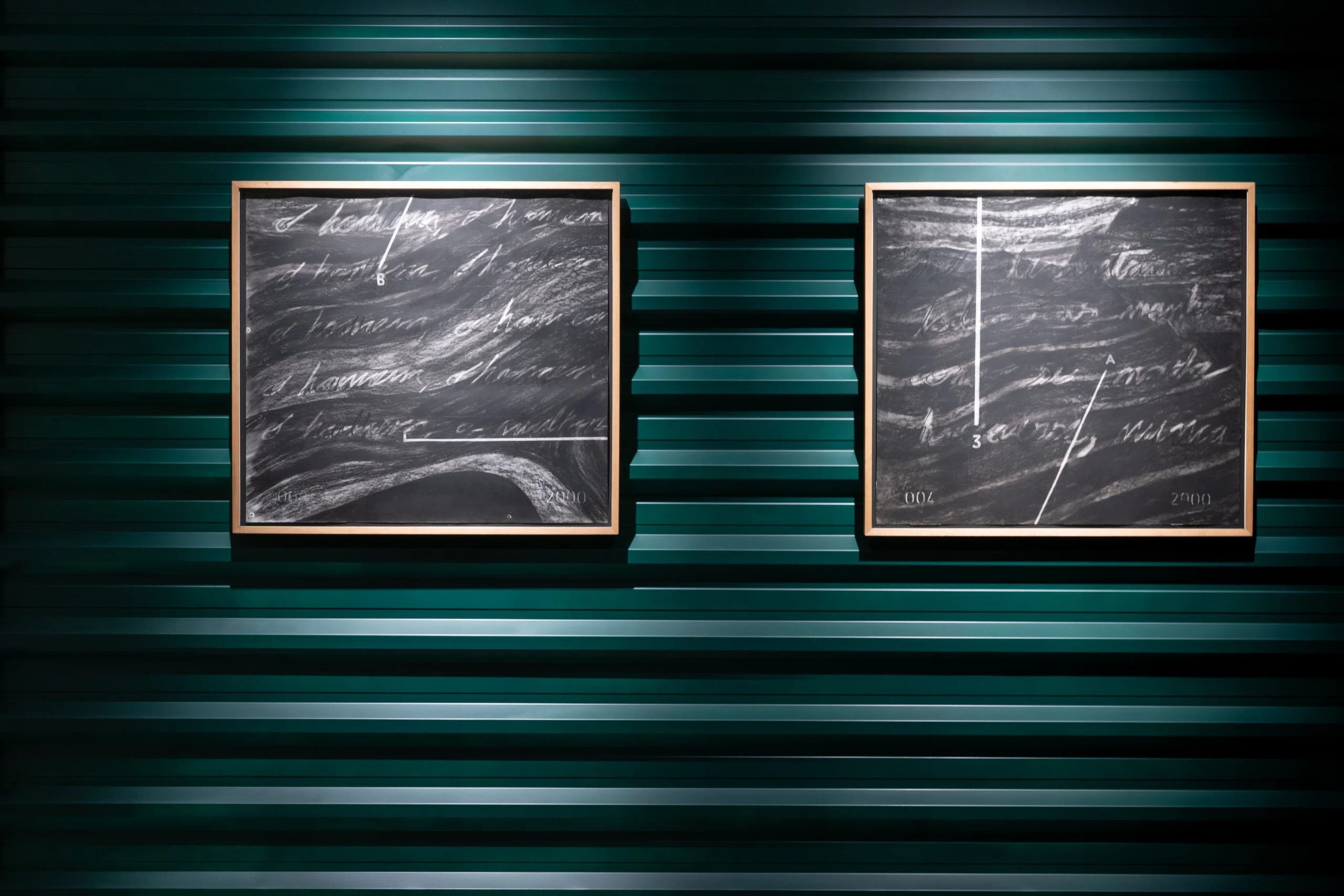
And are these connections with Minas Gerais presented in some way during the exhibition, perhaps in the text?
In part, yes. I feel that it has this direct connection with the state’s mineral history, but I like to think that it’s a project that isn’t local. It’s a project in which I had to focus a lot on these issues for a few years, which were the issues that were most alive within me. The work began in 2018, when I was putting together the BDMG exhibition, and this first set of works was already being made at the time. So it’s a project that also took five years. The accident in Mariana had already happened, but we hadn’t yet dreamt that it would happen again in Brumadinho. But it’s a relationship that, for me, happens in different ways, not just because of mining, but because of the other ways of thinking about the flow of wealth, the flow of thought, the flow of impressions, also in the sense of what we went through politically during that period, when you try to give away everything you have and what you’re left with is, in some way, this scorched earth. I had the work with the bell jars, which I developed by thinking about the listed buildings in Belo Horizonte that had, or still have, some cultural function; museums, cultural spaces, spaces that are linked to the preservation of memory, or a presentation of culture. It’s work that I’ve made here, but that could be made in any other city. It’s about historical and cultural heritage, which offers a service to the population, to our memory as a people, but which is in the middle of the landscape and in a constant process of permanent destruction.
This particular series is With such a low sky (2023), but it’s an offshoot of Not a Child’s Toy (2021), made during my first international residency in France, which was called R.A.U – Regards d’Artistes sur l’Urbanisme. It was a challenging project, because I had between a month and a month and a half to make the work, and it was a situation where you arrived at the place and had nothing previously given to you except some guidelines about looking at the landscape, looking at the urban issues of the city. It’s a city that was once very rich, but has become the poorest region in France and is now undergoing a process of renewal. My aim was to look at this transformation and the presence of different times in this project: the rich past, the poor present, and the uncertain future. I tried to create a more megalomaniacal work, a larger installation, with drawings, objects, a mixture of materials, structures that supported this conjunction of time periods and information. The idea was to work with stakes that tried to hold it up against the wall. On the other hand, it made me want to go to the complete opposite, a logic that I hadn’t worked with, which was the logic of a game, more playful, something without so much weight. In this case, I literally worked with snow globes, the kitschiest objects possible, with landscapes of Sydney, Paris- the cartoon images that I took from these objects.
I made laser-engraved cuts of the landscapes of the future urban renewal project and inserted these new images, like a skyline, inside these objects that are normally souvenirs. In place of what is normally put in there to make fake snow, to give these objects a nostalgic feel, I brought in red brick dust, which is the most common, traditional, and ancient building material in the region. When you shook them, this brick smoke from the past covered everything and then fell on these buildings. I took up this line of thought for “Brasil, Hy-Brasil” as well; in this case, I put these listed buildings in Belo Horizonte inside a dome, but made them a little bigger.
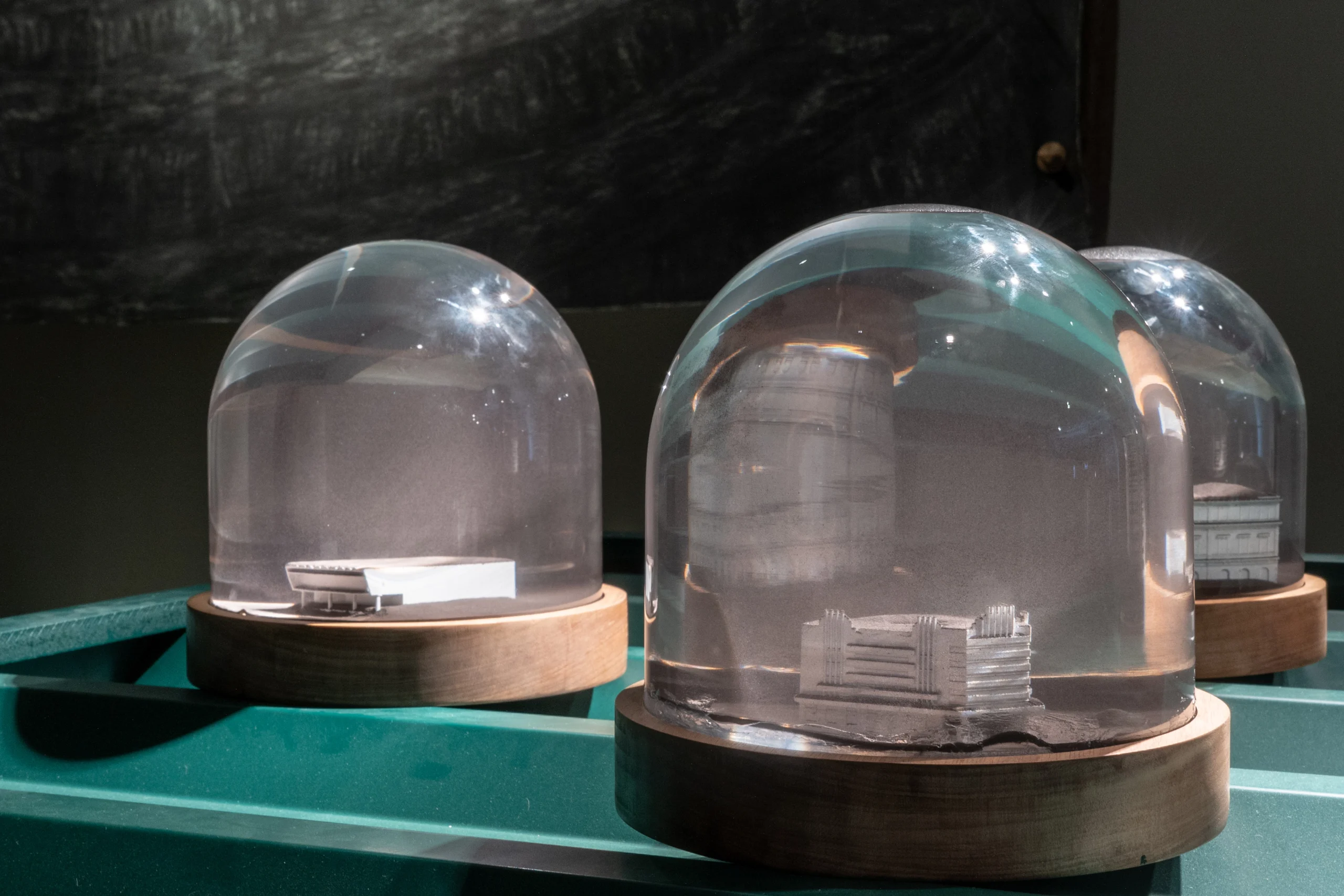
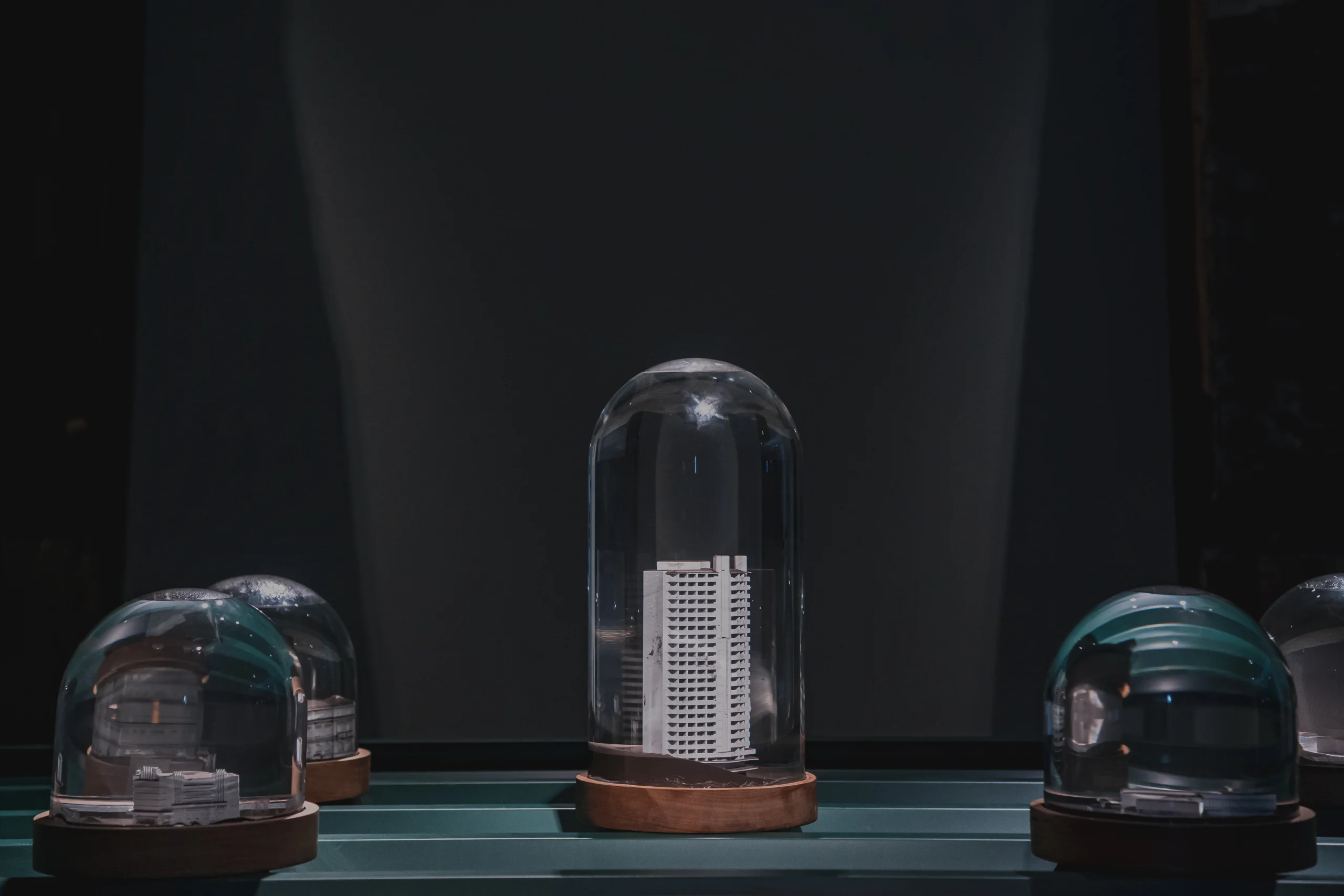
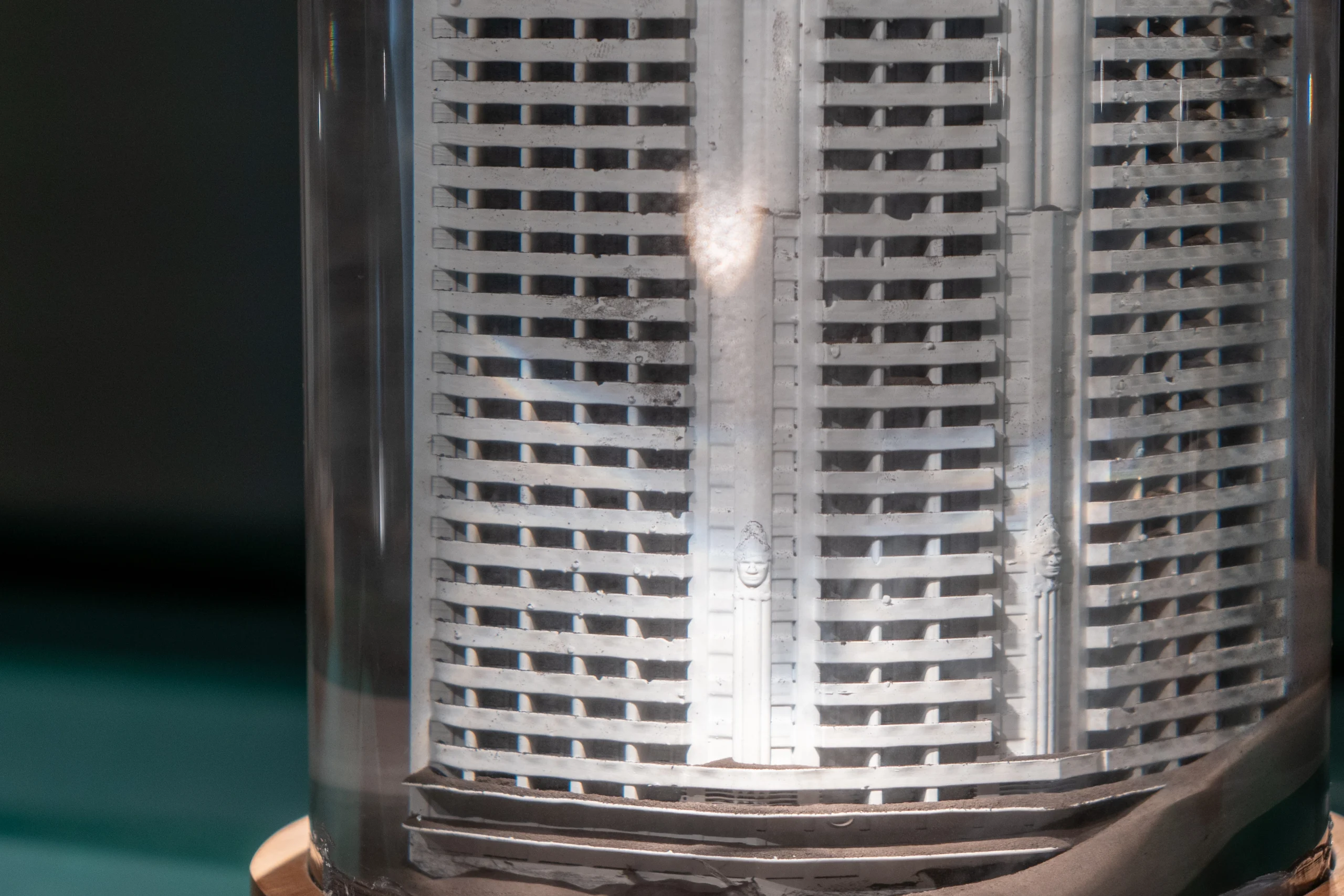
I see that these sculptures have elements that are very much related to drawing; erasing, covering, revealing. Even before you move the sculpture, the way this internal element remains is ghostly. The drawing way of thinking also appears in the sculpture.
When we develop a work in drawing on paper, there is a temporal charge that doesn’t necessarily appear. The burden of the process, of the layers, of the procedures – sometimes you don’t realise these dynamics, these volumes, in the sense of overlaps in the process and I think that, in these objects or in the animation work, perhaps this temporal element appears in another way. In this case, the works function almost like an hourglass. It can take 15 minutes, maybe half an hour, to be able to see the image from the inside again. There’s also something temporal that interests me, both in these works and in the works that have this thing about the erasure or negation of the image.
Perhaps this also illustrates our inevitable failure in trying to understand a building or a city. For example, a building might be a cultural centre or a museum today, but 10 years ago, or during the period of the Military Dictatorship, it had a totally different use, and our information is always very limited.
Something that started to interest me some time ago, but which I’ve recently been trying to turn my attention to a little more, are the issues linked to the form of “Brasil, Hy-Brasil”, despite its focus on the territory of Minas Gerais, which is a work that I’m actually thinking of continuing. Since 2018, when I began it, I opened up this work to a curator, Luiz Gustavo Carvalho, with whom I’ve been working ever since. Since then, we’ve been thinking about the project and we’ve submitted it several times to different calls for proposals as the project matured, until it reached the stage it’s at now. The choice of name, “Brasil, Hy-Brasil”, refers to Brazil as a territory, as our nation, but on the other hand, Hy-Brasil is actually the name of a ghost island in Irish mythology. It’s a coincidence even in the way it’s written, which is very close, but it was a mythological island, an imaginary island, a good place, a place of good living, but it was an impossible place to reach. The description I got of the island always said that it was shrouded in mist, in a fog, in the sea, and that every seven years it became visible. A sailor could see the island but never reach it. So there’s a bit of a macabre parallel, almost, with the history of our country: there are times when we think we’re heading in a direction, that we can change the country’s position, its place within history, the difficulties, the issues, but it’s always a utopian point, impossible to reach. From that, I began to relate the issue to a way of thinking that is unique to Brazil, but that I think is very present in Minas Gerais, which is the difficulty of relating to one’s own memory, to building a local memory, a collective memory.
É a falta da presença de museus e de espaços de arte na cidade, como isso é escasso; como Belo Horizonte, uma cidade tão jovem, já tem um passado tão grande que foi destruído nesse processo, e sobram esses prédios, esses espaços, mas estão como se fossem uma memória que está sempre em vias de se esquecer, está sempre em vias de ser apagada.
(Translation: It’s the lack of museums and art spaces in the city, how scarce these are, how Belo Horizonte, such a young city, already has such a great past that has been destroyed in this process, and there are these buildings, these spaces, but they are like a memory that is always in the process of being forgotten, always in the process of being erased.)
I’d like to ask you to talk about the work Comunhão, from 2016, which I think was installed in 2023.
That’s a curious thing – sometimes I date things in different years, which usually has to do with the process of its first presentation and the start of its realisation. Comunhão is a project that started when I was at university. It was the first project I did that focussed on photography. I’m very interested in the photographic image, but I have great difficulty dealing with it. In this case, it was the first work that dealt with the question of the negation of the image: an image that you couldn’t see, an image that was inaccessible, or that receded in some way. It’s a project that comes from a dream. At the time, I had a dream in which I was sitting on a bench in an enclosed space, almost like a gallery. In front of the bench there was a metal structure, a kind of railing, in which I saw several monocles with those 3 x 4 photographs. And I understood that, inside each of these monocles, there were grotesque images, images that I didn’t want to see in any way – of accidents, mutilated bodies, things like that. When I got closer, I went towards one of these monocles, in which I recognised an image of my father’s car accident, which caused his death shortly after I was born. I woke up with the sensation of this small viewfinder pulling me in, making me want to get closer so that I could see the image that was hidden inside it, but once I got closer, there was something about the image that made me pull back. That image would push me back, and I started working on it.
The project changed shape several times over a period, until I arrived at the idea of a metal box with an electronic system that is activated via an Arduino controller. You approach this box, which is about a centimetre long and has a small opening, and there’s an image inside. When you get close enough to distinguish the image, perhaps 50 centimetres from the box, a sensor on the front of the box picks up your presence and switches off the light. So it’s an image that, in order to exist, in order to be visible, you have to give in, step back, agree not to see the image so that it can continue to exist in some way. It was difficult to decide which images I would put inside. There were several stages and dozens of people who helped me in each process. In the end, I took part in a residency at the Museu Bispo do Rosário – Arte Contemporânea, in Rio de Janeiro, where I proposed to work precisely on recovering memory within the institutional collection. The museum is a complicated space, in the sense that it has the general museological part – a space that is the memory of the Colônia Juliano Moreira institution, in Jacarepaguá, it has the entire collection of Bispo’s work, including the art studios that still function, with some of the graduates of the asylum system – and it has the institutional part linked to the State Health Department. In the midst of this research, we discovered, in the museum’s institutional collection, several boxes containing a collection of 5,000 3 x 4 photographs, which were identification portraits taken on the day patients entered the institution over a period of more than 30 or 40 years.
For some reason, these boxes came out of this part of the health system, to which we can’t have any access as resident artists, mainly to preserve the identity of the patients. The work I made at the time, with the help of Gustavo (and Ricardo Resende, then MBRAC curator), was to relate these portraits to Bispo’s work. Two people linked to the institution carried out a general report on Bispo’s work in order to get the work listed, which was highly praised as one of the fastest listing processes, especially for a complete work. They opened an Excel spreadsheet and basically wrote down everything that was in each work; every word, letter, dot of each of Bispo’s works. It’s a document that isn’t yet public, but via this document, I investigated the presence of all the names that appear, because there are many first names in Bispo’s work. I realised that it was as if, in Bispo’s process of taking note of everything he saw, everything that existed in the world – in order to present it at the time of his death when he would be judged and would present everything he had been through in life – there was a list of the names of practically everyone he met. It’s as if every encounter was written down there. So there’s the navy section, there’s his time as a boxer, as a caretaker, there are the different institutions in which he was interned and, within that, always the name accompanied by a function. In between, many of the names were of patients. What I did was to separate all the names of the “sick” [the way Bispo referred to the “function” they performed in the case of institutionalised patients] who were within the columns of the works he dedicated to the Juliano Moreira Colony, to the Ulisses Vianna nucleus, where he was interned. Then we investigated which of these 5,000 images had registered names and the date of entry, and whether or not the names matched his work. This resulted in almost 30 faces, which could potentially be the faces of those names that Bispo took note of. I re-photographed these photos with chrome film, which is the film that makes photographic slides. And some of these are the faces that go into these Communion installation boxes.
I always wanted the images inside to be faces that looked out in some way, that were lit from within. It was a work that I could dedicate, in some way, to faces that would have been erased over time, in different circumstances. In this case, Comunhão is also a kind of homage to these people who have been erased by the harsh, aggressive system that is the asylum system in this specific space of the Juliano Moreira Colony.
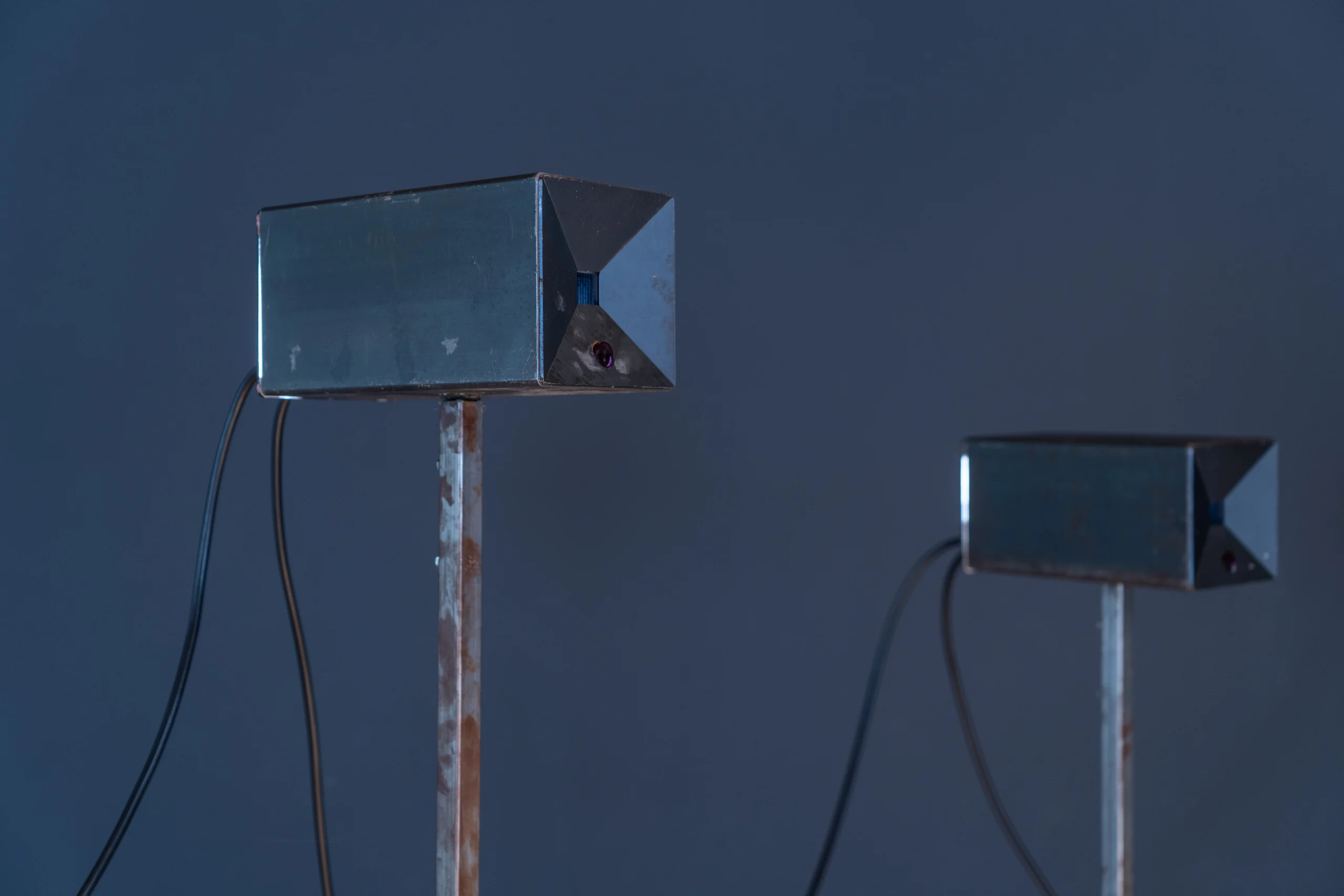
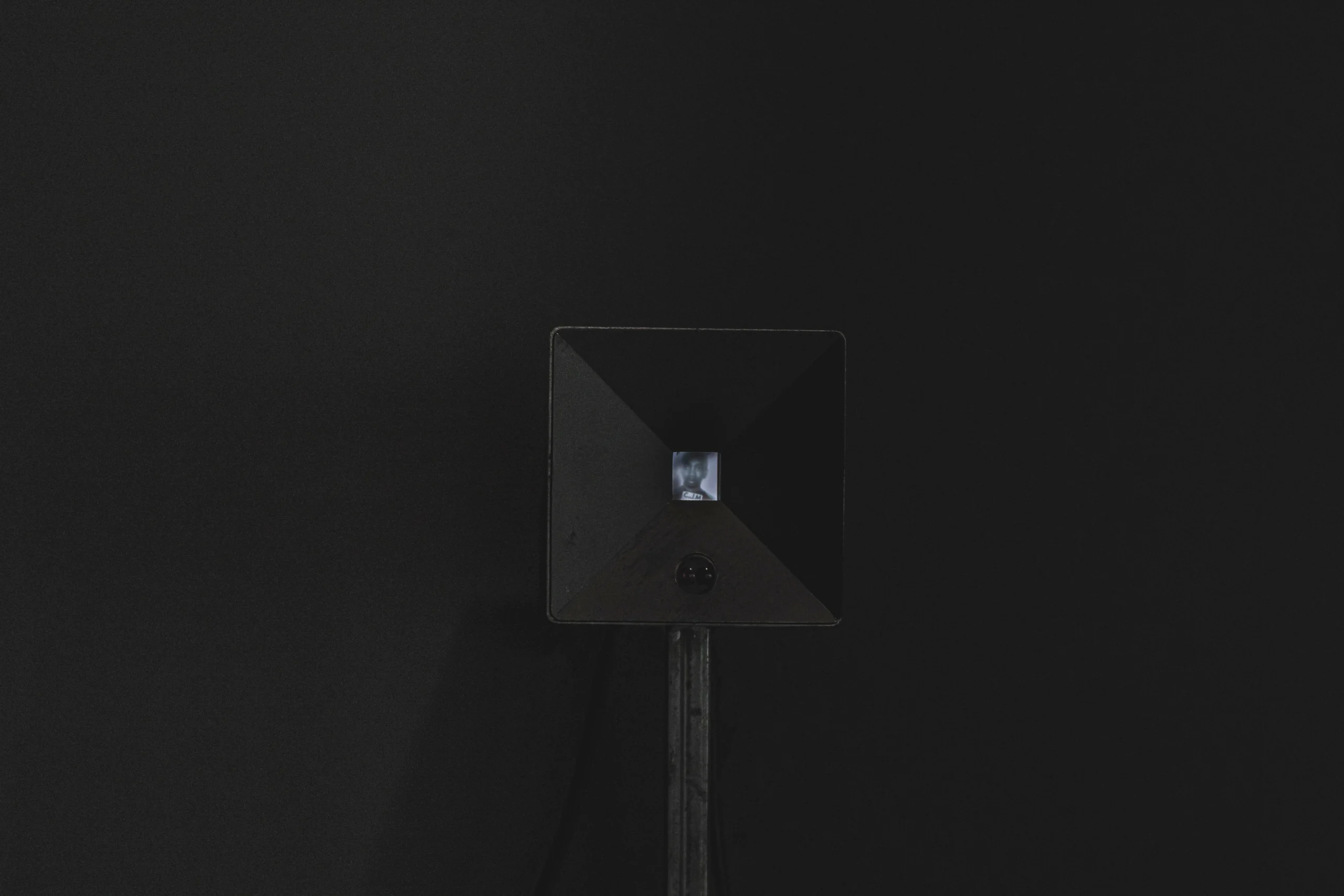
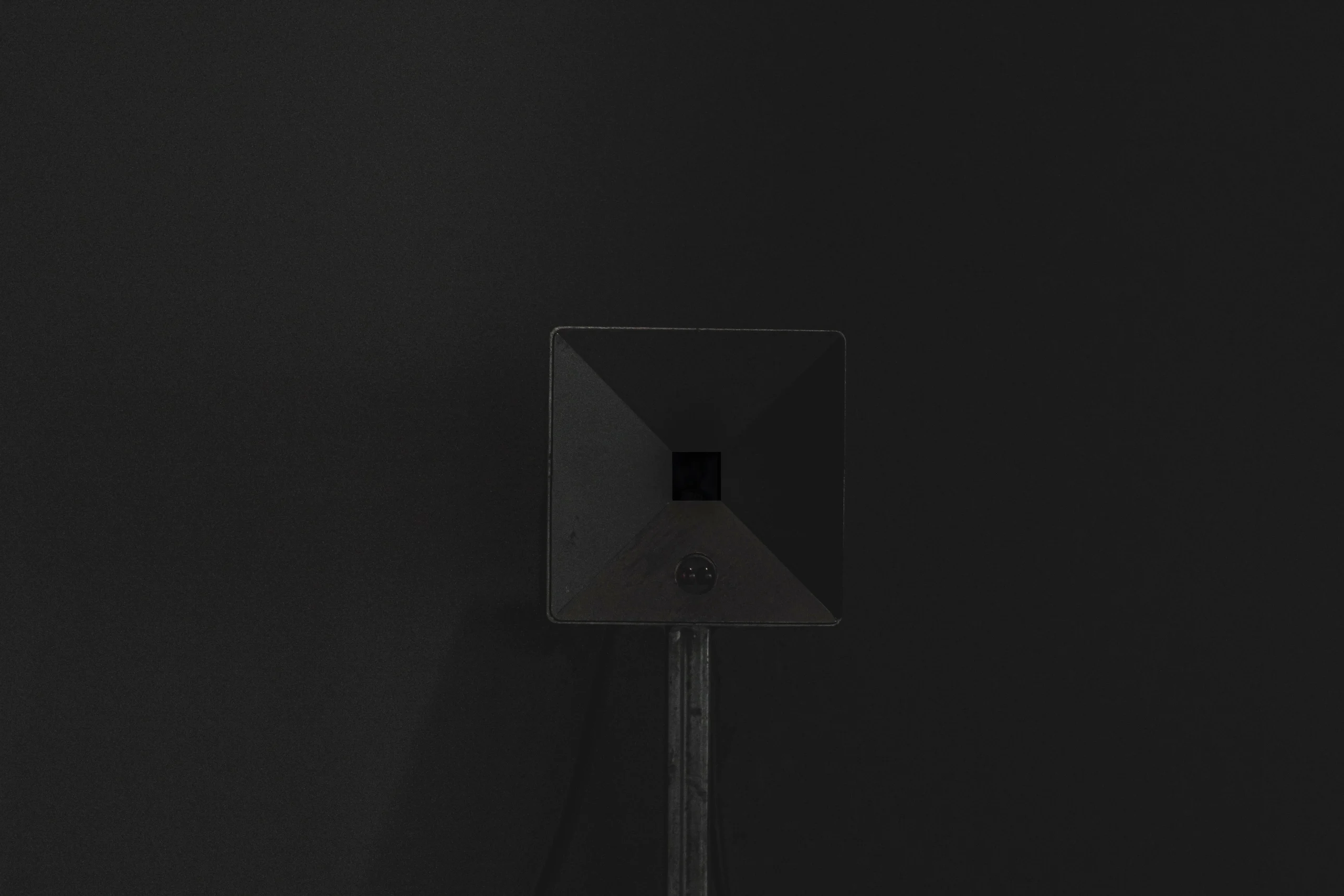
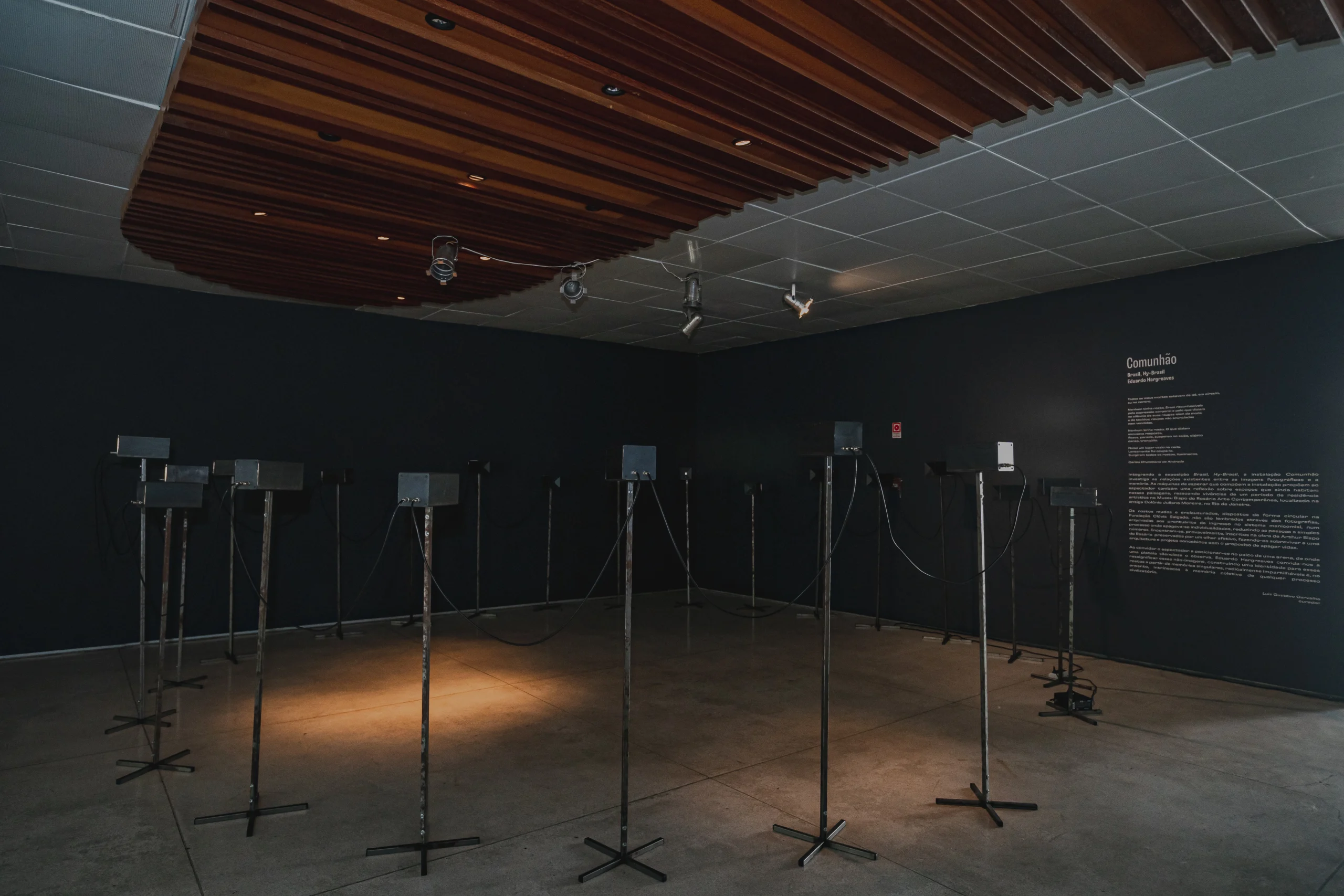
There’s also a point about the fragility of memory and the record, both the photos and the documents. We think they are preserved documents, when in reality everything is extremely fragile.
Yes, even several of these faces, among the more than five thousand we saw, had no first or last name. There was a huge number of children, or elderly people, and it was clear from the photographs that many of them were people who were entering this system against their will. In several of them you could see a hand entering the 3 x 4 photograph, holding their head so they could take the picture. It’s a very difficult memory to preserve, but what remains is also scarce. In some cases, the surname was written Antônio de Tal, for instance. If you didn’t know a surname, you put “de Tal” (this can be translated in English as ‘so-and-so’). It didn’t matter who this person was, it was the volume of people in the queue.
To close, I’d like to ask you to share a challenge that you see in your career, that you see in your research.
I think that, in a practical sense, one of the main challenges I’ve seen since the start of my career, a challenge that always takes us forward in some way, is the dynamic of really getting projects seen. Today, with small steps, I’ve been trying to take the work I’ve already made, and the new projects I’m developing, to other audiences and territories in the country – to São Paulo, Rio, Curitiba, but also Fortaleza, Salvador, São Luís. Up to this point in my career, I’ve had opportunities abroad, I’ve been on two residencies in France, I’ve also been on an international residency in Uruguay, but in Brazil, my work has rarely left the territory of Minas Gerais.
Secondly, there’s something that goes hand-in-hand with all this, which is perhaps a more internal challenge. It’s a bit of a challenge within the studio, a more personal challenge, perhaps, of dealing with these works that are projects I’ve been doing for years. I have some works that were a made little faster, but I end up working a lot in the logic of a project, of works that develop over three, four, five years, until they take shape. They are series that appear over time, but I end up thinking a lot about the relationship between the works over time and I think the challenge is to build a rhythm so that these works have different opportunities throughout their production time, because this slightly longer rhythm has its dangers, such as the difficulty of dealing with the more agile demand time that the market and public call-outs require. This studio process is a longer time, a slower time. Internally, that’s a challenge.
One thing that is perhaps the most important, in parallel with the studio process, is the possibility of dialogue, of getting the work seen and heard by different people, in different circumstances, in different places and countries, so that there is the possibility of an interlocution sensitive to this point of view of accessibility.
Eu acho que todo trabalho artístico é, por princípio, também um trabalho de comunicação em algum sentido. São trabalhos que existem numa primeira circunstância dentro do ateliê, mas só existem numa outra, quase uma segunda vida, quando eles estão numa possibilidade de diálogo com esse interlocutor, que é o olhar do visitante na exposição, o olhar de quem está tendo acesso ao trabalho.
(Translation: I think that all artistic work is, in principle, also a work of communication in some sense. They are works that exist, in the first circumstance, within the studio, but only exist in another, perhaps second life, when they are in possible dialogue with the interlocutor, which is the gaze of the visitor to the exhibition, the gaze of those who are accessing the work.)
Interview conducted on 17th July 2024 remotely via Zoom.
Projection and charcoal on paper
64 × 49 × 140 cm
Photo: Bruna Brandão
2020–2023
Paper, glass, wood, iron and steel
40 x 25 x 5,5 cm
Photo: Bruna Brandão
2021
Charcoal, graphite, dry pastel, natural pigment, iron ore, sandpaper, linseed oil, cold wax, paraffin and paper
43.5 x 30 cm
2018
Photographic slide, steel, PLA print, and electronic components
500 × 500 × 150 cm
Photo: Bruna Brandão
2016-2023
Resin print, acrylic, glass, mineral oil, and iron filings on wood
20 x 20 x 21,5 cm
2023
Charcoal drawing on paper
80 x 88 cm
Photo: Bruna Brandão
2018-2019