

Lucas Dupin
The artistic practice of Lucas Dupin (Belo Horizonte, 1985), although diverse in media and style, is unified by a continuous investigation into time, memory, and the transformation of matter. Dupin selects objects and places that bear the marks of time, whether through physical wear and tear or the symbolic weight accumulated throughout their existence. Through meticulous processes, often constructed over a long period, Dupin incorporates duration itself as a significant element of the work, transforming common objects into poetic reflections on existence. In the interview, Lucas shares his artistic practice, characterized by a profound investigation of time and materiality. Check it out:
Lucas, thank you for talking to us today. I’d like to start by asking you to introduce yourself, thinking of an audience that may not yet know you or your artistic practice, with any information you think is relevant.
I’m Lucas Dupin, I graduated and did my master’s degree at the School of Fine Arts at UFMG (Federal University of Minas Gerais), here in Belo Horizonte, Minas Gerais, where I’m speaking from. I’m originally from here and currently live between Belo Horizonte and São Paulo. My professional life is much more in São Paulo these days than here, and has been for some years now, but I’ve maintained my studio in Belo Horizonte. I think that, from the beginning, even during my undergraduate studies, I sought experiences that went beyond the academic world of the university. This is perhaps, for me, one of the most important things; even more important than the academic training itself, extracurricular experiences were fundamental. From the beginning, I was already involved with collectives like Kaza Vazia, which was very important here in the Belo Horizonte scene, back in the 2000s when there was a profusion of collectives. We worked with occupying and activating abandoned spaces or public places, so we were always dealing with materials that we had to hand. I think that’s a point that shapes me, in the sense of giving form to what interests me, to my production, which is dealing with the context in which I’m working. Since 2008, I’ve been in a flow of calls for proposals, exhibitions, residencies… This flow was interrupted by the pandemic, because until 2019 it was the rhythm of one residency per year: Bolsa Pampulha, Pivô, Fundaj, FAAP, places for me of a very large activation of research, periods in which I allowed myself to be immersed in a universe of production and research.
In 2010, I won second prize in the Energia da Arte exhibition at the Tomie Ohtake Institute. All the works that were there dealt with this context of production in Kaza Vazia. As part of the prize I received a trip to Canada, to the Banff Centre, which is a place of excellence in the context of global artistic production – a cutting-edge place. It was the first time I had a studio with a white wall. Until then, I worked within the street, or an abandoned house, places, people, mainly developing projects that dealt with context, with circumstances, but never within the white cube.
Another important point in terms of my background is that I’ve always been very interested in the craftsmanship of things, in the time it takes to make things. The world of books, which is very present in my current work, comes from a self-taught background in bookbinding. Everything I use today comes from the world of bookbinding, which is a super-meticulous world. I graduated in printmaking, so I joke that all my work is too laborious to do.
Esse olhar para o tempo das coisas, para a duração das relações, isso tudo eu acho que permeia, mas não de um modo óbvio. Acho que é um caminho mais para um lugar do obtuso, mas sem nunca perder, sem nunca abrir mão de uma dimensão também estética da coisa, da conformação das coisas.
(Translation: This focus on the time of things, on the duration of relationships, I think all of that permeates my work, but not in an obvious way. I think it’s more of a path towards the obtuse, but without ever losing, without ever giving up on, an aesthetic dimension of the thing, of the shaping of things.)
In many parts of your response, I can see, for example, the contrast between a work like Deserto, from 2010, and Estalinhos, from 2018.
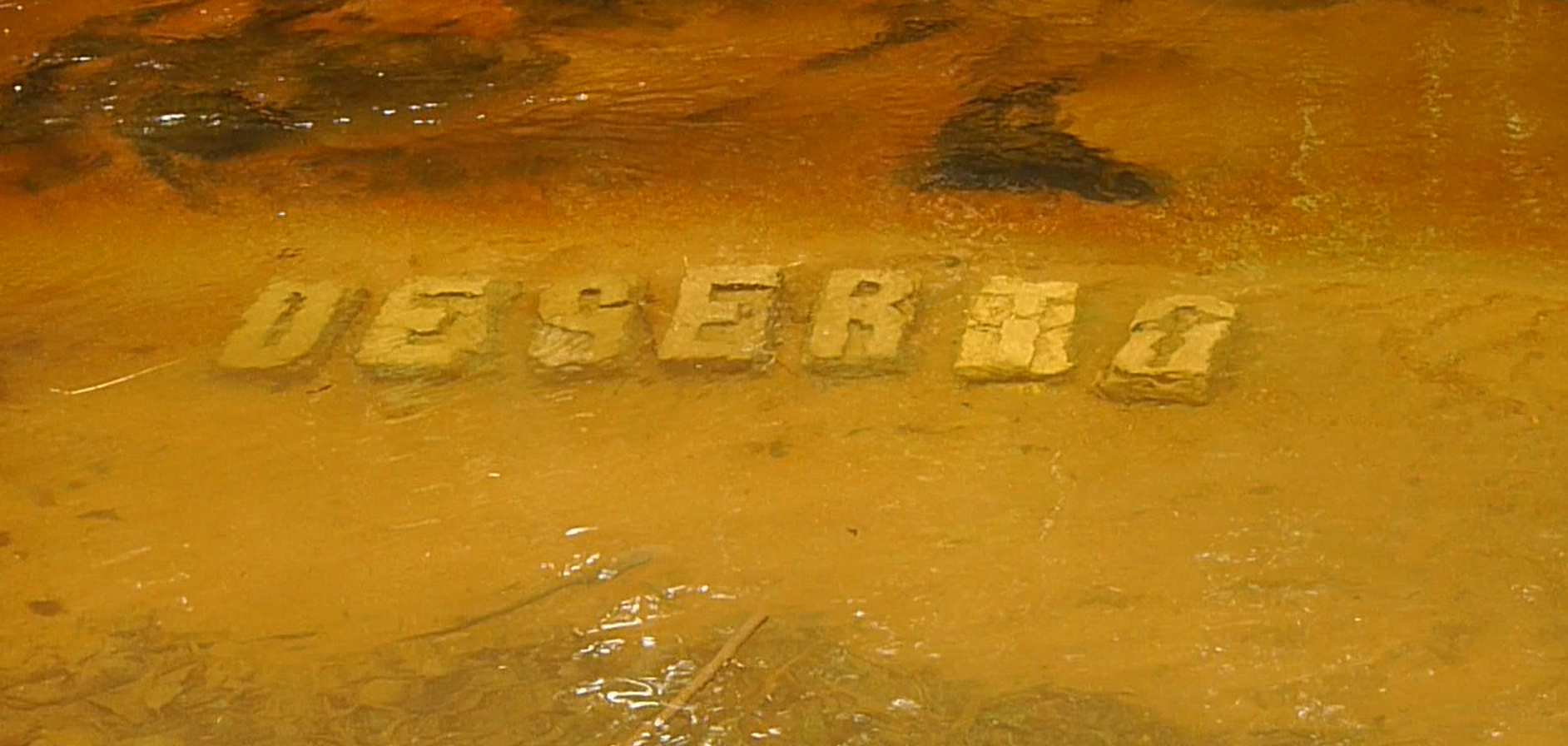
Deserto [Desert] is a very important work. This series, Livro paisagem [Landscape Book], even ended up as the beginning of my master’s degree and the title of my master’s thesis is Paisagem página [Landscape Page]. The intervention really happened and existed for a while.
Mas eu também tenho um hábito que é sempre pensar o trabalho no seu aspecto enquanto imagem. Eu acho que uma performance é imagem, uma intervenção é imagem, as coisas existem enquanto imagem, é um modo de pensar.
(Translation: I also have a habit of always thinking about the work in its aspect as an image; I think a performance is an image, an intervention is an image, things exist as images – it’s a way of thinking.) This for goes into a curatorial work I do, for example, for the Photoperformance Forum, which are ways of thinking; for example, the performance of someone connected to theater is in the field of experience, the performance of someone from the field of visual arts is very much linked to image production. This is noticeable when we study this universe. My field is image production, certainly, so much so that I draw my performances. I know where and how I want them to be recorded. I even draw and frame it beforehand. There are several other artists in the history of art who have also coldly considered how the record would be made and what would be disseminated. Joseph Beuys is one of those examples: we have access to some images, but they are meticulously thought out.
This work, Deserto, happened, but the video is what I present. For me, there’s a dimension of duration in this work; first, it appears as a poem, it has an order in which the letters are placed, which is “E”, “SE”, “SER”, “SERTO”, “ESERTO”, “DESERTO.” This order, its configuration, and this thing about the Portuguese language, the word “deserto” having the verb “ser” [“to be”] at its core is, for me, the point of interest. So when I place these adobe bricks, which are raw bricks, within a river configuration – in that context it was a very particular place because it’s a part of the river that only had sand and crystal-clear water – they will inevitably begin to crumble. We are talking about water, about earth, this interplay of elements that would only be possible within the narrative of the video. While there we can’t perceive this transition of matter in situ, because our experience, our human condition of perceiving these transitions, is very limited. Video helps; we can speed up or slow down time, make cuts.
At the time, for example, I wanted to leave a static camera in the forest recording the undoing of the word, but, 14 years ago I didn’t have the equipment for that, I didn’t have the money, I didn’t have the resources. As a result, the work is also a response to the context and the resources at the time.
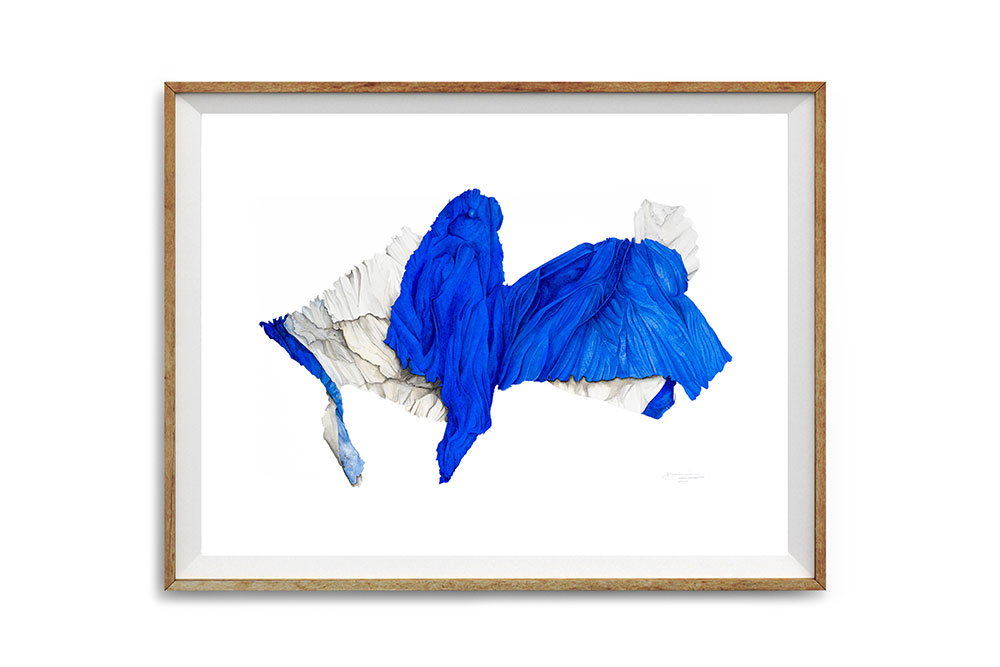
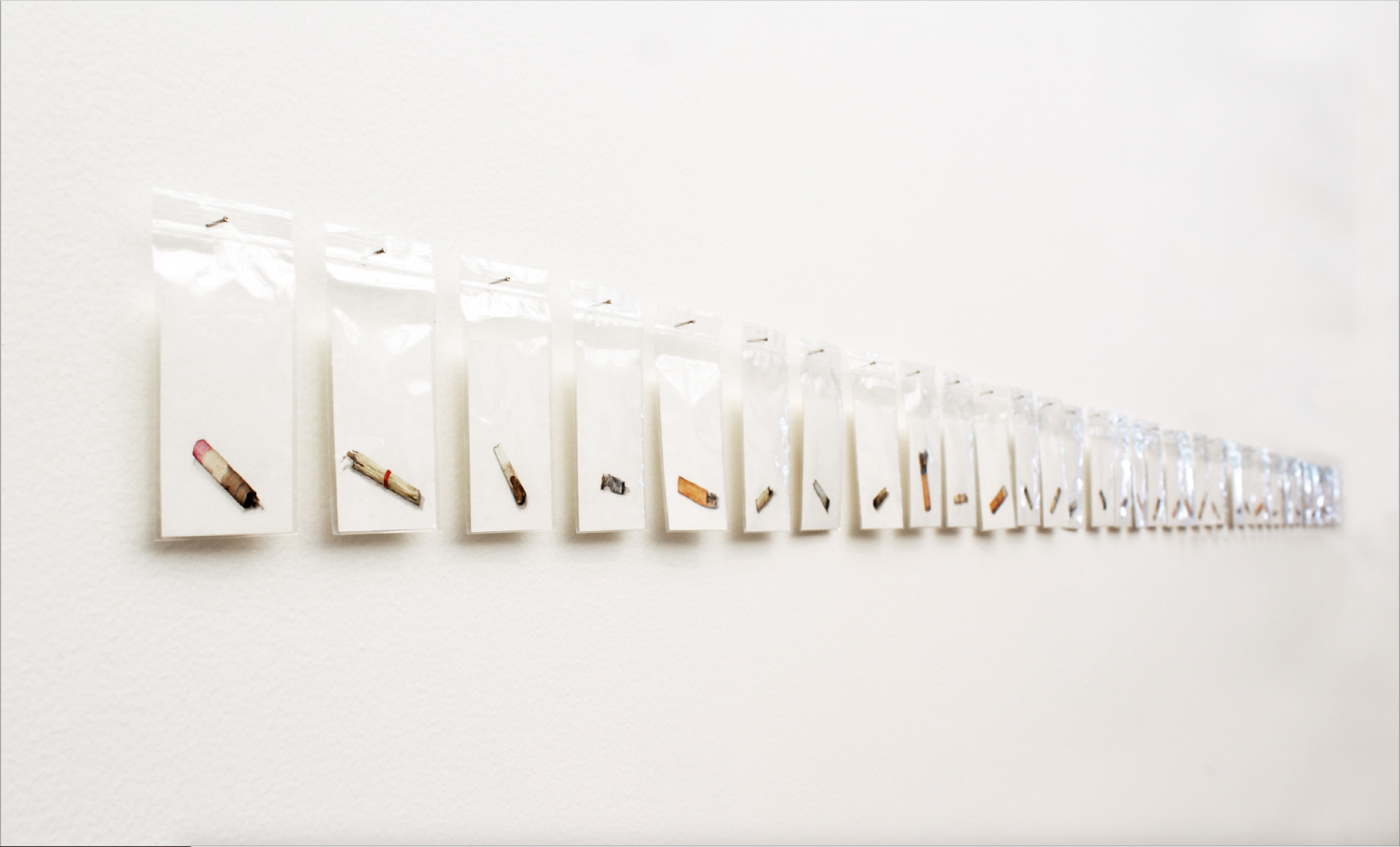
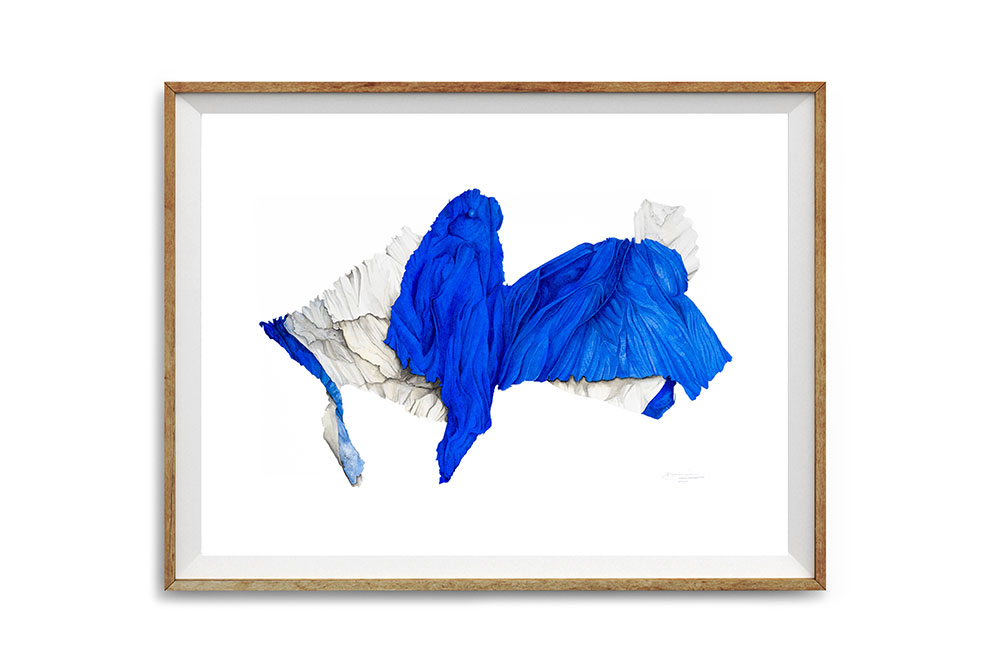
It’s funny you mention this work, Estalinho [Firecracker], because it’s a watercolor piece, a super meticulous, large-scale watercolor, intimately linked to a work from the same period, which are cigarette butts. I’ve been painting cigarette butts for 14 years. It’s an endless collection, like a drawing, a place of representation of a specimen. Watercolor has this connection, this intimacy with the place of representing the world, like the botanical watercolors of travelers, for example, which also represented the fauna and flora. Watercolor retains this sense of immediacy and also a characteristic of the technique, which is its portability. Watercolor, unlike acrylic and oil, doesn’t come back, it can’t be cleaned, because it’s a superimposition of transparent layers of paint. This peculiarity is both its beauty and a difficulty. So, the interest is in using this technique to represent something as awful as a cigarette butt. I started doing this in 2010, within a proposal from another artist, Irene Kopelman. She came to Brazil to give a workshop at that time, and she wanted us to paint stones, or things more readily available, things that were closer to home. So I left the building where we were, looked at the ground and said, “That’s it, cigarette butt.” And I started collecting cigarette butts and even understanding the cartography of the place, because this place, which was CentroeQuatro, is next to a street known as the street of brothels here in Belo Horizonte – Rua Guaicurus. So, it was very common, for instance, to find cigarettes smeared with lipstick. In another part of the city it was the more expensive cigarettes, so you start to understand, through the cigarette itself, a certain cartography of the space. This work ended up becoming part of an infinite collection because I only paint this cigarette butt once in life-size and, since they are very faithful representations, when people come to the painting, they say “Oh, how cute” and so on, but it’s a cigarette butt, one of the most hateful things.
I also didn’t pick up just any cigarette butt. I’d pick up, let’s say, the one that had been there the longest, or of a particular brand. But the point is: each one is unique. You can pick up the same brand, in the same place, but each one will always be unique. So it’s about picking up something so banal, and even in something so banal there’s this unique quality to it.
Eu estou sempre interessado em trabalhar não com algo que está distante, mas com algo que está muito perto. Isso me interessa bastante enquanto artista, trabalhar a partir de algo que nos é muito familiar, mas que, de alguma forma, seja pelo modo de trabalho, seja pelo deslocamento que é feito, isso possa ser visto e nos levar a outras possíveis leituras.
(Translation: I’m always interested in working, not with something that’s distant, but with something that’s very close. This interests me a lot as an artist, working from something that’s very familiar to us, but that, in some way – whether through the way of working or through the displacement that is made – can be seen and lead us to other possible interpretations.) A firecracker is a little bomb that explodes on the ground, a little piece of paper that everyone knows, but I spend weeks painting a large watercolor of something that small. In the case of the firecracker, the gesture of enlarging is precisely to remove, to make a division between the thing represented and the painting itself, even though it has an immediate correspondence to it. The object is so absurd, so rarely seen on that scale, that you lose your frame of reference. So people see petals, stones, but never the little firecracker.
What do you name the cigarette butts? What are their titles?
I’ve been calling it the Bitucas [Cigarette butts] series. I think all my works are kind of infinite series. The thing is, until now I’ve always exhibited them as one big line. And they’re exhibited inside a Ziploc bag. The bag is part of the work too. The bag exists because it represents this universe, this idea of collection, this thing of keeping things inside the bag, of identification. I exhibited this work again last year, in a large rotunda within the exhibition. And today I have a hundred accumulated paintings that I want to see how they can function within a different configuration. It’s a simple work, but one that I find very significant.
When I started doing this work, it was actually quite funny. Everything I was doing – the Tomie Ohtake award, the other exhibitions – was very much linked to interventions – in nature, in urban spaces. When I was painting these cigarette butts, which are super-realistic, someone turned around and, astonished, asked if I painted. I said, “Why not?” I don’t do interventions because I don’t know how to paint, but because the work demands that it be done in this way. This work, in this case, demands that it be a watercolor, in my view. It demands that it be in this dimension. The work demands the technique, not the other way around. Today, I’ve been painting quite a lot, but if you pick up my book A parte pelo todo [The Part for the Whole], you’ll see there’s sculpture, there’s intervention, there’s performance, there’s video performance, photo performance, there’s painting, there’s everything, all the languages.
And do you think these classifications (painter, sculptor) are still widely used, or has that changed?
This idea of defining something through language is much gentler today, though I still think it exists, especially when we talk about the market. Nowadays, the market is intimately linked to the institutional because the market works with predictability, not invention. The market expects you to somehow continue within the same line, so I think any artist who deviates a little from that has a greater difficulty, and painting is still the most prominent in the market.
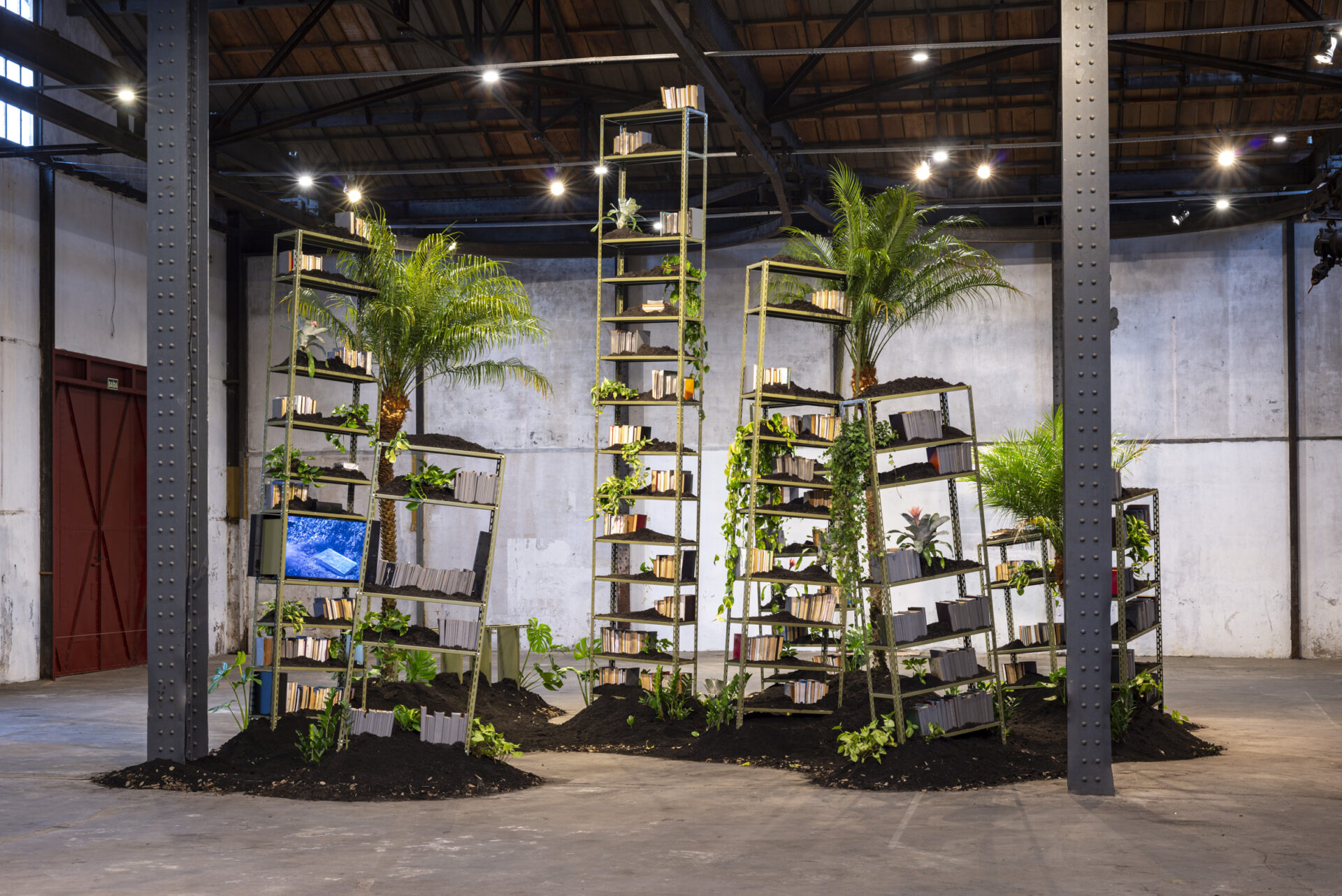
In 2022, I participated in the Mercosur Biennial, where I presented a giant installation, 7 meters high, a video installation (Da memória vegetal [From Plant Memory], 13th Mercosur Biennial, 2022). Having the opportunity to make work of this nature, the project is not lacking. The issue is that we know this depends on an institutional invitation, on a space with resources. I think the work responds, in some way, to the circumstances as well. I never sought to respond to a current agenda. I have my research that has been ongoing for over 15 years, and I trust that it is also responding to the issues of the time, but I’m not going to try to mold my work to the needs of the market.
Examining your works, the medium varies quite a bit, but there are these common points that I think are always interesting to observe. I’d like to talk about the Tempo-revés series (2013).
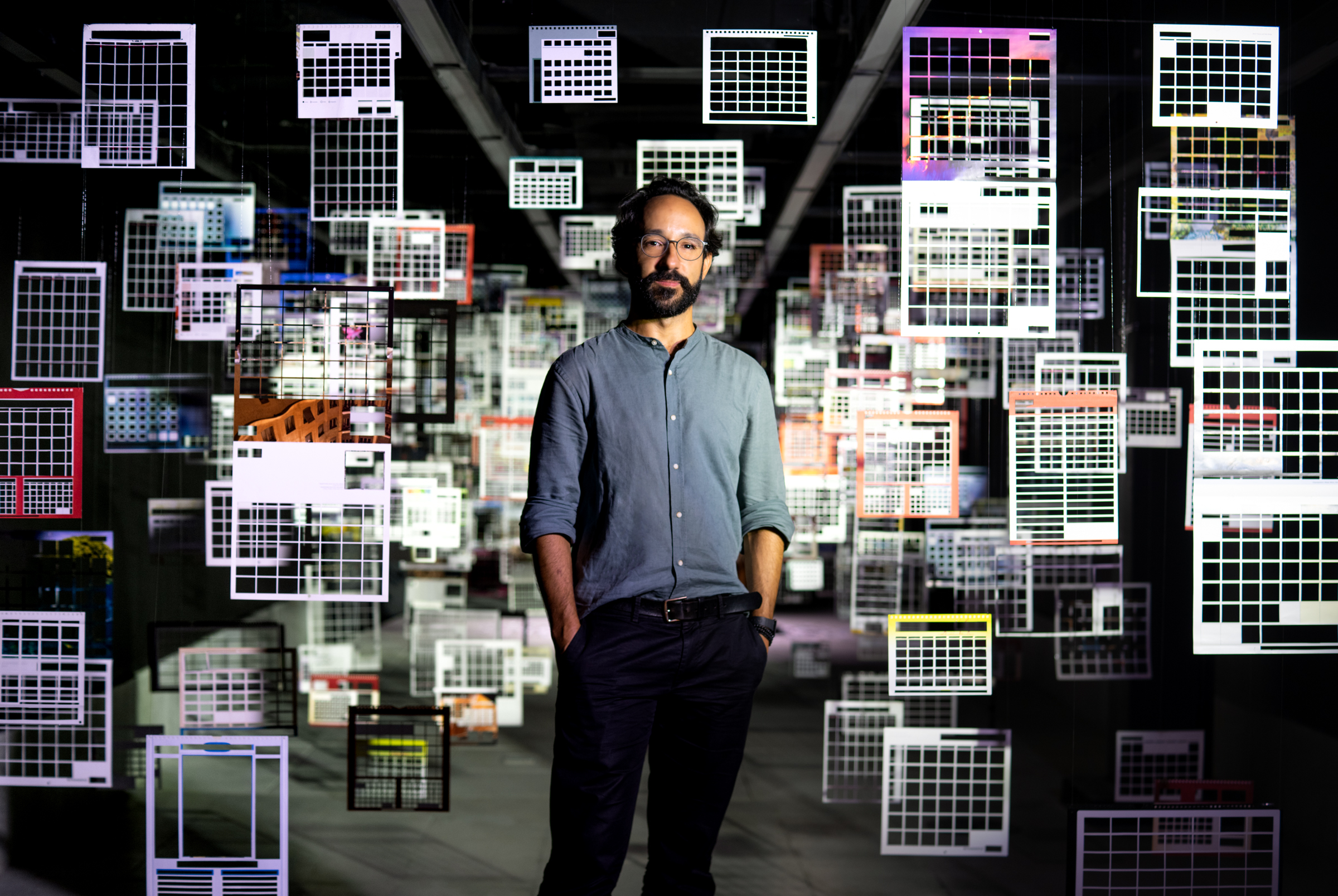
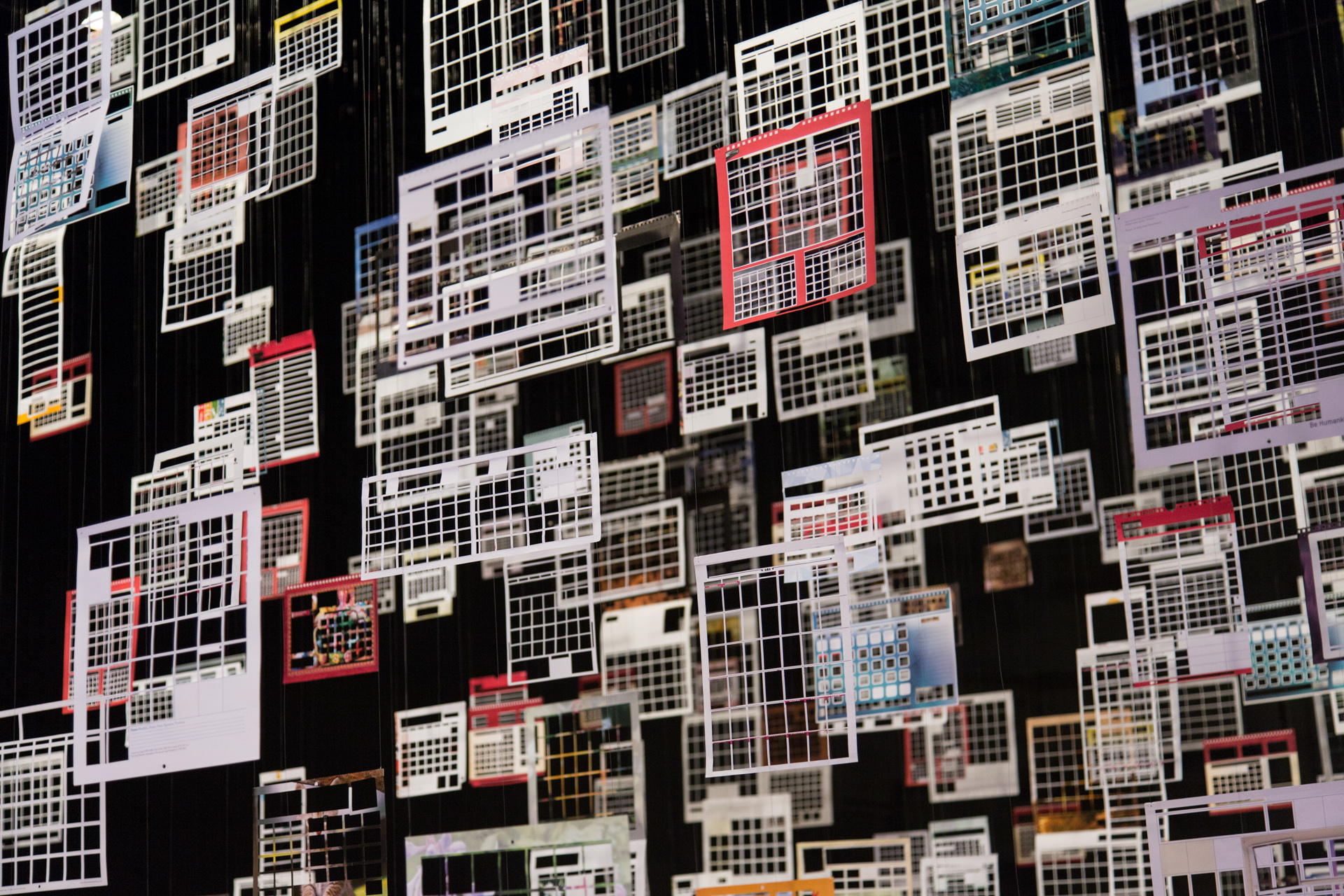
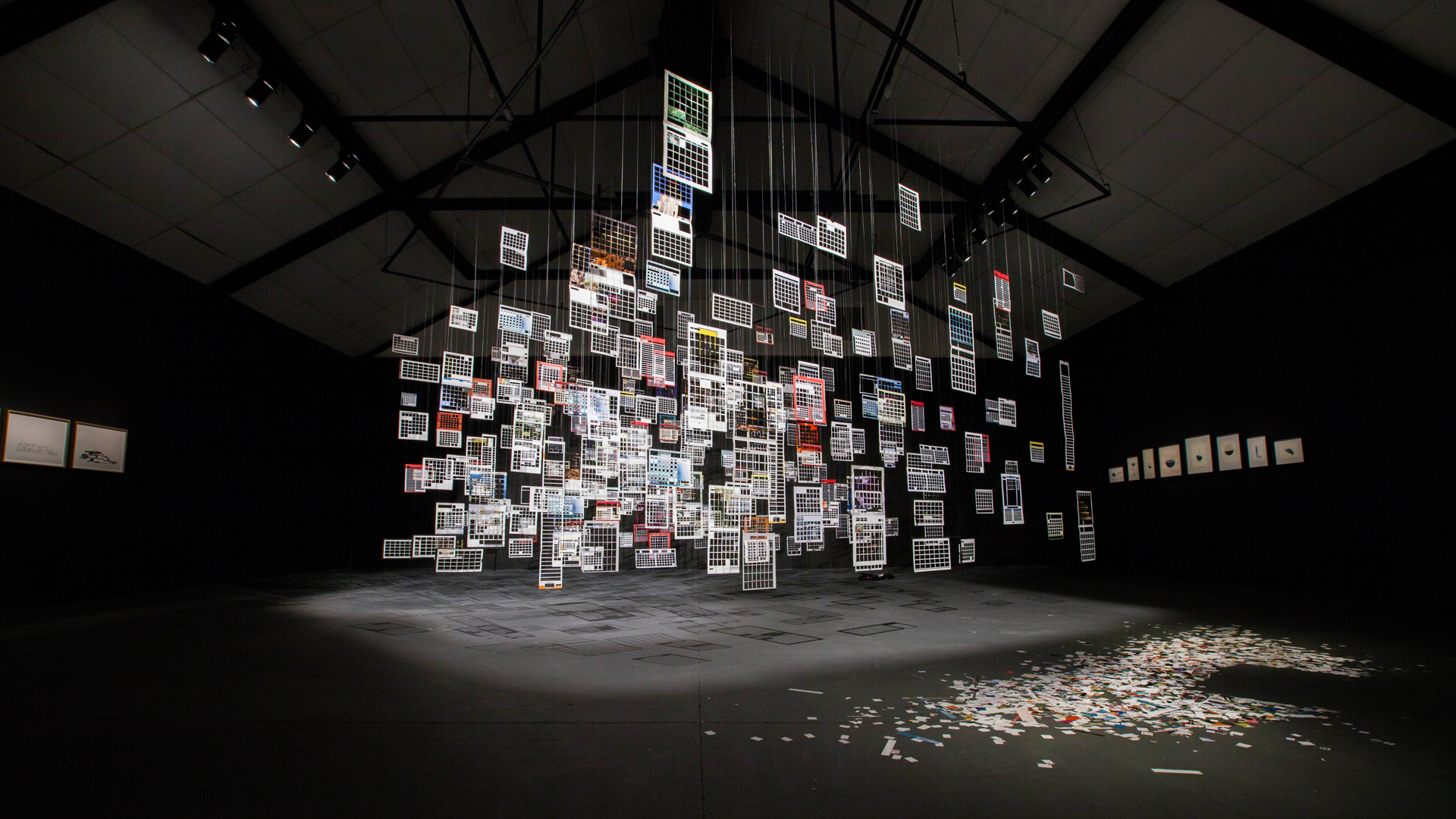
The Tempo-revés [Time-Reverse] series began in 2013. I exhibited the boxes for the first time in 2015, but it’s a work I started in 2013 when I was living in England. One thing that impressed me a lot there in England was their relationship with calendars. I had never seen a place with so many kiosks selling calendars. There were calendars everywhere, almost a basic kit for any place. It was very common at the end of the year to receive calendars as gifts from places. I found that interesting, at a time when I was also very reclusive. The operation of Tempo-revés is very simple. It’s about removing any, and all, references to time from the calendars: days, months, years, moons. And what’s left is this lace. And I found that extremely interesting. It was still a period when I was very connected to my master’s research, with Maurice Blanchot, Georges Didi-Huberman, with this idea of time outside of time, which is the time of writing, the time of creation. When we do this with the calendar, we realize how arbitrary our way of thinking, dividing, and organizing time is. Because the calendar is an invention, a dated invention, even. The word calendar comes from Latin, from the tax collection register book in the Roman Empire. And it actually arose from a need to remember when to collect taxes from people. The calendar we use is the Gregorian calendar, which has been improved over the centuries, but each society invented a calendar, like the Mayans had their calendar, the Incas had another. Each people, each civilization, in some way sought, and continues to seek, to organize time in a different way. Once these references are removed, what remains? What remains is a skeleton of our way of thinking and organizing things, which responds very much to our Western way of thinking; in boxes, and of giving shape to things. This connects with the book, which also connects with recent works that, through a cutting operation, take a known object, but at the same time is completely defunctionalized.
Tempo-revés is a series that spans various media. There are the boxes, which are essentially a 12-page calendar, generally one page for each month. We see the entire calendar, but all the numbers have fallen off. The installation, which is where the whole work originates, is part of this emptying gesture, and it’s associated with my age. It’s an installation in progress because every time I show it, I have to cut up more calendars, which means every year I add a calendar. In 2023, I exhibited it at Casa Firjan, in Rio, with a different configuration for the first time. It’s a work that’s three meters high; it really needs a huge warehouse, even though it fits in a small box, because it’s all hanging paper. There were more than 400 sheets hanging, and the space was completely different: low, but very long. I made this immersive installation inside which people walked, which was incredible, with a sound installation. I invited a partner, Davi Fuzari, to create a specific sound piece for the work. In this way, it was another work based on the previous work. I remember when I exhibited it at the Tomie Ohtake Institute, some people were crying. This work made an impression because it has an imposing quality when displayed in a different way, and there’s the sheer scale of the piece; you have to consider that each little square was cut out by hand, so it’s a massive, gigantic work. You can’t help but think about the passage of time, about that time that doesn’t come back, about that time that has already passed.
There’s also the performance, which is just taking the act of cutting the calendar into a public space. The first time I filmed with the crew was in a very symbolic place; at the intersection of Bela Cintra Street and Paulista Avenue. This is a very emblematic intersection because Paulista Avenue dips underneath to access Rebouças Avenue, and so there’s that configuration of being on a small island, in the middle of a huge traffic jam, being filmed from afar, and then you have the city submerging, emerging, and that madness. In the performance, I stay for eight uninterrupted hours without getting up for anything, without eating, only taking a sip or two of water, in absolute silence, cutting, emptying these calendars, which refers to the workday, dressed in a kind of worker’s outfit. I’m sitting and there are people passing by dressed in a similar way: dress, shirt, tie, etc. It’s a work that takes place in terms of a duration because, when the person arrives for work, I’m there, when she goes to lunch, I’m there, when she leaves, I’m there. It’s a work that also includes a series of photographs, which is another series of objects. There are the boxes, the photographs, the platform, the video. These are all ongoing works.
And you mentioned that the initial idea for the work came when you were doing a residency in England. Was this universality of the concept and the work intentional?
No, it happened because of the object itself. It’s something rather banal; it’s the object I had at hand, which interested me at that moment. I was isolated, with this object in the studio, and I understood that this motivated me. I even put out an open call in the city newspaper and started receiving donations of calendars from the city. It was the funniest thing, receiving boxes of calendars – it was really good, precisely because it’s something very common in the area. Some people still remember this work that I collected, just like I collect books. There’s work involved in collecting material. Currently, the only art materials I buy are brushes and watercolors, the rest is mostly construction material.
To wrap things up, I’d like to ask you to share a challenge you’ve faced, or are facing, in your career.
I think the challenge for any artist is to not stop, because we often go against what the world, the time constraints of work, and money, all dictate. I’m talking about any artist committed to artistic research. I think that, within this niche, there are still many ways to be an artist, but I would say it’s about not stopping, because it’s precisely a job that involves having one foot in both camps. One thing is to maintain research, a place of drive, understanding, interest, and enchantment with the world; another is to weave this together in a world where we are still dealing with the production of objects, the production of images, the production of meaning, in a world that is overloaded with these same elements, which will always devalue this act of creation. Or, when you reach a certain level of market interest, the artist will be objectified, and then it moves to another level, perhaps one of surplus value, which also completely escapes the world and reaches an astronomical level. So, perhaps one of the most difficult things for an artist is to maintain a consistent output without losing momentum, without losing that sense of wonder.
I think that some people who come from wealthier families are less likely to suffer from this variability, but any artist working outside of those backgrounds will always face the difficulty of finding a balance between time availability, resources, and financial resources because, sometimes, research and passion aren’t enough. We know that, living in Brazil, we’re in a country that doesn’t particularly like public policy in the field of culture, which are almost always concentrated in a few places, and in a few areas also. Unfortunately, the visual arts aren’t one of them, despite driving a gigantic economy. We know that most artists live and produce precariously, without minimal security. So I think the biggest challenge for an artist is not to stop, not to submit their research to grant applications. The culture of grant applications is good in the sense of democratizing access to resources, but we know that resources are very limited, and we fall into another realm that is also very distant from artistic practice and research itself. How resilient you are involves managing so many setbacks. It’s about not stopping and continuing to produce what you believe deserves your time, your attention, your resources—that unique contribution. Sometimes we’re happier when things coincide with the right time, with the right moment, but other times it’s really a struggle, because it’s cyclical.
I consider 2007 the year I started showing my work, which I understand as the beginning of a kind of artistic research that differs and continues to this day. So, we’re talking about 16, almost 17, years of uninterrupted production. I think that’s a distinguishing factor. The challenge is always how we maintain this space of research that also transforms over time and that won’t be a static image frozen in time for the market to consume. And I was very happy that you brought up the earlier works, because those who, for example, are seeing the more recent works will also see that the work I’m doing now is intimately linked to what I did in 2008 and 2009, which is when the series began.
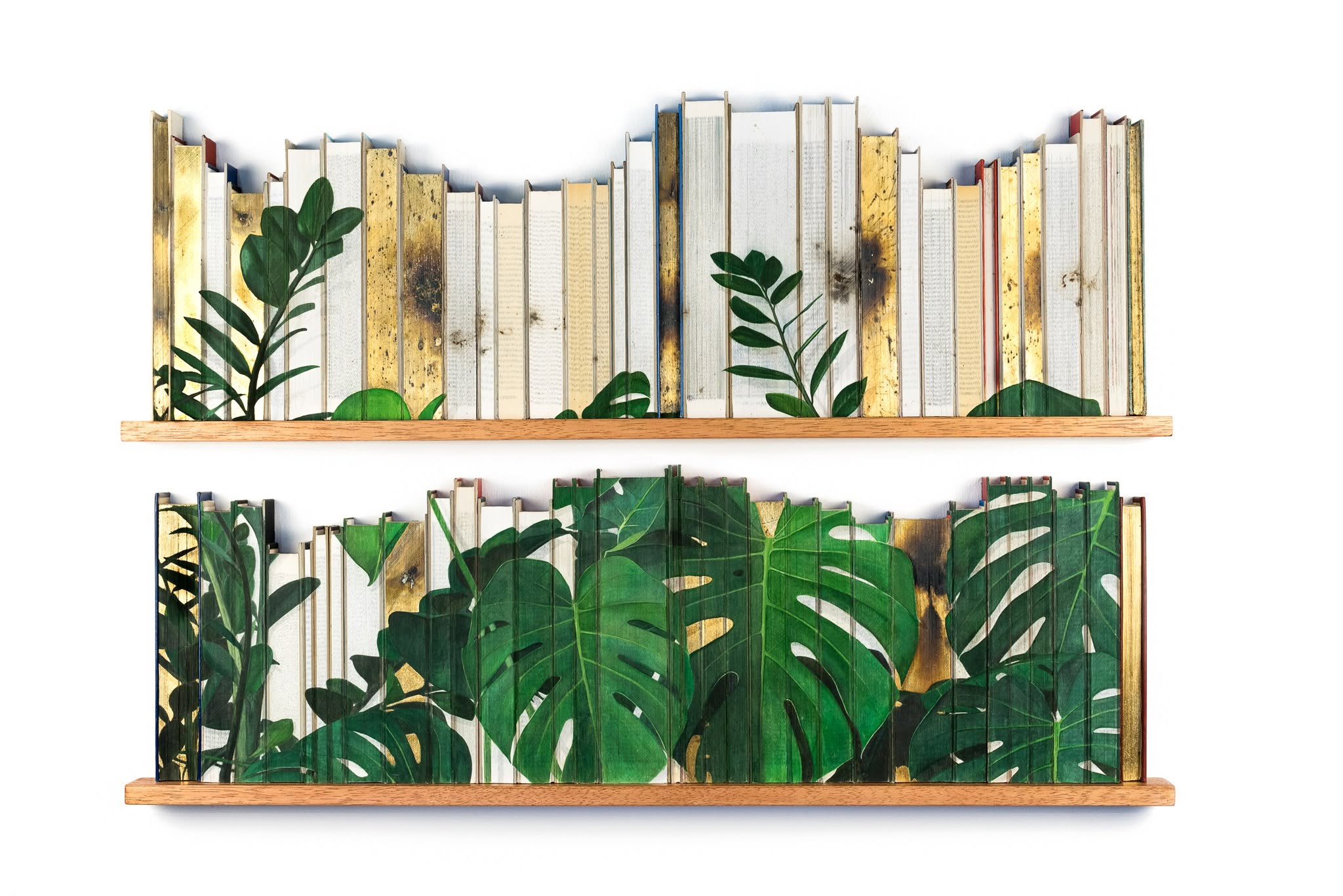
I like to say that the works from the series Biblioteca por vir [Library to Come] (2019), which are the paintings in books, for example, are part of a larger library that I’ve been painting for some years. And my challenge this year, for instance, is precisely to find space in my schedule to create this installation within a library, to occupy an entire library, so that this work can be seen in the place where it was conceived. In the case of the installation from the Tempo-revés series, it was such a megalomaniacal undertaking that it took me four years to be able to show the installation. In 2013, it was already finished and planned, and it took me four years because I needed a warehouse, I needed money, I needed people to be able to assemble it.
For me, work that was done 10 years ago is sometimes more alive than what I did last year, because the time of production isn’t linear, the time of research isn’t linear; it’s much closer to a spiral that returns and passes through the same place, but at the same time, it’s a different place. What changes with time is that we come to understand that some works take years to be made, to be stitched together.
Interview conducted remotely via Zoom on July 15, 2024.
Steel bookshelves, books, televisions, plants, soil and Full HD video (4’45’’)
Photo: Marco Gonçalves
2022
watercolor
90 x 70 cm (framed)
2020
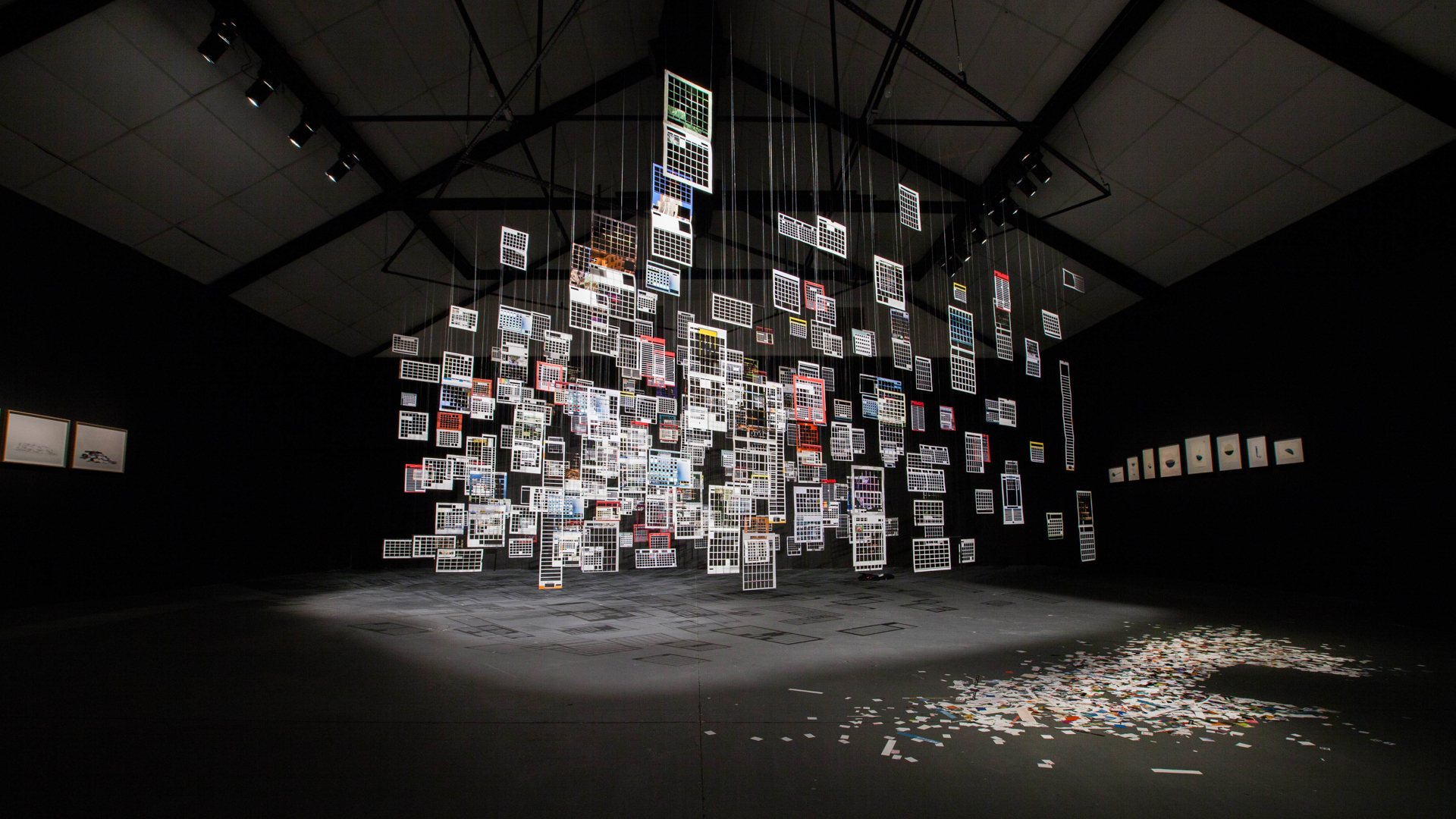
Installation overview , Commercial calendars cut outs and nylon fiber
5 x 6 x 3 m
2013
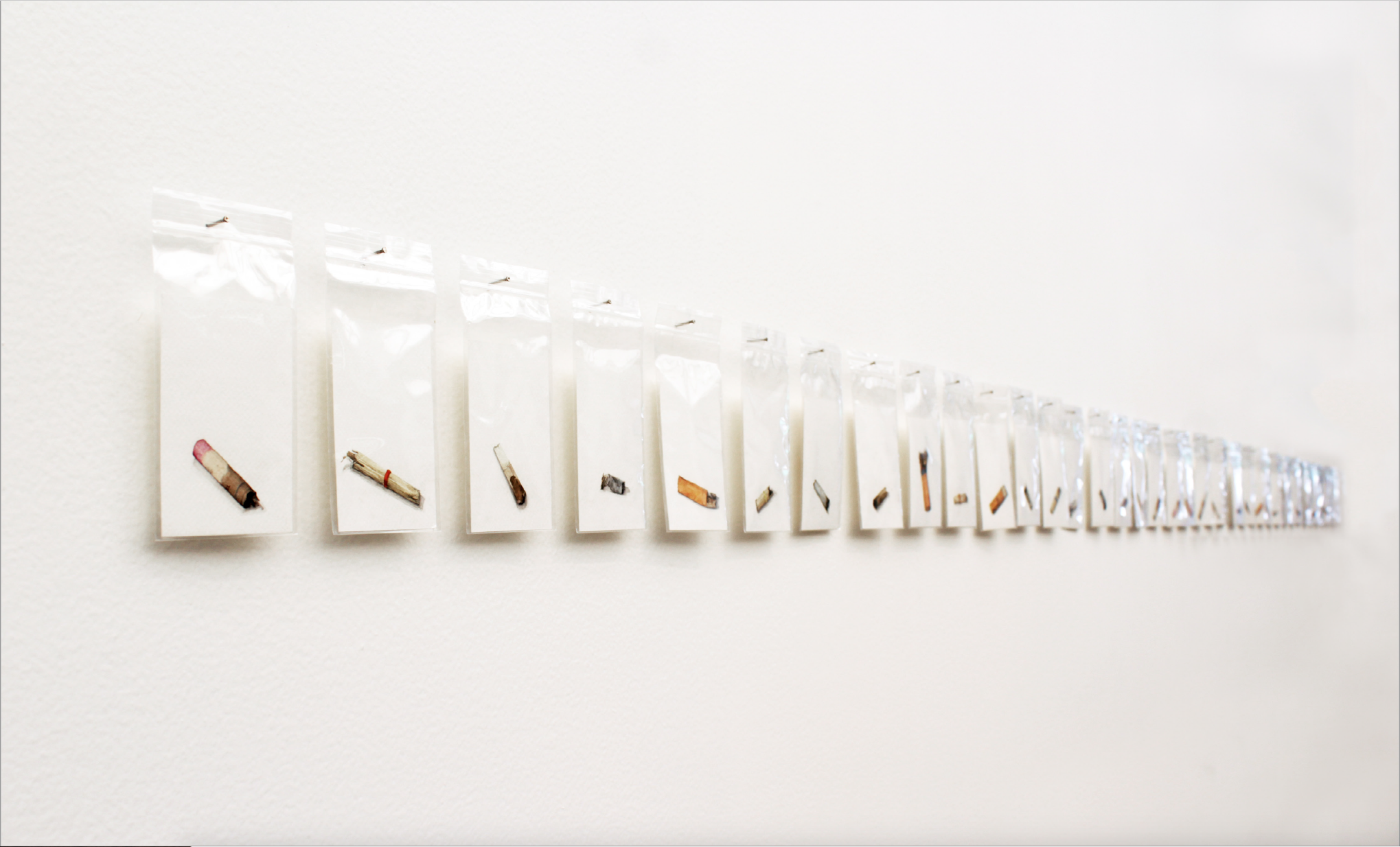
watercolor + zip-lock
7,5 x 11,5 cm (each)
2011
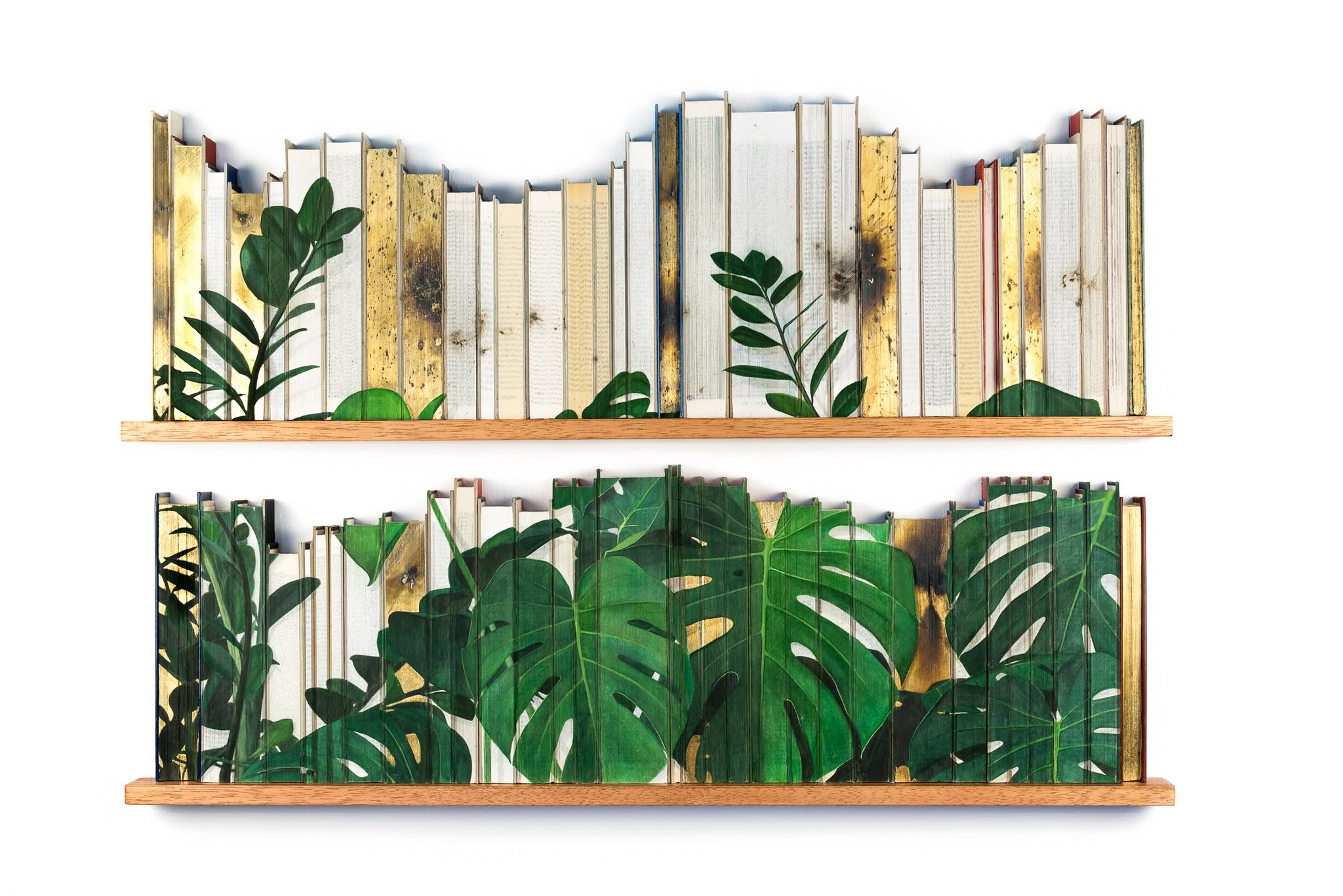
watercolor, gold leaf and gunpowder on sliced books
100 x 80 x 5 cm
2020
Frame
2010