

Nino Cais
Nino Cais (São Paulo, 1969) is an artist whose works are based on connections – between past and present, artist and viewer, human body and material world – and are presented in various forms, such as photography, video, sculpture, and collage. Cais’ work is characterised by a deep sensitivity to the subtleties of everyday life. He uses memory as a tool to explore the present, to question what we know and how we know it, and to challenge our own notions of identity and belonging. In the interview, Cais discusses how his personal and professional experiences have shaped his approach to art. Check it out:
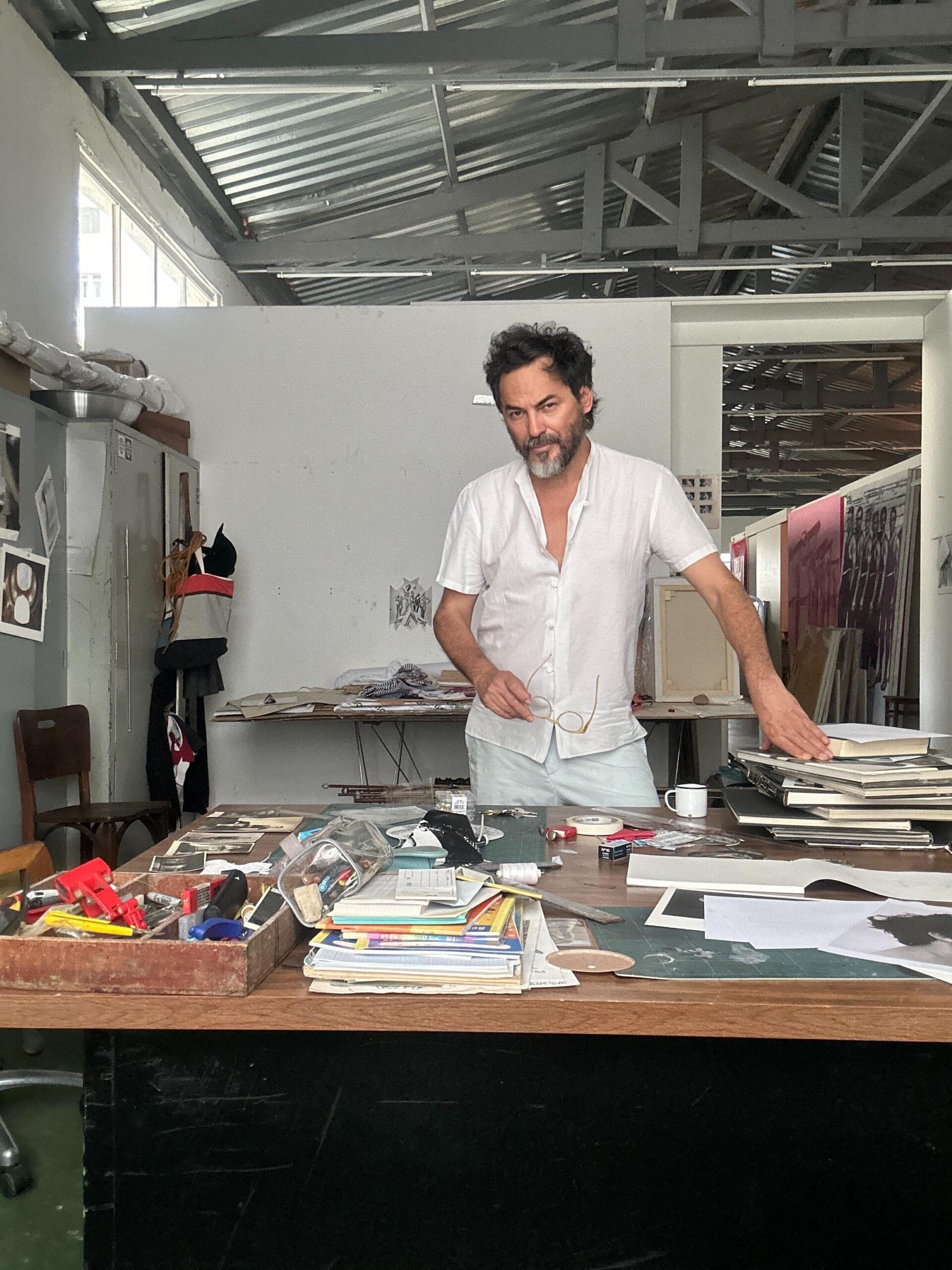
Nino, thank you for having us in your studio. I’d like to ask you to introduce yourself, thinking of an audience that may not yet be familiar with your artistic practice, with any information you think is relevant.
I’m Nino Cais, I was born in São Paulo and spent most of my childhood in Freguesia do Ó, a neighbourhood in the city. I come from a very ordinary family and grew up around the church. I studied to be a priest and I think it’s important to say that, because my work carries with it some ancestry, or spirituality, or aura. After a year of studying within the seminary, I had a personal crisis. I went back to São Paulo and got a scholarship to study at Faculdade Santa Marcelina, where I did a bachelor’s and a graduate degree. In parallel to my art production, I taught in a social project for ten years on the outskirts of Campo Limpo where I worked with young people aged 14 to 21. I loved this work and learned a lot. I was producing at the same time, though I barely had a studio. In 2012, I was invited by the poet Luis Pérez-Oramas, who is a sensitive person and a wonderful writer, to take part in the 30th Bienal. After that, a series of possibilities opened up and I went on to work with galleries outside Brazil. This broadened the meaning of my work much more. I was invited to work on a series of projects, something that underpins my production to this day – I continue my research with the same determination, the same dreams. It seems that we’re always still children; we’re always dreaming bigger and wanting to achieve even more possibilities, and for our work to question more, to provoke more. I think I’m still very young and I want my work to grow a lot, because I haven’t learned enough. I want my work, together with myself, to learn and go out into the world with this questioning, to really transform it, to make some sense of it.
O trabalho de arte, a gente sabe, não tem utilidade, mas eu luto para que o meu trabalho faça algum sentido no mundo. Meu desejo é esse. Eu continuo ainda muito jovem, muito inexperiente, sonhando que meu trabalho de fato atinja o espectador e lhe dê não somente um objeto com sentido de valor, mas que esse valor seja muito mais simbólico, e que ele ataque o outro em outro sentido, que amplifique o nosso volume de escuta, de ser humano, de ser social, de ser que questiona, de ser político.
(Translation: Art work, we know, has no usefulness, but I fight for my work to make some sense in the world. That’s what I want. I’m still very young, very inexperienced, dreaming that my work will actually reach the viewer and give them not only an object with a sense of value, but a much more symbolic value, that it will challenge others in another sense, that it will amplify our capacity for listening, of being human, of being social, of being questioning, of being political.)
We’ve known each other for many years, but we’ve never sat down together to talk about your work objectively. I’ve never been to your studio, so it’s also nice to have this opportunity to finally interview you and access your work in this other way.
I think listening to the artist is always something other than what you can see. Especially for me, who works within many forms: I go from sculpture to video, to drawing, to collage. Sometimes there’s no connection.
Based on what you mentioned about your artistic practice being very plural and navigating between different media, what is it like for you to negotiate this movement?
Firstly, to contextualise, I think that when we look at the history of art itself we end up creating a roadmap. Artists very much had an idea of following on, which was a requirement for them to be able to articulate their work and understand themselves within the art circuit. I think this was also directed towards academia. Artists were committed to a single subject, a single form, because it wasn’t just the artist’s choice, it was in the nature of the art environment. If you think about the -isms – minimalism, impressionism – you learn that art had segments. I think they’ve been breaking down, especially since Duchamp after his milestone of putting an everyday object on show with such certainty, and questioning the idea of the artist’s own making, what we understand as creation, process, the idea of genius. I’m putting this into context because I’m now starting to look back and realise that we have to practice this freedom. Those who have an affinity with various forms should settle in this place and be at ease with it. My work has a plurality because I began to look at this history and question it. I think it’s actually multiplied since, and this plurality is now much denser, much more extensive. The questions have also changed within the nature of art. Today, for example, we see much more social and political content in art work rather than simply the aesthetic, or the mere praising of beauty.
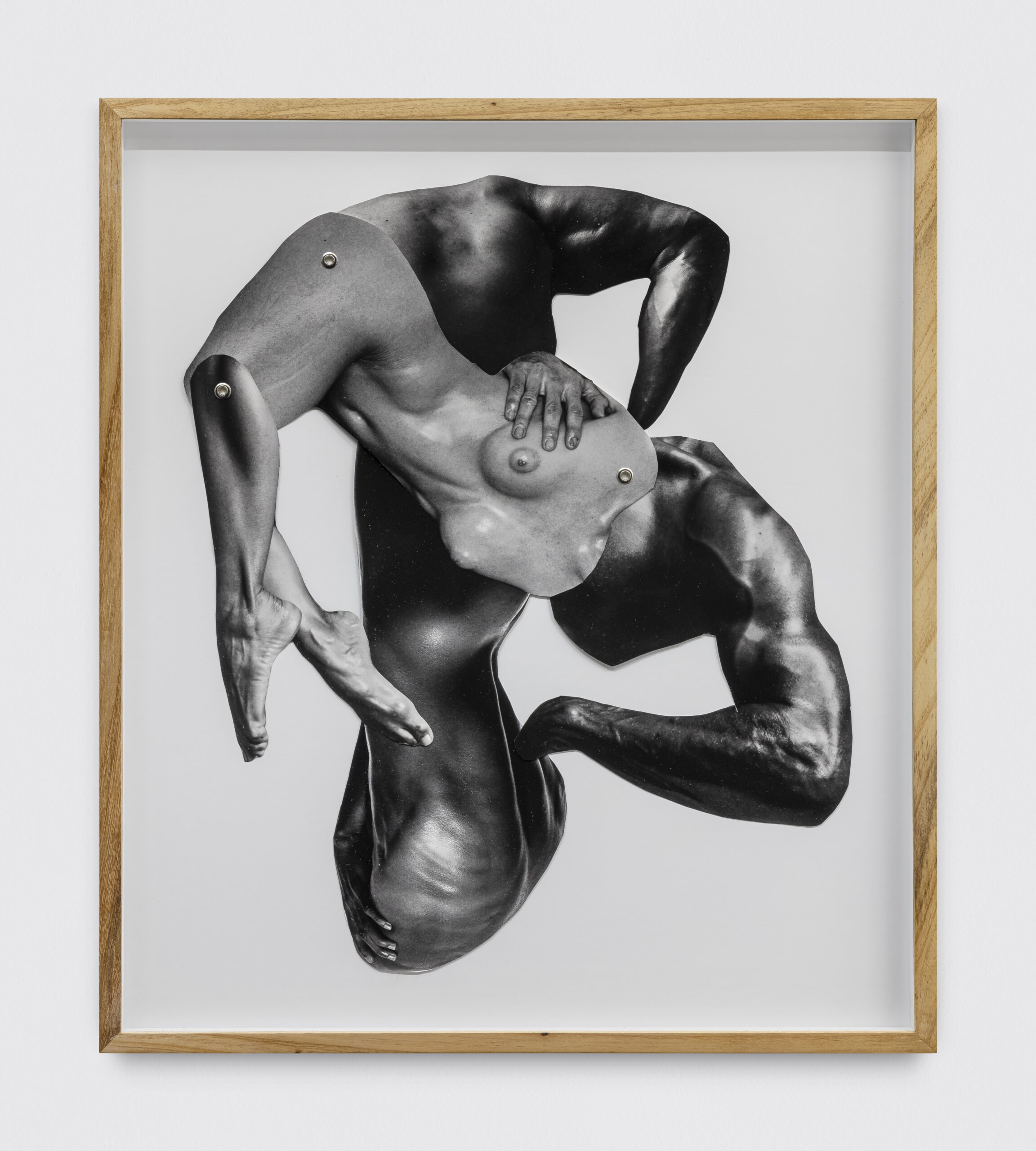
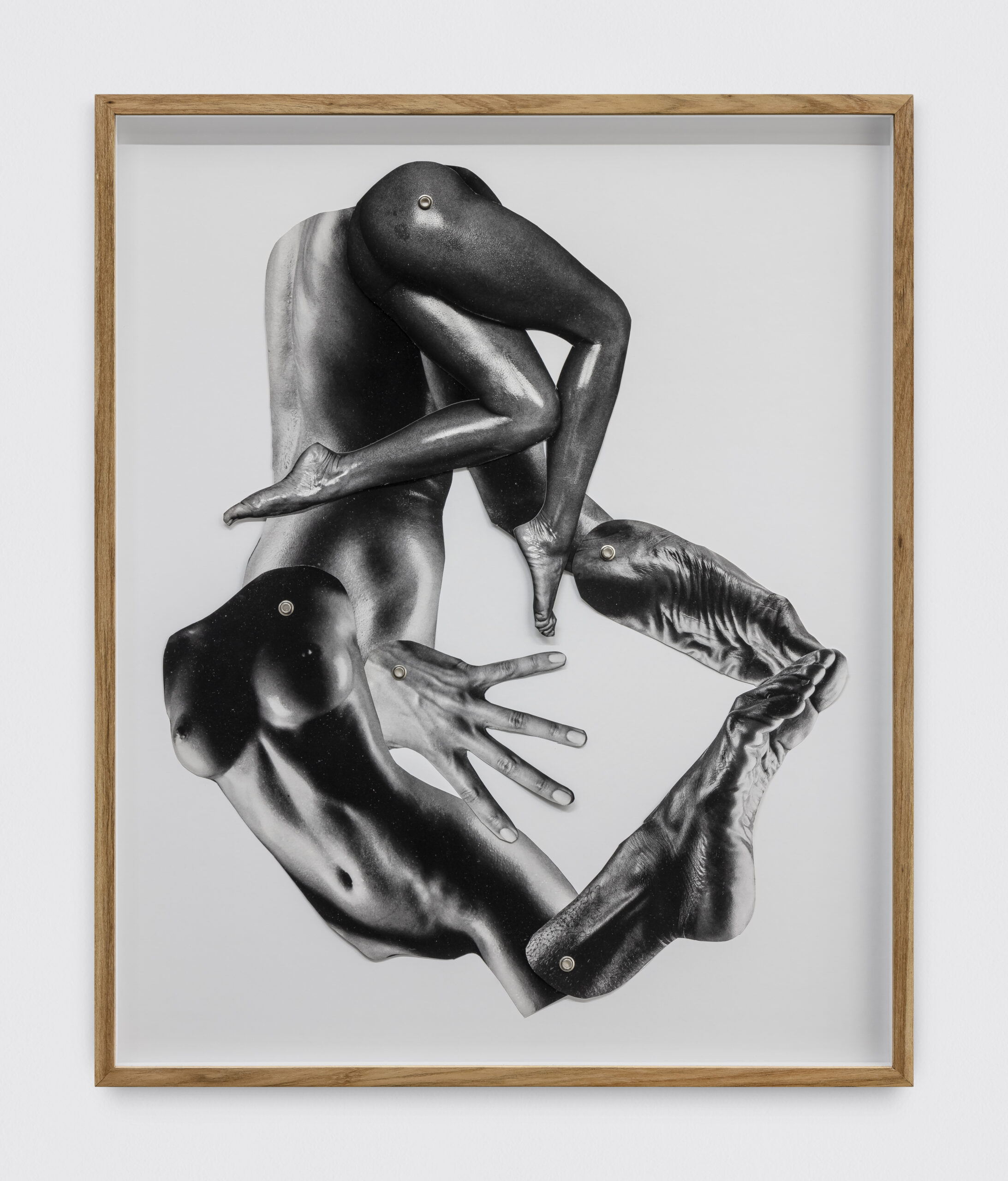
At university, I initially became involved with a few subjects that fascinated me. The first was understanding the question of everyday objects and my surroundings, so I ended up working a lot with objects, which continues within my research to this day. Although we can multiply possibilities, I think there is a common thread that aligns itself and pulls you along for the rest of your career. It’s a thread that’s half-transparent, half-invisible. I also became very interested in fabrics because my mum is a seamstress. Then I started working with photography, the body, and objects. As I really got my hands dirty, feeding off this material, these ideas, the work naturally created new pathways and roads, new axes. I began to think that the idea of the body, of the object, has a very broad meaning. I stopped just photographing myself and started examining the systems of photographing the body. I began to observe how the body is photographed, watched, praised, contemplated, exalted, and desired when we look at an image, or when we buy a magazine – be it in fashion, a nude, or even in pornography. The body has an appearance in these whole universes, and a purpose, which is sometimes confused by the place it occupies. I was no longer interested in just my own story, my own daily life, but in understanding these multiple bodies that are in the world and what they communicate. Then I began working with image appropriation. I started buying a lot of images, mainly of male and female nudes. Initially, I worked with these two possibilities. Today, I work only with male nudes, really as a matter of ethics and respect for the female figure. and so as not to take a position in relation to this body – although I have a bit of “freedom” because my only influence growing up was my mum, so I feel the feminine lives very strongly in me.
I think that’s why my work has such breadth. Nowadays, when someone says: “you work with performance, you work with photography, you work with collage,” I always try to answer that I work with ideas.
As ideias se instalam na minha cabeça, criam uma provocação e questionamento e eu tento derramá-las para o mundo. E quando eu tento derramá-las para o mundo, eu começo a encontrar a linguagem.
(Translation: The ideas settle in my head, create a provocation and a questioning, and I try to pour them out into the world, and when they spill I start to find the language.) Then I say: “this idea works much better in a video, it needs this movement, this idea needs to be an object, I need to draw it, I can’t materialise it in any other way if it’s not through drawing.” I’m an artist who works a lot with my hands; I like to get involved with materials, to look for materials, to choose.
I have this broad openness to my surroundings and to the things around me. My work manages to have these different sides, because I’ve permitted myself to leave behind a very narrow set of resources in order to manifest much more of an internal desire. And this inner desire doesn’t imply a single condition, a single theme. It’s broad, just like our lives, our senses, and our feelings. This breadth of being fits into a work. I’d say it’s work with multiple forms, but the ideas are generally much more fixed and solid.
Thinking about what you’ve said about your research into the body, although it may come from photographs, these representations of the body are sometimes abstract, with some cut-outs showing it more clearly. Also, thinking about the male and female, how do you see this relationship between the body, and the art object, and its representation?
I think there’s a lot of abstraction, in fact, because the body generates many meanings and signifiers. The body is eminent, an inexhaustible source of possibilities. In this sense, the body is also something abstract. When I cut out the image of the body, I often deconstruct it almost. I think of it as existing in pieces, as separate parts. Images of Greek or Roman sculptures broken into pieces always come to my mind. We have the advantage of using our history and the knowledge we have to complete this body. Even when the body exists in some way that is not very visible in my work, in which case we can use the word “abstract,” I understand it as a body that carries the meaning of “body.” For example, I have a habit of working a lot with chairs, and I say that the chair is able to name itself, to bring a body present. When we look at a chair, we think it’s there to receive a body and we imagine that body leaning against it, snuggling up to it, taking part in that object. The object and the body have similarities and are almost a pair. Everything that exists in the world exists only because of the body, which is the mould for everything that exists. And since the body is that mould, everything that comes out of the body is, for me, a sculptural object. I no longer have this limit of, “this is an art object, this is not an art object.”
In fact, in my work, there is a body that is sometimes less visible, sometimes less apparent, but it still questions an idea and a purpose of the body, of this physical body, which has its extremes – the tips of the fingers, the tips of the feet. or the top of the head. It tries to make a link, to go around this whole and the symbolism of the body, even when it is not totally concrete, or displayed in a more narrative way in the work.
Along these lines, I’d like you to talk about the sculptures in which you use clothes, but always together with other objects.
These works are a little more study-orientated, but I wear men’s shirts a lot because of a social construction, the idea that the shirt carries the representation of a formal man, and contains the sign of the formality of this figure called man. As I said, my body doesn’t seem to fit this masculine figure. I’m distorting, breaking, and trying to put this prototypical male body in contact with another element that refers to a sometimes domestic universe. This body is always trying to set up a partnership, or connect with some element of nature, the environment, objects, and it mimics these elements when the two are together and takes another form. You can no longer understand what is outside the world and what is inside the body, and how symbolic these two things are. I always say that when you look at a porcelain cup decorated with flowers, it inevitably takes you back to the past. The object brings with it time, memory, and history, so we can’t abort our memory, or even the idea of an ancestor, for example, without the history of the objects themselves.
Antoine de Saint-Exupéry (1900-1904) has a quote that I really like, in which he says that he’s not afraid of dying, but he is afraid of losing the meaning or the tie with things, because things make him more eternal. He says that when he thought of a ring of his grandmother’s, he put that ring on and he had his mother’s time, his grandmother’s time and his own time; he stretched out time, made time denser and more eternal. Objects have this capacity – what surrounds them also represents time.
I like to align these things, from the objects, to the fabric, from the fabric, to the body. Clothing is very important to me because clothing is a cloak, almost like another skin. Our bodies have adapted very well to clothing, so we have these two elements that oppose each other, and it’s no different with sculptures. When I work with objects and fabric I’m also trying to set up a dialogue between the body represented – not the body present – and these objects and show how they line up, how they intersect, fit together, and how it seems that one depends on the other.
How do you initially come across these materials? Do you look for an object from a specific period, for example, or do you use your own archive?
These encounters can happen in various ways. It’s almost like a flirtation, let’s put it that way, because I walk through the city and look at objects. Sometimes it doesn’t make any sense but I just like the object – its texture, its colour, its materiality, or its meaning – then I bring it into the studio and it lies dormant there. Sometimes I don’t even use it properly once I’ve bought it. There have been objects that have stayed in the studio for ten years, after I first saw them with a view to producing something. Some of my shirts that I buy and end up not wearing very much, I bring back to the studio too. I’m not really interested in who the object belongs to, but rather what it traces as a schema and a meaning in itself. A shirt is always a shirt, a cup is always a cup, it doesn’t matter if it’s mine or the neighbour’s, if it’s old or new.
Whenever I travel outside Brazil, my favourite thing to do is to go to a bookshop. Sometimes I prefer going to a bookshop to going to a museum, because there I’ll have a lot of possibilities to feed on these materials. When I’m closer to home, sometimes I go to an antique shop, rarely to a thrift store. Then I bring these elements into the studio and, over time, compose this symphony of possibilities that they deal with, and that they carry.
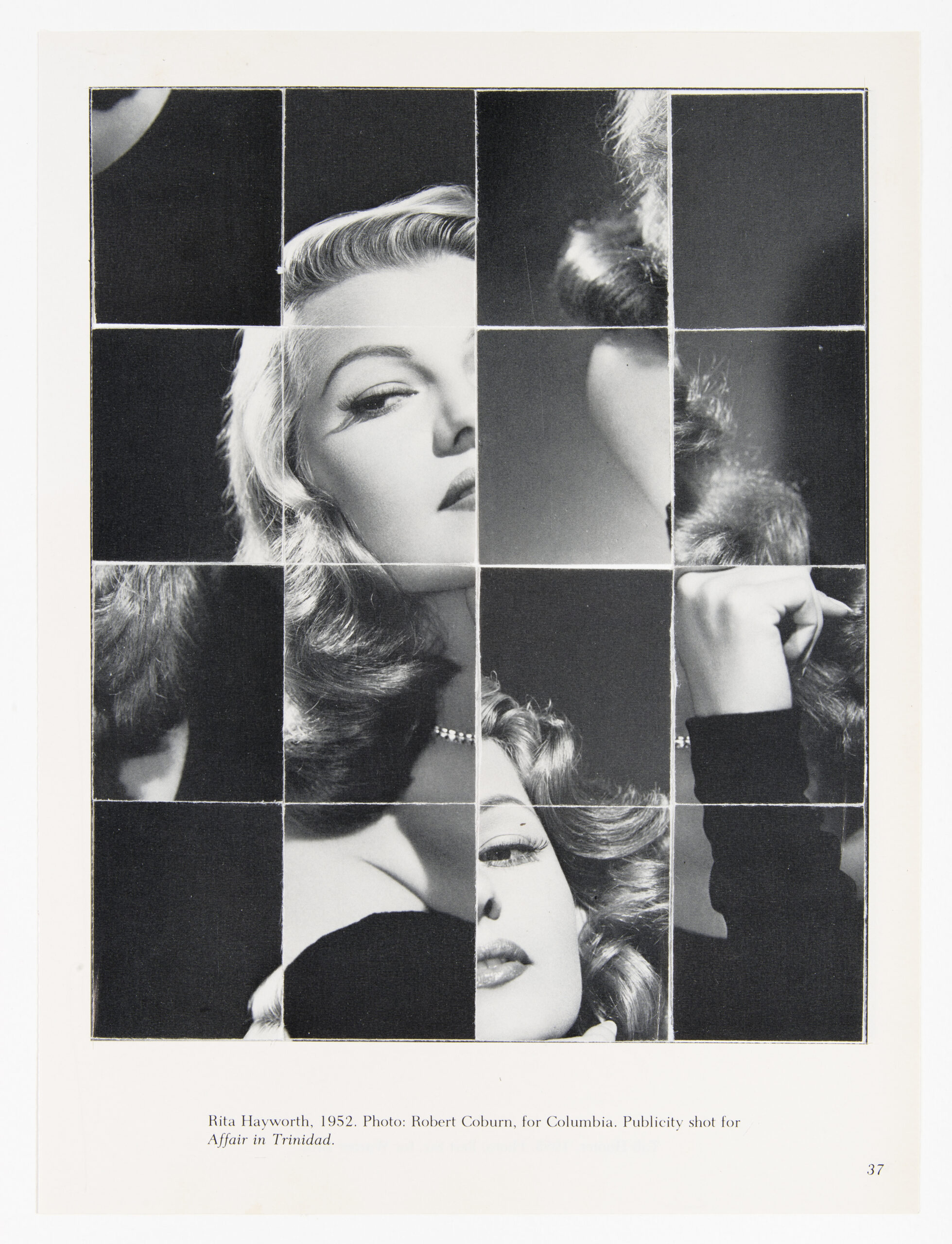
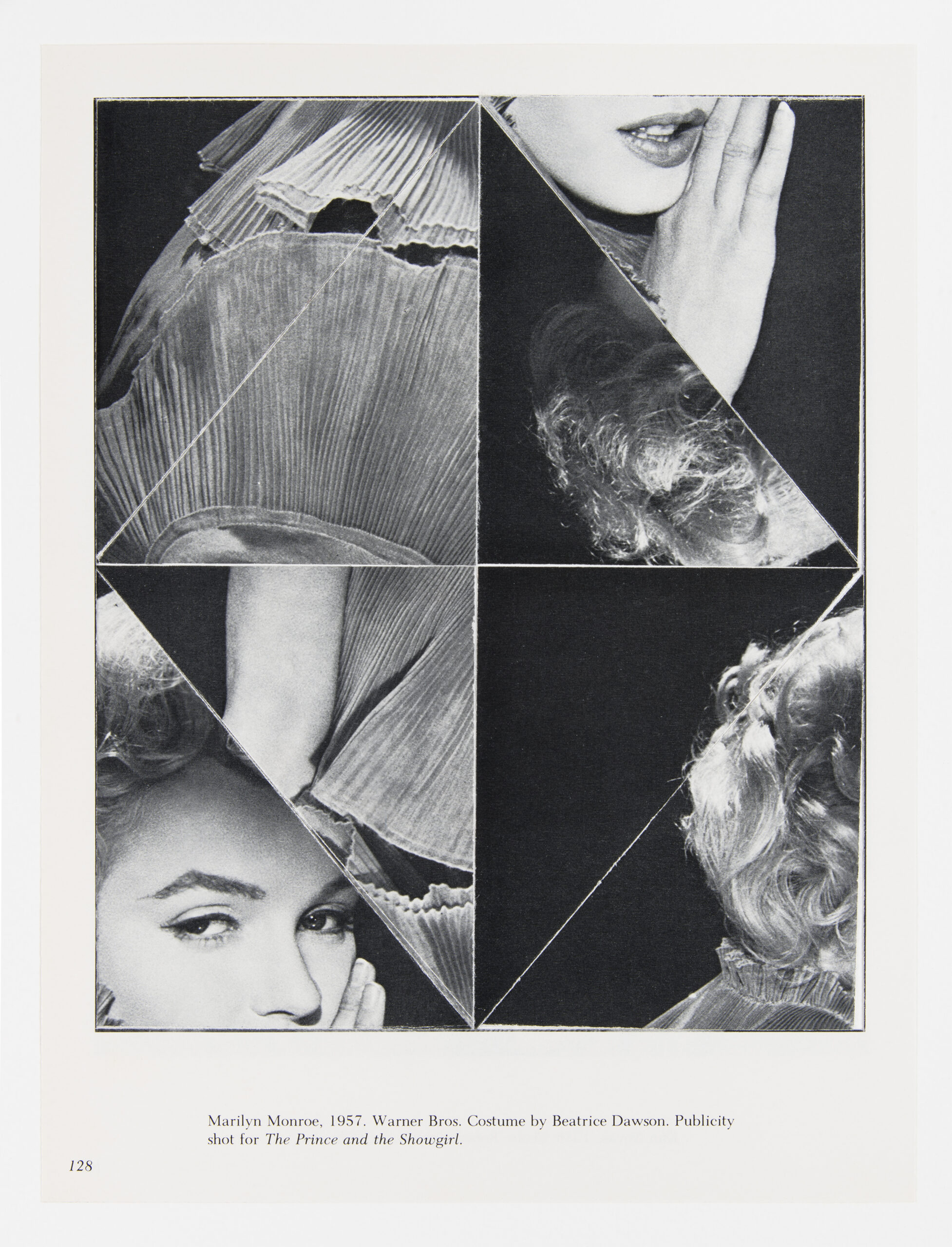
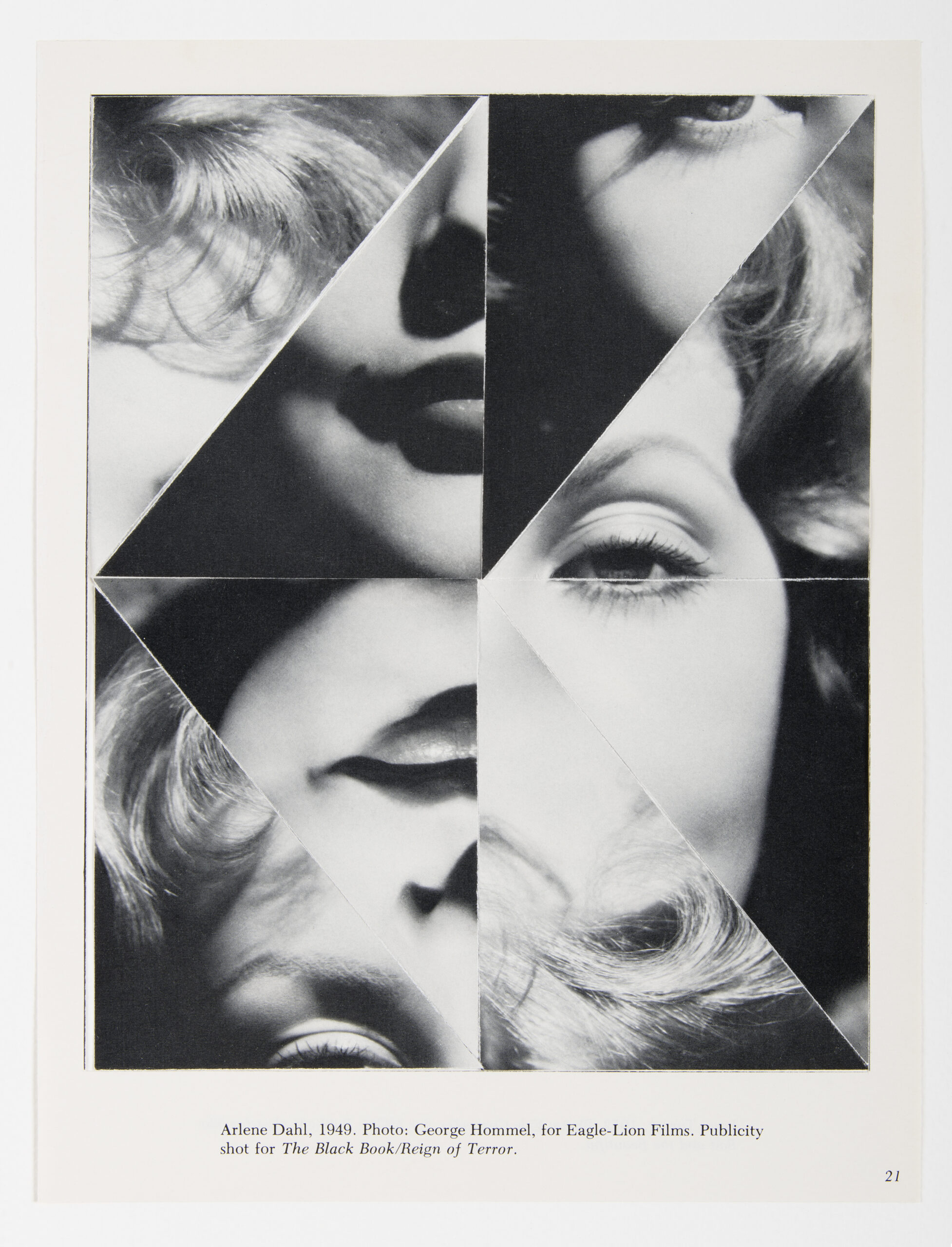
Returning to the question of representation and the body, I’d like to discuss some works that are photographs of American models and actresses. Those in which you take these figures, who represent an ideal of beauty, and apply super-geometric cut-outs to the photographs to reconfigure them.
These works are part of a series. The idea of the image, the word “image” itself, thinking of this quite erudite word, arose in my work when I started appropriating old books so as not to have problems with copyright.
A partir desse recurso de olhar para as imagens, comprar livros, geralmente livros de fotografia, comecei a ter um certo encantamento pela ideia da imagem. E aí surgiu um estreitamento entre a palavra, a imagem e o conceito. Então, a imagem não é mais só um material, mas ela traz consigo um conceito, a sua própria história do significado da palavra “imagem”. Eu comecei também a me debruçar muito sobre determinadas imagens e questionar a ideia de como a gente as lê, seja através dos olhos ou da nossa memória, do que a gente entende como imagem. Porque a gente olha para a imagem e esquece que a gente tem um repertório para entendê-la.
(Translation: From this resource of looking at images, buying books – usually photography books – I began to have a certain enchantment with the idea of the image. That’s when the word, the image, and the concept, came together. The image is no longer just material, but it brings with it a concept, its own history of the meaning of the word “image.” I also began to look a lot at certain images and question the idea of how we read them, whether through our eyes or our memory, and of what we understand as an image. Because we look at the image and forget that we have a repertoire with which to understand it.)
In the specific case of this work, when I deconstruct the image it’s as if it were a game in which I move these pieces of the image around so that our brains can return them and construct the image, because our brain contains a repository that can do this. When we look at an image, we perform in front of it with our body, our experience, our cognitive senses, because it naturally brings some code that we recognise or don’t know. When I cut out these images, this performativity becomes much more explicit.
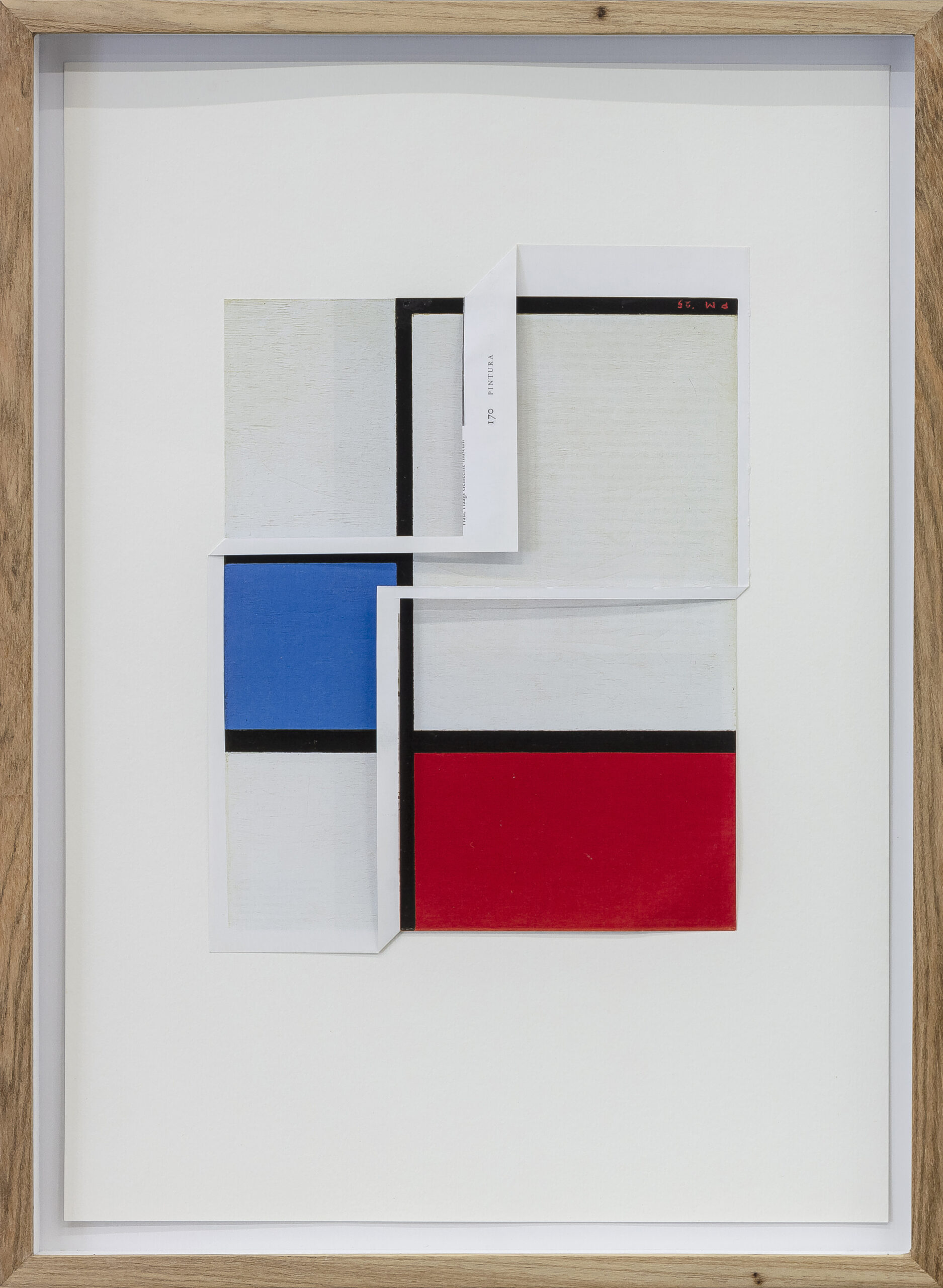
In the Mondrian series (2020) something very different happens, because by cutting out and bringing in these new elements, a new image is created.
Or it reinforces the image itself because Mondrian is there, creating squares and segmented lines, horizontal and vertical. When I fold the image, I also seem to reinforce this potential to present lines, planes, and colours, as such. Another thing I like to think about is that the image isn’t just two-dimensional. I understand the image as something three-dimensional and when I do these actions on the images, it’s as if I’m creating a provocation in order to think about the image in its three-dimensionality.
Some of your works have a direct relationship with art history, or a reference to it. How do you understand these references, the identification of which ultimately depends on who sees the image and, as you said before, the repertoire one has of images?
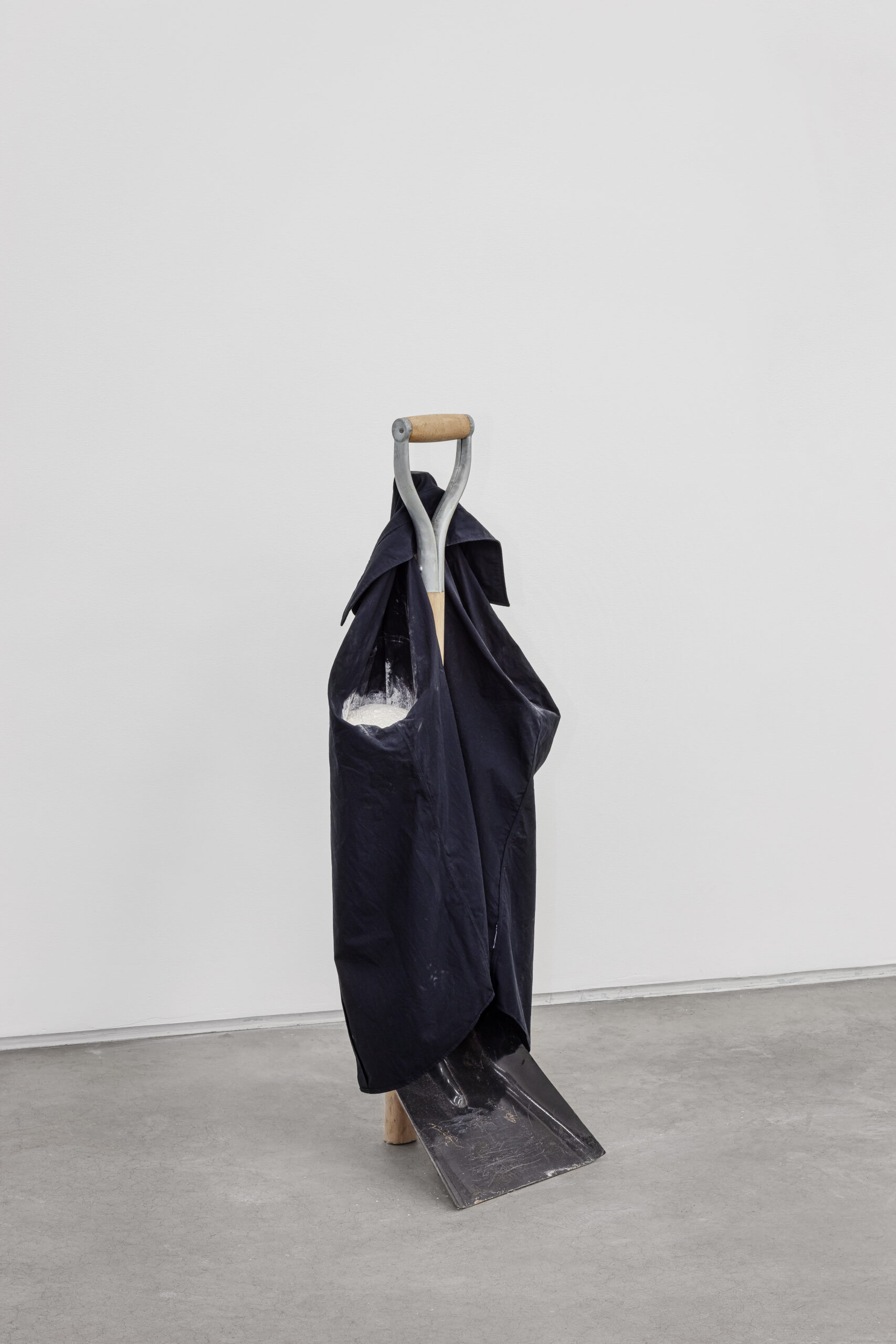
I always think it’s great to revisit the history of art. Almost all artists have always done this, looking at history and taking it back, or bringing it into the vivacity of their own time. For example, I’m very fascinated by the image of the jellyfish. How many artists have depicted the jellyfish for this reason? How many artists have depicted Leda? How many artists have tried to represent the nudes of art history set in nature? I recently made the work Excavator (2023), in which I refer to Van Gogh’s drawings. I take great pleasure in reviving these themes, because they are practically archetypes. To revisit these archetypes is to put that scene back into play, what happened then, what happens now. So the images from art history books that I cut out have a bit of this attempt to revive these themes, or to come to terms with them. Sometimes I look at a painting and find it so incredible, so impactful, that I try to create a relationship, an intimacy with that theme and, as I’m not a painter, my way of dealing with it is to approach it, to attack that image. I really have an interest and a fascination, I would say, with reinterpreting.
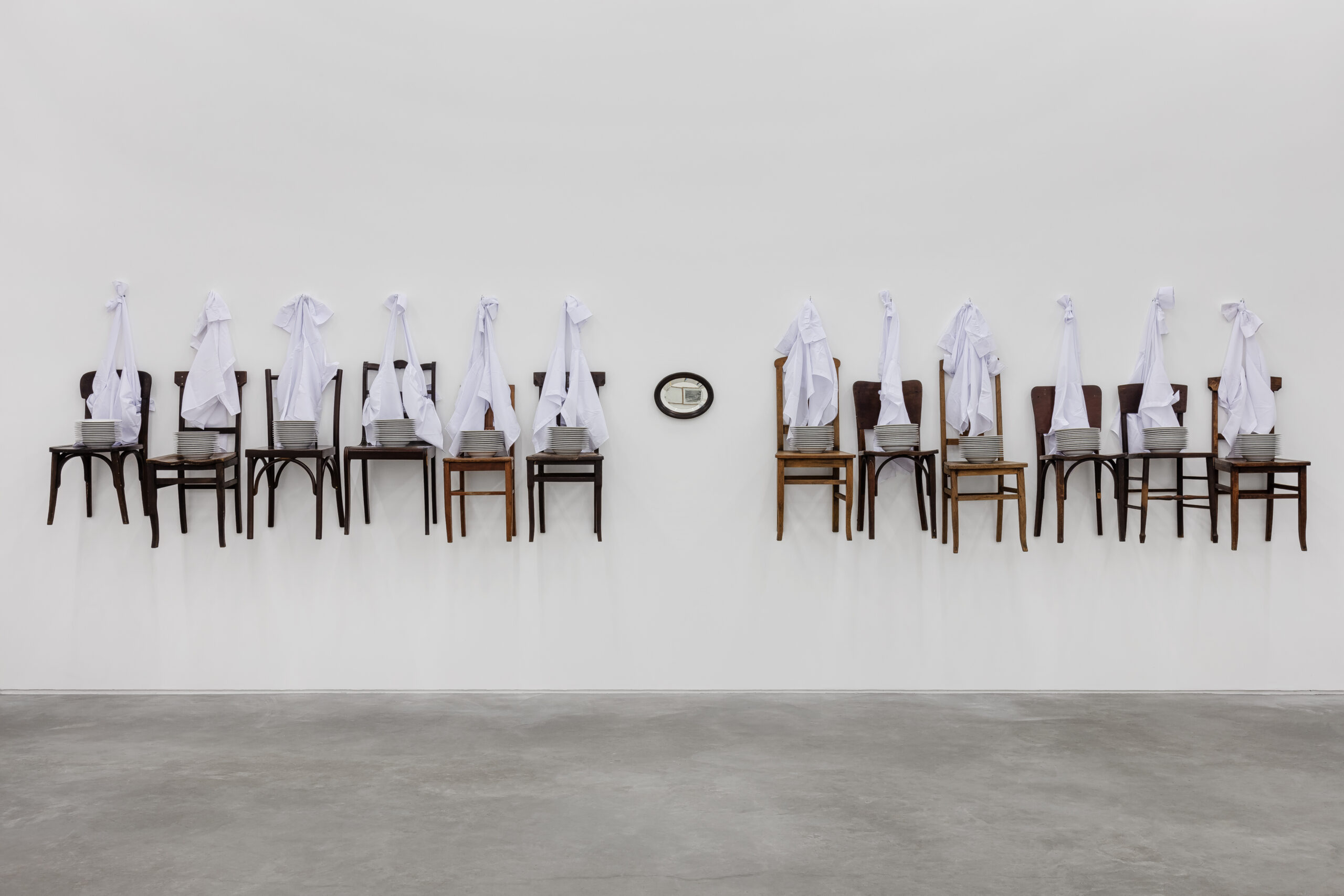
In the exhibition I did [“Clarão – from body to dust, from body to earth”, in 2023] at Casa Triângulo in São Paulo, I once again portrayed The Last Supper because of a memory of when was younger and I saw the painting by Leonardo da Vinci (1452-1519) in Milan. I stayed with that image for a long time because it was so striking. In this exhibition, I’ve hung 12 chairs on the wall, each with 12 plates, and in the middle, where the representation of Christ in Leonardo’s painting would be, I’ve attached a mirror. So I place the viewer as the figure of Christ. I always return to themes that interest me, be they Christian themes or archetypes.
We’ve talked a bit about your sculptures, collages, and photographs. Now I’d like to talk about video. Could you tell us a bit about Pertencimento (2023)?
I think video is a very beautiful vehicle. The very idea of cinema is fascinating. This video was born a little from the idea of how we understand the image. In it, I’m standing in front of the camera and I start speaking all the names of things I remember from in the kitchen. My body is very permeated by the domestic environment. I wanted to try and remember all the objects I had in the kitchen because I also think about the idea of the body through food. We exist because we feed ourselves; if we don’t feed ourselves, the body dies. I wanted to propose to myself this game that the body exists from food and I thought: “Where do we produce food? Where do we make the warm cake, the coffee?” In the kitchen. Then I started saying all the words I could think of, without writing them down. It sounds easy, but when you go to do these exercises and remember the objects in the kitchen, it’s difficult. The glass of water is there in the video because I wanted it to convey the idea that the viewer is questioning me, almost like in a statement, or in an investigative or police conversation. You’re being approached, and the only memory you have are these objects, which are more everyday, trivial, and which, deep down, have a lot of meaning.
Again, I was very interested in constructing this video based on an intersection with a work by Richard Serra, Verb List (1967), in which he writes down all the verbs of the actions he does in the studio. He writes down “sawing, cutting, hammering, nailing, pinning, kneading, squeezing.” How do you make work? By cutting, sawing, nailing, gluing, and he writes down all these verbs as if to say: “it’s the actions that make up the object.” In this parallel, it is through the memory of these objects that the body is configured, and a dialogue of liveliness and presence is established through the memory of these objects. What’s more, the action of numbering verbs evokes images. If someone says “glass,” you draw the glass. Maybe not the same glass – everyone draws a glass they remember, or you draw the glass you have in your house. You end up materialising these objects and there’s this dynamic of excess, which is also beautiful. You overlap these objects, which take up space. With more objects, more space is taken up, without there being any object in physical terms.
I was going to ask you why you decided to appear in the video, but I think you’ve answered, since the idea of your memory evoking these objects was interesting to you.
And also the idea of the artist as a figure is being questioned. Obviously, we always have to think that the work is bigger than the artist, but the artist is in vogue there, he’s in this spiral where the work is configured, drawn. So, in almost all the photographs, if not all of them, I’m the one present. It’s as if I were the master and the subject. I’m brought together with this making and I also become the object itself.
Because your production is so plural, so diverse, have you ever faced any challenges when people can’t identify your work, or with the desire, the need perhaps, for a viewer to try to connect things in a slightly more linear way than how you present them?
I don’t worry about them recognising whether the work is mine or not.
Na hora em que estou fazendo, eu crio essa provocação comigo mesmo, é para mim. O trabalho do artista sempre é primeiro para ele, depois para o espectador. Eu acho que, quem produz para o outro, produz vaidade, produz produto. Acho que a obra é um questionamento, é uma pesquisa. O artista precisa ter uma pesquisa, e essa pesquisa nasce em torno da minha necessidade, do meu contexto, das implicações que estou vivendo.
(Translation: When I’m making it, I create this provocation with myself. It’s for me. The artist’s work is always for him first, then for the spectator. I think that anyone who produces for someone else produces vanity, produces a product. I think the work is a questioning, a research. The artist needs to do research, and this research is born out of my needs, my context, the implications I’m experiencing.) So I have no interest in whether it’s linear or not. I think this is more a problem for academia, for research. Incredibly, I don’t have this concern, but people always say that the work makes a lot of sense. I don’t see that – quite the opposite. I just get on with it. Obviously, I have a “clock” that signals when I’m too far away. It’s like a kitchen: “my cuisine is Mediterranean, I only work with these foods,” or “my cuisine is tropical, I only work with these…” Artistic production has an order. As much as it permeates various forms – photography, drawing, sculpture, objects, video – there’s a common thread there that I often don’t see, but most people tell me they find super-coherent. I’m not worried about seeing this coherence, because if I start to see only this coherence, I’ll stop and I don’t want to stop the possibilities, I want to have a range of possibilities. I only have one life and I want to do everything.
Thinking about the body of work, I realised that several of them are classified as “untitled.”
That’s another problem in my life. When a title is born, it’s because a stone has fallen on my head [laughs]. Because if the stone doesn’t fall on my head, there’s no title. That title has to be obvious to me. It’s not like The Last Supper (2023), which needed a title because it was born out of a memory and a story, or Excavator, which I made in memory of Van Gogh, or Maiastra (2007), which is a tribute to Brancusi, in which I’m balanced on my knees on top of bowls. Some are born with a title, but in general I have great difficulty with titles. I also think that sometimes a title can close a lot. So, in fact, it’s an option not to name the work. I could put a flowery title, but I prefer not to give a title, because then I open up a sentence to be investigated. There are works that are ordered, that’s when I say that the stone falls on the head, otherwise it doesn’t have a title. So, together with the world and the viewer, the work itself asks for some meaning to reverberate in it.
There are some works that need a title because the title will support an idea that has been given. It’s born with that very round, very designed, aligned purpose, so the title makes sense. But, in general, when I look at some works, I think: “he could have so many paths, he could have so many titles, why am I going to punish him for the rest of his life by taking the same name with him?” I think that makes a lot of sense in our stories. For example, my name is Marcos Eduardo de Cais, nobody knows that. Nino was given as a nickname out of affection. Even today, when we discuss gender and sexuality, why do we have to carry around a definition forever? Sometimes people say: “Are you gay?” I say: “No, I’m Nino, that’s all. Nino.” And Nino is several things. I don’t have to be a single defining thing for the rest of my life, I can be a bit more liquid, dissolve, spread out, permeate the world.
Interview conducted on 14 March 2024 at the artist’s studio in the Pinheiros district of São Paulo.
Cut-out book pages and eyelets
55 x 48 cm
Photo: Filipe Berndt
2023
Cut-out book pages and eyelets
62,5 x 51,5 cm
Photo: Filipe Berndt
2023
Wooden chair, shirt and porcelain plates
135 x 650 x 45 cm
Photo: Filipe Berndt
2023
Cutting, paper and folding
46,5 x 34 cm
Photo: Filipe Berndt
2020
Shovel, shirt and wheat flour
98 x 38 x 30 cm
Photo: Filipe Berndt
2023
Inkjet print with mineral pigment on cotton paper
120 x 100 cm
2018
Inkjet print with mineral pigment on cotton paper
120 x 100 cm
2018
Inkjet print with mineral pigment on cotton paper
120 x 100 cm
2018