

Mari Nagem
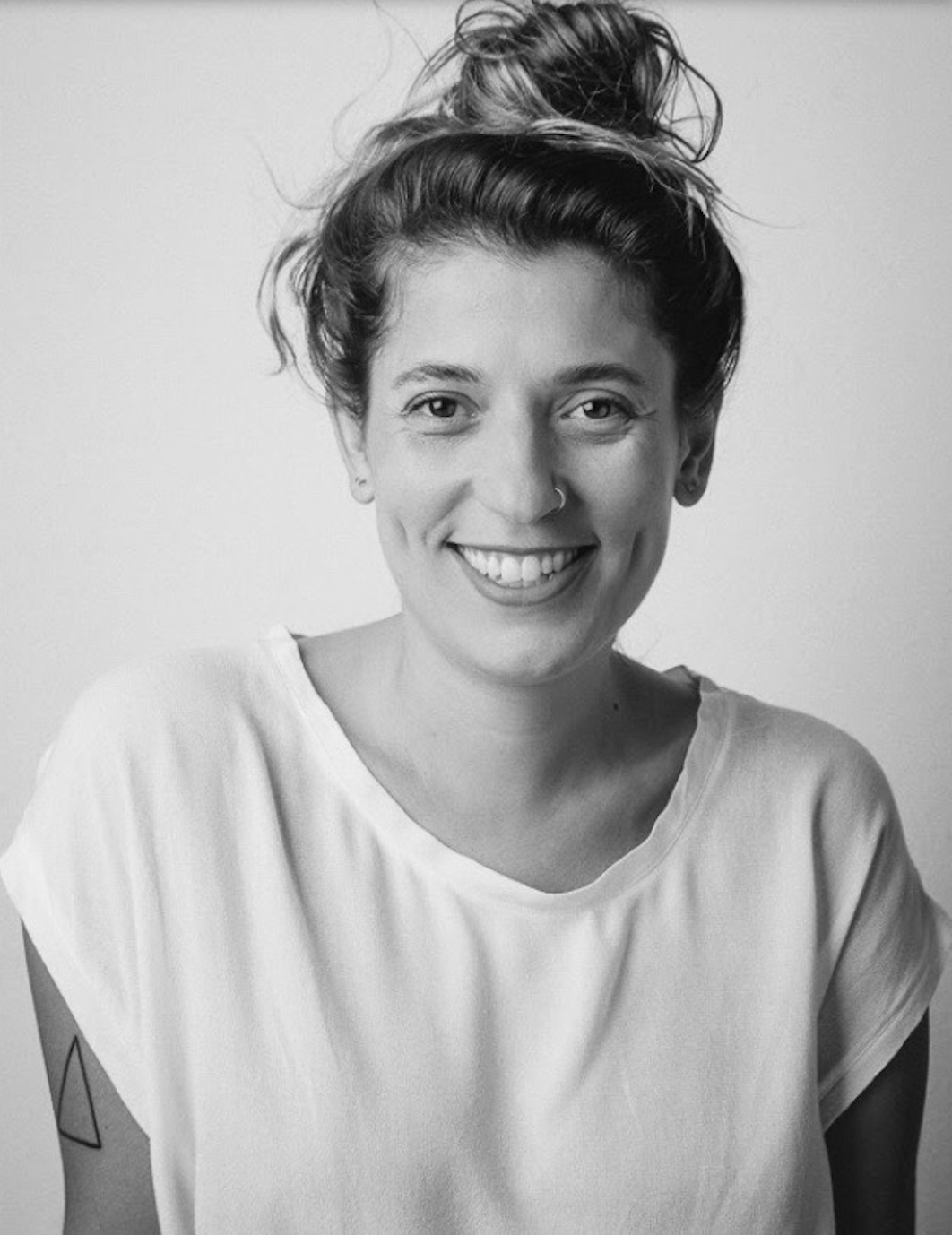
Mari Nagem (1984, Belo Horizonte) is a Brazilian visual artist and researcher who explores the intersection between nature and digital culture in her work. Nagem develops her interest in the perception of space, investigating its manifestations in different contexts; from the virtual – on a computer screen – to the concrete – in the physical environment. These dichotomies resonate in her practice to create a combination of elements that reflect our hybrid reality and, in a way, explores a possible intersection of such elements. Take a look:
Mari, thank you very much for taking time out of your day to talk to us. I’d like to ask you to start by introducing yourself, with any information you think is relevant, thinking of an audience that may not yet know you or your work.
Thanks for the invitation, Brunno. I’m Mari Nagem, a visual artist and researcher working on the perception of digital culture and its relationship with nature. I’m from Belo Horizonte, Minas Gerais, but I’m currently living between Belo Horizonte, São Paulo, and New York.
How did you become interested in combining the digital with nature – two elements that aren’t usually put together? Tell us a little about where you found your inspiration.
Actually, I think inspiration comes from everywhere, but I recently realized the following: my parents are biologists, my brothers are physicists, mechanics, and engineers, so we grew up discussing the Genome project at lunch, or theories of evolution, and this had a lot of influence on my interest in nature, science, and the representation of science.
E a questão da tecnologia me interessa porque simplesmente eu percebo que a gente está inserido num desenvolvimento tecnológico em que essas contradições entre o natural e o artificial, o físico e o digital, a intuição e o racionalismo, estão sempre como se fossem forças conflitantes. E eu trago isso para o meu trabalho, para o meu processo, de maneira a combinar esses antagonismos.
(Translation: The question of technology interests me because of the simple realization that we are inserted into a technological development in which these contradictions between the natural and the artificial, the physical and the digital, intuition and rationalism, are always conflicting forces. I bring this to my work, to my process, in order to combine these tensions).
I think we’re in a world where these differences are intrinsic and combined. We already live in a natural, artificial world. How do we understand, how do we navigate, the physical and digital worlds? What are the transpositions of languages, of thoughts, that occur between these universes?
Lately, I’ve been reading a lot about media philosophy – for example, Byung-Chul Han on neuro-botany – then I go back to reading things like Ailton Krenak – it’s always a mixture. For a long time, I’ve worked formally with exhibition design, and I also work with large-scale events, so the question of space is always very present in my practice. How do I perceive space? How does space inspire me? How does space speak to me so that this work exists? In which space does this work exist? If a work exists in a digital space, on a computer screen, it has a language, it has a form that is different from when I transpose it into a physical space of 3 x 3 meters, for example.
This makes me think of The Forest (2022), which looks like an installation but is almost an art exhibition in itself, with the image at the end and two spotlights. How did you think of this work and how was it installed?
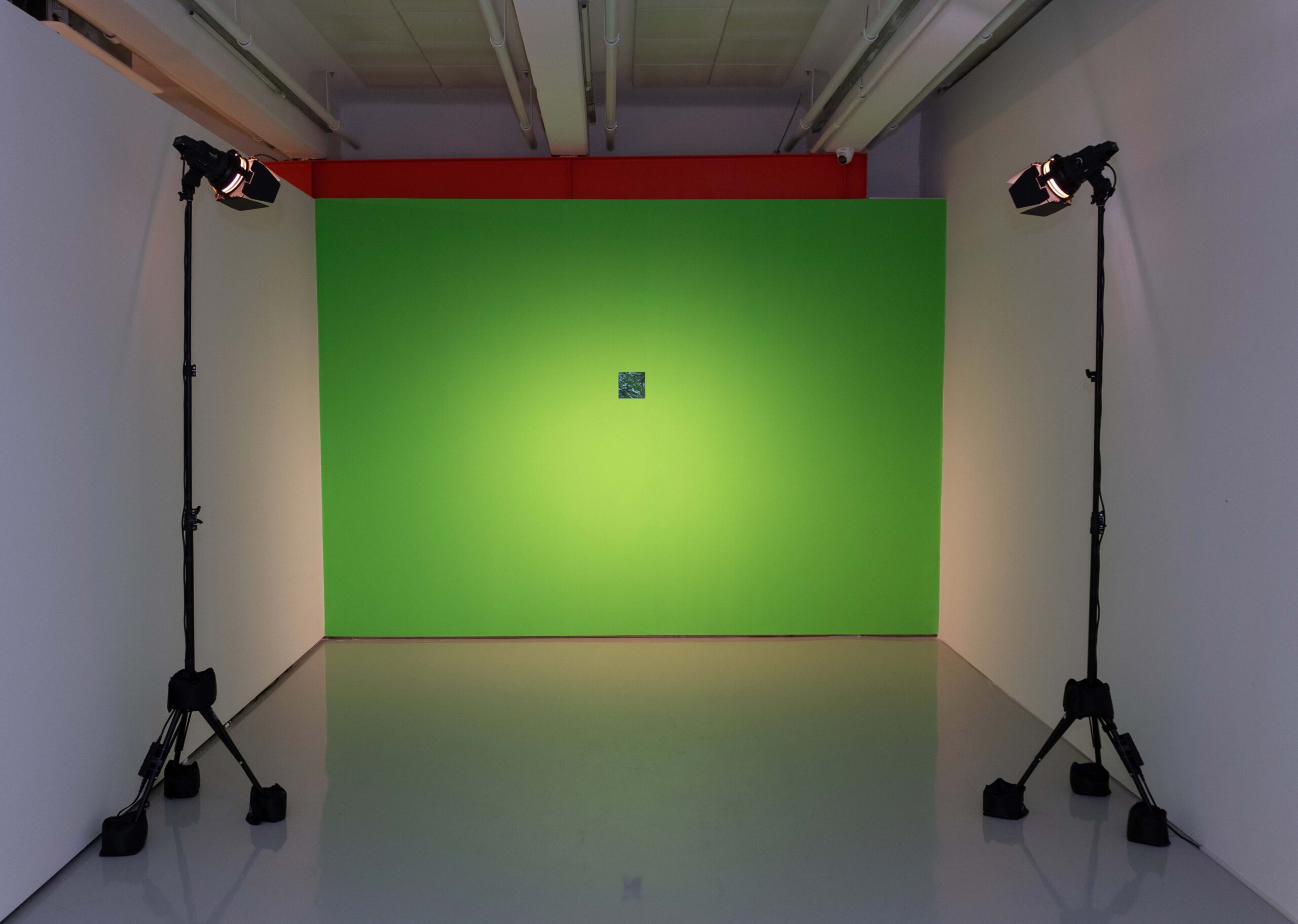
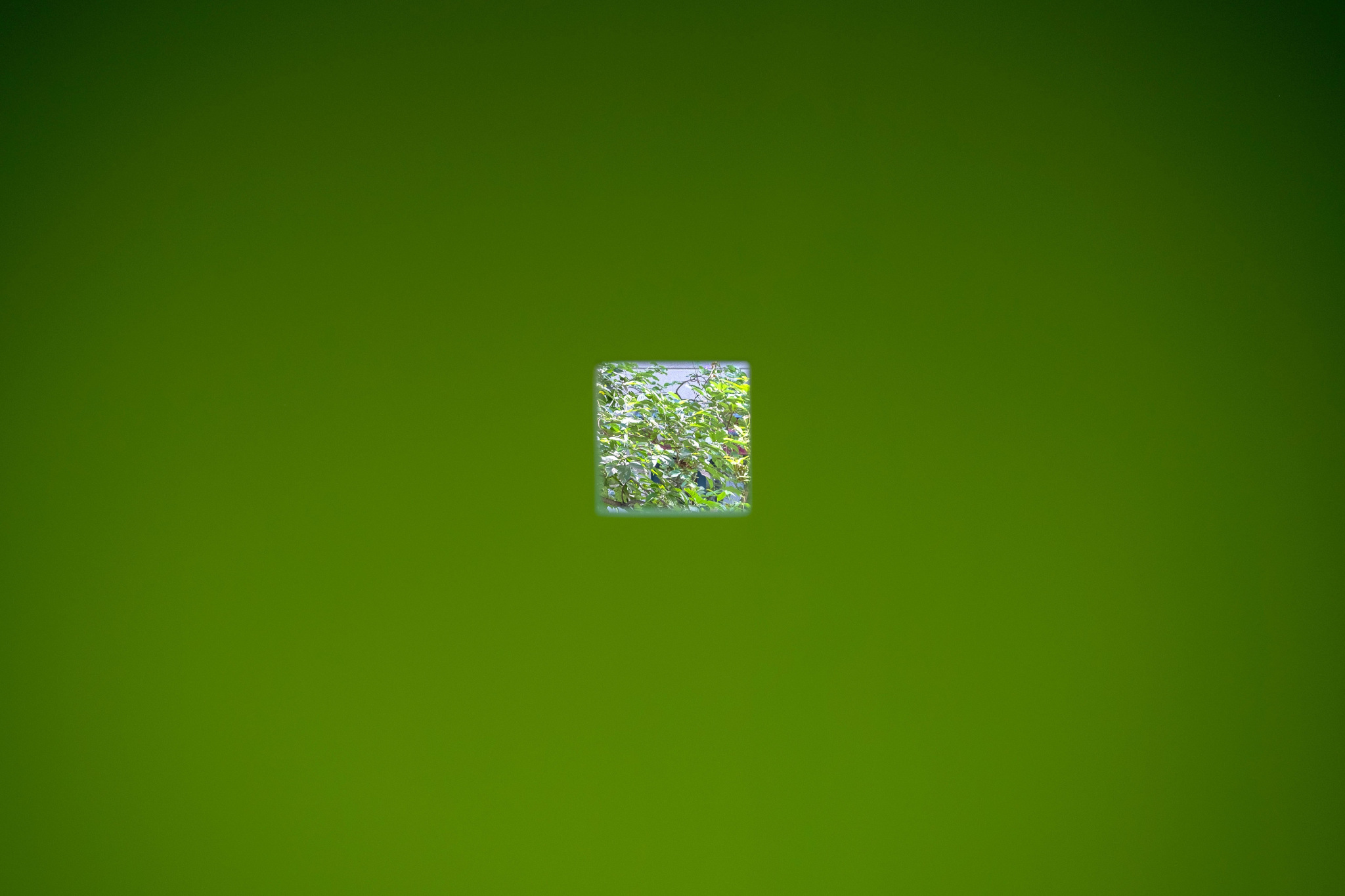
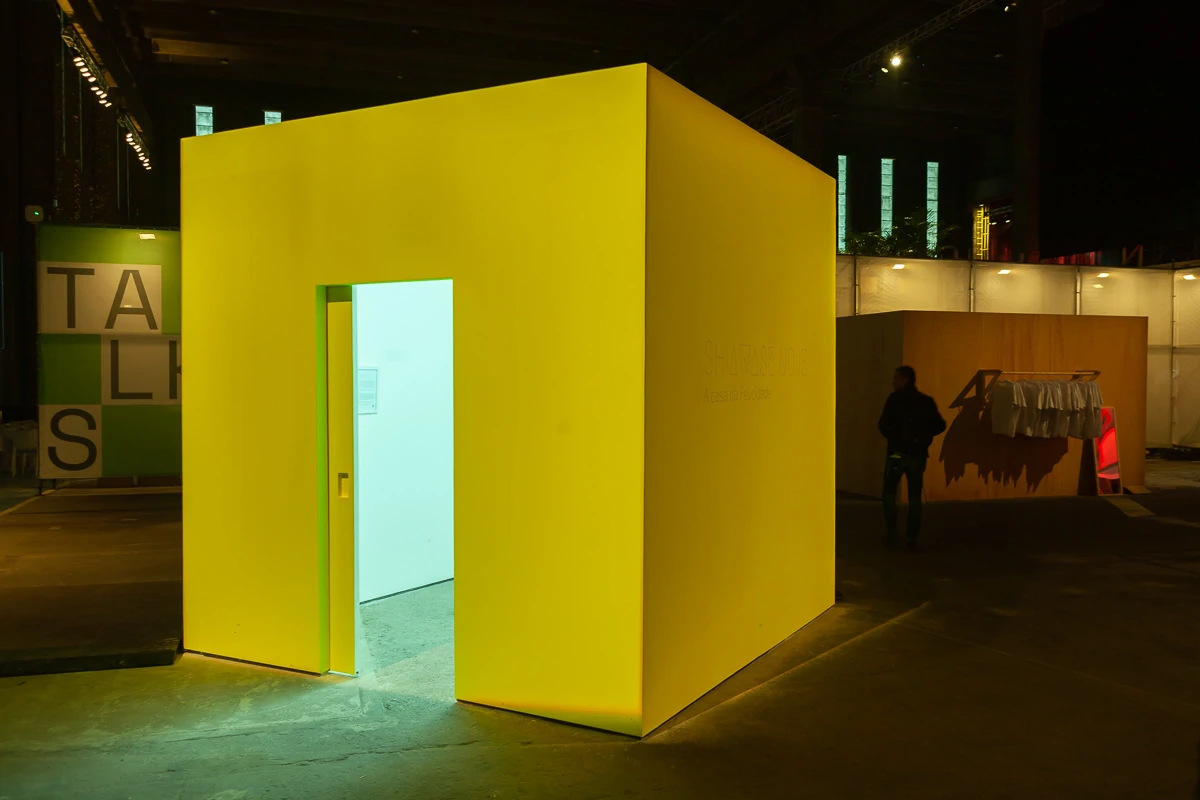
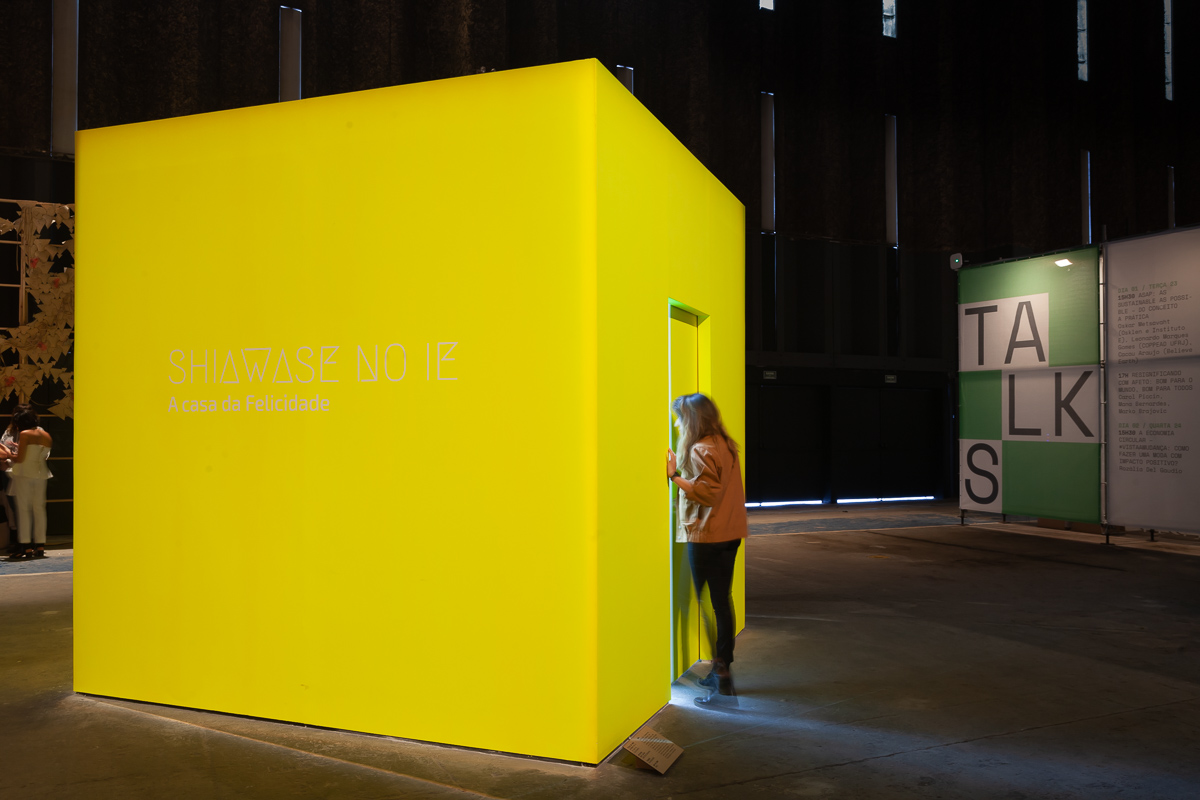
The conceptual part of this work is the idea that we’ve grown up looking at nature as a resource, separating humans from nature. Obviously, this anthropocentric perspective has led us to the state of climate emergency we are in today. The Forest starts from the principles of image construction; in this case, it works with cinema, the idea of the green screen, where you can imagine yourself anywhere. The work is formed, then, as if it were a studio with a green screen and two spotlights. When I arrived at the exhibition space, I saw there was a window overlooking the garden of a shopping center, exactly where the work was going to be. I realized that if I drilled a hole in that wall, it would lead directly to the garden, to the part with those plants. I said, “Perfect, now the work has become site-specific.” In fact, not everything there is a forest, but in many ways it could be a forest. There’s the question of using chroma key, and of imagining yourself there. At the same time, there’s green, which is the color you automatically imagine when you think of nature, and that little garden with real plants, which is the closest you can get to a forest. It’s not a garden of plastic plants, but a real garden that has been designed inside the context of a shopping center’s courtyard. People look to see what’s in that hole and, when they get closer, they realise it’s a small garden. At the same time, it’s very common to see people taking selfies in front of the green wall, because there are two spotlights and a colorful background. This had happened in another work I did (Shiawase no Ie | The Happiness House, 2018), when I worked with a fluorescent yellow house, a cube, and you had to enter this space that had a controlled temperature, which was the temperature of happiness (that comes from another piece of research). I watched the visitors, and how everyone came to the door of this cube, this house, and took photographs and selfies in front of this monochrome wall, with its strong color. That in itself is a work that also has this relationship with media, and with screens. Nowadays, we don’t really aim the camera at what we’re seeing. We aim the camera at ourselves. We talk about “getting out” of the Anthropocene, but all the time we’re looking at ourselves as being the most important thing.
Staying with The Forest, do you feel that there is a difference in interpretation, or even in the way people approach the work, depending on their age?
I was happy that this was a work that reached very young people. The yellow house too. I’m happy when I see a 15-year-old interacting with the work, and young people can pick up on it very quickly. At the same time, I say that the work is simple and minimalist compared to today’s world, with its large amount of information and visual pollution, and yet to see that it is able to attract the attention of this generation is marvelous. At the same time, there were people from older generations – 60, 70-year-olds – who found the work extremely poetic – with a slightly sad and ironic poetry – because it is that. So the work reached several generations, but in different ways.
I imagine that very young people, when they look at the green screen, they don’t see the color green, they see the chroma key, which is used as a screen for other things to be shown, whereas a person who doesn’t have this knowledge would perhaps only see a green screen.
I don’t know if it’s a generational thing to perceive this differently. No one has remarked on this to me. I think that perhaps it’s more the people connected to audiovisuals, or who are thinking about the work more, who interpret it in that way. But I think that the green – because there’s a little square with green, which are real plants in the background – perhaps because of the perception of this similarity with nature, you already integrate one thing with the other. After all, it’s everyone’s perception, and I really like to see various interpretations and re-interpretations of the work from different perspectives.
You mentioned your other work, which is related to your research into happiness. Would you like to tell us about your research?
In 2017, I started a very broad kind of research on happiness in the contemporary world, and one of the main outcomes of this work was the creation of an App that measures human happiness in front of the computer: The Happy App (2018-2021). I did a performance in 2018, during which I spent eight hours in front of the computer, thinking that eight hours in front of the computer during the pandemic and post-pandemic would be nothing. But for me, at least in 2018, it lasted a long time (laughs). I was doing everyday things like writing emails, talking to friends, working, doing research, reading the news, paying bills. This App took a photo of me, and a screenshot, every minute and used emotion recognition technology based on facial micro-expressions. So I had a record of my face every minute, what I was seeing on the computer, and a measure of my emotion, which, in this case, I chose to use to measure happiness. Throughout this performance, which became a video performance, I was 6 percent happy after eight hours in front of the computer. This is a work about happiness, but it’s also a work about the subjectivity of data and technology as a whole. Firstly, how realistic is it to measure and quantify emotions? The App itself, the emotion recognition technology, starts from the principle that all emotions are manifested in the face in the same way, and doesn’t take into account the specific ways of expressing those within different cultures. You might assume that everyone who is smiling is happy, but in reality, they’re not. There is a plurality and, at the same time, a very subjective value in these technological quantifications – the work is also very much about this.
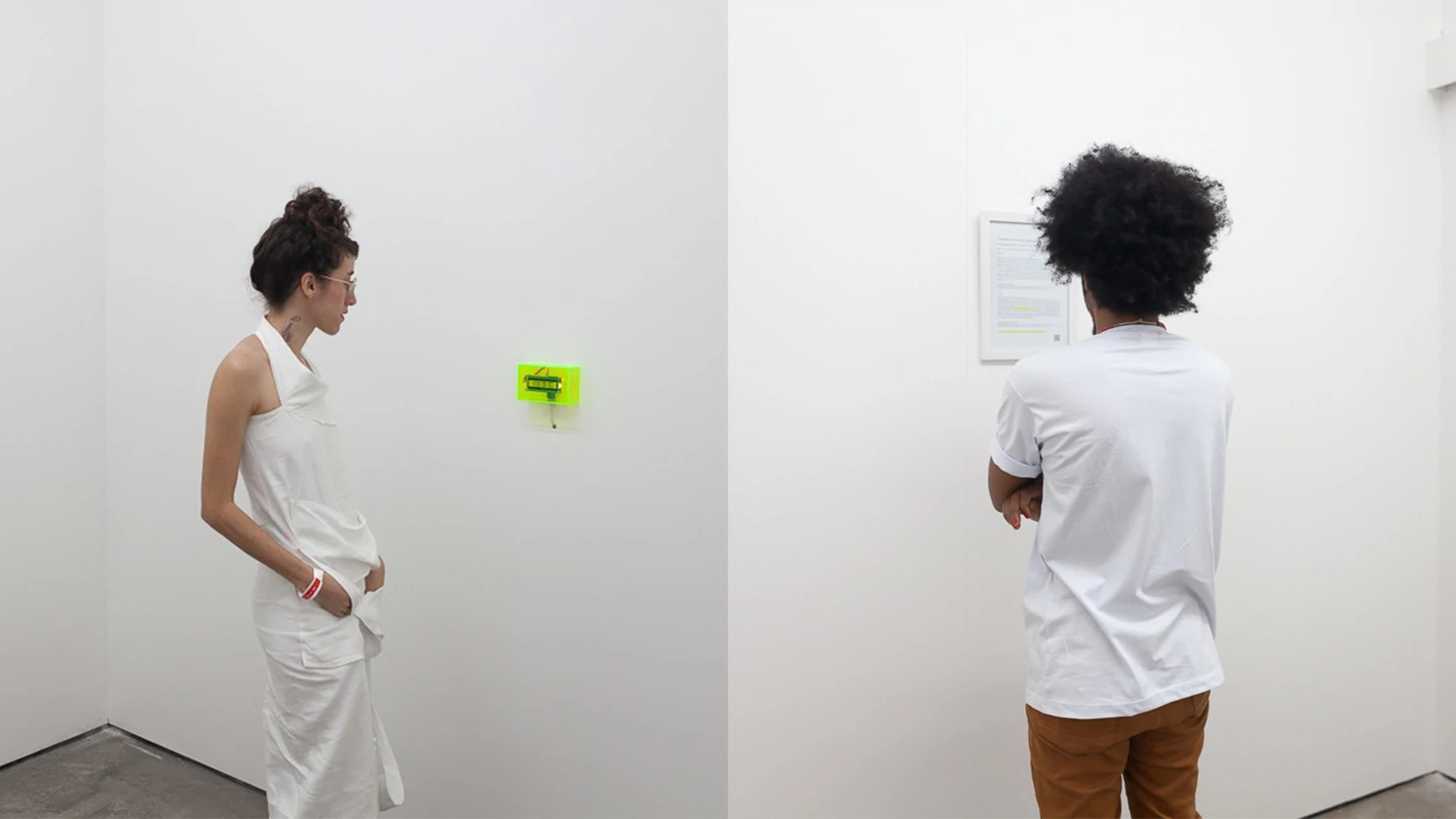
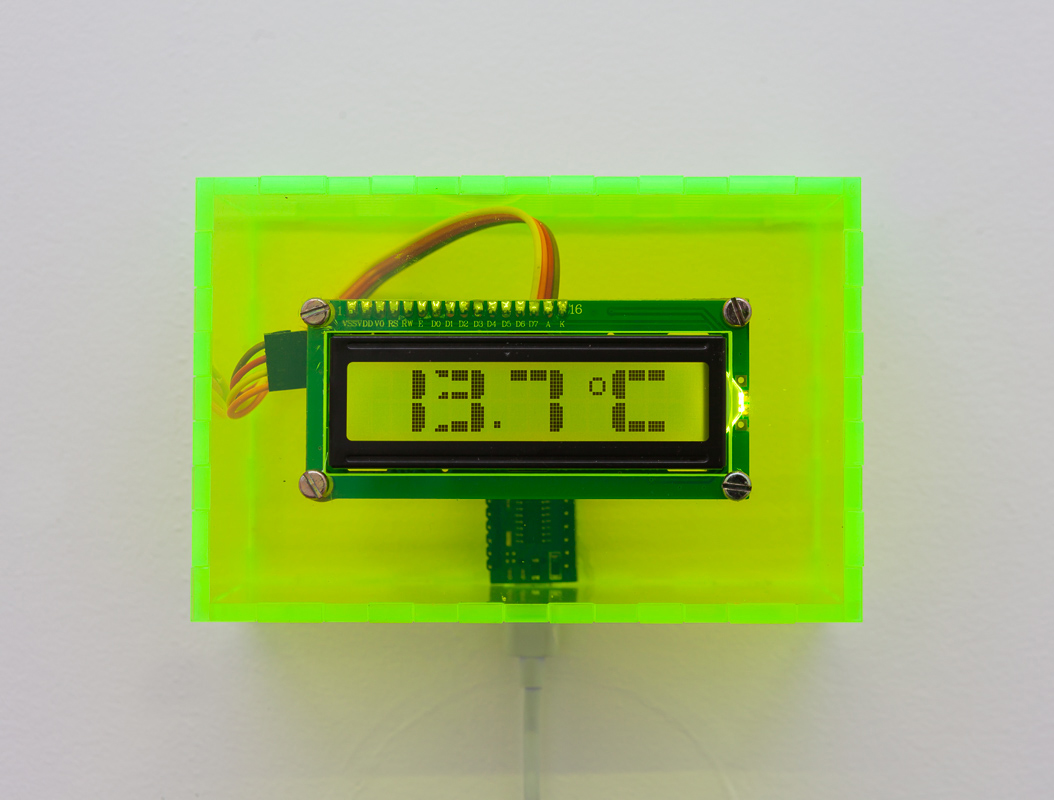
This research into happiness generated another work: the House of Happiness. I came across an article on economics by a Japanese author, in which he defined happiness as being maximized at 13.9 degrees Celsius – that’s the ideal temperature for happiness. This is in a Japanese context – the research was carried out there, it was academic research, and I was very curious about both the result and the area of research itself. I created the House of Happiness, which is a space, a cube you can enter, where it’s between 13 and 14 degrees Celsius. This installation, this cube, is fluorescent yellow on the outside, since yellow is also a color closely associated with happiness and joy. When you enter, it’s all white, very septic, with a white light, the summary of the article talking about happiness, a small, customized thermometer, and an air conditioner that maintains this temperature. The most curious thing is that this work was carried out in Brazil, a tropical country where 13 or 14 degrees is very cold and certainly not the temperature of happiness (laughs). It was very interesting to see people’s reactions when they went in there, either feeling cold or thinking, “how unpleasant.” At the same time, there were other performances going on, involving some people skateboarding who got very hot. When the performance was over, they went to the House of Happiness because they were sweating. They said: “Man, this is the best place in the exhibition.”
So for them, that place really became the house of happiness (laughs).
Exactly! And I was observing the reaction of the public in the house, and I really noticed this issue of the selfie outside the installation, against the walls of the house. Especially the people who were wearing clothes that matched the neon yellow.
Thinking about all the technological evolution we’ve seen, with artificial intelligence developing, and with computers, how has this influenced your research today? Are you continuing with this research?
Yes, I still do. In my work, my relationship with technology comes and goes in various ways. Technology is a very big field. It’s very broad and goes in many different directions. I have increasingly investigated the relationship with screens and what this means from the point of view of our perception coming mainly from screens, how it reframes our world. I sometimes apply the issue of artificial intelligence to the development of certain works, but with great care and criticism. For example, in a similar way to the work on happiness, I developed another work in partnership with Thiago Hersan called Cordiais (2021), in which we applied this algorithm that measures happiness to historical paintings. This generated an interactive website that created visualizations of data and made paintings with this information. It’s as if I materialized the data, as if it was a graphic representation, in painting, of subjective data. Obviously, these works have a very strong relationship with technology, in the sense of programming – a part in which I worked with Thiago, who is not only a technical partner but also a conceptual partner. In this process we are thinking about, and pulling apart, some of these technologies.
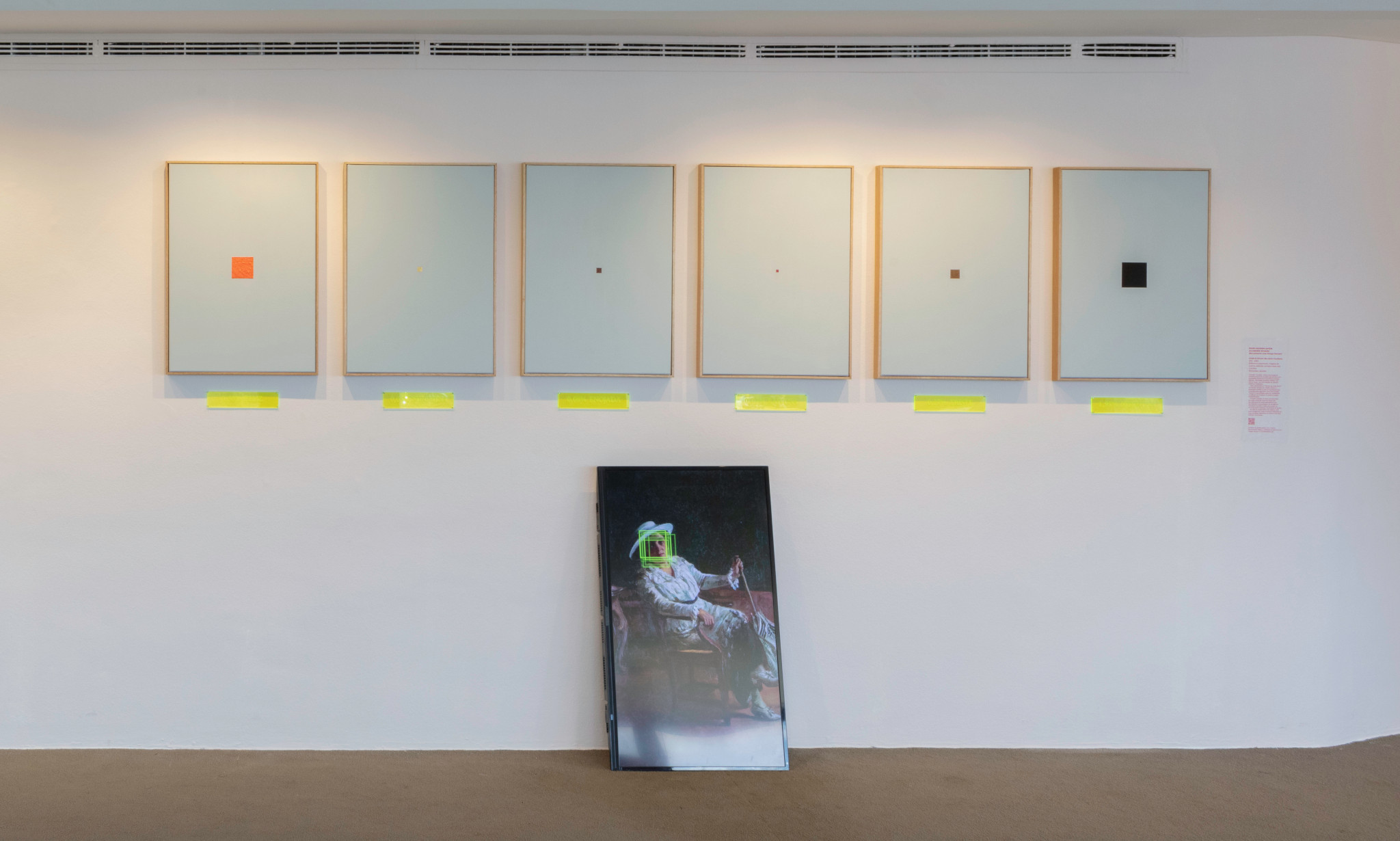
Considering the often unconscious way in which we relate to technology, this question of the confrontation between the physical and the way we interact with the screen, or with this other interface of the digital, can we see this same confrontation in your work The Dive (2022)?
Absolutely. The Dive was interesting because it materialized during the pandemic. It was a project that had already been thought out and elaborated, but it was during the pandemic that it was shown, and it was the first time that I couldn’t assemble a work, that I had to do everything remotely. I remember that one of the things that struck me most at the time, when I started art school in São Paulo, was David Hockney’s A Bigger Splash. It was an exhibition at the Tate Gallery in which there were a large number of works, and I was really impressed by it. For someone who was just discovering the world of contemporary art, it shocked me in such a way that it stuck in my mind. And The Dive was almost an update of this work for me, where this dive takes place today, this question of the illusion of the canvas. At the same time, I read Pierre Lévy’s writings on what the virtual is, and he came up with a phrase that somehow calmed me; he said we don’t need to place the virtual and the real in opposition, but that it’s another way of being present. After that, I began to reflect that many things in my work are not oppositions. They are oppositions as we understand them, but they are always in combination in my work, because that’s the world we live in. It’s just that this other way of being present in, and towards, the digital is often not thought about, we don’t pass through it at a conscious level.
I’ve been reading a lot of Byung-Chul Han on media philosophy. There’s a book called The Salvation of Beauty in which he talks about how smooth the world is. Today, we see everything is smooth; bodies are all smooth, everyone has a filter, but we don’t realise it in general. We’re immersed in this world and suddenly it becomes standard, and we haven’t had time to reflect on it. We get into the question of technology, programming, artificial intelligence, models, patterns and categories. For example, when I talk about categorizing emotions, there’s an ideology behind it. Who created this ideology? What are the bases on which these ideologies were analyzed? This is intrinsic to the value it will generate, the results it will generate. It’s a constant process of becoming aware of this relationship of perceiving the digital, of perceiving technology, of realising how I exist in this world full of hidden mechanisms. I’m not talking about how I exist in Second Life, or my avatar, no, but about this existence and this dive. It’s incredible that we can immerse ourselves in the digital, but it’s a screen. The physical dimensionality of it today is a screen. Even when we think about VR [virtual reality], we have an illusion of 3D, and often our brain understands it as 3D, but, physically, this is another relationship, and what I think is important is to understand how and what is transformed in us.
It’s interesting to see the lack of time we have to deal with technology. When we use VR, our brain believes the image, but in thousands of years, I wonder if perhaps we’ll have learned to identify the unreal?
Digital time is certainly completely different from physical time, the time of the body. Nowadays, we have a system, which is solar time, in which we have cycles; the human body has one cycle and big cities, and the internet, have other cycles. The internet, for example, is on 24 hours a day. The human body needs to sleep, it needs to stop, it needs to eat. The internet can be there all the time. I don’t know if humanity will live another five thousand years to re-adapt.
Eu acho que é muito importante entender vários aspectos ligados a essa relação com a tecnologia para que a gente também consiga reestabelecer a relação com o mundo físico, a relação com o tempo das coisas físicas. Uma árvore plantada demora um tempo para crescer, o barro demora um tempo para secar e ficar duro e ser queimado. E eu estou falando desses elementos porque eu tenho cada vez mais vindo para o físico; porque eu acho que é isso, o tempo do digital é ansioso para a capacidade humana.
(Translation: I think it’s very important to understand various aspects linked to this relationship with technology so that we can also re-establish the relationship with the physical world, the relationship with the time of physical things. A tree takes a while to grow, clay takes a while to dry and harden before it can be fired. I’m talking about these elements because I’ve been coming more and more towards the physical; because I think that’s it, digital time produces anxiety for human beings’ capacity).
And I’m not saying this is bad or that it’s good. We need to understand this issue, and this is part of my process when I’m working with technology. That’s why I come back to the words of the dive and of Pierre Lévy: “The virtual is another way of being present.” From what I perceive of the virtual and the digital, what is this way of being present? How do I want to get the best out of this conscious “being present” within the properties of the physical world?
I understand that in your work there is no judgement as to what is better or worse, good or bad. There’s a subjectivity – the work offers the viewer a confrontation with this space. Is that on purpose? Do you try to draw any kind of judgement, to draw a certain conclusion from this confrontation?
It’s quite deliberate, because if I had the answers for a better world, for a more balanced world, I might be doing something else. I’m always proposing different questions and points of view on aspects that are being talked about in society. For example, in The Forest, we’re also talking about deforestation. We’ve realized that this has been a problem for a long time. It’s not because it’s 60 degrees in Rio de Janeiro today that this is today’s problem, it’s already been talked about in various ways. In my projects, I link some contemporary issues with the relationship with the screen, how I position myself in front of these technological devices, how I spend my time with them. Perhaps this can change attitudes, change thoughts, but, obviously, within the possibilities of what each viewer has in themselves. I know that environmental destruction is an absurd problem. But I don’t need to talk about it explicitly in the work. The work already addresses this issue, but the other layers, and what this dimension is proposing, is done without any value judgement.
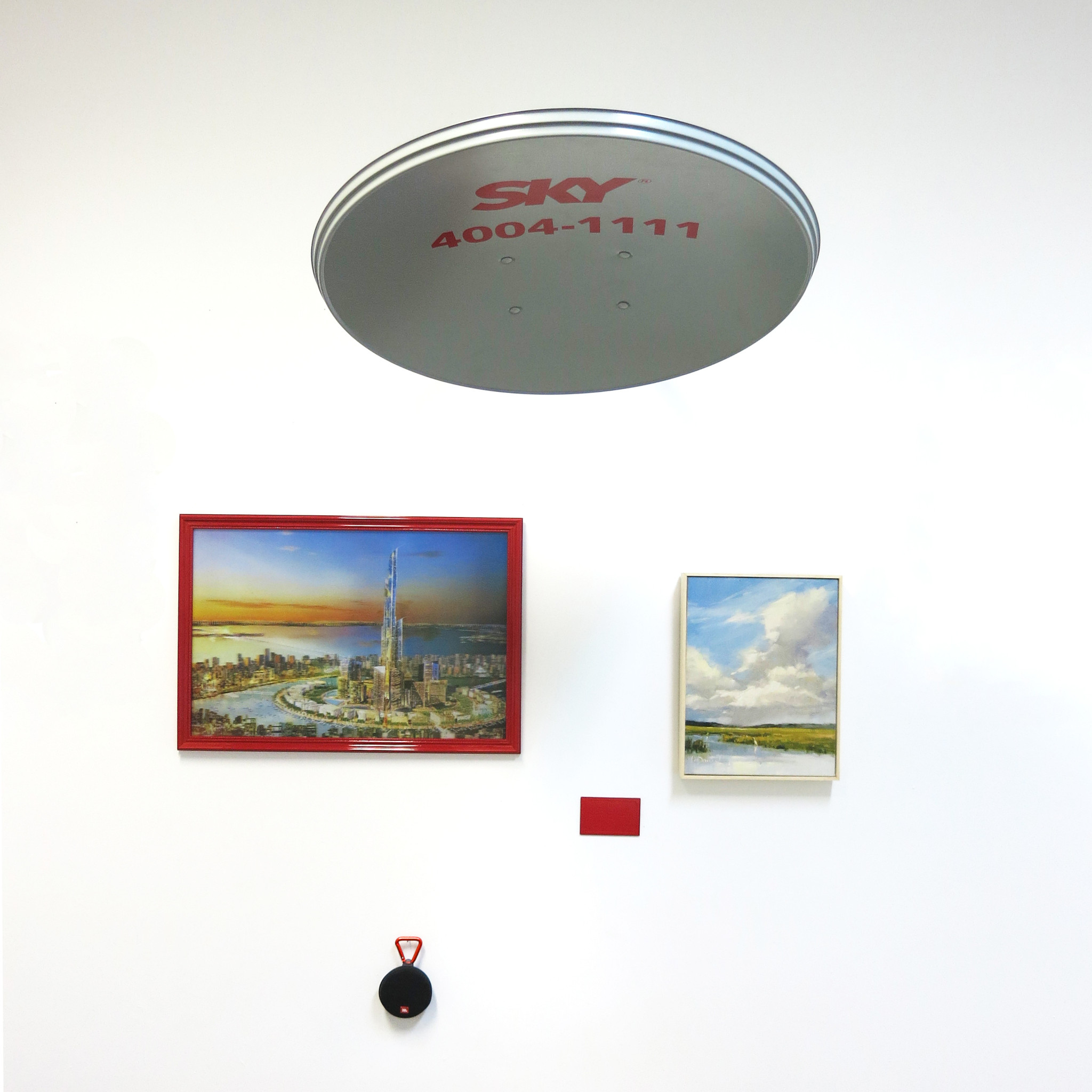
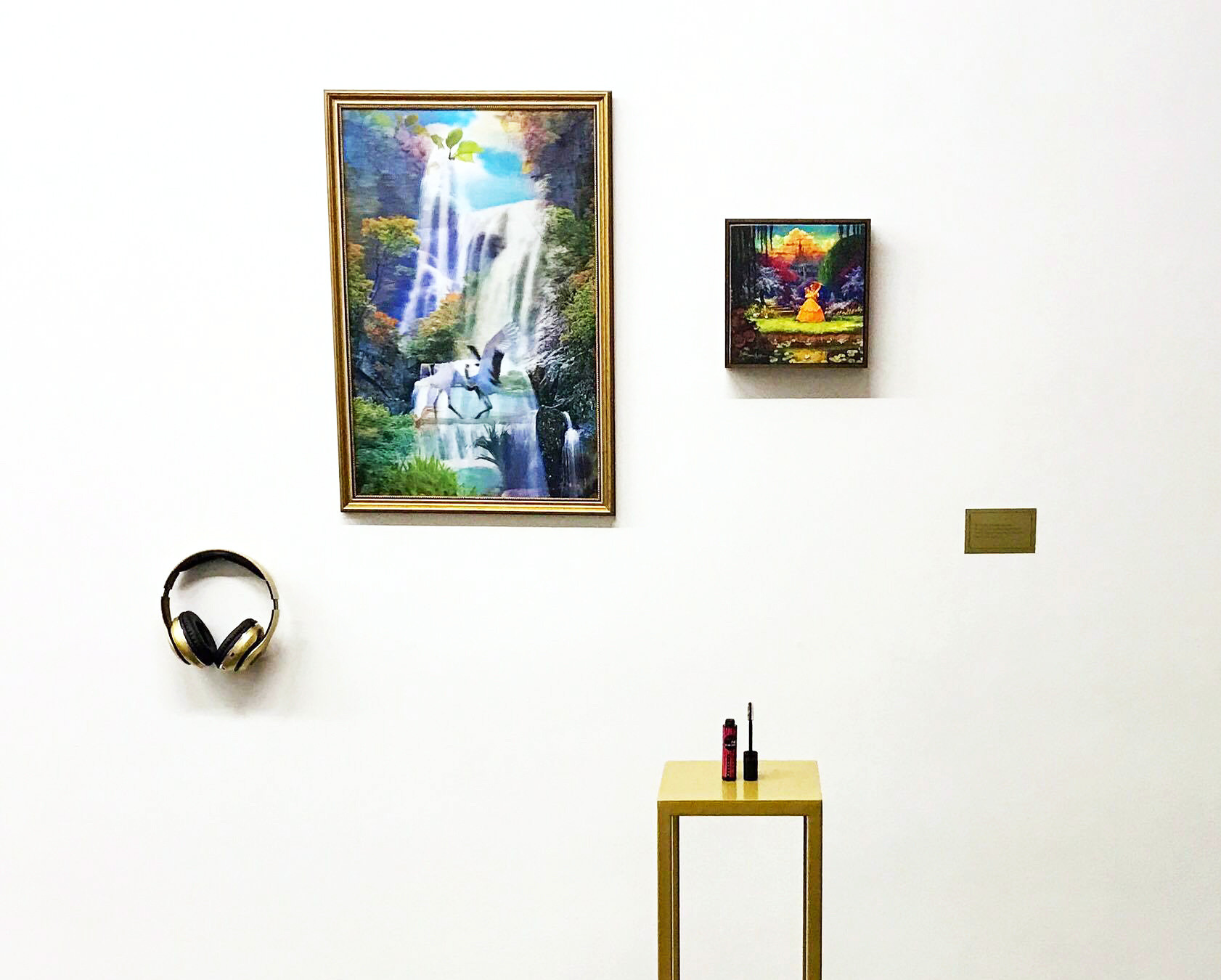
You’re a multimedia artist, how did you get to this place? For you, how does this negotiation between theme, research, and the media you’re going to use, work?
I started out making video installations. My initial research interest as an artist was the moving digital image. I worked with video installations for a long time, investigating how the digital, ethereal image of projection occupies a space. It was at a time when I had projectors, when I had spaces and cameras, and I went down that route. Then, in another situation where I didn’t have so many of these devices at my fingertips, my interests also began to change. As I said, the relationship with space always influences me, not just when it comes to placing the work in space, but the space in which I’m living, that I’m occupying. Which country, which continent, what scale I’m starting from. Just like the digital space. Firstly, each project is very much based on an interest in experimenting, and understanding what these materials and media are saying to me. There is also a question of semiotics, what that color represents, or this shape, or that material, the history of a material, that media, often the effect of that material being transformed, and how it is perceived by the human eye. I always look for a symbolic, semantic, or physical value for each of the choices I make in my work.
For example, the use of acrylic paint has a reason behind it that is not the same as the use of oil paint. With the use of clay, I wanted to re-signify the relationship with my fingers. I was working with issues related to the earth, the forest, so I wanted to work with the earth, acting on this symbolic meaning in the material aspect as well. This process often takes place when I get my hands dirty, when I want to investigate that material, and this process takes place when the objects are built and finished by technicians, architects, professionals who have a mastery of that material, and a dialogue with me. It’s a negotiation that I love. If you look around, the physical world is very rich – very rich in textures, colors, and sensibilities. Something always catches my eye and makes me want to investigate why. Sometimes I don’t know what comes first: the material or the work, the material or the theme, or the media? It could be that something in the clay attracts me, and then a work appears. Or I’m reading about a subject and realise that it goes well with a plastic float. In this case, the theme came first and the material later.
It seems to me that you always have this quest, through the materials and when you give physicality to the work, to find elements that help to serve almost as anchors for your research, and for your ideas of the work.
Yes, exactly. I always try to reduce the work as much as possible, in the sense of what is the minimum of form, the minimum of color, the minimum of material that I can use to say what I want to say? For example, O mergulho is a trampoline that has a very simplified form, a concrete staircase with a wooden plank, a wall painted blue, and a suspended spotlight. There are basically four different materials – concrete, wood, paint, and a light source – to talk about the rigidity of a structure, about a canvas, about the idea of a dive, but one that doesn’t physically happen. The body isn’t immersed, it doesn’t have the malleability it has when it’s in water, for example.
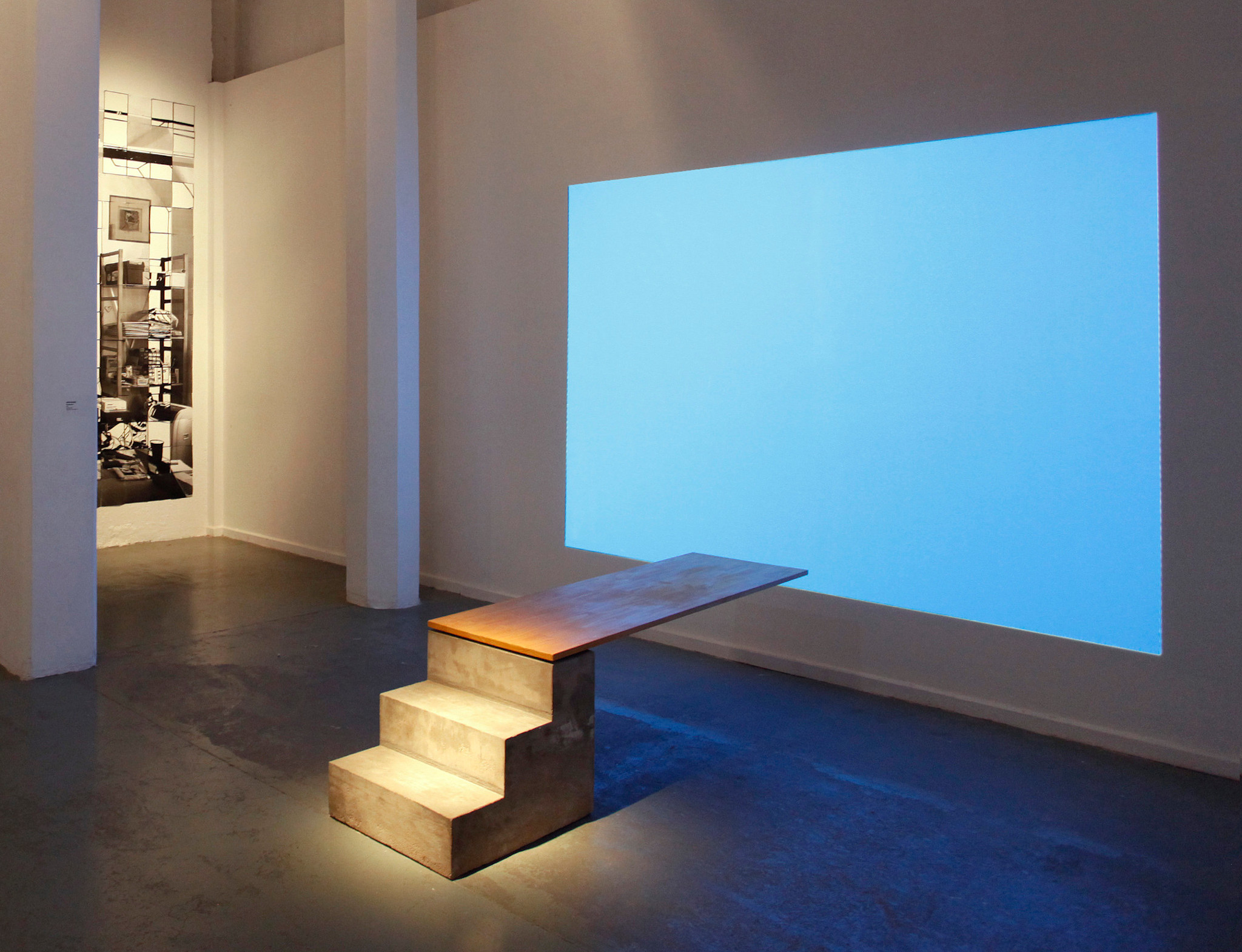
And where does this interest in the economy of elements come from?
We live in a very visually polluted world. I think there’s this thing: “Wow, there’s so much going on that it’s hard to focus, to pay attention to each object.” I try to attract attention with very little, but in a direct and, at the same time, elaborate way. There’s a question of taste, obviously, there’s an aesthetic desire for things that touch me, that influence me.
Eu acho muito difícil chegar na simplicidade. A simplicidade parece fácil quando se vê: “ah, é tipo só uma parede e um holofote”, mas não começa assim (risos). As unidades falam por si e no todo elas também ganham outro significado.
(Translation: I find it very difficult to achieve simplicity. Simplicity seems easy when you see it: “Oh, it’s just a wall and a spotlight,” but it doesn’t start like that (laughs). The units speak for themselves and, as a whole, they also take on a different meaning).
From my point of view, the economy of elements also brings a universality to the work. Because the moment you use a trampoline, stylized, Western, Eastern, or even appropriate something that already existed, take it from another space and put it inside the gallery, it starts to bring the information behind the object, it starts to pay more attention to the object itself than to the dive, because this idea is easier, in a way, to imagine – us climbing and jumping – when there is this economy of elements.
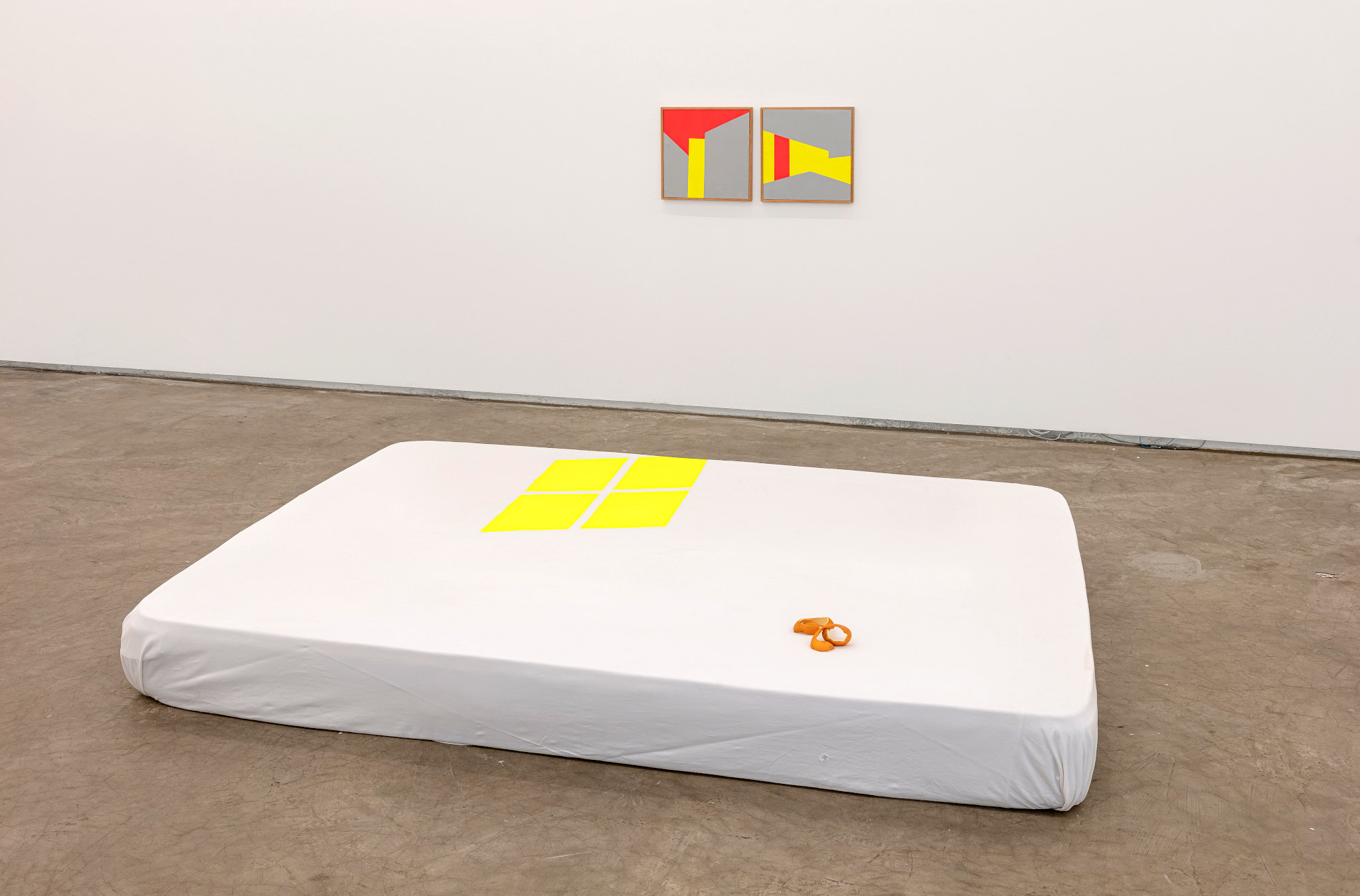
It’s very much the symbolic charge. I mentioned materials, but that goes for objects too. What is the symbolic aspect of a trampoline? What does it bring? The trampoline brings the swimming pool. For example, in the work Sunbathing (2021), which is a mattress with an orange peel, two paintings, and a drawing on the mattress, the yellow square on the mattress doesn’t just bring the window, it brings the sun. I would say that these are the hyperlinks that come from the materials and the objects themselves.
O que um objeto, uma cor, pode trazer como significado simbólico, semântico, formal? Essa economia de elementos faz com que você olhe mais para o elemento em si e para os hiperlinks com que esse elemento se relaciona.
(Translation: What can an object, a color, bring as a symbolic, semantic, or formal, meaning? This economy of elements makes you look more at the element itself and the hyperlinks to which that element relates).For many people in art, The Dive relates directly to David Hockney, for other people, from other media, it doesn’t.
I think it’s amazing to see how his work changes because, before, he used a much darker palette and when he moved to Los Angeles, the whole color palette changed – he found himself completely. It was a conceptual dive for him, into his life, and also a dive into painting. And here we have this dive, this confrontation, in fact, of our own daily dive into the media.
And it’s funny about Hockney, thinking about what you said about the color palette. Obviously, the space he was in influences his work – the climate, the elements, like the color of the sky. On digital screens the colors are very saturated. We see these resolutions on televisions – I don’t even have a television at home, for example. I find it very difficult to watch television today, because I find the colors extremely saturated, and it tires the eye, it’s a level of definition that my eyes don’t have in the physical world. So there’s this place, this dive into saturation. You can see this in the colors I use. But I focus on one or two saturated colors. Like objects, the mass of color also carries symbolic value.
I’d like to ask you a little about the challenges of your practice, of your research. Is there anything you’d like to share with us, thinking about the challenges or adversities you’ve encountered, or are encountering, in your artistic practice?
Being an artist is a rollercoaster. There are many moments that involve the financial issue, how your practice is supported so that you can remain faithful to your work. There’s the question of organization, which, in my case, as my practice is based on material experimentation, I’ve learned to plan very well in order to manage this process, because you often don’t know what’s going to happen. I think there’s the difficulty that sometimes you have to be everything. The artist has to be the producer, he has to be the manager, he has to be his own curator, his own editor, his own painter, sometimes. It’s a challenge, but I like it, and I find it easy to change personas – I’ve learnt that too. I notice a big difference compared to the past, thinking back to the difficulties of Mari as a visual arts student, which was talking about my own work. Before I used to say: “Well, if I had to talk about it, I wouldn’t be doing it.” And with time and practice, we learn that it’s possible to talk about the work, and the work can still speak about itself. But I think that, in my case, a current challenge is space. Because I’m always travelling – I’m now living between New York, São Paulo and Belo Horizonte – where is my studio? Now, I’m trying to think of the next step. If I’m going to make bigger installations, where am I going to have a big studio where I can test various things? Now I have works that are in New York, I have works that are in Brazil. How do I deal with these spaces, how do I occupy the space in the best way? Now I live in New York, how big is my studio? How big are the paintings I can make? Or the size of the installations? There are also technical challenges, but I love working as part of a team, calling in an architect, or an engineer, a sound specialist, a programmer, a biologist, scientists. These are enjoyable challenges.
Interview conducted on 30th November 2023 remotely via Zoom.
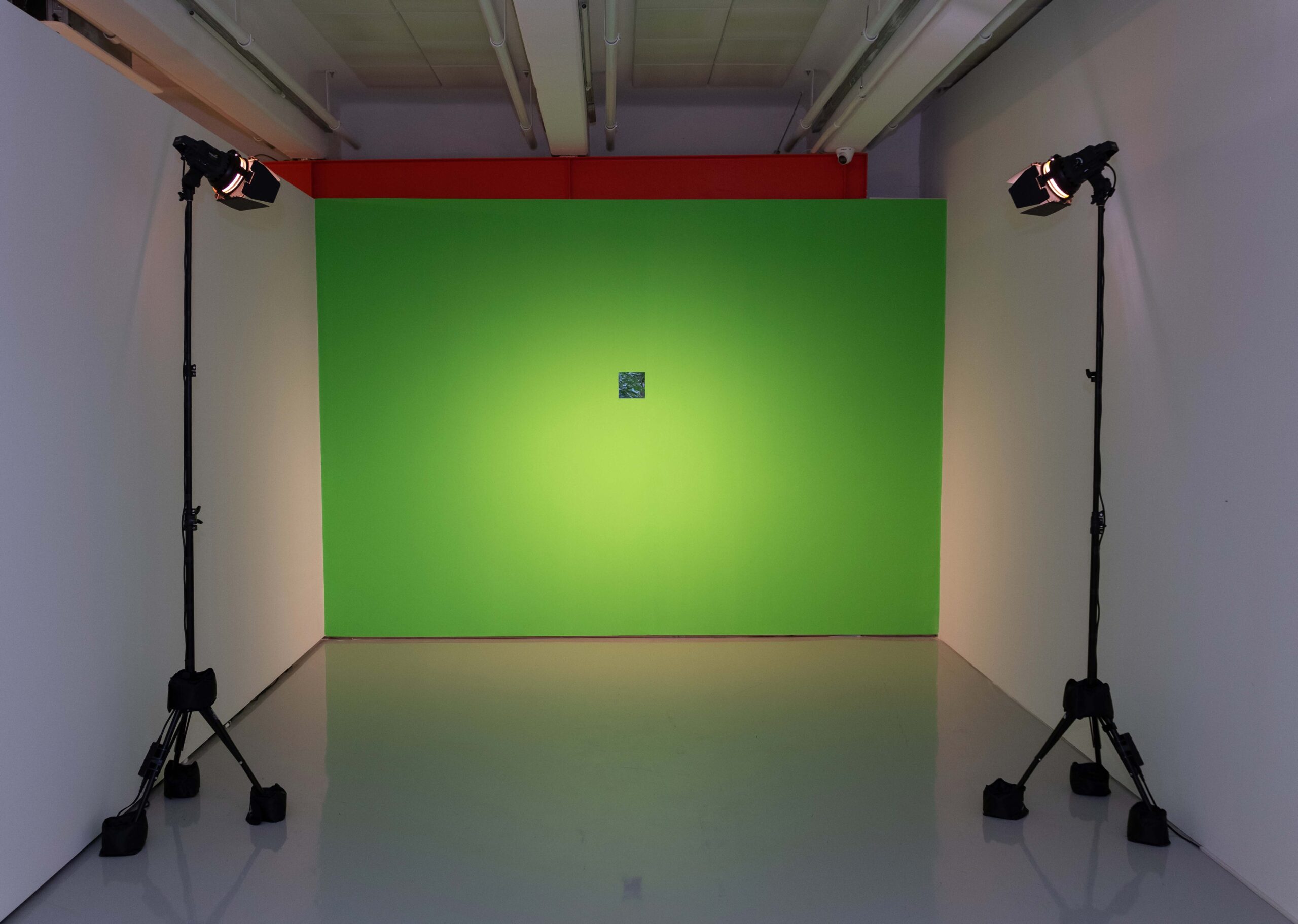
Green chroma key painted wall with a hole to the outside and light reflectors I Variable dimensions
2022
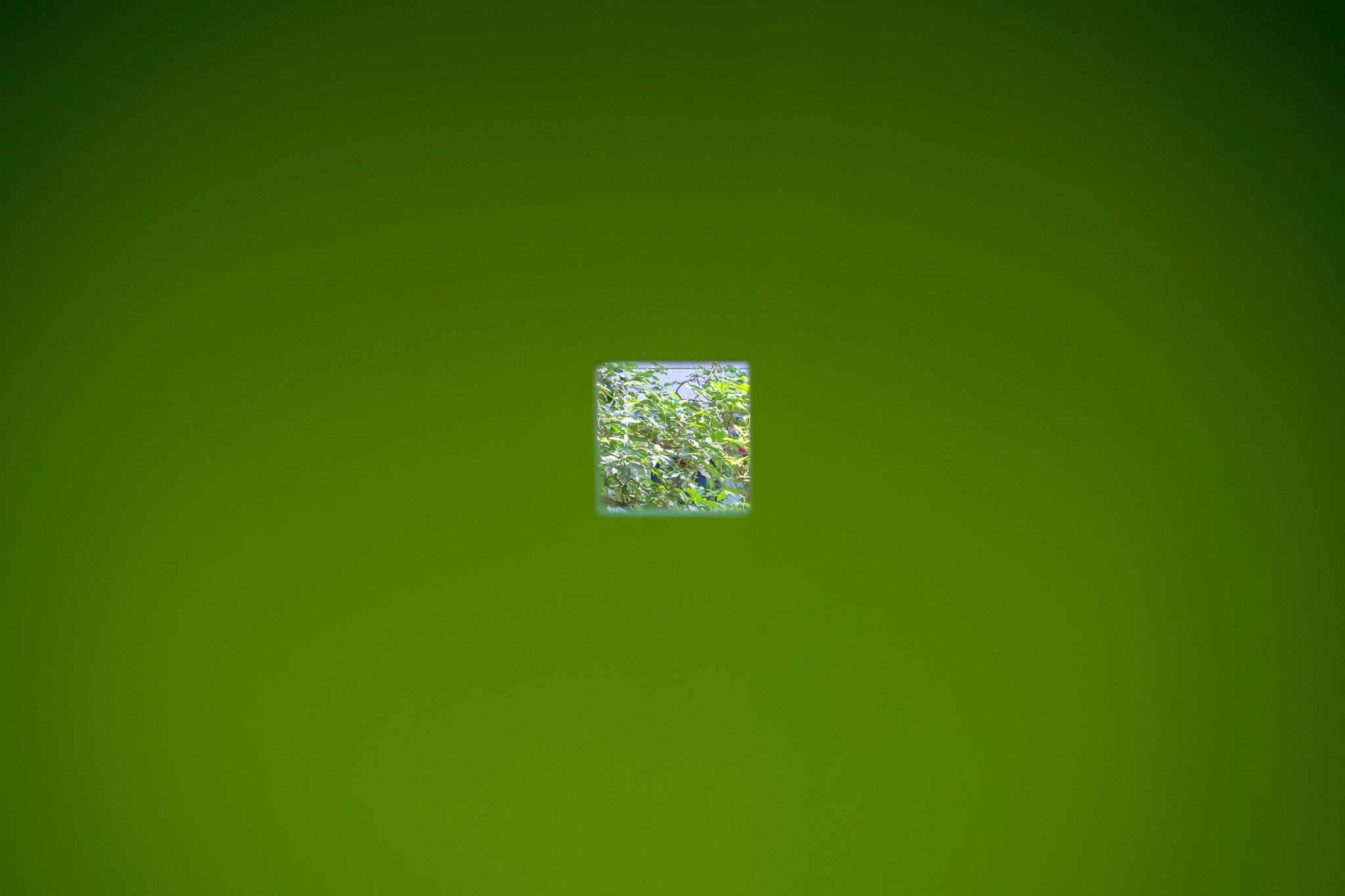
Green chroma key painted wall with a hole to the outside and light reflectors I Variable dimensions
2022
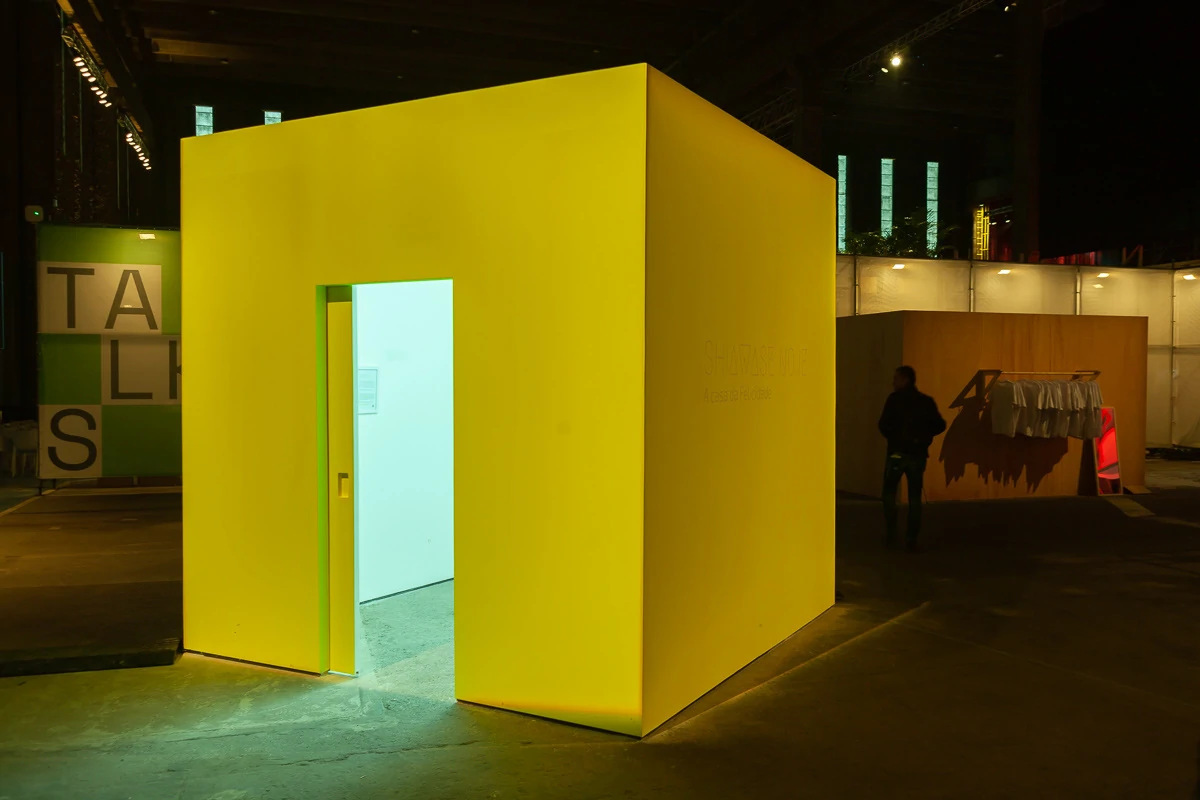
Installation with
cooling system, custom thermometer and framed article I Variable dimensions.
2018
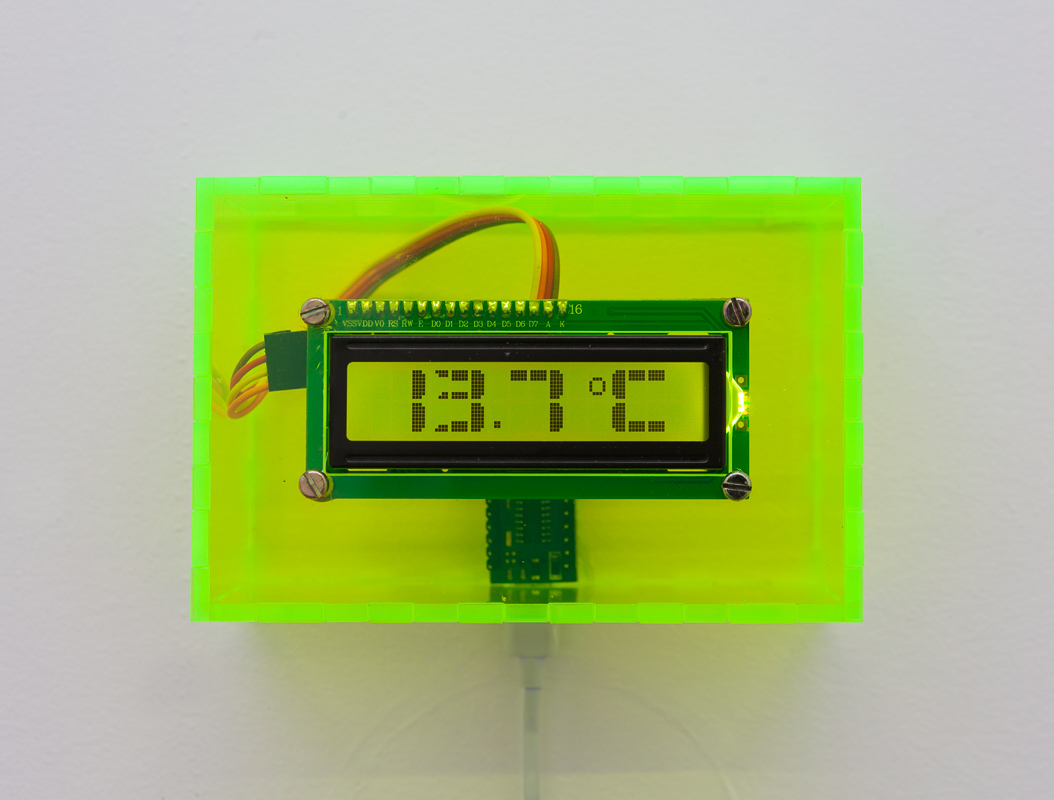
Installation with
cooling system, custom thermometer and framed article I 7 x 11 x 6 cm
2018
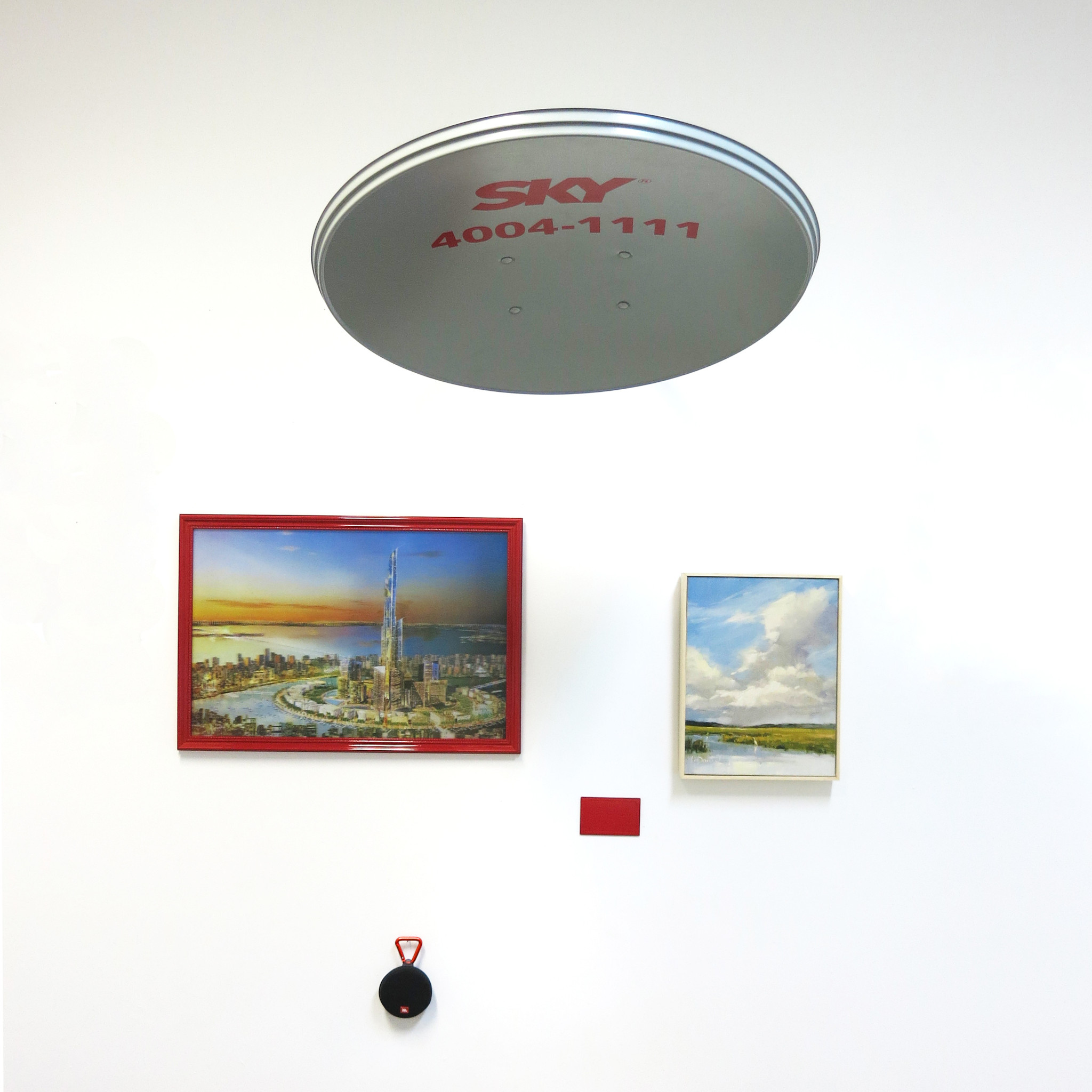
2017
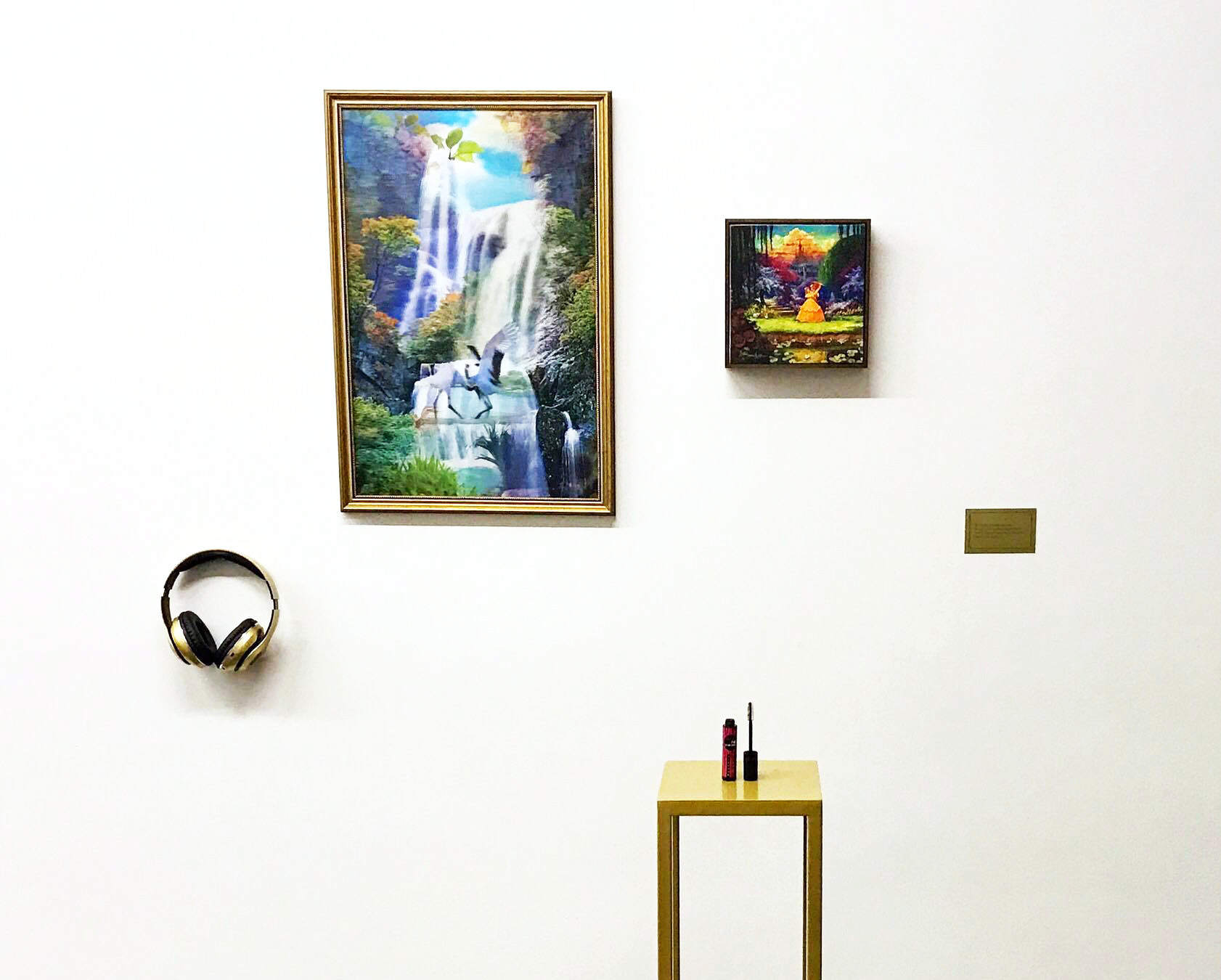
2017
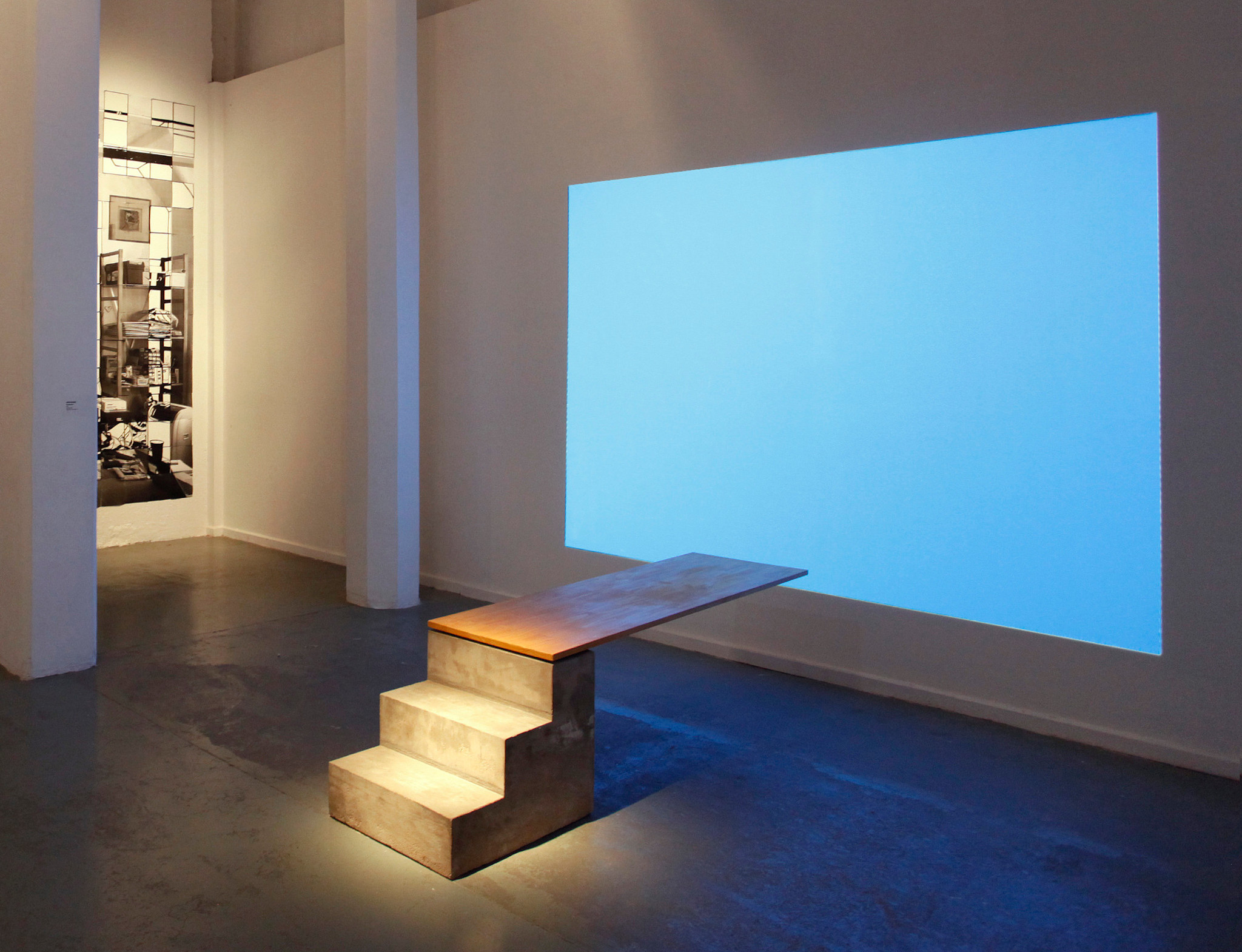
Concrete, wood, latex paint on wall and light I Variable dimensions
2022
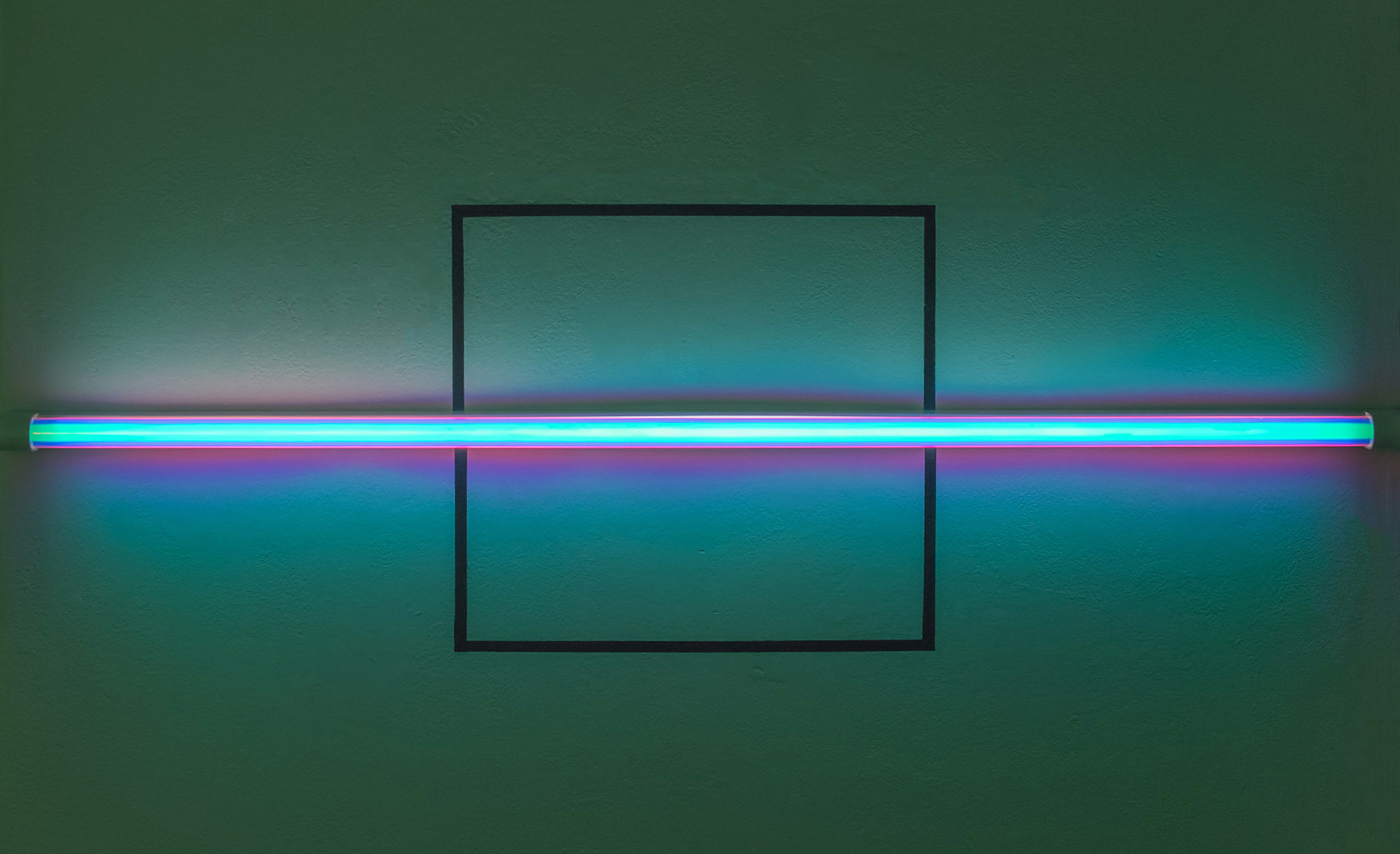
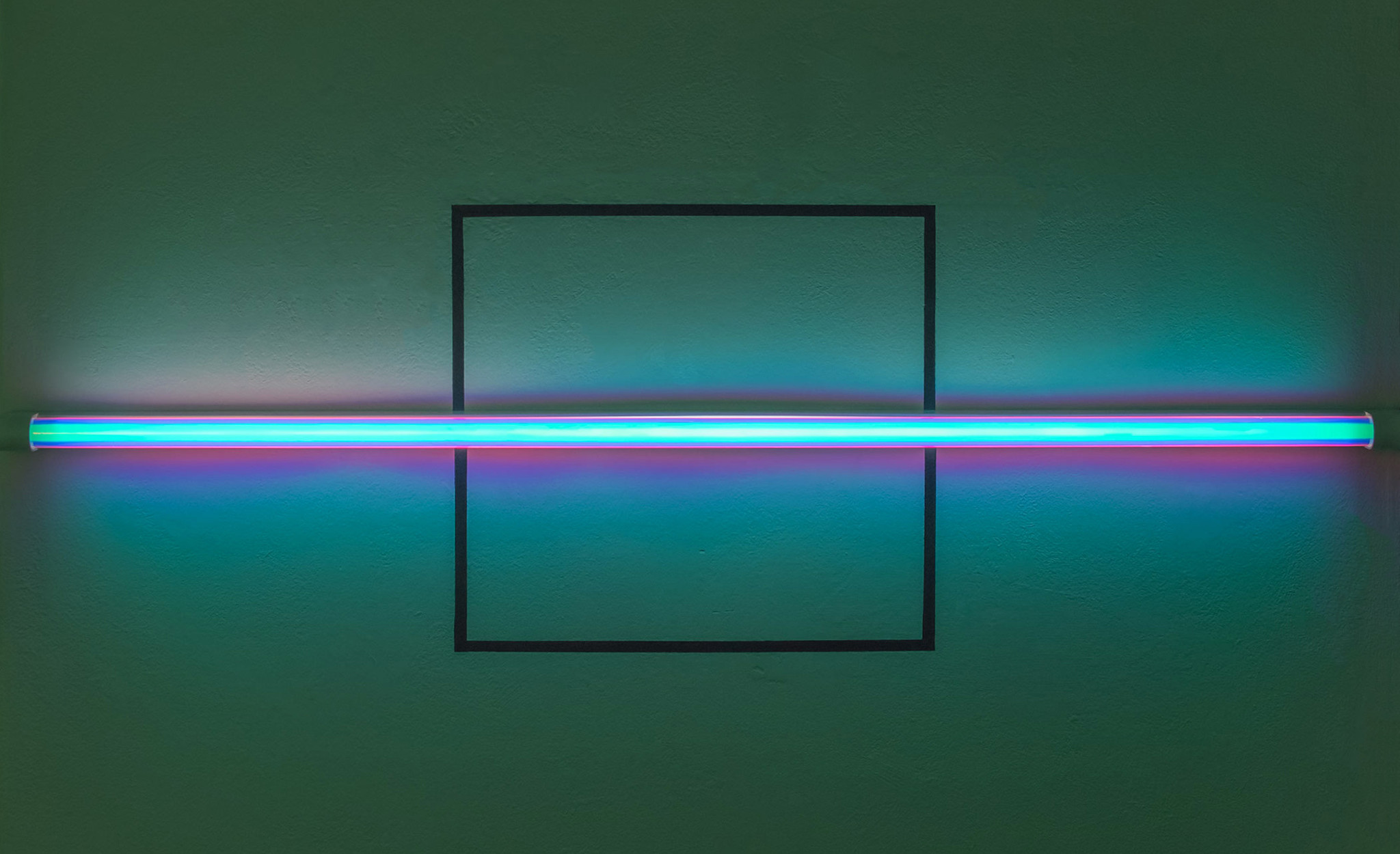
Light tube, reflective coating and acrylic on wall I 122 x 39 cm
2018
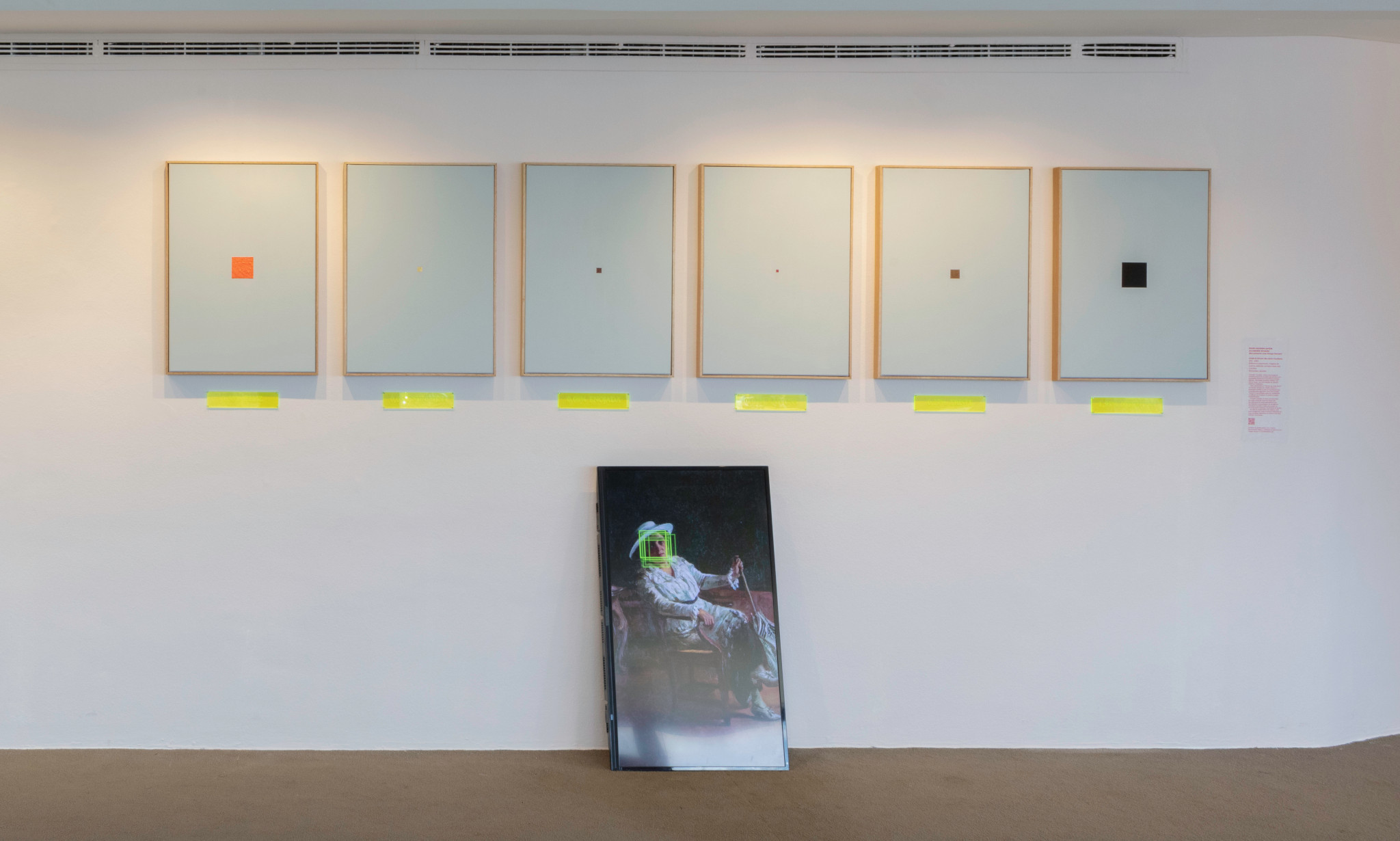
Custom software, archival images, diverse materials on canvas and engraved acrylic I Variable dimensions
2024
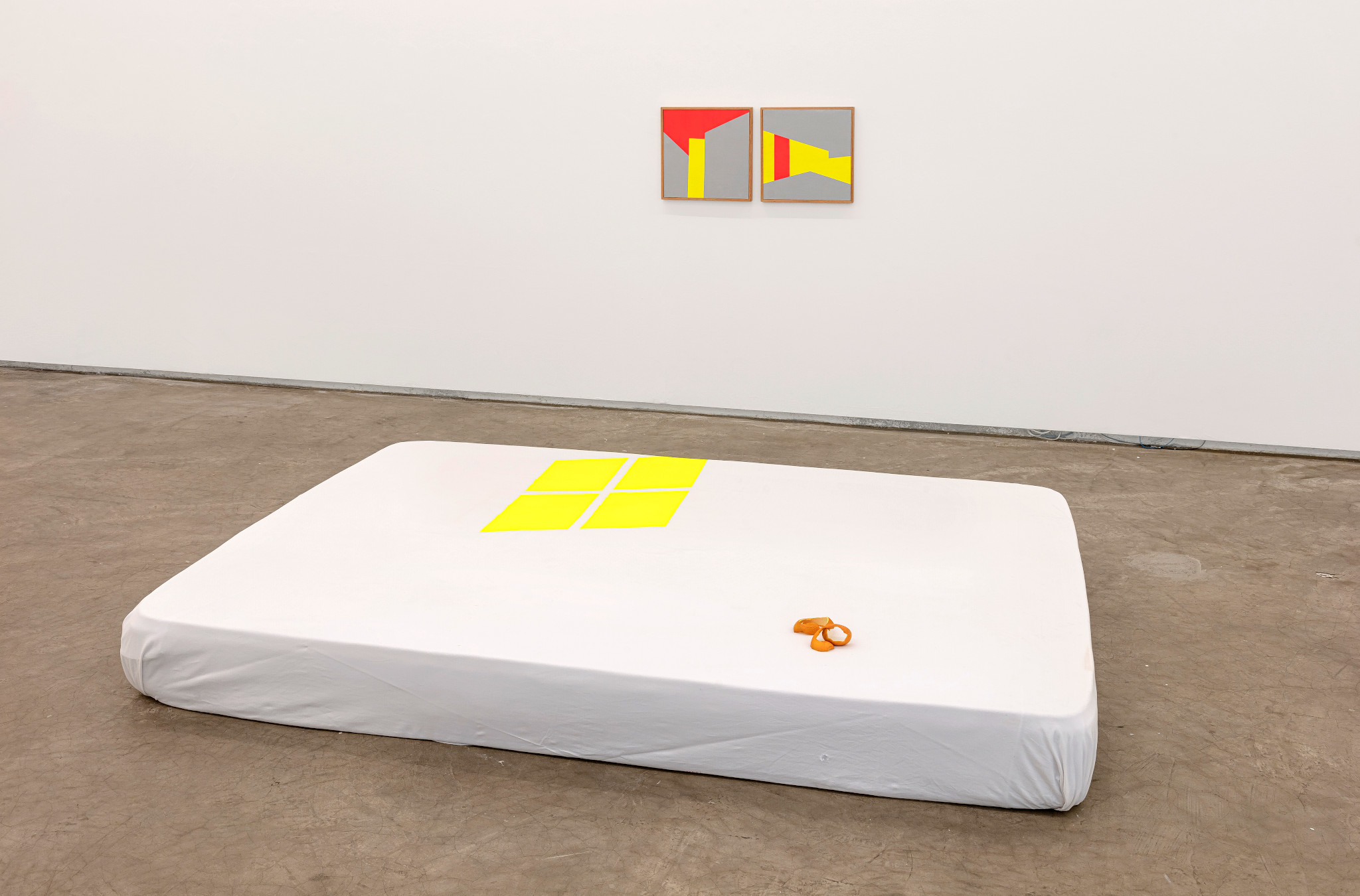
Mattress, sheet, paint, orange peel and acrylic on canvas I Variable dimensions.
2021