

Nicole Kouts
Nicole Kouts (São Paulo, 1997) is an artist who navigates between the visual, audiovisual and scenic arts, and illustration. Her artistic research centers on the intersection between technology and memory, exploring the temporal and the media transformation of images. In the interview, Nicole discusses how her multimedia work began with drawing and how her practice changed when she discovered the infinite creative possibilities offered by the internet. The artist also talks about her cultural roots and how they influence her work. As the granddaughter of Greek immigrants, the relationship with her ancestry and living in the Greek community in São Paulo have played a significant role in shaping her visual imagery and the way she approaches her work. Check it out:
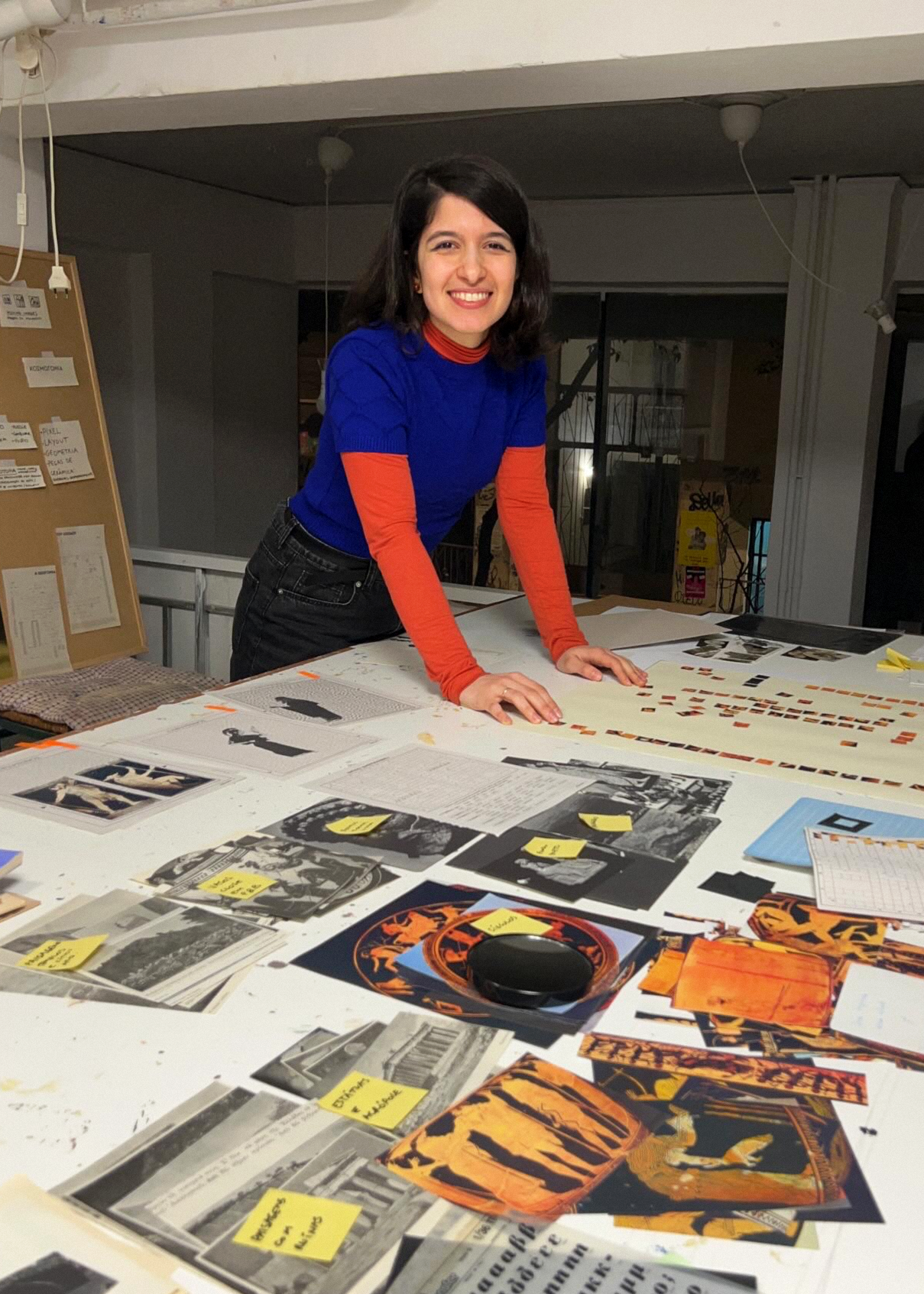
Firstly, thank you very much for agreeing to talk to us and taking time out of your day to do so. I’d like to start by asking you to introduce yourself, with any kind of information you think is relevant, thinking of an audience that may not yet know you and your work.
Thank you for inviting me, I’m happy to be here. My name is Nicole Kouts, I’m 26 years old and I was born in the city of São Paulo. I’m a multimedia artist with a degree in Visual Arts and a postgraduate qualification in Scenography and Costume Design from Belas Artes in São Paulo. I am very interested in researching interlocutions between the visual, performing and audiovisual arts. I work mainly with video, collage, performance, photography, installation and net art. I also work as an illustrator, and with costume and set design in the theater.
Where did your interest in multimedia language come from? And what do you mean by “multimedia”?
To begin with, I’ll tell you how I began to see myself as an artist. When I was a teenager, I really enjoyed drawing and surfing the internet. I created a blog when I was 13 and, from then on, I met other artists of the same age in Brazil who also posted their drawings. We started chatting, creating friendships and forming comics and illustration collectives, all online, and I was very fascinated by the possibilities that arose from these experiments. We even invited more well-known illustrators to contribute to our blogs and to lend a hand at the comics events we attended – it was great fun.
My horizons broadened when I realized that, with the help of the internet, I could share the creations on the table in my bedroom. I realized very early on that drawing and then scanning turned the drawing into something else. I think this process of transformation from analogue to digital became very internalized in me. Nowadays, I realize that this is one of the matrices of my work. With this publicizing of my illustrations online, I also grew closer to the performing arts. I started making posters for plays at the invitation of friends who were studying theater at that time. I soon realized that I liked the backstage, and the idea of working in a collective. I felt stimulated when I was in contact with other artistic visions. I illustrated posters, books and album covers, and along the way I decided to study visual arts at university and to take some free courses. Then, everything changed even more. The question of multimedia art stems from a desire to cover a variety of techniques and to see my work branching out in unexpected ways. During university, I experimented a lot with idioms, some of which I identified with more, others less. I faced a bit of resistance with painting and the materiality of paint, and I still find it challenging, but when I came into contact with engraving techniques, which result in more two-dimensional images, I thought: “I think this is my thing” – several layers, one image on top of another, sediments of time. Somehow, I thought that printmaking had something to do with video and the digital world, perhaps because of this idea of layers, like in editing programs. It was a key moment for me when I realized that my work was to do with both the graphic image and the moving image – sometimes more on one side, sometimes the other. I think “multimedia” thinking speaks to this desire to mix and multiply, and I think my history with the arts also came from a multimedia understanding of the creative process.
How was your access to video art and multimedia practices at university?
In my art degree, I took courses on video over two semesters, and on art and technology, which were incredible. Something I found curious, and which turned out to be very stimulating, was that the classes didn’t focus so much on technique. I don’t think the intention was to teach you how to use all the editing features of a specific program, but rather to film ideas and use the video platform to communicate something. From my experiments and getting to know the video work of other artists, I realized that these materials, when in a more “raw” state, were also powerful and could be works in themselves. I identified with the idea that video art is often not necessarily the result of a precise editing technique or the best equipment. I think that’s why I got to grips with video; it’s a very malleable and complex medium, especially in this day and age of computers, mobile phones with cameras, editing apps, screen recording and social networks.
How do you see this transformation of video into a work of art, into a canvas that confronts the viewer?
I usually carry a notebook and when I have an idea, I write it down and draw it. This graphic thinking, which is where I started, is always with me. Even though I don’t do much drawing directly, the graphic side of synthesis is very present. When I think of an image or an association of questions for a video, it goes onto paper and somehow I can already visualize the shape of the final work. Sometimes, there’s something missing in order to achieve this result, and this research process can take a few hours or several years. When the work is ready, most of the time the result is very similar to the first idea that was there in the notebook. The process of conception in drawing also has to do with the way the work is shown afterwards. In the case of a video filmed as a computer screen recording, I already take into account the pixelated aspect that results from a filming like this, with lower resolution, and this becomes more of a feature of the work when presented on screens, projectors and other formats.
Do you generally use modern, or older, devices?
I made my first video work in 2016. From then until today, I’ve had one or two different computers, about three mobile phones, and now I have a slightly better camera. I’ve been getting by and taking advantage of the possibilities of these devices, sometimes borrowing something or other as well but always in a way – I think this is an issue in my work, whether it’s with collage, digital images or photomontage – in which I appropriate the resources I find and make them work in the way I’ve imagined. I like to think of it as a magic trick. There are a lot of tricks involved in my work that give the feeling that something was done in a certain way, but sometimes it was done in a much simpler and improvised way. For example, there’s a video called Monologue (2021), which is a Zoom video call between ears painted by Hieronymus Bosch, taken from a variety of his works. This collage was made on Photoshop using still images and edited as a video. I simulated a video call that wasn’t actually made on Zoom. The frame that indicates that the person is talking was created from contours that changed in sequence, as if they were stop motion. I see the editing process as a playground: how can I make a workaround that results in the visuality I’m looking for? And sometimes it doesn’t take much. I like to play with that [laughs].
In our current state of rapid technological advances, technology, that is something we usually connect with the future, actually helps to mark the past.
This is a subject I’m very fond of – the recovery of pasts, both near and far. I think the discussion of time is a thread that connects my work – the relationship between today and some other time. From this, I usually choose two or three things and combine them in a way that can provoke some strangeness, some friction in the present. Most of these issues are not resolved in one work. Some are repeated, others are reformulated, new things appear and, in this way, the works talk to each other.
And how does this part of expanding your research and your interests work and making these cut-outs that become works? What’s it like for you to close a project, a piece of research to create a work, but also to continue it afterwards?
Some subjects guide my research, though they keep changing, and one recurrence is the relationship between technology, memory, time and, in some way, archaeology, but archaeology in a more poetic sense. Part of this has to do with my generation and its connection with the digital universe. I keep thinking that, in the early years of my childhood, I witnessed a world saying goodbye to analogue and migrating to digital. I still had a more analogue childhood, but I was already playing games on the computer, for example. When I was about ten, I saw people using flip phones and by the time I was a teenager, smartphones were commonplace. These were very marked accelerated transitions, and this subject is reminiscent of archaeology, because what has been left behind seems to have been left very far behind. All this generates a very interesting repertoire of images to explore. At the same time, another recurrence in my research is my relationship with Greek ancestry. I think of the transits and displacements of my grandparents and great-grandparents, who immigrated from Greece and who had also gone through a process of forced migration within their own country, because they were from the Asia Minor region. They came to Brazil and formed ties with the Greek community in São Paulo. It’s a very small community, but like any immigrant community, it’s made up of different layers and specific cultural aspects that shape a certain identity. Growing up in this context was, and continues to be, a major influence on my visual and emotional imagination, with the language, music, objects, traditions, memories of a place that has been left behind in time, the relationship with the Orthodox Church, classical Greece, which seems so distant from recent Greek history but is so present in images (especially in the context of art). This whole process of rescuing and reinventing pasts has been gaining ground in my work.
Eu tento colocar, a partir do meu ponto de vista, como que todas essas coisas se combinam. Como se fosse um jogo de combinações mesmo, um quebra-cabeça. Eu quero falar disso, mas eu também quero falar disso. Será que dá para juntar? Às vezes dá, às vezes não, mas aí eu faço um trabalho sobre a dificuldade de juntar [risos].
(Translation: From my point of view, I try to show how all these things combine, as if it was a game of combinations, or a jigsaw puzzle. I want to talk about this, but I also want to talk about that. Can it be put together? Sometimes you can, sometimes you can’t, but then I work on the difficulty of putting it together [laughs].)
How did you see digital being part of your cultural upbringing?
This is a key question that I like to keep open, because I don’t think I have a definitive answer: what is my relationship with the digital? How does it influence my life? It seems to be influencing me more and more. When, for example, I worked in comics collectives, with illustration, the relationship was very organic – it wasn’t a meta-relationship, like, “I’m working on a computer aware that it’s a computer.” Using the internet was part of social relations, but I think there’s something that goes beyond that today. We understand that it’s a tool and that this tool has a power, a controlling force; we know that it’s not impartial. When I chose (because it ends up being a choice) to also bring technology and the digital universe into philosophical questions in the fields in which I work – not just the media itself, but also talking about technology as a problem – then the work changed a lot, because everything ends up becoming a possible subject and a possible question. For example, a video call, an interesting image that appears on the screen, an image that gives an error, or a new program that is launched, or relations with artificial intelligence, end up not just being events, but also become something that I can absorb for broader research. I think it’s stimulating – perhaps that’s the word. It’s a relationship of stimulation, of a back and forth.
It’s interesting to think about your work Doppelgängers (2020) because, when you created it, you depended on a response from a person, and now there are people using artificial intelligence to create their own doppelgängers.
This work began in 2020. It’s curious how, in just a few years, projects like this take on new meanings because, suddenly, a new digital resource appears that totally changes the view of it. I think that’s incredible. There are more spaces for discussion and it’s not a work with an end point in time. This work is about a search that a computer couldn’t do, because there are nuances of human perception involved. The question is: “Have you ever seen someone who looks like me? Or do you think I look like someone? If you remember and/or happen to find one, could you please send me a photo?” Some of the people who sent me photos have never seen me in person and only know me from the internet, from photos. Then, all of a sudden, another person who has known me for many years sends me a photo of someone who makes me think, “Wow, that doesn’t look like me. What did that person see me as?” These are subtleties of recognition that perhaps a computer program would be hard pressed to reproduce. I don’t even think it’s a question of comparing the capacity of a computer or a group of people, but it’s about the time the work takes, and the perception of the other. This interests me a lot, these extensions, expansions, and contractions in time. Most of my videos are long, they repeat themselves, they demand a certain attitude of looking and waiting, while other images are very fast: works at which you look, and that’s it.
I wanted to ask you if there are any challenges you’ve encountered in your career, or that you’ve encountered in your research and production.
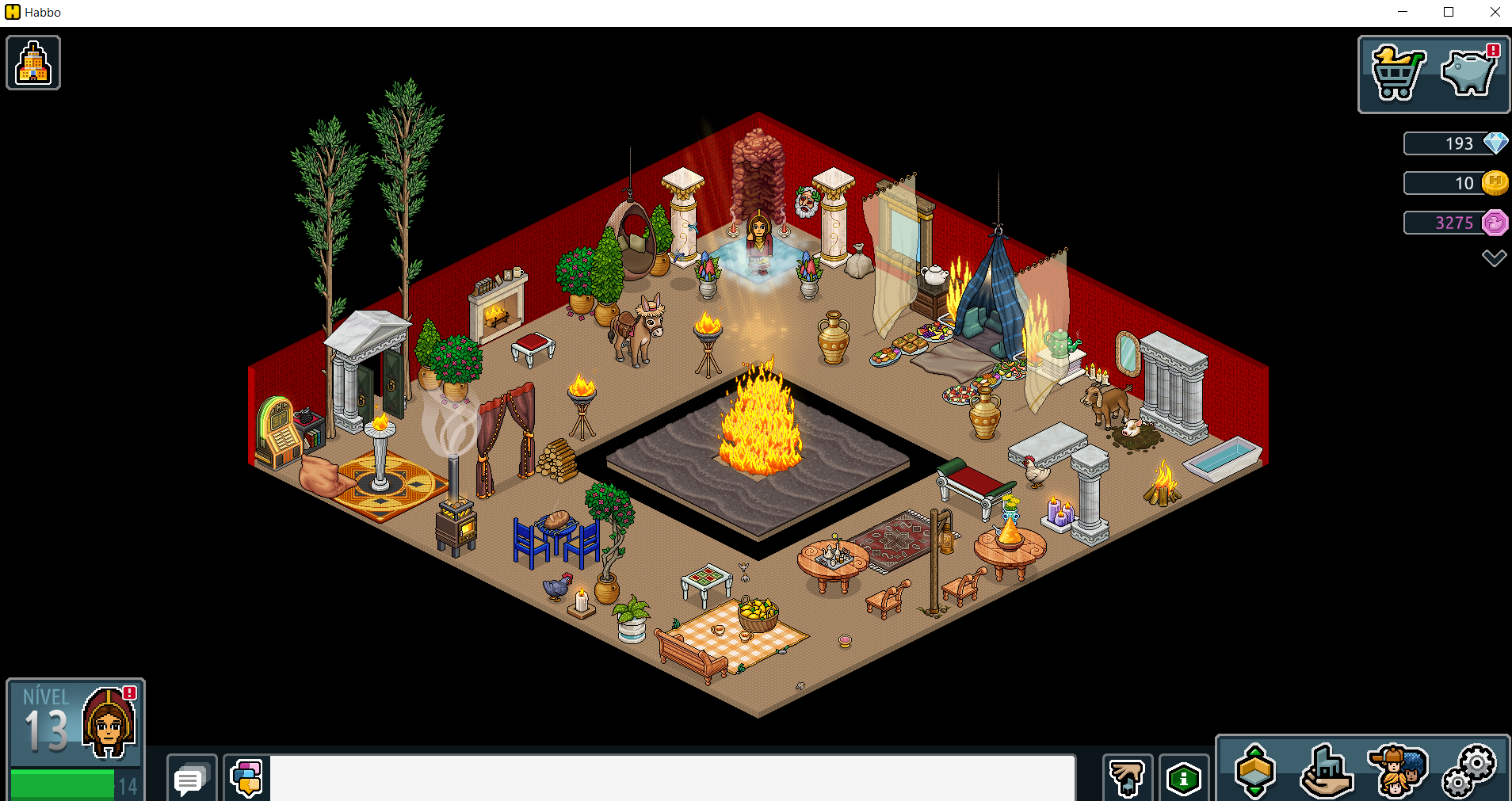
This area is really challenging. The challenges are always there, to a greater or lesser extent. One of them is in relation to the process of building a career. I think that, in the arts, it’s not an obvious thing. There’s no one path you have to follow, or something you have to do in a certain way. Access is often indirect and it’s difficult to know how, and where, to navigate in order to present your work. It’s also a challenge to reconcile more than one interest within the arts themselves. I think there is, in general, a complexity in the market, or even when you present yourself as an artist, when you find yourself in the interlocution between more than one medium in the arts, or between other areas of work. In my case, my work with illustration and the performing arts is also part of my research, and one feeds the other. There are external demands for a lot of predefinitions and summaries that, more often than not, don’t match the plurality of the whole. The work is not crystallized, it’s not just what appears most often, and there are many layers that can make up the paths of artistic research. Multimedia and digital art is challenging because the media used are often not the most traditional. Video has gained more space, with more archiving and preservation, but there are some works – for example, a digital happening, which is an image, or a screenshot – that don’t have much in the way of reference. For example, I made the site-specific Virtual Hestia (2022), which takes place inside an online game, Habbo Hotel. The space is called Virtual Hestia, and it’s the temple of the goddess Hestia of Olympus, which I created within this game. It’s an open room where people can enter with their avatars, to interact and chat with the representation of the goddess. Even when it comes to describing how the digital site-specific works, or finding formats to record this work, there are challenges. I’ve been careful to build a record of my work in an organized way. It’s a way of dealing with this challenge; printing the canvases, recording digital exhibitions, exhibitions in other countries, various projects. I try to keep this archive organized, with dates and images, because digital media is very fleeting. You never know what might happen to a cloud, or a hard drive. I think, if I don’t do this carefully, who will? It’s a way of valuing my own work. It requires a certain discipline, and I believe that, over time, it will be worth it.
Documentation is really a challenge for everyone, but for multimedia art it’s a bigger challenge because it relates to the work itself – for example, a file. Which file to use, how to update that file, how to convert it to the next medium?
That becomes part of the job, sometimes that’s what the job is. I have a piece of work called How to ask everything? It’s a screenshot I made in 2021, when it was announced that Yahoo Answers was going to end. As soon as I heard about it, I made a Yahoo Answers account. I used the platform a lot, but I realized I didn’t have a profile there. So I asked a question on the last day of Yahoo Answers, which is: “How do I ask everything?” Three people answered me. One said: “Ask the questions before 9pm.” The other said: “Level 1 only asks 5 questions a day.” And the last answer was: “It’s a waste of time.” If I’d rehearsed it, the answers wouldn’t have been so good. I printed out this screen of the question with the answers and the work is this image, because Yahoo Answers no longer exists. It’s all gone. The record of the work is the work. It’s a digital happening, in text. And the happening is also the printout, of the screen which is an action. The documentation ends up having a dialogue with the work when it’s multimedia.
It’s very easy to think of digital as permanent, because it’s so simple to save these files somewhere, but it’s different to think of a service, a building that has been destroyed, a company that has ceased to exist. Yahoo is a website that ceases to exist, and marking this end, which can often go unnoticed, is interesting.
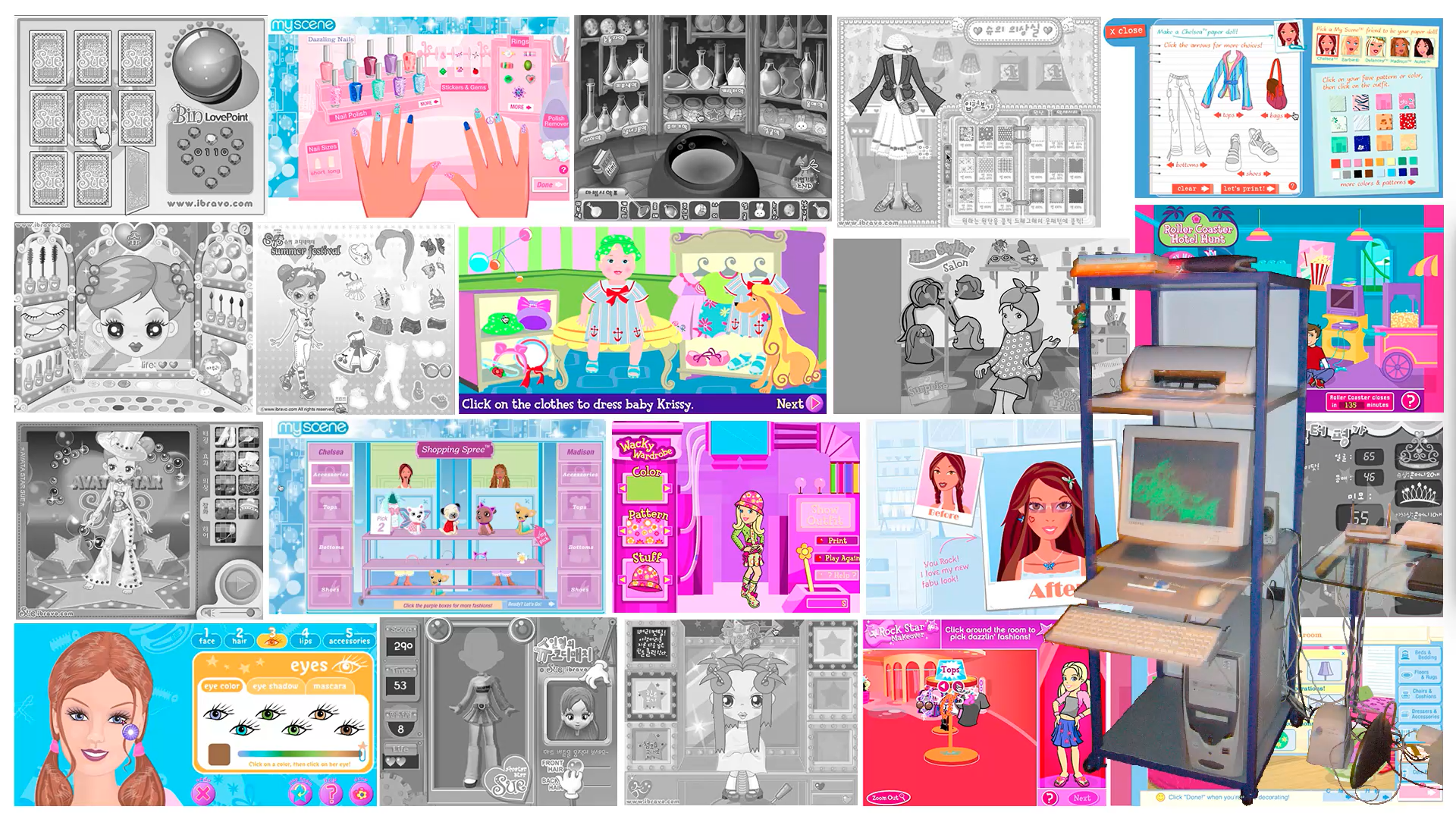
These are the recent archaeologies I mentioned. I also have a video called Games of my Childhood (2021), a memorial I made because Adobe Flash Player also ended. I recorded a gameplay playing those little games on websites that were categorized at the time as “games for girls” – painting a doll’s nails, Barbies, Pollys, choosing clothes – my favorite computer games as a child. It was something in my imagination to go online and play these games, which were very simple, though colorful and full of little noises. When I realized that Adobe Flash Player was going to run out, I searched for these games and, for a while, I recorded the screen as I played them. Then I made this video, which is a composite of these materials and a photo of the computer I was playing on. It’s a documentation that is also a work on building memory on a platform that no longer exists.
The research process is very important in your practice. How do artistic residencies work for you when it comes to developing work? What is it like for you to see yourself physically in an environment that is different from your familiar place?
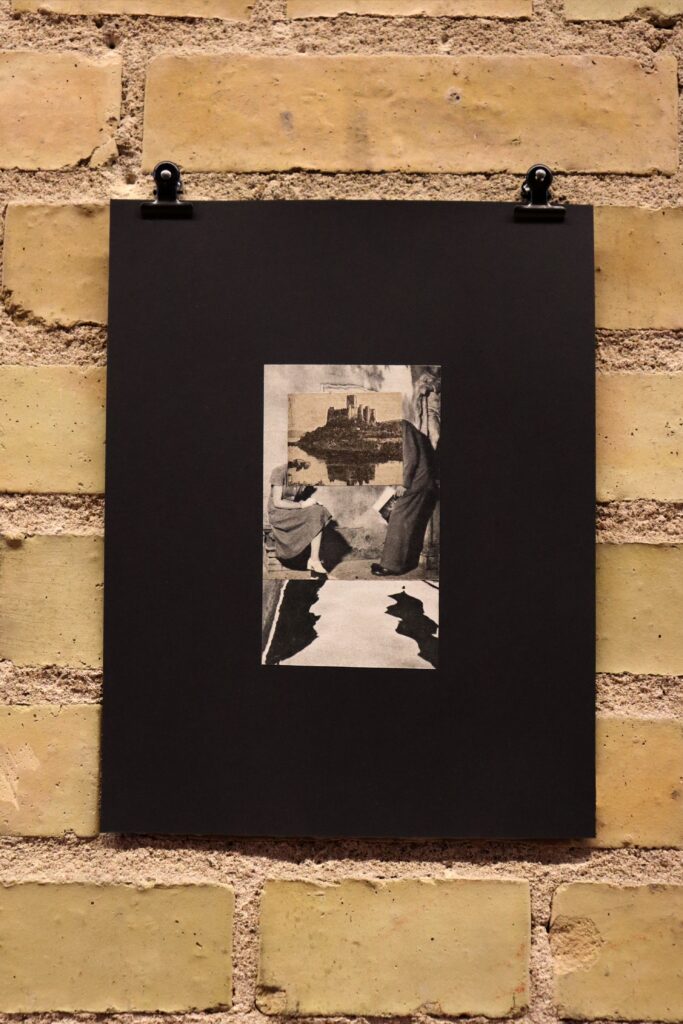
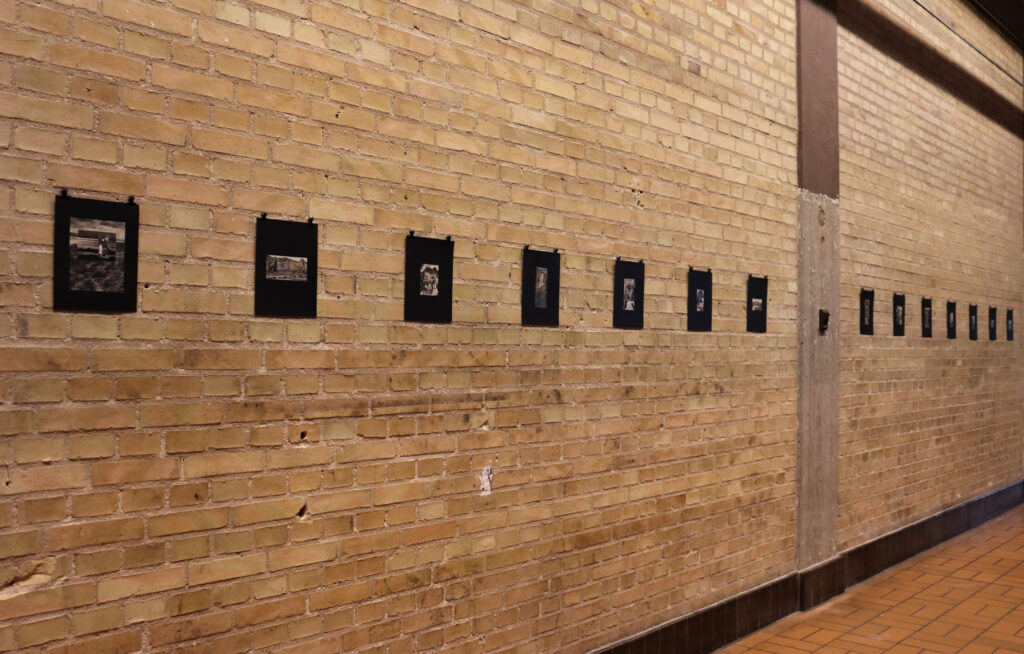
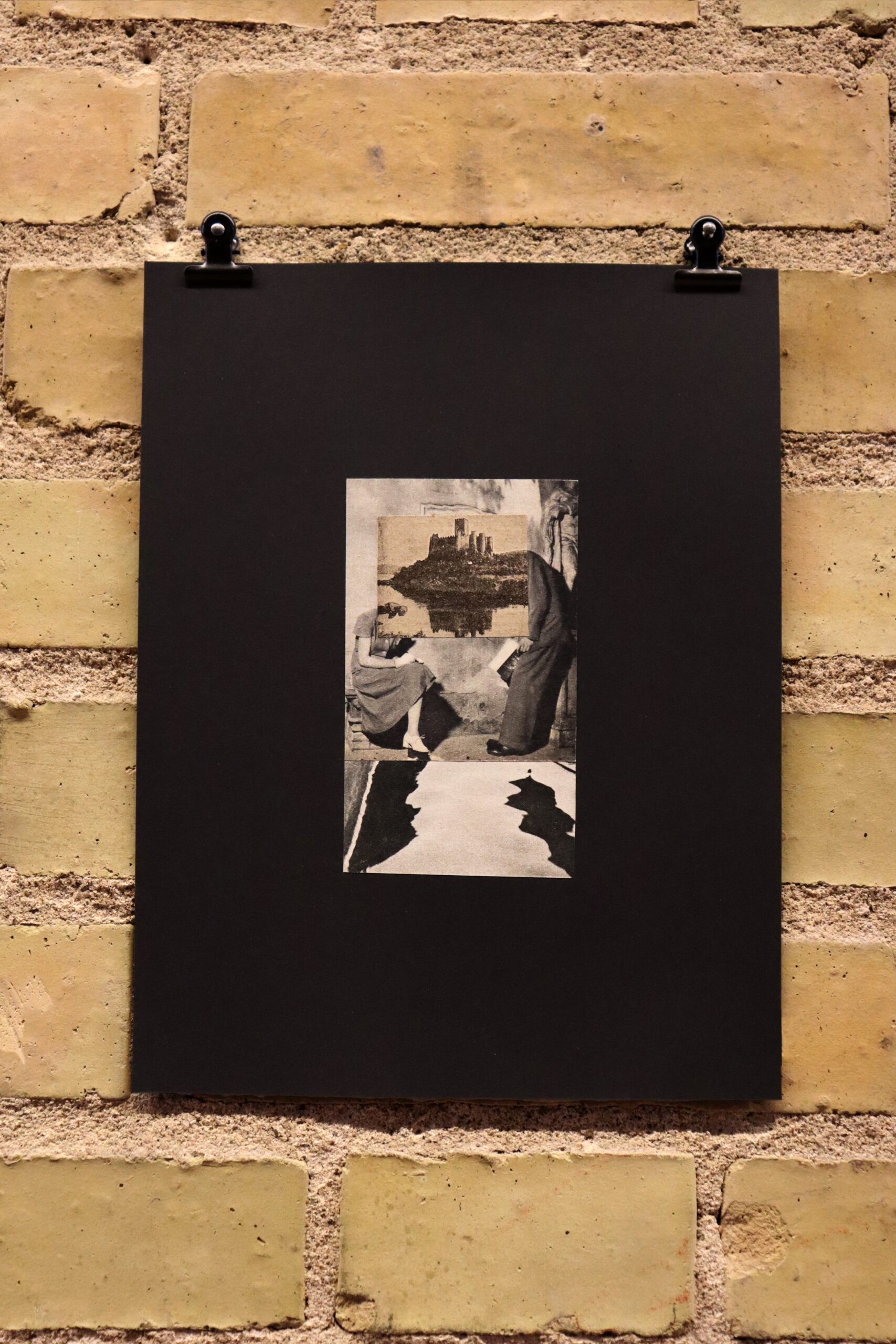
For me, it’s very exciting. It’s something that puts even more strain on ongoing processes. I think what changes the most when I set out to work in a different environment, is where I’m looking, where I can point. There are many new stimuli, but the questions, in general, I bring and take with me. Just like I said about my videos that go on and on, that repeat themselves, I think artistic research has a bit of this too. For example, there are two new works that I exhibited in Denmark, in the solo show “Enigmas” (2023). I was there, in a small town, very far north. It was a three or four month residency, in which I tried to understand how that place was so different from what I’m used to. I felt it very intensely because everything there was very orderly, and visually much more geometric – a hard geometry, a cold climate – and so I observed and wrote it all down, and went to some bookshops, because another thing I love is finding old magazines and cutting out archive material.
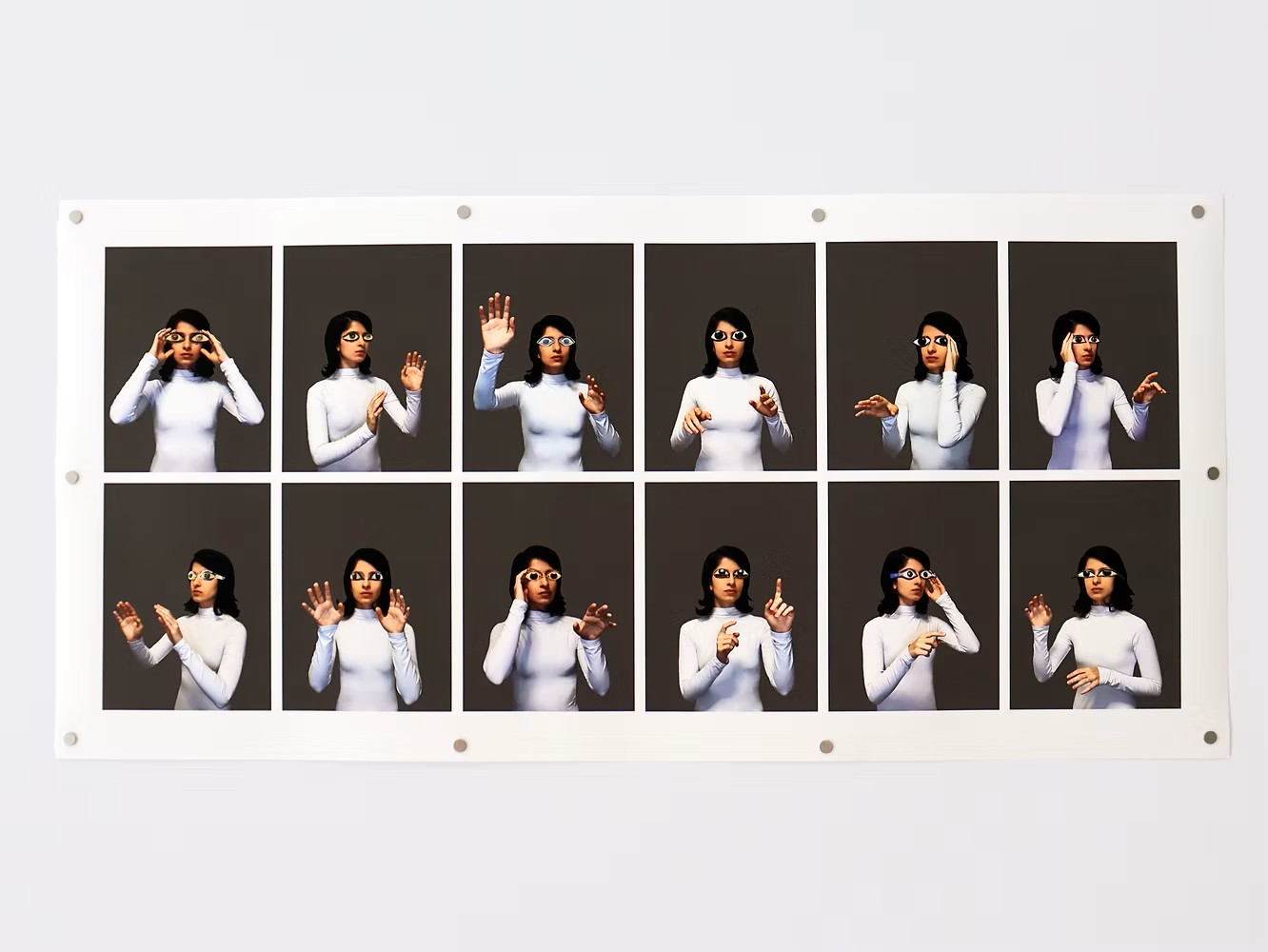
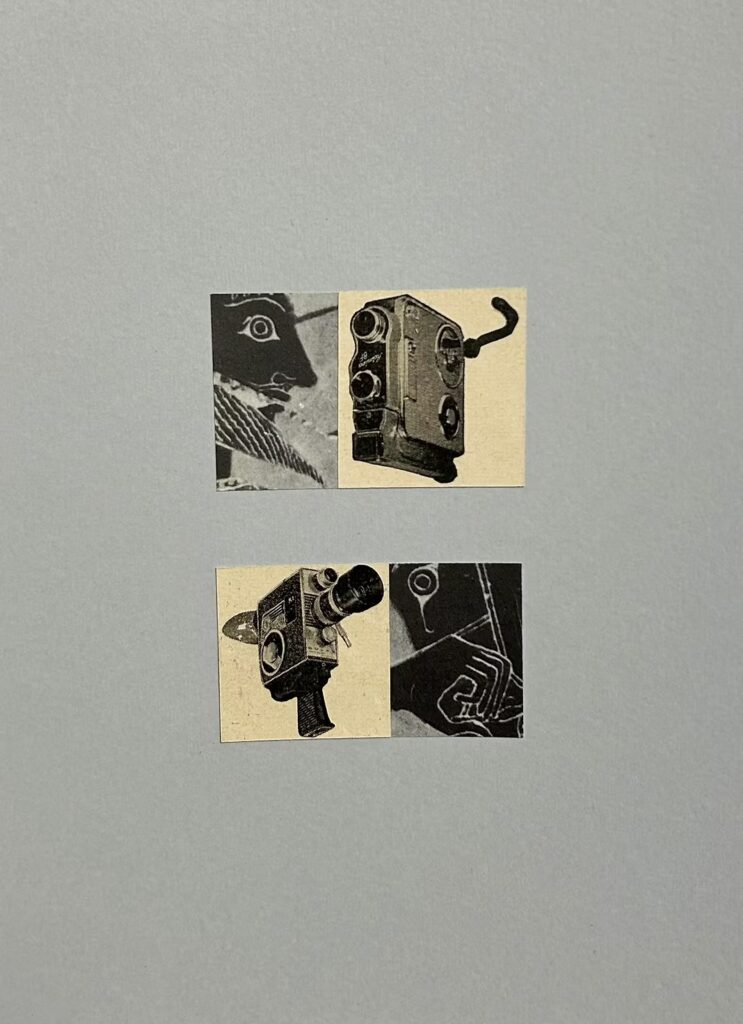
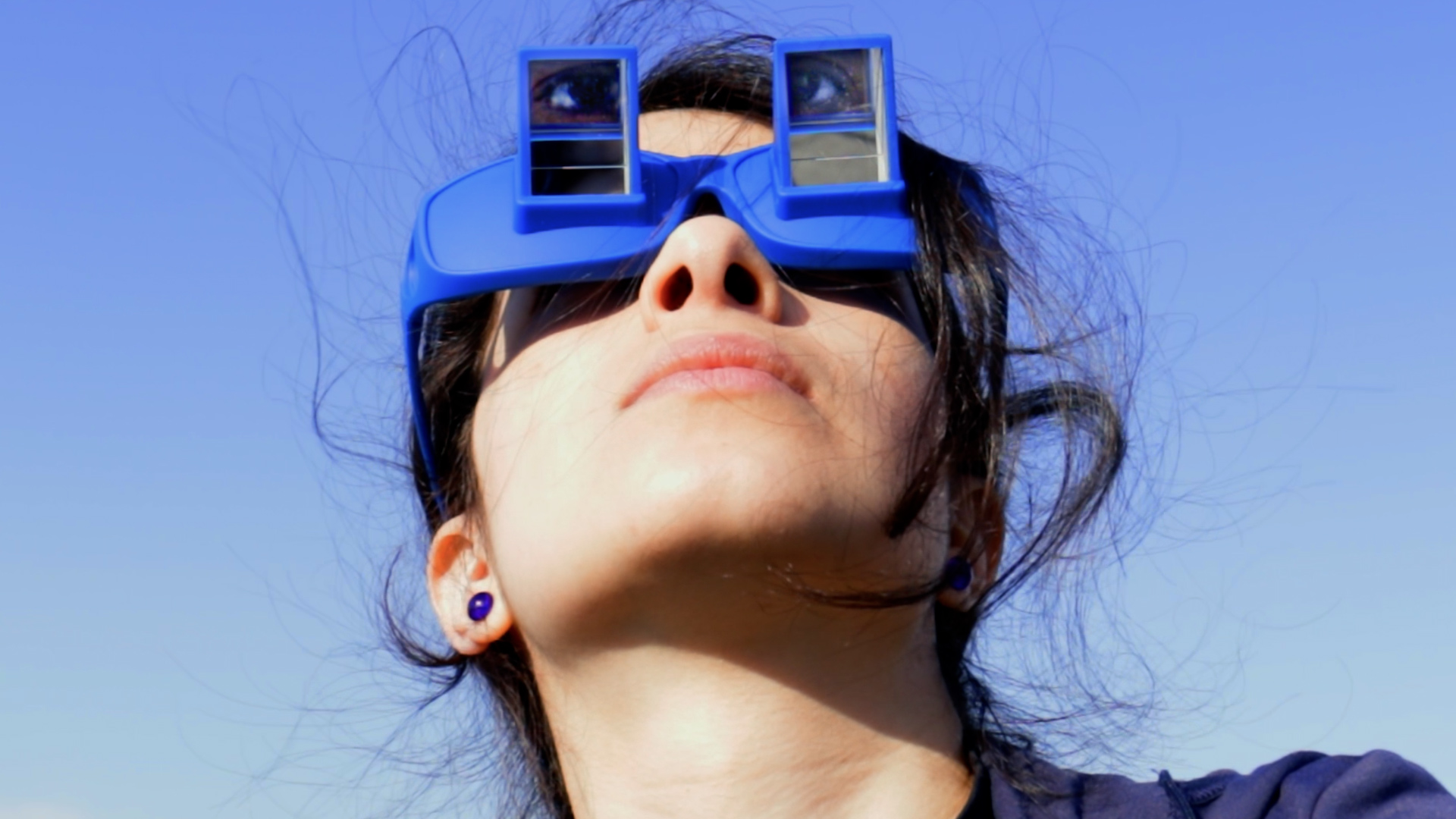
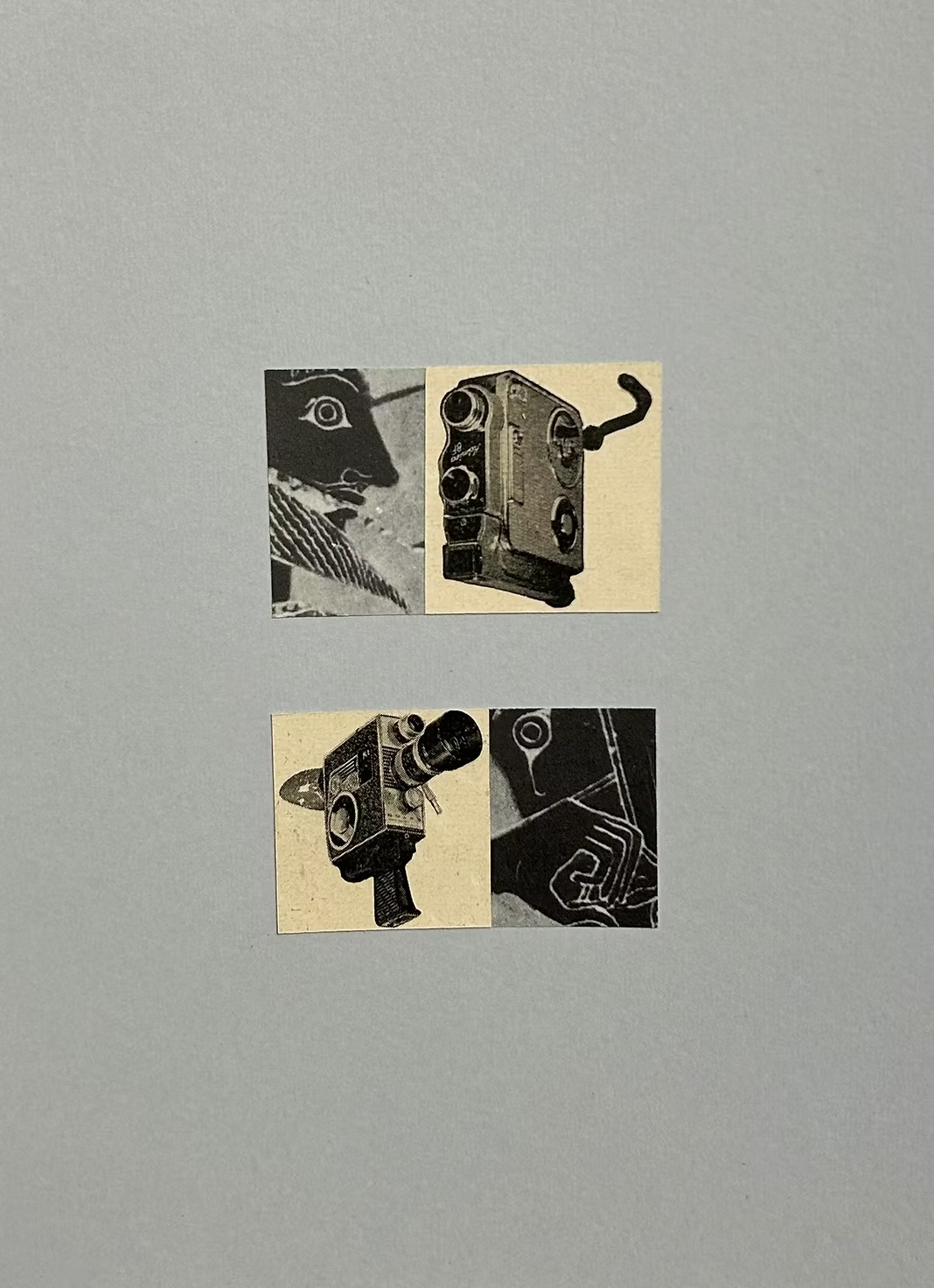
I found some local magazines from the 1950s, almost all of them sepia-toned and with an almost crumbling paper texture. I took this material and started cutting it out and making millimeter-sized joins between one photo and another. I made a series of 14 collages, each of which is a combination of three images, but in a way that looks like a fusion. I say collage, but what I’ve been working on most recently is the idea of merging images, so that it looks like one image is immersed in another, so that the collage itself isn’t so marked. I do this merging of one image into another on paper, but in other cases I use the digital resource itself – Photoshop. It’s also a trick. This series of images, which are the enigmas, I put together and transformed into new stories that speak to the mystery that permeated my observations of this place.I also made a video, Mirrors for tired eyes (2023), from glasses I found in a 1.99 shop, called lazy glasses. They have a mirror feature that allows you to read or touch your mobile phone while sitting or lying down, which I found very funny. I thought, “Wow, I need to buy these. I’m sure I’ll use them for something.” This is common practice in my work. I see something, I put it away and, even if it takes five or ten years to use it, I know it’s going to become something else. I left them there [the glasses] and made a drawing, structured a video idea, and put it into practice. It’s a video in which I perform using these glasses to observe landscapes of nature and very quiet scenes of this Danish city, the sea, the sunny sky, and a very green lawn. This video also talks about science fiction. There’s a sense of putting yourself in another space-time, and the image of the large glasses on your face makes you feel strange, and creates a dialogue with the images of people nowadays wearing virtual reality glasses.
You mentioned your connection with your ancestry, how does that come across in your work?
It’s present in many works, more or less directly, but the main thing ends up appearing not as a theme, but in the process of thinking about visuality and repetition. Let me give you an example. I grew up attending a small Greek Orthodox church in the center of São Paulo, which, according to tradition, is completely filled with Byzantine icons. These paintings have a flat appearance and a visual standardization. The very principle is that this ancient tradition should not change, that the icons should be painted in the same way, that the stories should be represented in the same way, and that this process itself is also part of the ritual. Then, there I was, a little girl, listening to the chants in archaic Greek and looking at all those images, and this marked a visual perception, in an environment lined with images that communicate with each other, and with those who observe them. These images have a power because they are placed in a sacred environment, they are made for devotion. The same icons, in a smaller format, are also present on domestic altars in the homes of family members and other people in the community. I think that all of this, even if at the time I didn’t really understand what it meant, somehow connected some dots in my head about possible relationships between image and time, and about the power of images.
Hoje eu percebo que o meu trabalho tem algum lastro que tem a ver com a vontade de criar colagens, de fazer fusões de imagens que são chapadas, que são bidimensionais e em que, a partir daí, tempos vão se sobrepondo.
(Translation: Today, I realize that my work has something to do with the desire to create collages, to make fusions of images that are flat, that are two-dimensional and in which, from there, times overlap.) It’s a way of using this visual repertoire that has a lot of ritual force, but in a totally different context. My work has this collage of times, even in the videos, a desire to put one thing together with another and make it a fusion, to become one thing.
Interview conducted on 6th December 2023 remotely via Zoom.
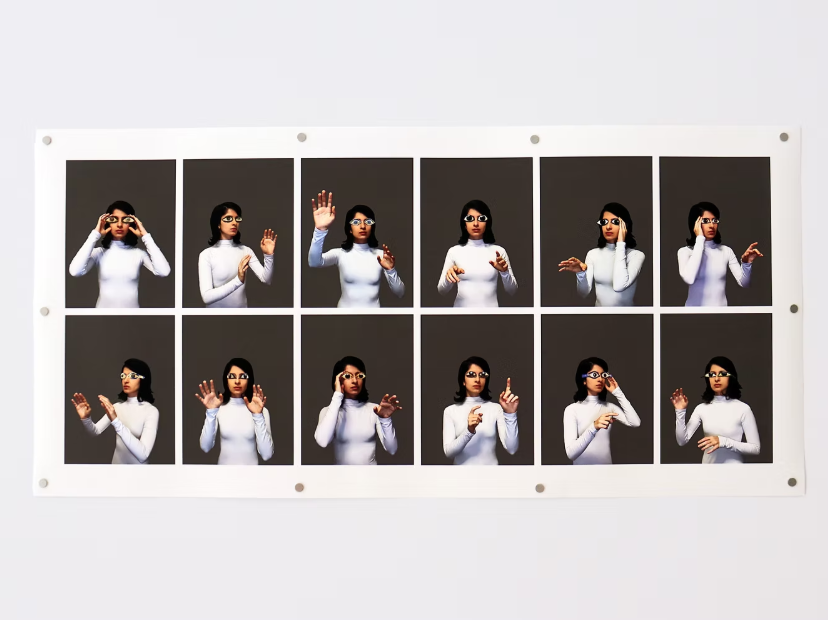
Series of 12 photomontages
50 x 113 cm
2022
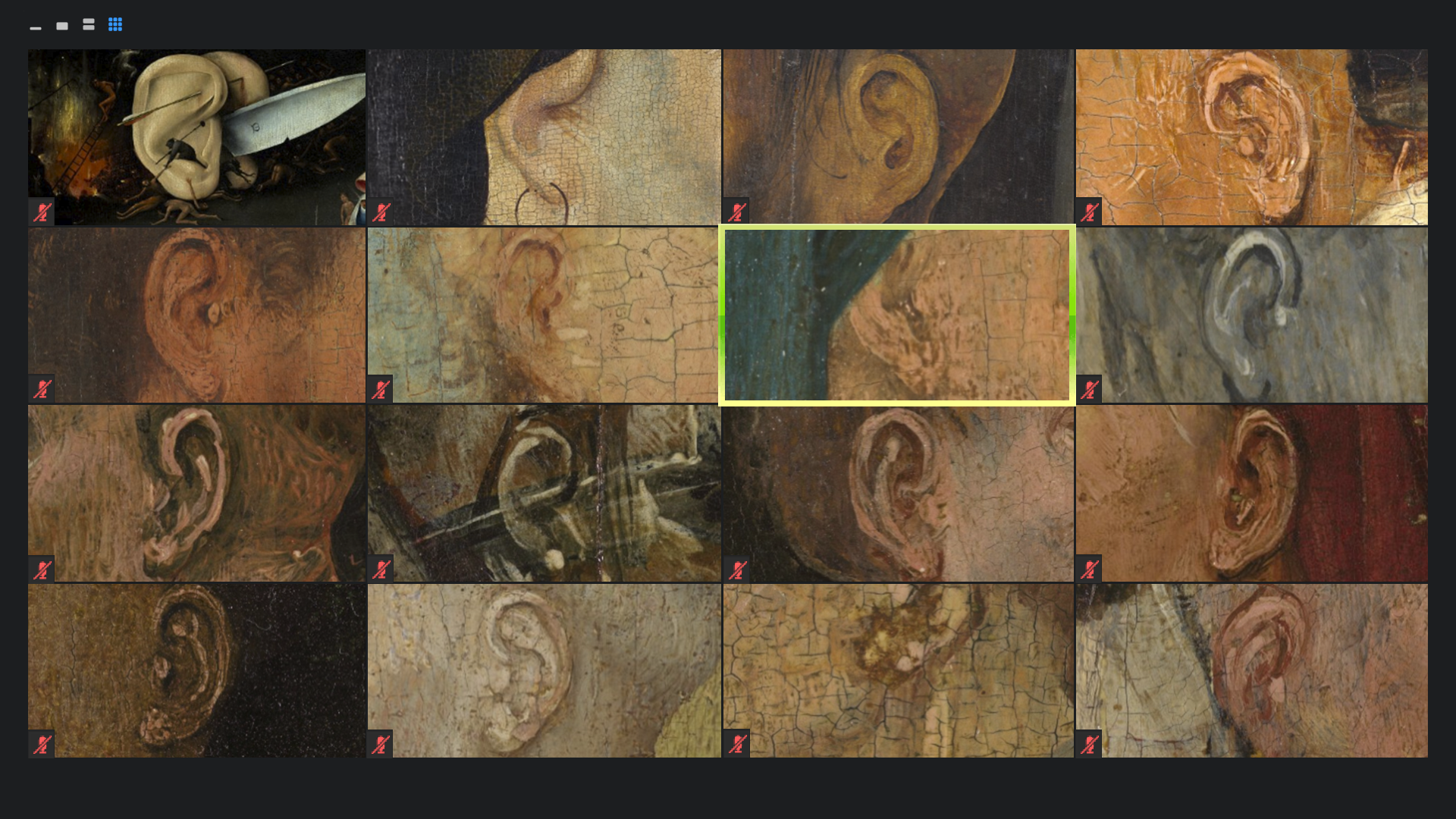
Frame
2021
Site-specific / web art
Habbo Hotel
2022
Frame
2021
Paper cutouts on paper
| 20 x 26 each
2023
Frame
2023
Paper collage
Paper: 21.6 × 16 cm
Image: 4 × 6.5 cm
2024