

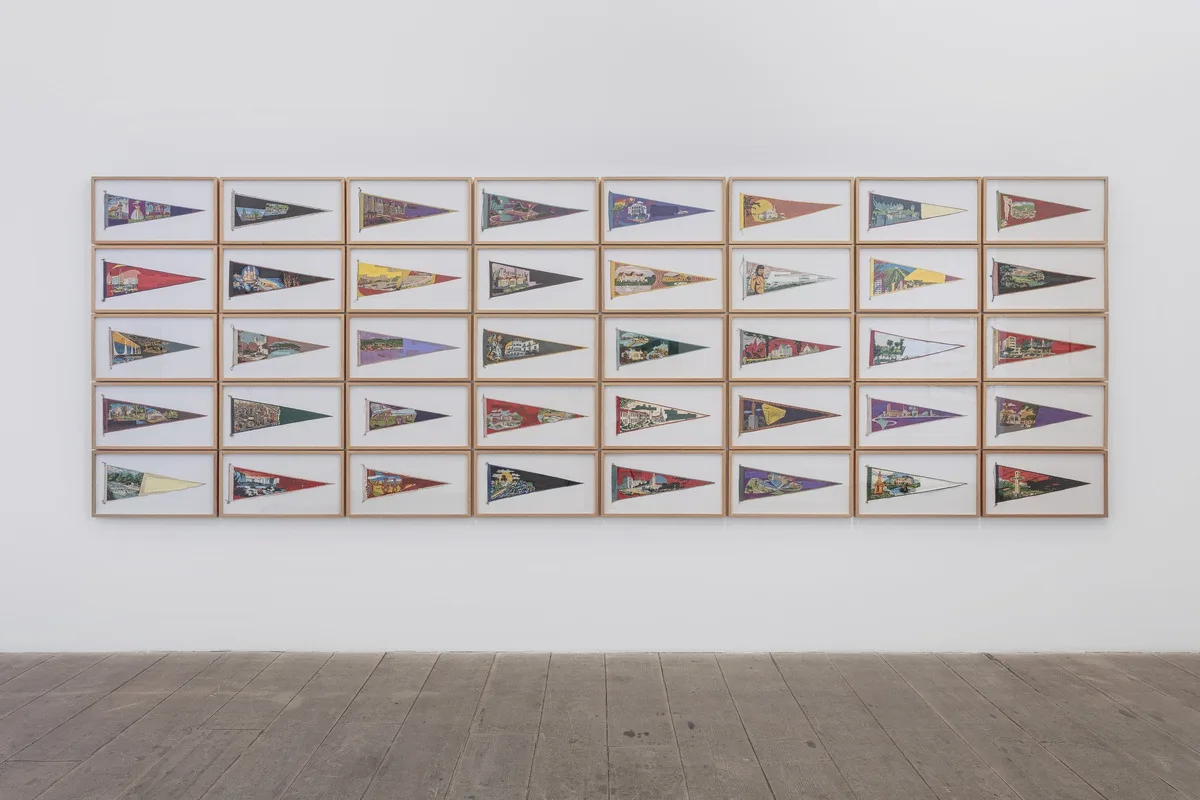
Bruno faria
Bruno Faria (Recife, 1981) constructs works that operate as alternative archives of Brazilian culture, finding in these records methods of accessing the tensions and contradictions that have shaped the country. Many of these elements bear the marks of periods of repression, censorship, and processes of social transformation, and reflect strategies of control, erasure, and re-signification present both in cultural production and in Brazil’s urban landscape. In this interview, Faria shares details of how his research unfolds organically, allowing each project to emerge from the relationship between experience, displacement, and documentary research. Check it out:
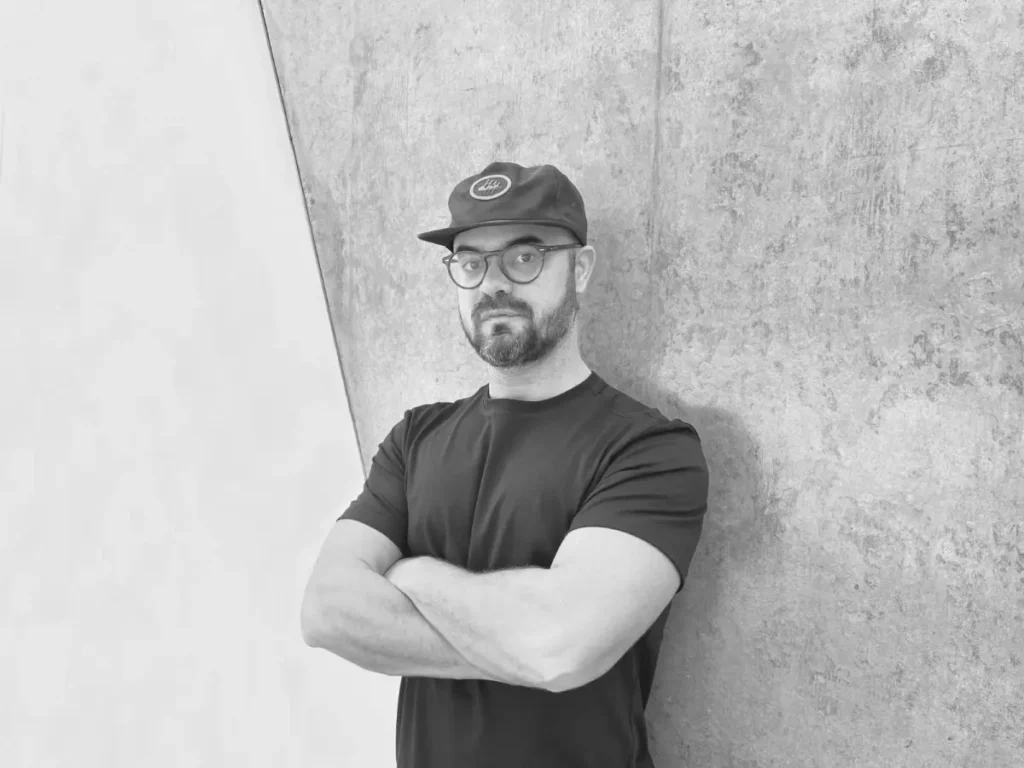
Brunno S.: I’d like to start, Bruno, by thanking you for being here with us and asking you to introduce yourself, with any information you think is relevant, thinking of an audience that may not be familiar with your artistic practice.
Bruno F.: I’m Bruno Faria, a visual artist from Recife, Pernambuco. I work with different forms, from drawing, sculpture, painting and engraving, to installation, performance, and video. The work always begins from a specific project and has a conceptual basis. Based on this new project, I look for the form and the media that are best for the work I’m developing in that moment. That’s why I always work with all media. My training was at FAAP (Armando Alvares Penteado Foundation) in São Paulo, and I later did my master’s degree at the School of Fine Arts at UFMG (Federal University of Minas Gerais). There’s something very particular about my production, also true for other artists, which is the question of displacement, and me always being in transit. I used to live in Recife, studied at FAAP, then moved to São Paulo. After São Paulo, I won a scholarship called Bolsa Pampulha, in Belo Horizonte. Then I went there and stayed for a year. After that, I won another scholarship at the Cité des Arts in Paris, and one in Barcelona for a project at the São Paulo Cultural Centre. Then I went back to Belo Horizonte to do my master’s degree and stayed there for two years. In the meantime, I won a grant from the Iberê Camargo Foundation to go to Mexico City. Travelling has always been very present in my work, in my life. As my work is very much based on specific concepts, even those that are site-specific, you can always see cities in each new project – containing a lot of history, architecture, landscape – and the daily life of those cities. These elements are always present in my production.
I think your works also have a very important question of scale. I’m thinking in particular of two works: Introdução à História da Arte Brasileira 1960/90 (2015) and Brasília (2018).
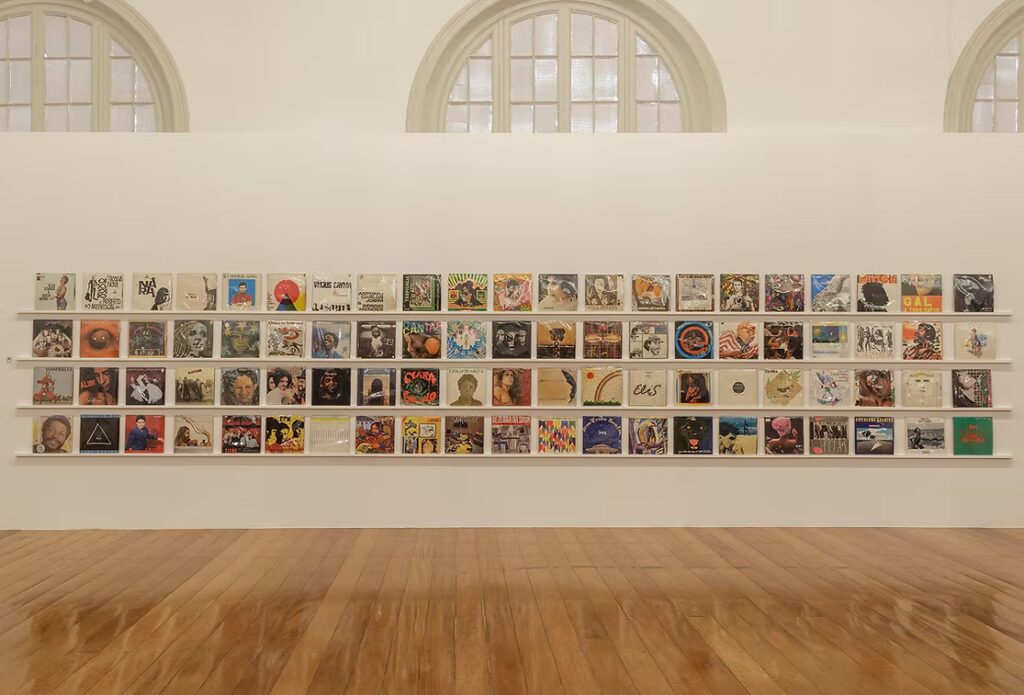
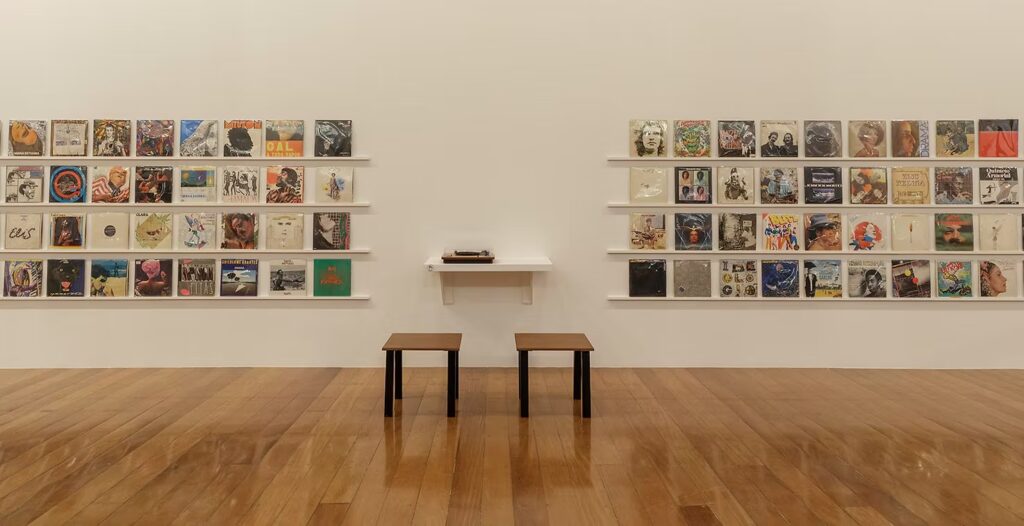
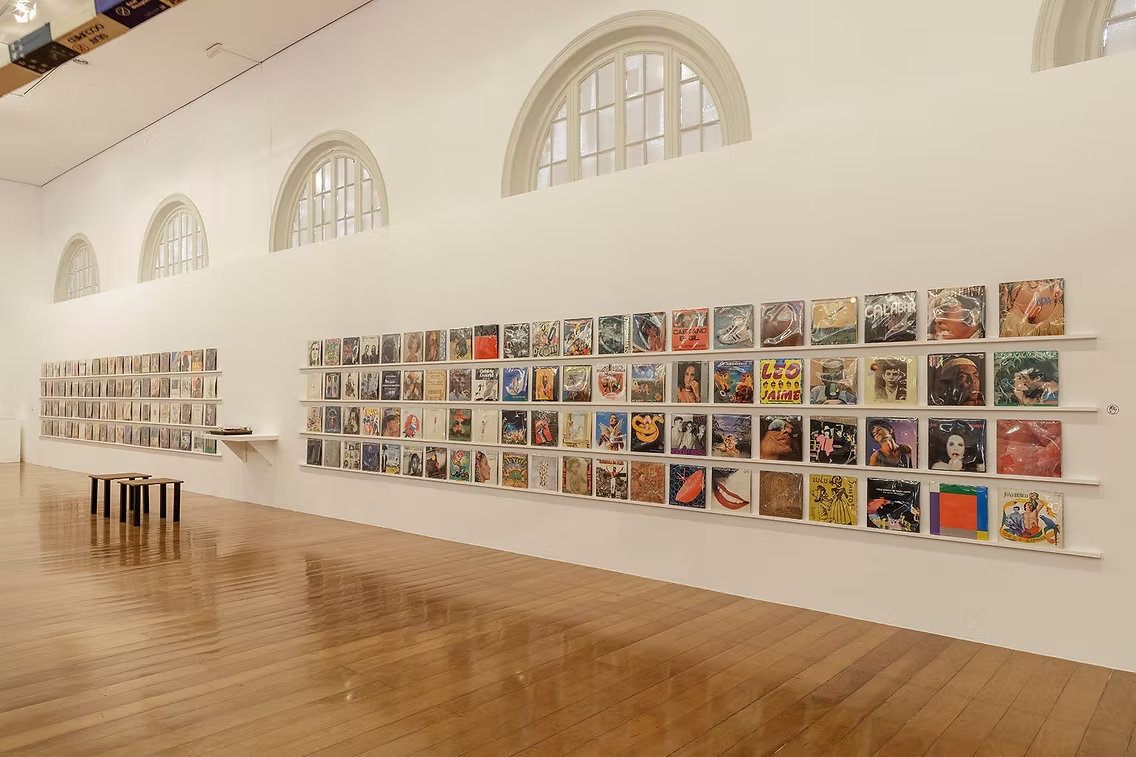
Introdução à História da Arte Brasileira (Introduction to the History of Brazilian Art) came from an encounter I had in Praça Benedito Calixto, here in São Paulo, where I always went to buy LPs. I noticed that the covers of some LPs were made by artists. One of the first I saw was Gal Costa’s Legal, with a cover by Hélio Oiticica. Then I saw Alex Flemming’s cover for RPM. I like researching a lot, so I started researching other covers and I discovered that, from the 1960s onwards, the Elenco label were inviting visual artists to design album covers. I thought, “Well, that’s a lot of work,” and I started collecting these discs. This happens a lot with my production; I collect objects, things that already exist, so that at some point I can develop work from them. I collect and collect and allow the idea of whatever form it might take to mature. It’s very interesting the question you asked about scale because things grow and I don’t know what that’s going to result in, often because I’ll only find this out around the time of the exhibition. I collected the LPs, for example, and for the exhibition I realized I would make a wall of them. It would have that dimension, and I would have a cut-out to give form to the work. So it became that piece with 168 albums and a record player. It’s an interactive relationship with the public – they can experience the discs and discover the LP cover, the artists who were the authors of those covers. This work began with research going from the 1960s up to 1990, which is when the vinyl record started to become extinct after the arrival of the CD, and there was no longer the demand for LP production. The LP has a format, a particular dimension – I think it’s 31 by 31 centimeters – which gave the artist the freedom to create an image. The CD is much smaller. My piece creates a panorama that is a “history of Brazilian art” via the album covers. Strolling beside it, the public can wander through Brazilian visuality. There’s Luiz Zerbini and Barrão, who did Cazuza, Marina Lima, all the 1960s, Caetano Veloso, Gal Costa, Maria Bethânia. There are some super interesting works, like those of Fernanda Gomes, for example, with the Dulce Quintal cover, which has the image of a tear – that is her work. Through the album covers, you can see how closely related the language of each of these artists is. The visuality, the whole of the work, is very interesting, and there are very important points that go beyond the visual, such as the history of the moment in the country: albums that talk about the dictatorship, albums that were censored by the dictatorship – like Gal Costa’s India, which had to be released with a blue plastic cover, like porn magazines of the time – and Léo Jaime with the album AIDS, which talks about AIDS in the world and in Brazil. So you journey through the country’s history via music in convergence with the visual arts.
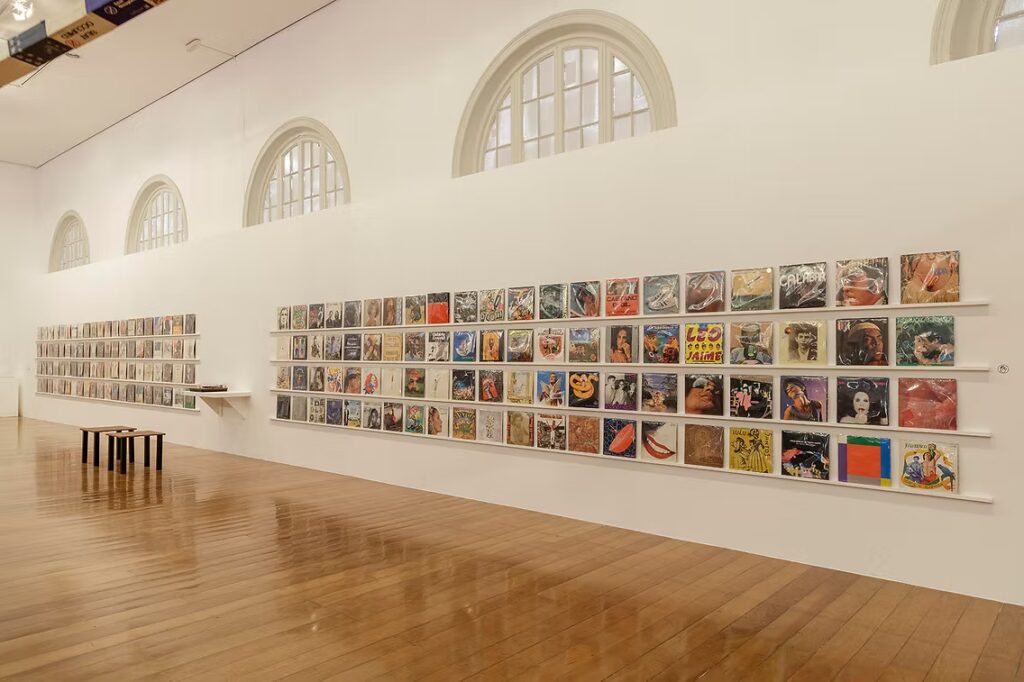
I also find it very interesting how the work inverts the expectation of an encounter with contemporary art. Because, for the general public, confronting contemporary art is often a little fearful, and this work actually does the opposite; it reveals that the LP disc you’ve lived with, or still live with, is part of the contemporary art scene. How many times has the work been shown?
The first time was in a gallery in Praça Benedito Calixto for a project by a curator who was thinking about the gallery’s surroundings. The second time was in a solo show at MAC-Niterói (Niterói Museum of Contemporary Art), curated by Pablo León de la Barra and Raphael Fonseca. Then at the Pinacoteca do Estado de São Paulo, and the next presentation of this work will be at Itaú Cultural in São Paulo.
As an installation, it’s also interesting how it always changes when it takes place in different spaces.
The work is chronological, starting in 1960 and going up to 1990. It is generally adapted to the size of the wall and the architectural space of the institution. For example, in the gallery, which is a commercial space and the flow of people is two, three, five people a day (sometimes nobody goes to the gallery during the day), it all depends. People would pick up the work, taking the album from the wall, put the LP on the record player, and sit down to look at the inserts, which can be very precious. For example, there’s A peleja do diabo com o dono do céu, by Zé Ramalho, the cover of which is by Ivan Cardoso. The booklet is incredible, because there’s a photo shoot with Hélio Oiticica, with Xuxa Lopes, with Satã and Mônica Schmidt. They really created an essay for this surreal, amazing record. There’s an Ira album that comes with 3D glasses, which give the cover a different appearance. So, in the gallery the public had a different kind of interaction. At the Pinacoteca, for example, at MAC-Niterói, because the flow of people was so great, and many of the discs were very rare and expensive, the public couldn’t even pick them up individually. Instead, there was someone there to guide them. The work became a game – you took the album off the wall and it had a sticker on the back. In order not to lose the interaction so much, the guide would help the visitor to pick the album up so they could look at the sticker, identify the author of the cover, and put it on the record player. There was always a person to guide them. For example, a very rare disc is As aventuras da Blitz. It was censored because of one track and, in order to sell it, they spoke to the people at the record company who controlled censorship and they had to cross out the track with a stylus. So the track is all crossed out and doesn’t play that song – it’s become a rare record now. The first edition of Caetano Veloso’s Transa disc is an object with a triple cover that you fit together so it becomes a sculpture. It’s super interesting because it has all the visuals of that time, of the object, and is something sculptural. It’s like Lygia Clark’s Bicho, that sculptural thing that you move, that you manipulate. It’s very interesting. Because of this, when there’s a heavy flow of visitors in an institution there needs to be guidelines, otherwise the albums would be destroyed within a month.
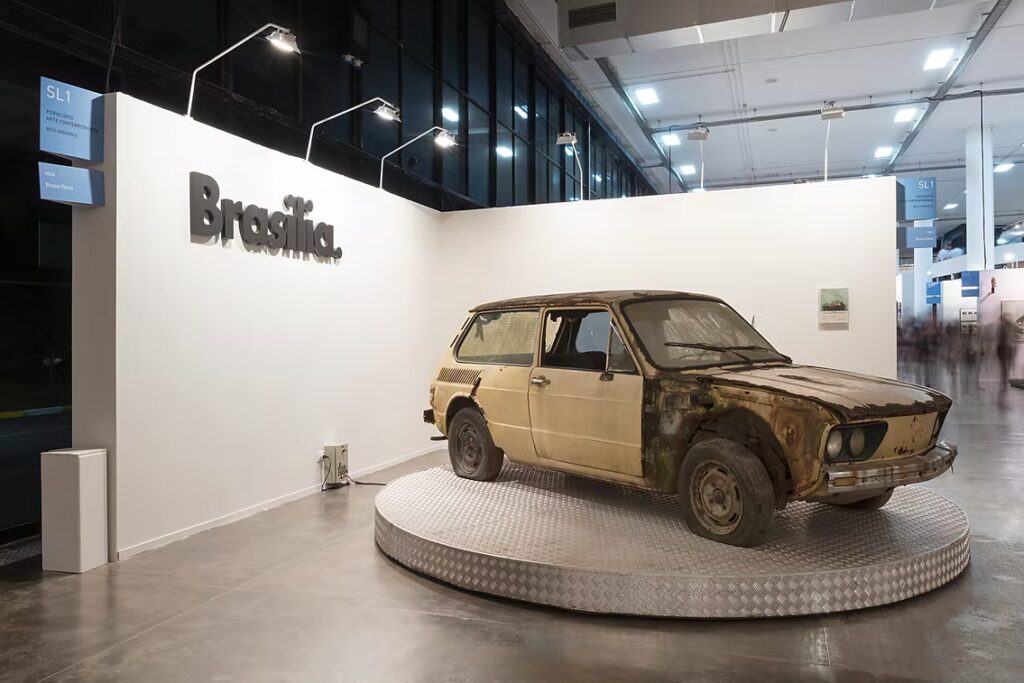
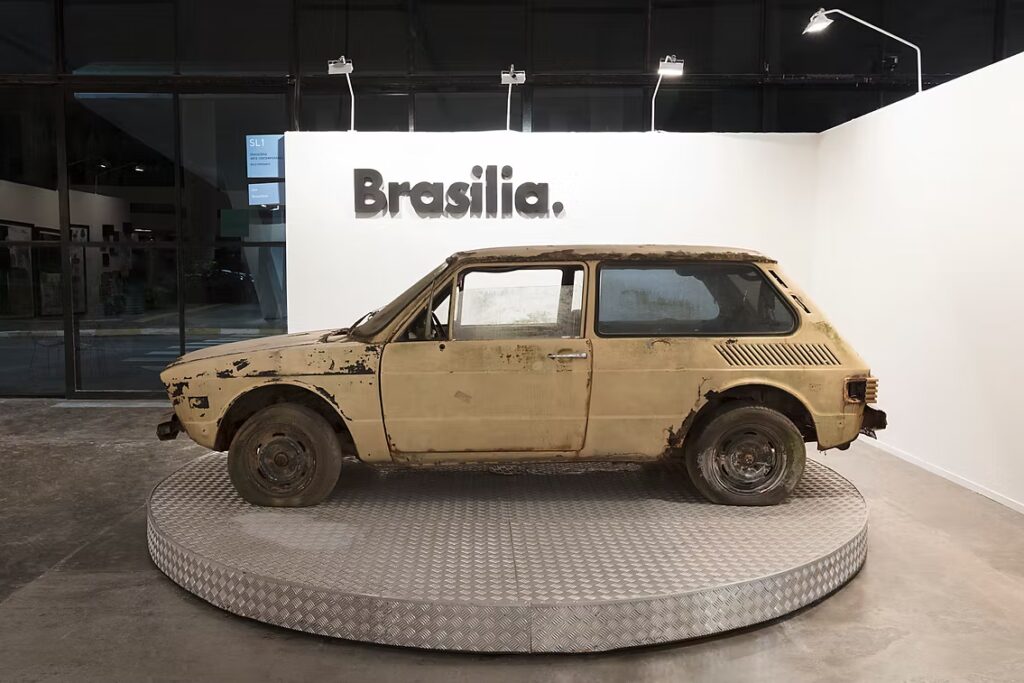
Thinking more about this dynamic of gallery and museum, I wanted to talk a bit about the work Brasília. When I saw the photos of it, I thought it was in an institution, but I discovered that it was presented at an art fair.
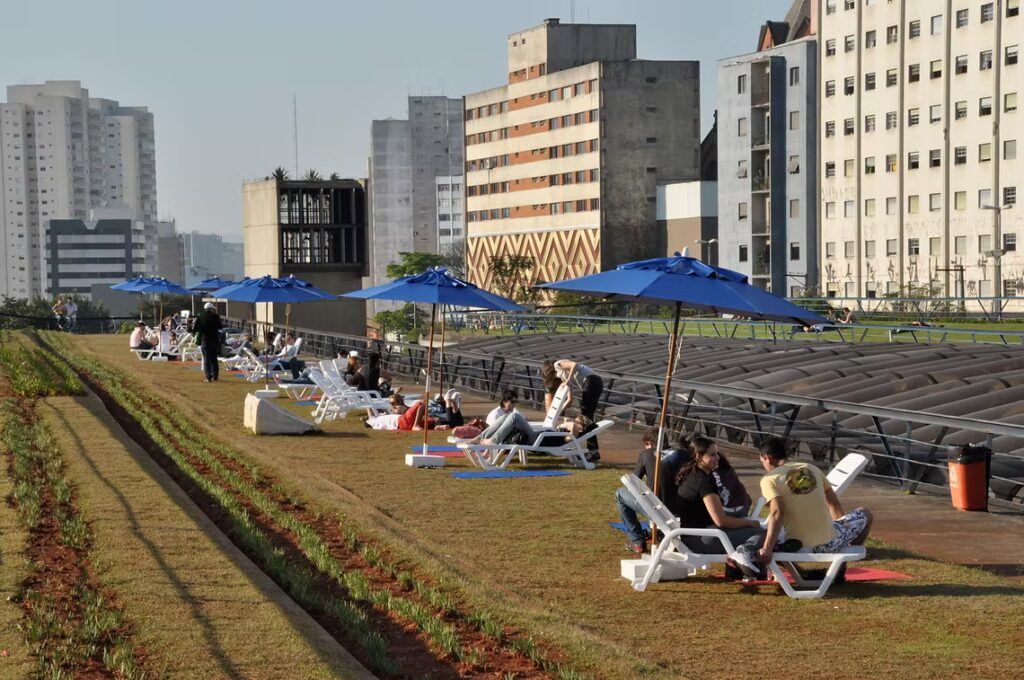
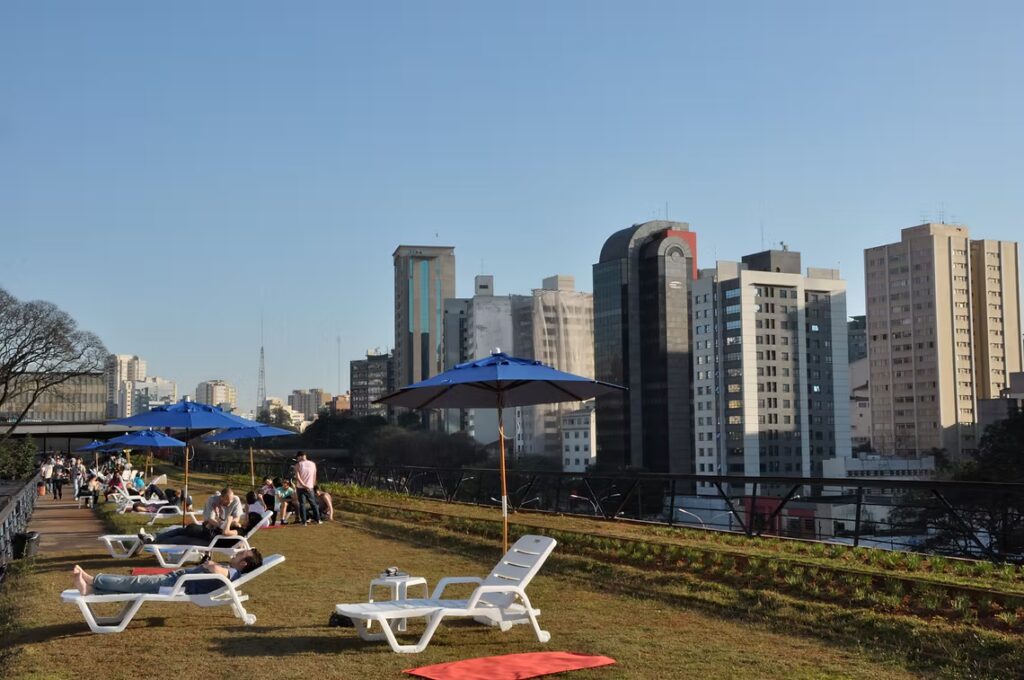
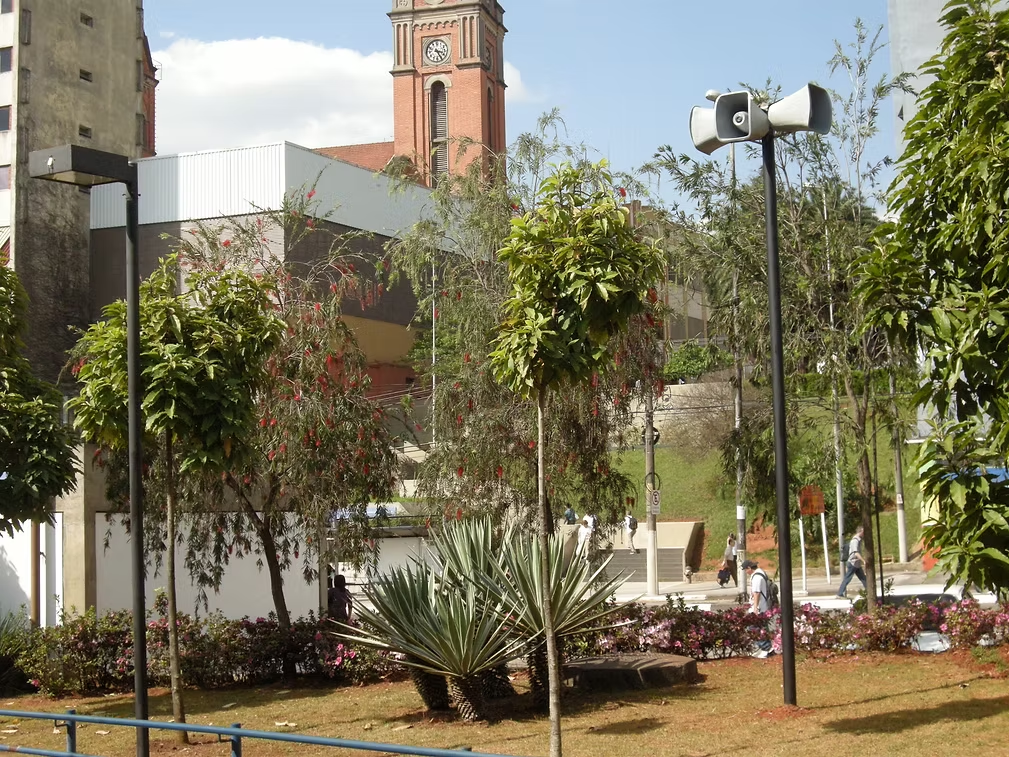
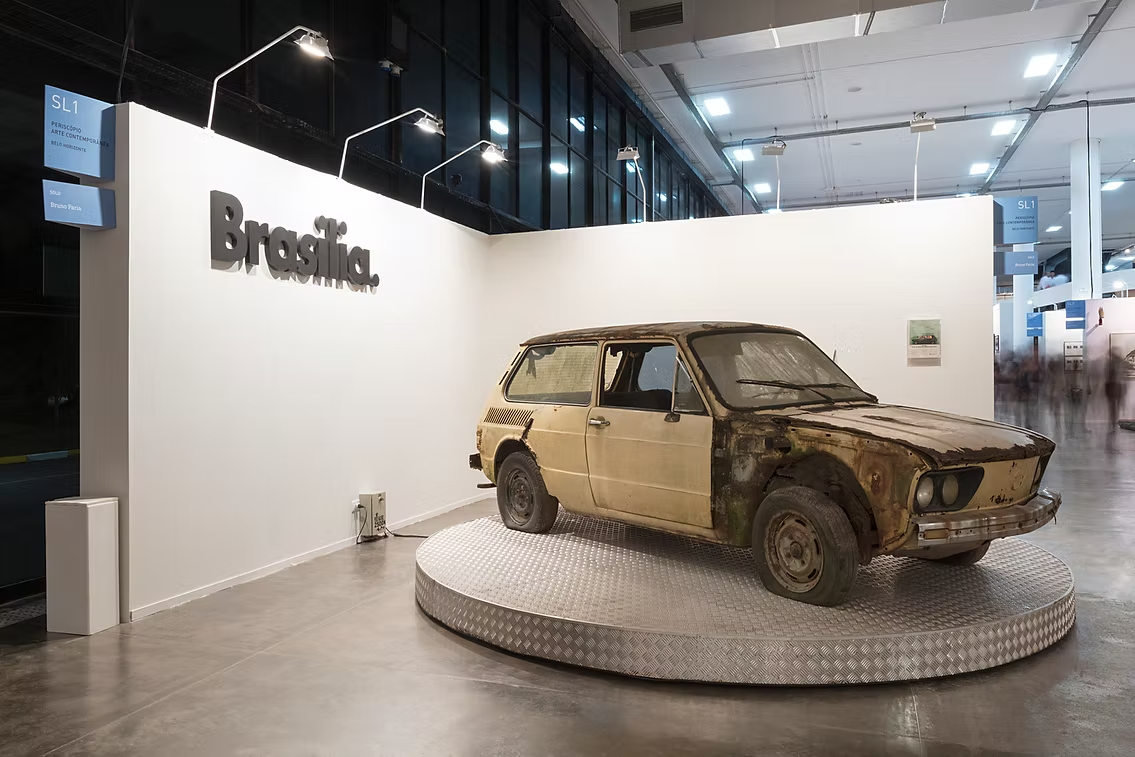
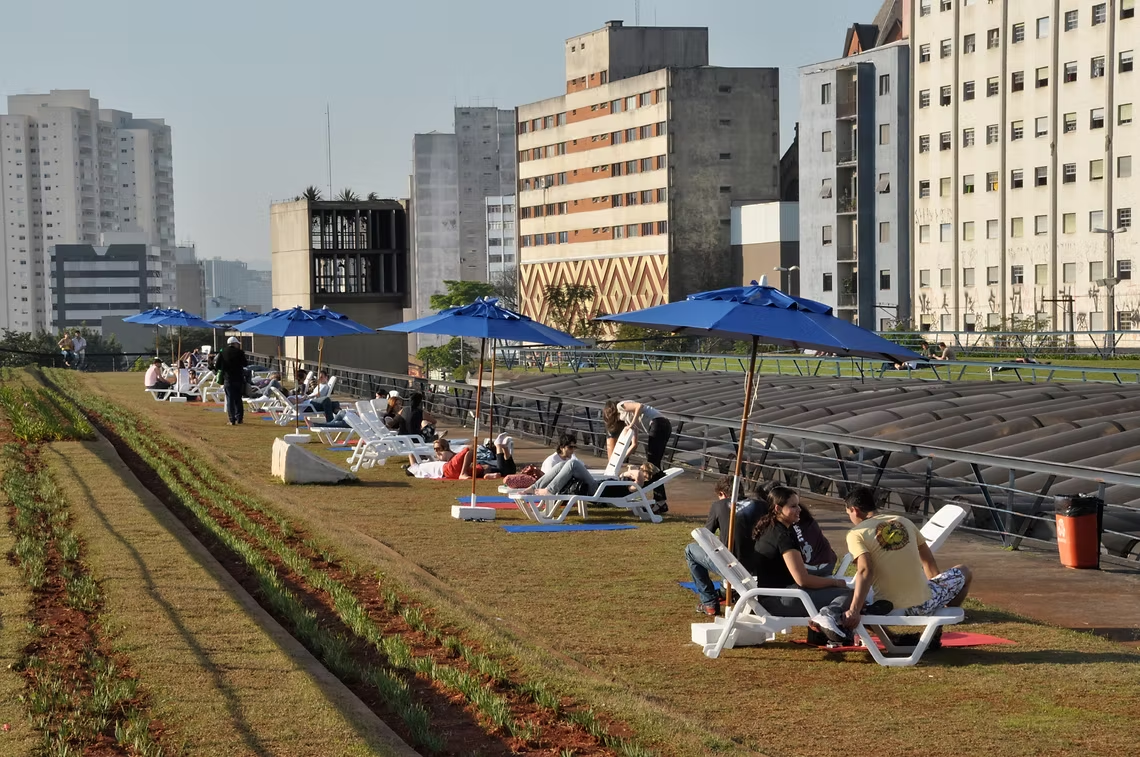
The Brasília work came from an invitation to present a solo at SP-Arte. My work has always been very experimental, with a lot of actions happening in public space, and including ephemeral works. There’s never been such a thing as an object, something on a smaller scale. For example, when I was selected by the São Paulo Cultural Centre to present a season of individual projects at the time, I went to study the place, the history, and the context of the São Paulo Cultural Centre. During my research, I discovered that the Itororó stream used to run through there, which was canalized to make way for Avenida 23 de Maio, one of the most urban areas in São Paulo. From that research, I thought up two new works, Miragem (2009) and Oásis (2009). Oasis involved transforming the roof area of the São Paulo Cultural Centre, which was closed at that time, into a kind of artificial beach. There was a garden on the roof of the São Paulo Cultural Centre that was meant to be a sculpture garden, but it didn’t work out very well at the time. To access it, you had to go through a closed glass door and when I was getting to know the space, I saw that photo and wondered, “Can I see what’s there?” When I entered the garden, I thought, “This looks to me practically like an artificial beach.” The noise of the cars driving past was like the sea’s waves. The work became a collection of chairs, umbrellas, parasols, and mats, giving use to the area which had previously been a closed and dead space in a public institution. From then on, people occupied it in the most fantastic ways. Every day it was packed with people reading books. The people who work at the São Paulo Cultural Centre still say they remember me. They would go to the shaded area after lunch, lie on the stairs, or rest on the sun-loungers, before going back to work. People who lived in studio apartments in Rua Vergueiro would go there to relax and pass the time.
Is it still open today?
Yes. There are no more beach chairs or umbrellas, but to this day people can still go there. When I was invited to come up with a project for the SP-Arte floor, it reminded me a lot of that time, that moment in the Cultural Center. Again, this was a space of five square meters. I wondered, what should I do there? What should I bring? Which sculpture? What painting? When researching the history of the Fundação Bienal de São Paulo, I saw that car fairs had been held there at times. It was a car fair then, and now it’s an art fair. So the idea came to me to think of a metaphor for the country through the Brasília car, transforming that stand from the floor of an art fair into a car show floor, arranging a completely broken-down Brasília in a junkyard as a metaphor for a country that is worn out and bankrupt. The idea was to turn it into an installation, with a Brasília car rotating on a turntable.
E algo muito importante, que foi muito difícil de encontrar, mas eu consegui, que foi a capa de uma edição da revista O Cruzeiro com a propaganda do lançamento da Brasília. Essa revista fecha todo o sentido da obra, porque a propaganda é: “Chegou o carro Brasília, o novo carro para o brasileiro, o carro Volkswagen, o carro com linhas curvas, linhas modernas, avanço, modernidade”. Todo o texto da propaganda está falando sobre carro. Mas, se você tira “carro” e coloca “cidade”, o anúncio está falando sobre uma cidade utópica, um projeto moderno utópico, que teve questões que faliram. A propaganda é muito interessante, dá um fechamento sobre essa metáfora do que é o carro Brasília e o que é o país Brasil.
(Translation: And something very important, which was very difficult to find but I managed, was the cover of an issue of O Cruzeiro magazine advertising the launch of the Brasília. This magazine encapsulates the whole meaning of the piece because the advert says: “The Brasília car has arrived, the new car for Brazilians, the Volkswagen car, the car with curved lines, modern lines, progress, modernity.” The whole text of the advert is talking about cars, but if you take out “car” and put in “city,” the advert is talking about a utopian city, a modern utopian project, which had issues that caused it to fail. The advert is very interesting; it gives closure to this metaphor of what the Brasília car is and what the country of Brazil is.) The work presented in that context was a tremendous success.
The context brings this new dimension to the work. It has an impact when seeing it for the first time at an art fair. In an institution, the dynamic between the public and the work changes.
Totally. That was the moment when we were in a very delicate context. That’s one point. Showing the work at the Fundação Bienal de São Paulo was also important, because it brought back the idea that the place had once been a car fair. Presenting it at a fair, in a place where everyone is selling an art object, was a way of critiquing the institution. Of course, the greatest power for me comes from the work taking place at that fair, but this work can be presented at other times, in another place, in a museum, in a gallery, but I think that, in order to do this you have to go back to the context in which the piece was first presented at the fair. It’s important to contextualize that first moment because, if we’re talking about the site-specific, it’s a moment that was thought out conceptually.
Did the gallery respond well to the proposal?
They loved it and it was a very important moment for them. It was a gallery from Belo Horizonte just starting out who wanted to be part of the circuit in São Paulo and Rio. They wanted to do a solo show rather than to simply sell, which is why they came to me. They knew that I have a more institutional profile and they didn’t want to do a solo show to sell things but to attract attention, and to get the gallery’s name out there. It was perfect because it attracted a lot of attention from newspapers and magazine articles, and TV programs. It blew my mind that a work that spoke critically about the country, about the political context, was featured on TV Senado.
Still thinking about this criticism of the state, I’d like to talk about a sculpture that is very different from Brasília, which is Falha, from 2020.
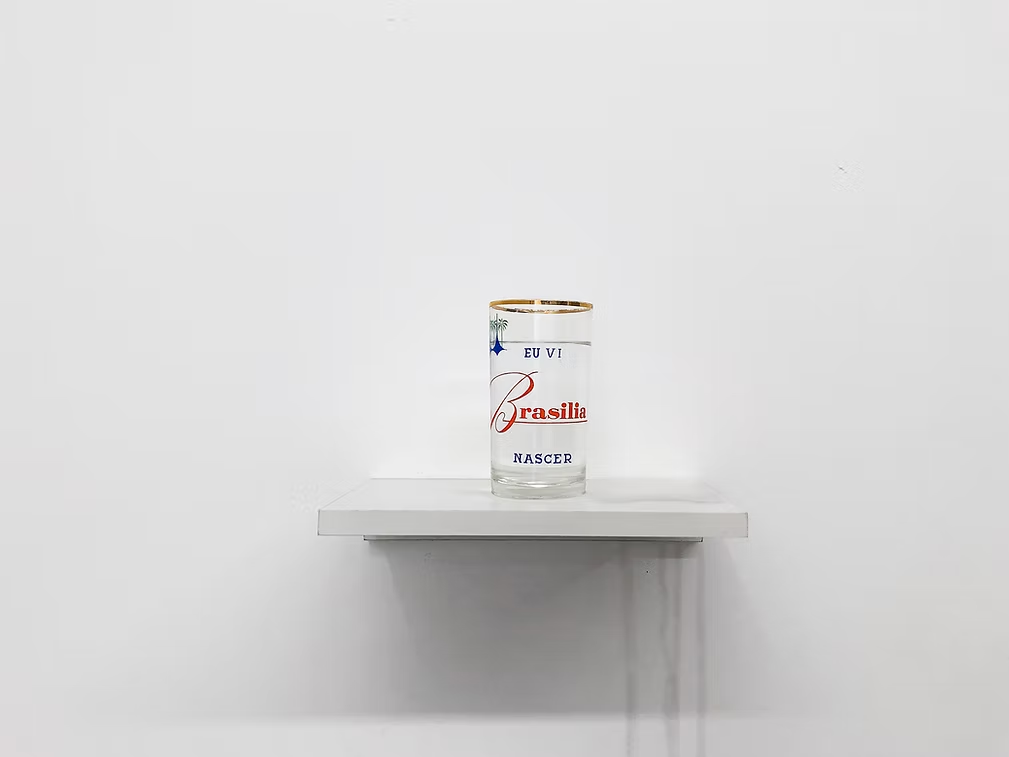
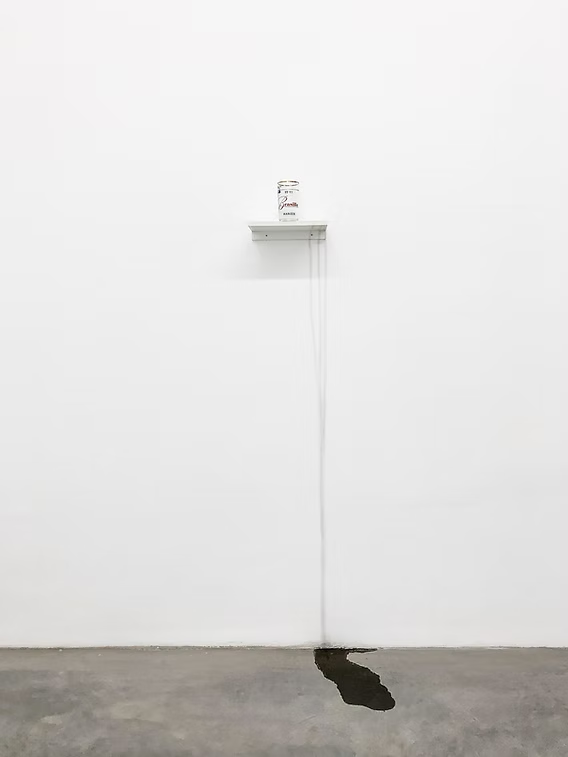
As I’ve said, I collect objects that I reconfigure, which is a very ready-made process. When I first saw the drinking glass, I thought it was beautiful, with its slogan about Brasília – the typography, the landscape, the architecture. I bought the glass and lived with it, thinking about what piece I could make. Then the idea came to me to make a micro-hole in it. To turn it into a glass with a problem, in fact. It was a metaphor, once again, for a country that has failed. In order not to drill and crack and break the whole glass, but to make an imperceptible hole, I spoke to a dentist who had to make a specific, tiny drill bit. It was a painstaking job to make this hole. The glass with water in it is presented on a shelf, and the water is falling, dripping, leaking. The problem with the glass is a metaphor for Brazil and a problem for the institution that exhibits it, because they have to wipe the water away and add more. So it’s a work that seems like a performance because it has a cycle that doesn’t stop during the exhibition. Like wiping ice, it’s like the country. Once, this glass was presented at the gallery and a collector from São Paulo came in and really liked the work, but she said she found it difficult to buy it to put up at home, because she would have to hire a specific employee to clean the water. But that’s really fascinating, that the work is a real problem. That’s what’s interesting – it’s not a decorative element; it’s a problem, it’s Brazil.
To close, I’d like to ask you to talk about Letreiro objetivo, from 2014.
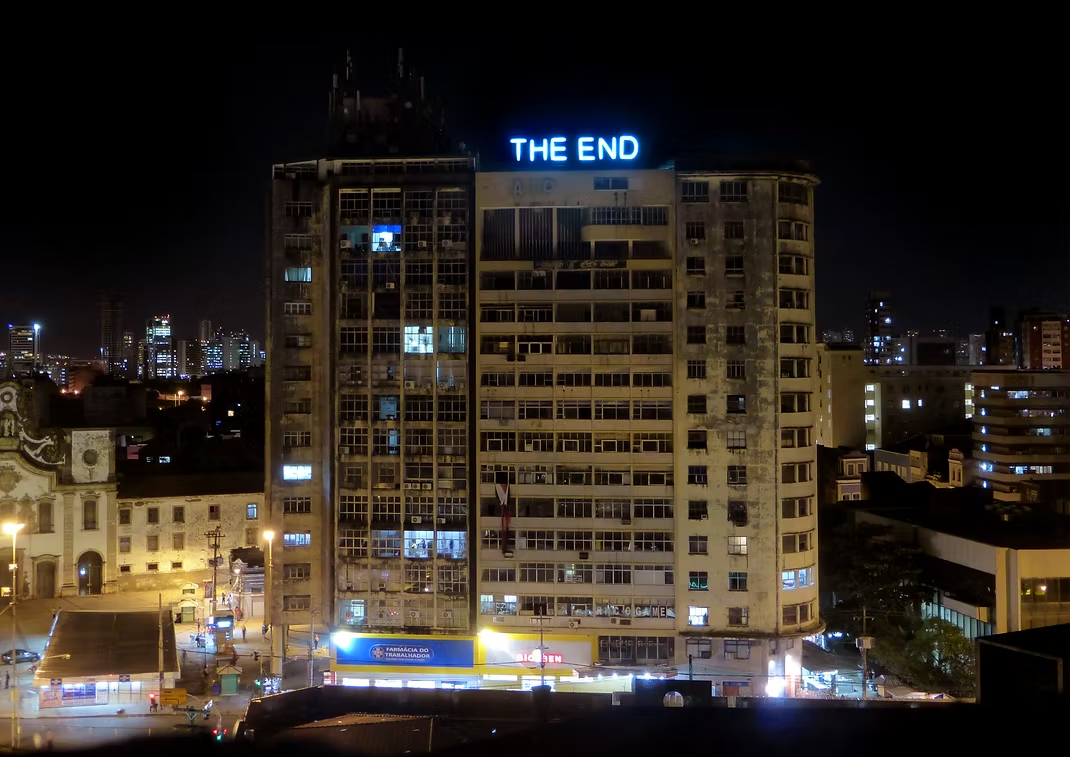
I won an award from Funarte to hold an exhibition at Sala Nordeste in Recife. All the works were based on research into the IP cinema, an old art cinema in Recife which, during the dictatorship, was a neutral zone. People – many intellectuals, cultural people – went there to protect themselves from the dictatorship. This cinema was on the top three floors of the AIP building, which is the Pernambuco Press Association, a beautiful modernist building, one of the most important in Recife, with an architectural design by Delfim Amorim. Since the time of this exhibition, the building has been largely abandoned. Researching the history of the building and seeing that it used to have a cinema – a cinema that I myself went to as a child – I thought about the end of something, the end of a thought, an idea, a project. Then I came up with the slogan The End, which appears when a film finishes, of course. The idea was to return not only to the fact that there was a cinema there, but also to the end of a building, the end of an important moment, the end of abandonment in a city. The proposal was to build a large neon sign, 12 meters long, and place it on top of the building, announcing this. It was very interesting that, as night fell, the neon would light up and proclaim this end. From various points around the building, people could see The End, and from very far away too. There’s a scale aspect that’s very important also, because there I worked on the scale of the city. It wasn’t a neon made for a photo, thought up in a small way, but on the scale of the city itself. Because it was on top of the building, nobody knew what it was. For me, this is a very important and interesting point in the work. I often went up there to see people’s reactions, which is something I really enjoy. And it was wonderful. People walking down the street would say: “It’s political”, “It’s propaganda”, “It’s something that’s going to be launched”, “It’s the end, the world is ending.” It’s really incredible because it’s the passer-by, it’s the person who, most of the time, has nothing to do with contemporary art, but it’s sensitivity at its highest level. We’re in the art circuit, in the sphere of art, but sometimes it’s a bit disappointing. People go to art exhibitions and don’t even look at the work properly; they don’t even allow themselves to enjoy the artwork. Sometimes many people, curators even, arrive at exhibitions to fulfil a checklist, but this is not so on the street. There, it’s the person who has nothing to do with art. It’s also very close to the work I presented at the São Paulo Cultural Center. I remember that, at the time, the curator, Fernanda Albuquerque, told us to put a nameplate on the work. Then I said, “Let’s not. Let nobody know if this is art or not, let it just happen,” and it was fantastic, because there was no plaque, no artist’s name. When I presented Oasis at the São Paulo Cultural Centre, I also presented Miragem, which was a sound sculpture outside the Vergueiro metro station. It was a totem pole with three loudspeakers from which came information for bathers. For example: “Attention, attention, if the current is from this side to that side, try to return to the beach,” or, “If you drink alcohol, do not enter the sea.” This was in several languages: Portuguese, English, Spanish, German, French, and Chinese. It was very interesting because people created their own image of this beach in their heads. So the work was based on a very semiotic idea, of creating the landscape through the soundscape that you heard talking about the sea and about the beach. Nobody knew that this was an artwork. At that time, it was in the context of an exhibition program, in an institution, and some people went to see the work, they saw exhibitions, but many didn’t even know mine was a work of art. That matters a lot to me. Quiet moments in some works, which grab the public in a different way.
Interview conducted on 30 July 2024 remotely via Zoom.
engraving / Painting
2016
Installation
2015
Installation
2018
Intervention
2009
Intervention
2009
Escultura
2020
Intervention
Frame
2014