

Armarinhos Teixeira
Armarinhos Teixeira (São Paulo, 1974) is an environmental artist whose work explores the intersection between human industrial growth, environmental conservation, and the earliest forms of biological life; subjects pertinent to the field of BioArt. His artistic practice is strongly influenced by Brazilian biomes, from which he creates unique pieces. In this conversation, Armarinhos shares his particular approach to combining industrial elements with environmental subjects, explores his inspirations, creative processes, and vision for the future, and addresses topics such as the real challenges faced by artists in the contemporary Brazilian art scene. Check it out:
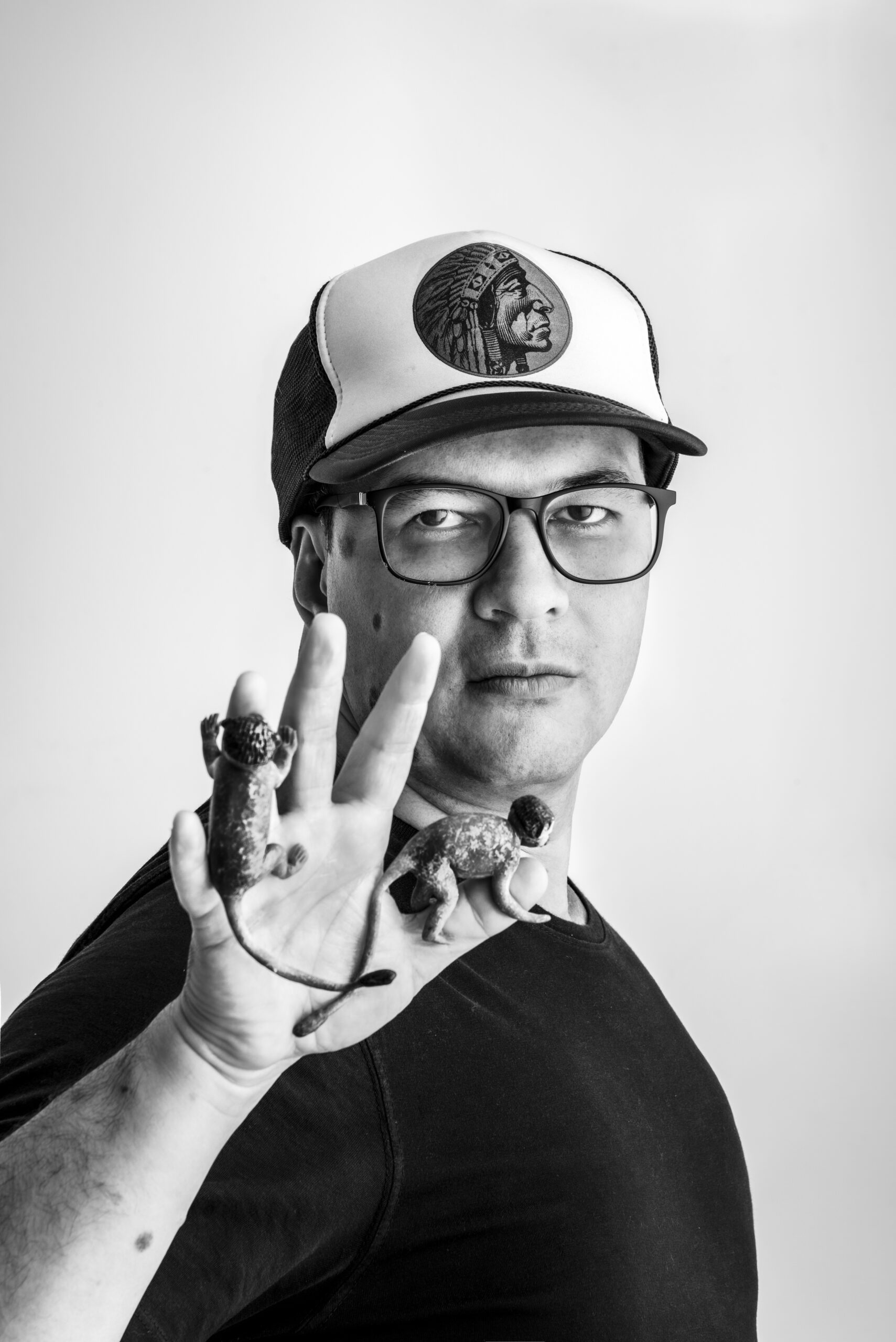
Armarinhos, I’d like to start by asking you to do a brief introduction and introduce yourself to someone who doesn’t yet know your practice and works.
I’m Armarinhos Teixeira, originally from São Paulo. I started getting involved with art in 1982 at the São Paulo Cultural Centre, in São Paulo’s Liberdade district. I attended the first workshops there until the early 1990s, with tutors from the University of São Paulo (USP), or the Institute of Art and Decoration (IADÊ). At that time, there was little talk about contemporary art, even in São Paulo. There weren’t the institutions we have today in Brazil, such as the Banco do Brasil Cultural Centre, Itaú Cultural, and the art fairs. There was a more restricted type of programming – not elitist but aimed at a more specific audience. At the time, I knew about the São Paulo Biennial, but I didn’t understand the purpose of that gathering of works. I didn’t know if it was a show, a spectacle, or just a collection of interesting or strange things of that time. I’d always been motivated to pursue a career in the health sector. Part of my family works in this sector, so I ended up studying pharmaceutical biochemistry and biology, and even passed the entrance exam for medicine. I attended various courses for a year or two until I discovered that I have oral, visual, and written, dyslexia. At the beginning of the 1990s, I began to understand the lack of connection between new presentations of art and the areas I was involved in, and that it would be interesting to influence biological or biomedical thinking, such as in physiology and morphology, by introducing the plastic arts into them. That’s when I realized that my work is related to an environmental function, which increasingly involves responses to ecology, discussions of BioArt, and a better understanding of botany. Today, I know all the areas of the Brazilian biomes, from the Pampas to the Amazon. I grew up in the Atlantic Forest, in the Cerrado, which is my mother’s region of origin in the Centre-West. To this day, I live in the semi-arid region and have always visit the Pantanal. All my research led me to develop responses by making constructions in the plastic arts, but with an interest in objectifying our current reality. At the time, my work wasn’t widely understood, because the discussion about art in Brazil was always based on literature – not scientific literature or literature that talks about fiction or change; something that today the planet is trying to understand better, having realized that we are going through a terrestrial change and that our biosphere is collapsing. Today, I can have a greater understanding with other people – those from the 90s to the early 2000s.
Also, in the 2000s – at least in Europe – there was a change in the approach to the art object, going beyond art history and aesthetics, via other theories and ways of thinking. It’s interesting to see the connection you make between ecology and biomes, considering that the raw material of your work is the opposite of this; a material of an industrial and urban nature, even though it has its source in natural, raw materials.
In an environmental discourse, industrial thinking is necessary in my work. Since the 1950s, following large industrial development, everything from shoes to moon landings has been made from highly resistant and durable materials.
Para a discussão atual – que é o que se faz necessário no meu trabalho ambiental –, a ideia de utilizar materiais da indústria é para que o futuro desses materiais não encontre o meio ambiente como depósito final.
(Translation: For the current discourse – which is what is needed in my environmental work – the idea of using materials from industry is so that the future of these materials doesn’t end up in the environment as its final resting place.)
It is therefore necessary to create works that make more naturalistic models and debate plans that invoke botany, marine biomes, squid, jellyfish, octopuses, and other organic elements. Even if I use industrial materials such as polyester, nylon, or others, the discussion is about reframing industrial work and has nothing to do with recycling. These materials are unique and, at the same time, cannot be recomposed by recycling. But it’s important to note that if these materials are used in industrial construction, they can remain idle for 250, 600 years, so imagine that fact if they are then disposed of on land, whether in Brazil, at sea, or in landfill sites. In this way, all works of art, whether mine or those of other colleagues, are always derived from plastics, such as acrylic pigments.
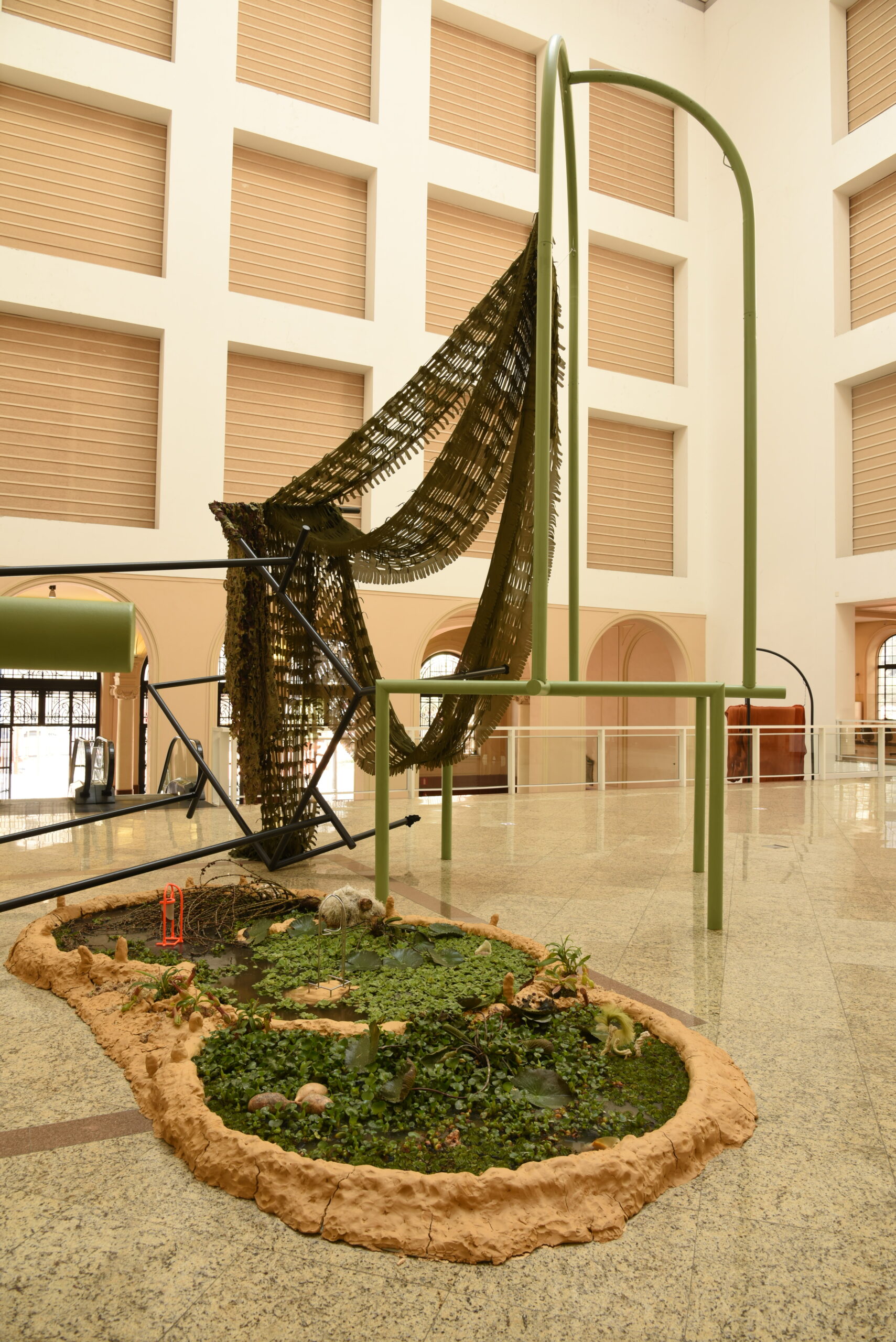
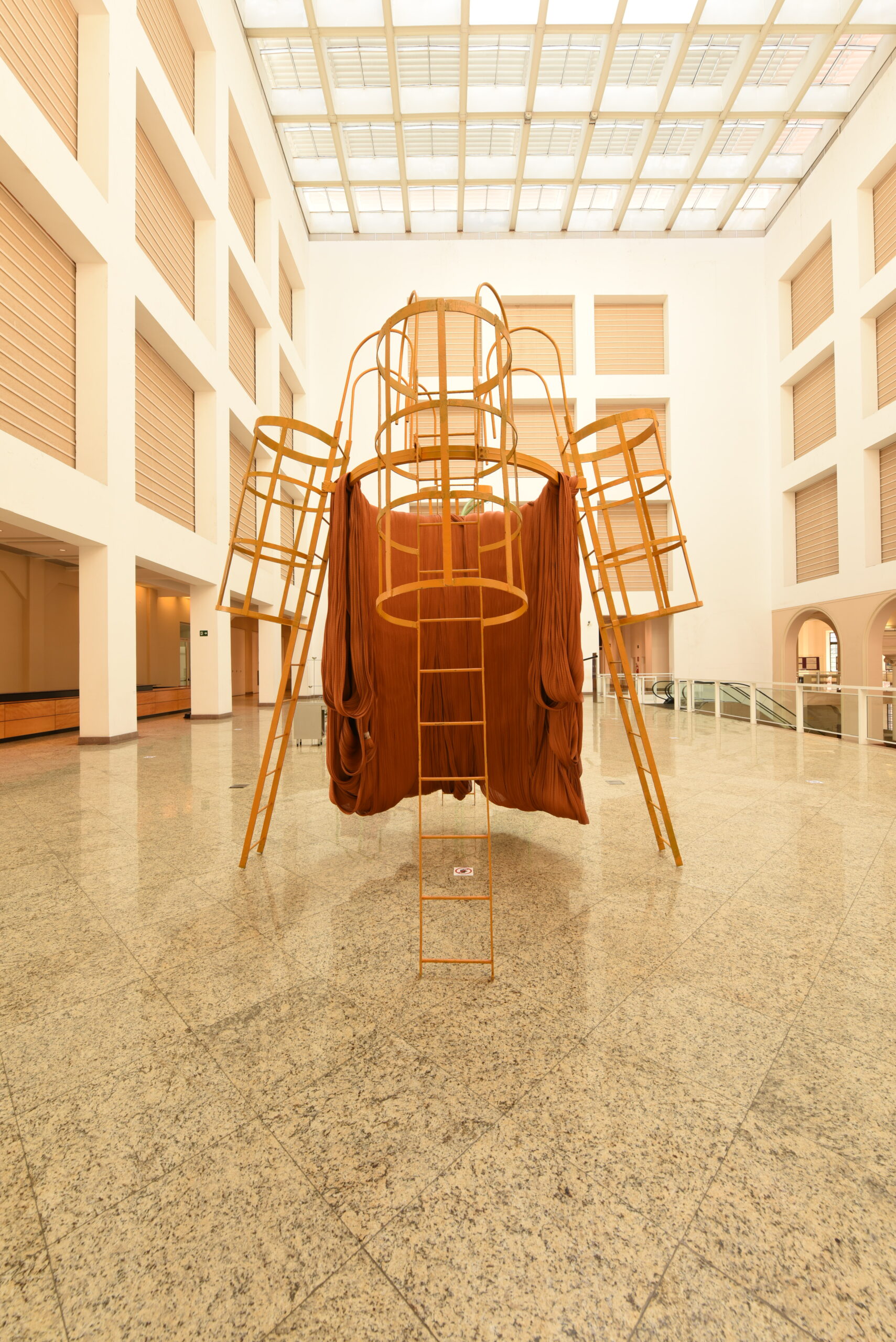
Solo Exhibition at Centro Cultural Correios – São Paulo
Regarding industrial materials, as you’ve mentioned, they decompose after around 500 to 600 years. However, when it comes to works of art, it’s the opposite. We want to preserve them so that they last as long as possible. How do you see this contrast and the dynamic between the art object and the durability of such materials?
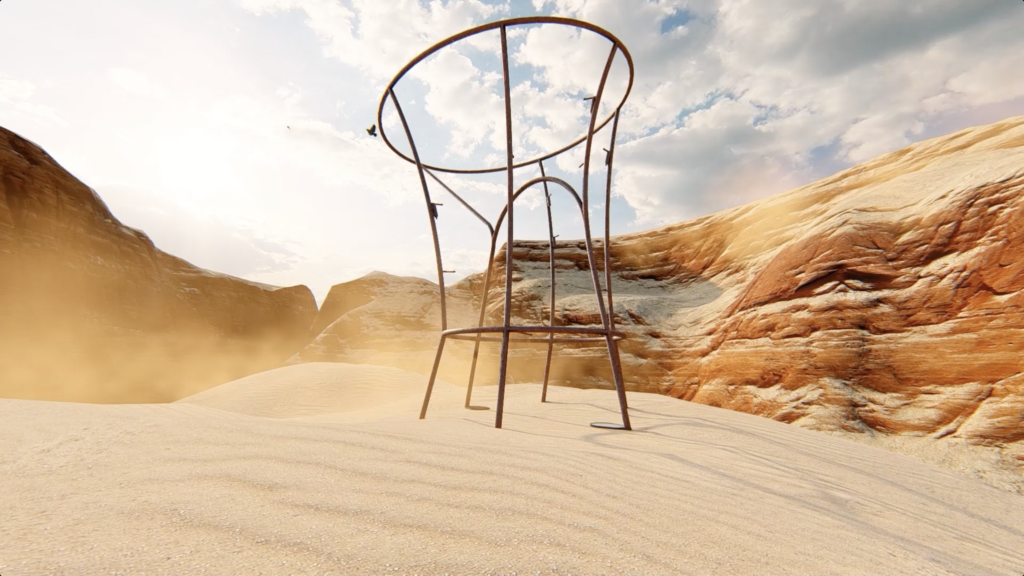
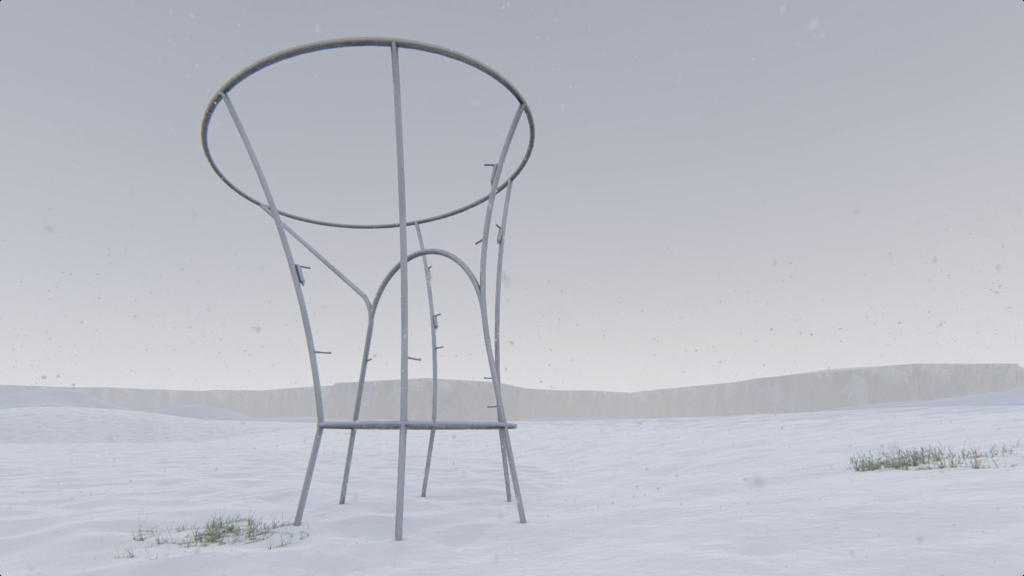
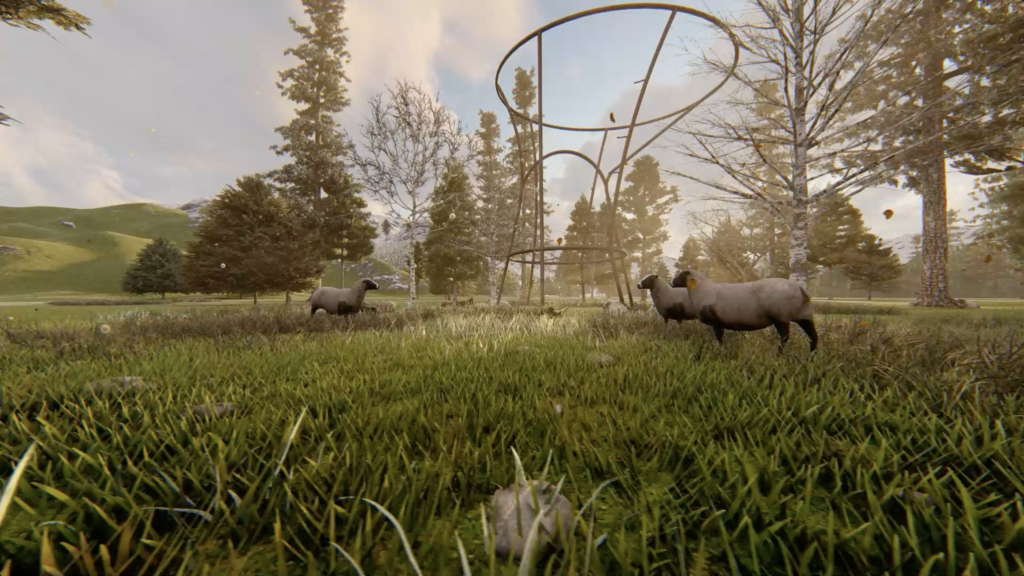
Yeah… for example, it’s now 2023. When encountering it in 2200, my work will be a contemporary fossil of the future. All contemporary life has been influenced by chemicals. There is another discussion about what oil derivatives are: a kind of liquid residue from the very organism that is on the planet, like a digestive transformation by the planet, converting what has accumulated on the earth over millennia. Such a discussion doesn’t necessarily take place in my work, which rather involves environmental thoughts and discussions, but with the precise aim of taking discussions that arise within industry and turning them into biotic thinking to use as a basis for constructive warnings. At the same time, I am one of the researchers who has been creating this kind of thinking for a long time, and this is evident in one of my works where I created a biological installation; a metal structure that reproduces the functions of a tree. I also create sculptures that explore a new form of art, which is biological or plant sculpture. I’ve been conducting research into the structure of a specific type of pineapple found only in the Amazon region. I’m investigating the possibilities of this new fiber, which is not made from the pulp but from the structure of the pineapple itself. This pineapple doesn’t have a structure edible for humans, but it does contain an extremely resistant material in terms of the possibilities of creating new fibers for clothes and shoes. I’m currently testing this material for making sculptures, and, so far, it’s worked. Now I’m starting to research other plants for a new plant sculpture. Why is that? One example: most sculptors, including me, think about creating steel sculptures. To give you an idea, to extract one kilo of minerals from the earth you have to open up an entire crater. So the devastation, whether in mines or in the Amazon, whether legal or illegal, is enormous. It’s curious to note that, while there are no complaints about the opening of craters for the extraction of iron ore, when it comes to gold there is almost equal criticism and damage to space, and to the environment.
Então, eu acredito que no próximo século as nossas matrizes serão vegetais. Ela será a mesma que comemos, a mesma que se decompõe, a mesma que se tornará o objeto aplaudido no futuro.
(Translation: I believe that in the next century our matrices will be plant-based. It will be the same one we eat, the same one that decomposes, the same one that becomes the object of acclaim in the future)
This connection between all materials makes me think about the definitions of natural versus artificial… Regardless of their origin, there is an inherent connection between each and every “material”.
Meu trabalho é ambiental, onde se discute o que o homem solucionou como seu material de genialidade, e em outro aspecto, o seu material de convívio habitacional, que é o planeta.
(Translation: My work is environmental, in which we discuss what man has solved with his material genius, and in another sense, his material way of cohabiting, which is the planet)
Therefore, whatever connection the artist establishes in the creative process, whether through academic studies or self-education, whether through industry, or the teaching of fine arts, or even through the creator’s own self-taught knowledge, all of them [these modes of relating to the creative process] first teach the construction of what is built in the city. So our first creative transportation happens in the city, not in the countryside. The visual arts were not created in the countryside, they were created in support of this great industry that says, “you have skills, now take this”, but what it gives us is an industry. In that way, I’m a response from an industry to the residents of a great capital that is still São Paulo, in Brazil, and in other territories on other continents. What made me move was my attraction to science, to health, and my interest in the environment and living with it. In the modern world we have now, uninhabited areas of cities are seen as magical planes, a mystical territory, an ancestral territory, discussed as if they were spaces transferred from another planet. So if we’re talking about different territories, it’s because this industrial plan has affected us. How can we get rid of this industrial model, given that it has still affected this environment that is here, and which is also on the verge of collapse? In Brazil, for example, here in South America, we have always been prototype users or guinea pigs for all the other continents. For example, in Italy you can take a train to Venice, but in Brazil I can’t get to Bahia by train. So, in all industrial aspects, Brazil was the consumer of all the European, American, and civilized structures. Brazil has always been very experimental [and susceptible] to circulatory changes, in other words, the country is constantly undergoing changes and experimenting with different trends. Brazil is still a portal of agendas, and what’s in fashion.
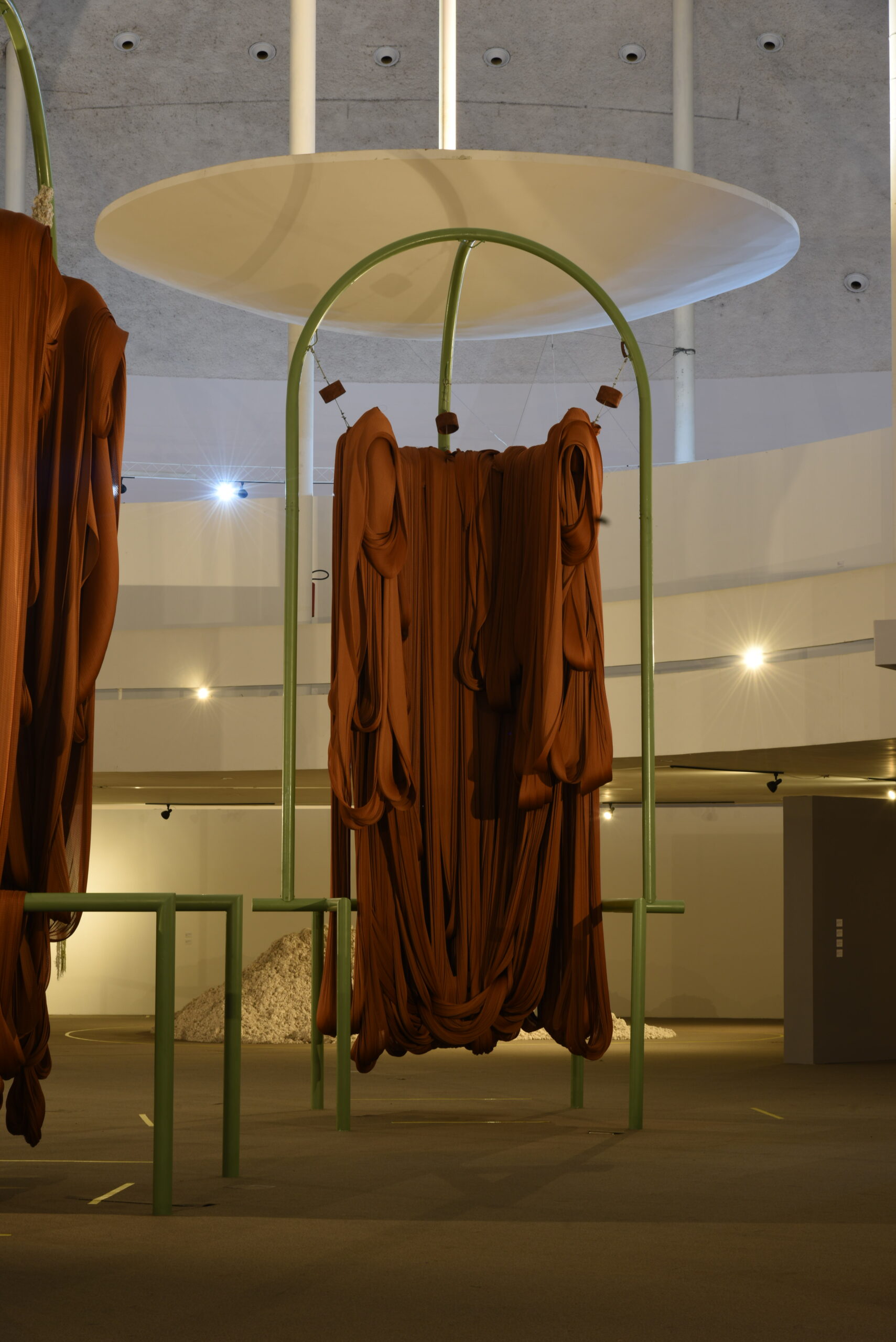
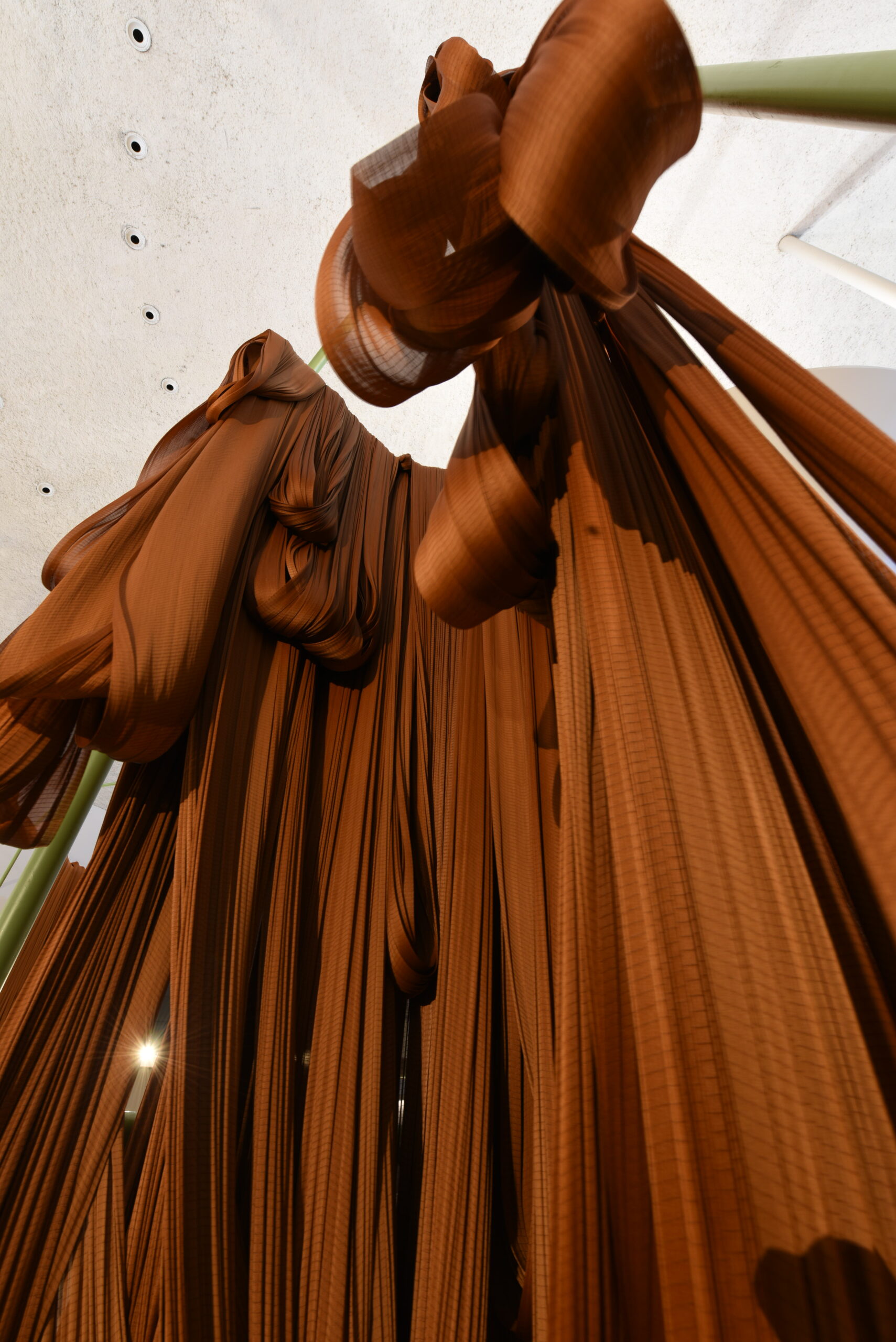
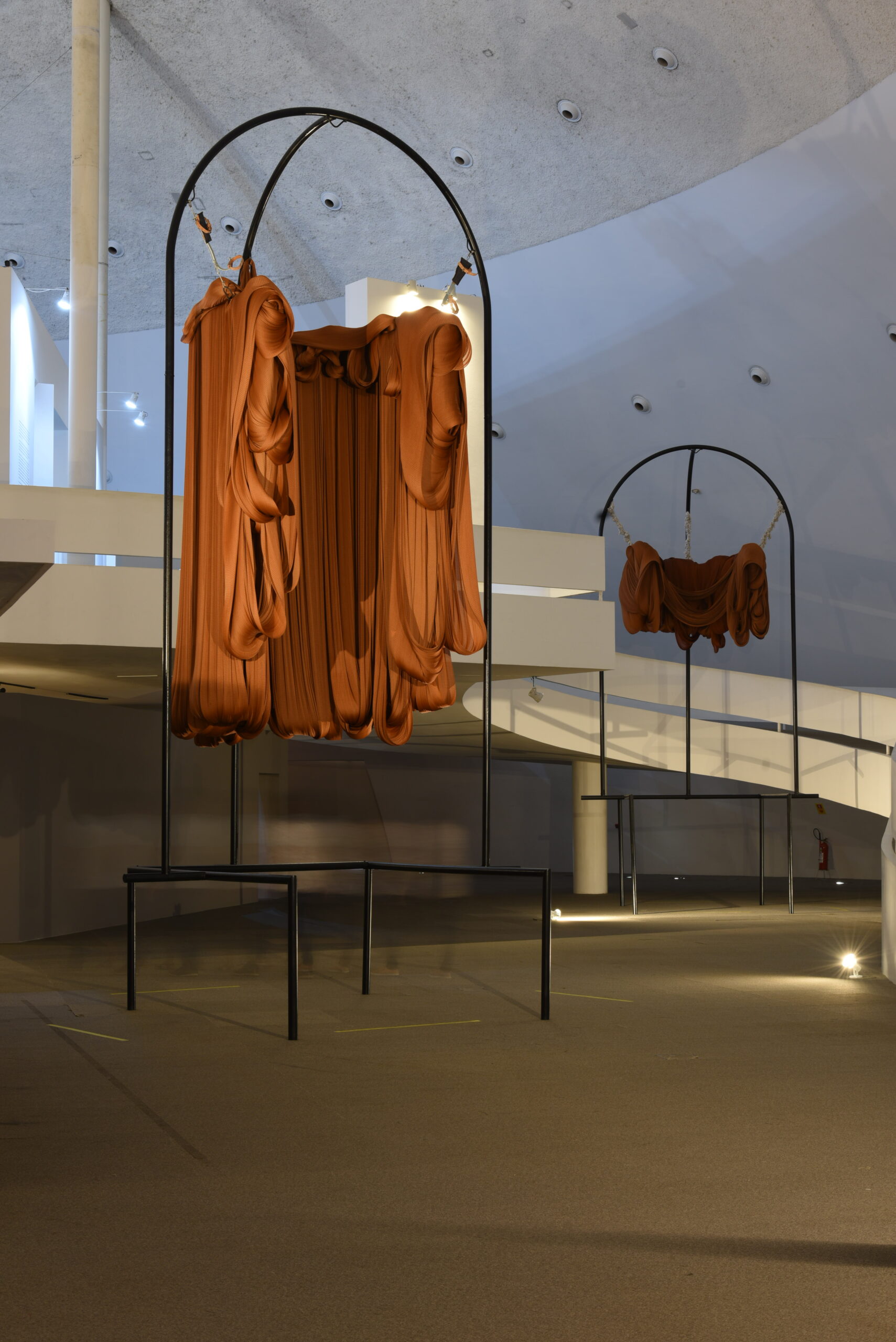
National Museum of the Republic – Brasília
Do you think this is influenced by the fact that Brazil is a relatively young country?
I believe that Brazil has clung to this great excuse of being a young country, and that it really started to take some steps forward from the 1920s onwards. Our influences have always been European, from the Modern Art Week of 1922 in Brazil to the present day. In the 1920s, our consumerism was focused on products such as perfume and clothes, or on the creative workshop that was France. In the 1930s and 1940s, we learnt about the existence of the United States and Germany. London has always had a strong presence, ever since its territorial defenses against Portugal, and ended up influencing Brazil to abandon its ties to monarch and its colonial status in order to enjoy other continents in their entirety.
I always find myself explaining Brazil from the point of view of being a new country and how that influences politics. When I was young, politics wasn’t discussed because it was a taboo subject. But more recently there was a period when everyone discussed politics as if it were a football match, and I see that as a positive thing, because you have to go through these phases before you get to a relevant political debate.
The only thing I like about politics today is that it has really arrived at a good moment. Perhaps it still needs to adapt, but Brazil has never really been a territory of sharing. Today, I feel that even the most misunderstood opinion is heard. Even in my generation, politics was something reserved for adults; only those over 40 could talk about politics. Today, a 10-year-old child understands that politics is flawed. They understand it from their school, be it state or municipal, where there is no lunch, no playground, and no good classrooms. And our other meaning of the word cultural has been devalued because of politics. The word “culture” has been devalued and misunderstood, associated with chaos. Do you like culture? Then you like mess. You’re not serious, so you’re not prudent, so you can’t be trusted. You’re a person who closes yourself off to any new thinking. So when the word “culture” was distorted in Brazil, it lost its true meaning of worshipping things that give us a new direction, something aesthetic, tasteful, visually harmonious, collectively or individually intelligent. The people who complain that having culture in Brazil is an abuse of financial resources are mistaken. London, for example, invests in culture with government funds. When you visit the Tate Modern and admission is free, you understand the cultural importance of favoring the emergence of more geniuses in your country.

You mentioned London and the Tate Modern Museum. In December 2001, the British government decided not to charge admission to national museums. This sparked a discussion about making the museum free for British people but charging foreigners because of tourism and because the foreign public is already “used” to paying for entry to these places elsewhere in the world. In the end, the conclusion was that England has a cultural responsibility not only to its inhabitants, but to the world. Therefore, keeping local museums free recognizes this responsibility to share this culture with the whole world. This goes beyond discussions about funding and resources for the arts.
In my case, for example, I was born in the center of São Paulo, in the Liberdade neighborhood, in a house where the backyard was the street. Since the early 1990s, I had a liking for art, but I still wasn’t sure that I could become an artist. I thought I could be an artist of monuments, like the fountains and sculptures of Indigenous people and Jesuits in the center of town. I thought that the artist’s path lay in this direction. Three or four decades have passed since then, and I’ve realized that I’ve made progress with my first public works in other countries, but I still haven’t had the opportunity to create a public work in Brazil. In any territory, be it Jardins, Paulista, Centro, Zona Leste or Zona Sul, we have been abandoned by the lack of a cultural structure that values human intelligence. What’s more, we don’t even have nature itself as a monument in São Paulo, which is huge. This is different from being in New York, London, Japan, or China, where you can turn a corner or enter a new neighborhood and come across a great work of art. Immediately, a child or adult who has seen these works in exhibitions or TV reports will recognize the artist’s name. In places like New York or London, we find festivals or structures that support public art, such as squares, environmental departments, streets, avenues, buildings, and we still don’t have that. In Brazil, communication around culture is still restricted – you need to enter a space to experience art. When I make a public request to those who have the power to nominate artistic actions for a space, they see it as the cost of the vandalism that will follow. And that’s not entirely true these days, because you can be in the most complex outskirts of the territory and still be in the most urban place, where you can invite everyone to take part in these actions today. We have a territory that is still underdeveloped, and it’s hard to explain why it’s taking so long for all the Brazilian institutions to implement this kind of action, whether they’re high up in Brasilia, in the cultural area or in the big galleries, which could even help their own artists, but don’t share a schedule for doing so. It’s 2023, and we’re in a cultural wasteland.
And connecting with what we mentioned at the beginning about the non-public part of the art market, which today has developed a lot compared to the late 80s and 90s, I believe that the public machine and public spaces haven’t kept up with this modernization. That’s crazy, because we have the second oldest Biennale in the world and since then there’s still a lot to be done.
In Brazil, organization is both good and also vindictive; whether that’s galleries, politics, or people (laughs). A rich gallery says: “I’m already doing a lot, I’ll put a work by my artist here and, on the other hand, you’ll pay for everything”. In Brazil, that’s fundamentally the choice. Political choice has a basis in familial and political grouping. Normally, the appointed positions are never occupied by those who really understand the environment or culture. This creates a gap between the powerful and the communicator. Brazil has the second largest production of information on culture on the planet, because it has a biennale, but it is the last to accept funding the construction of the individual, whether he is the son of a bricklayer or the son of an engineer. So culture in Brazil is still flawed by any policy, past or present. What differs from one policy to another is only that one is more moderate than the other. In Brazil, there is a great risk that an individual artist will grow old – and this could even be me – and reach the end of their life without ever having been applauded for a prize in their work. As a result, those artists who don’t take part often have to migrate elsewhere in order to be recognized or be personally able to continue to persist. Another major difficulty is our currency, which has never been materially stabilized. It’s painful when you hear that a currency like the Swiss franc has held its value for over 200 years. It’s terrible to come to the United States and hear about the crises of the 1930s, the bankruptcies of the 1990s, the start of Barack Obama, the collapse of the property market, and see the dollar still remain strong. Brazil needs to adapt. An example of this is when I try to go to London. Although I realize that I’m an artist who creates works focused on environmental thinking, perhaps I won’t be considered to take part in the Biennale that’s taking place now, or the 2025 Biennale. Maybe I won’t be selected because of my personal characteristics or because I couldn’t make it to (some) meeting. Although Brazil hasn’t learnt to dominate continents, it has often learnt to harm South America all on its own. This creates a negative cycle, as there is no pride in standing out, since others get angry when someone stands out. If someone stands out in some way, others cause them harm. However, abroad, the Americans want to be in China, the Chinese want to be in Korea, and vice versa. That doesn’t happen to us.
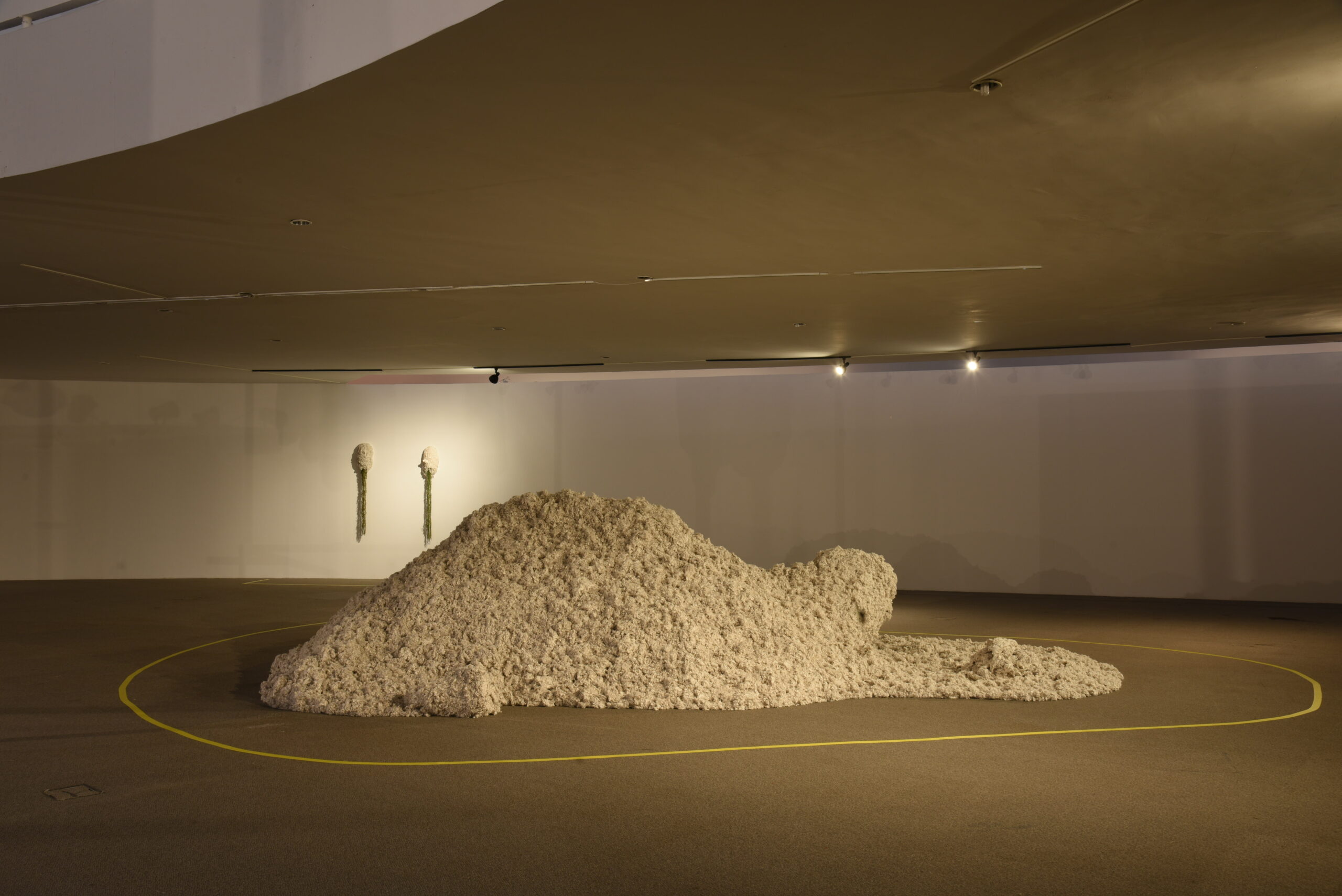
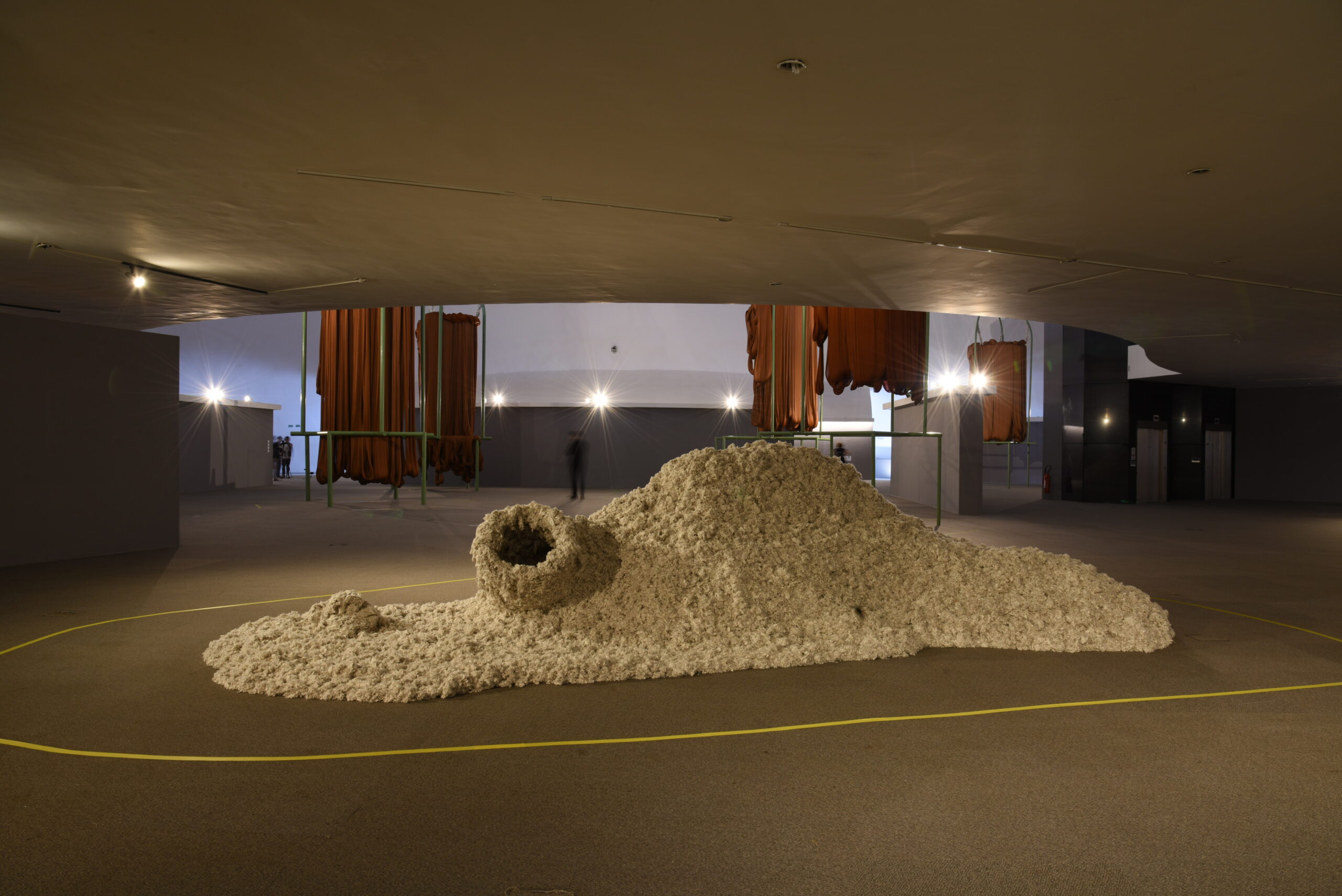
Going back to what you mentioned about your work, I see that from a layman’s point of view, without any kind of information the work can, at first glance, be described as an encounter with the raw material of industry that we talked about. From an aesthetic point of view, the raw material itself has something industrial about it.
Yes, but that’s exactly it. If as an artist I think about environmental developments, it’s as if the work is my graphic of presentation, because I can hide behind the superficial visuality of the work. There’s a big difference between talking about BioArt, discussing naturalness and being ecologically enamored. Someone with no knowledge of ecology or biology can put a fern next to concrete and take part in a biennial. In this case, it was a different discourse, but it fits in with tropicalism and has this green, ecological charm. The arguments of naturalness are different; the enchantments of naturalness and the plan for the planet are completely different. In my case, I create works that have a meaning of utility and fulfil a function, but that are still presented on the plane of plastic arts, maintaining the coherence of an artist, so saving them from being a merely aesthetic discourse.
Interview conducted on 6 October 2023 remotely via Zoom.
Solo Exhibition at Centro Cultural Correios – São Paulo
2019
Solo Exhibition at Centro Cultural Correios – São Paulo
2019
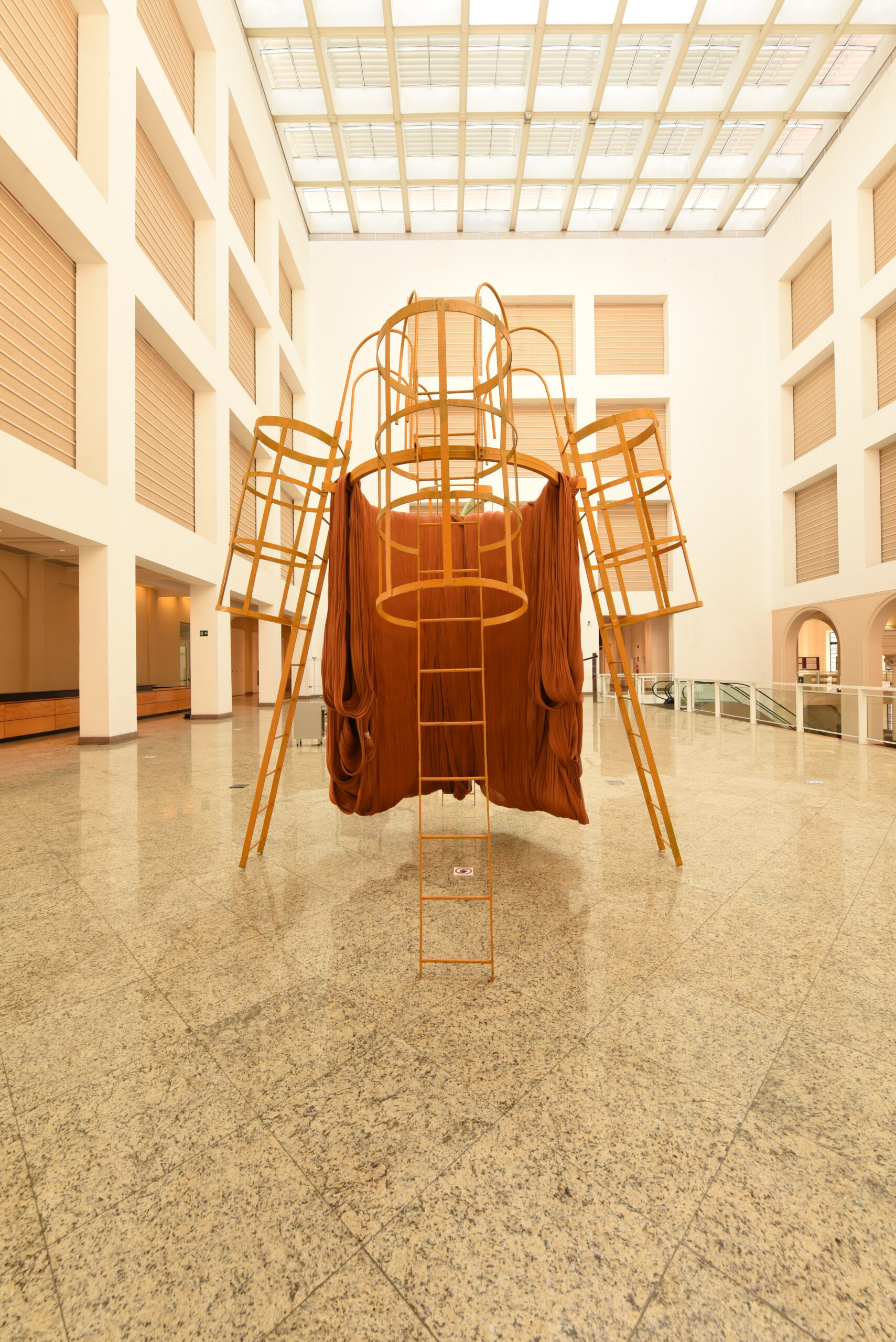
Sculpture Steel – Polyester I Variable dimensions
Solo Exhibition at Centro Cultural Correios – São Paulo
2019
Technique and materials: Sculpture – Carbon steel, epoxy paint and polyester I Variable dimensions
National Museum of the Republic – Brasília
2019
Technique and materials: Sculpture – Carbon steel, epoxy paint and polyester I Variable dimensions
National Museum of the Republic – Brasília
2019
Technique and materials: Sculpture – Carbon steel, epoxy paint and polyester I Variable dimensions
National Museum of the Republic – Brasília
2019
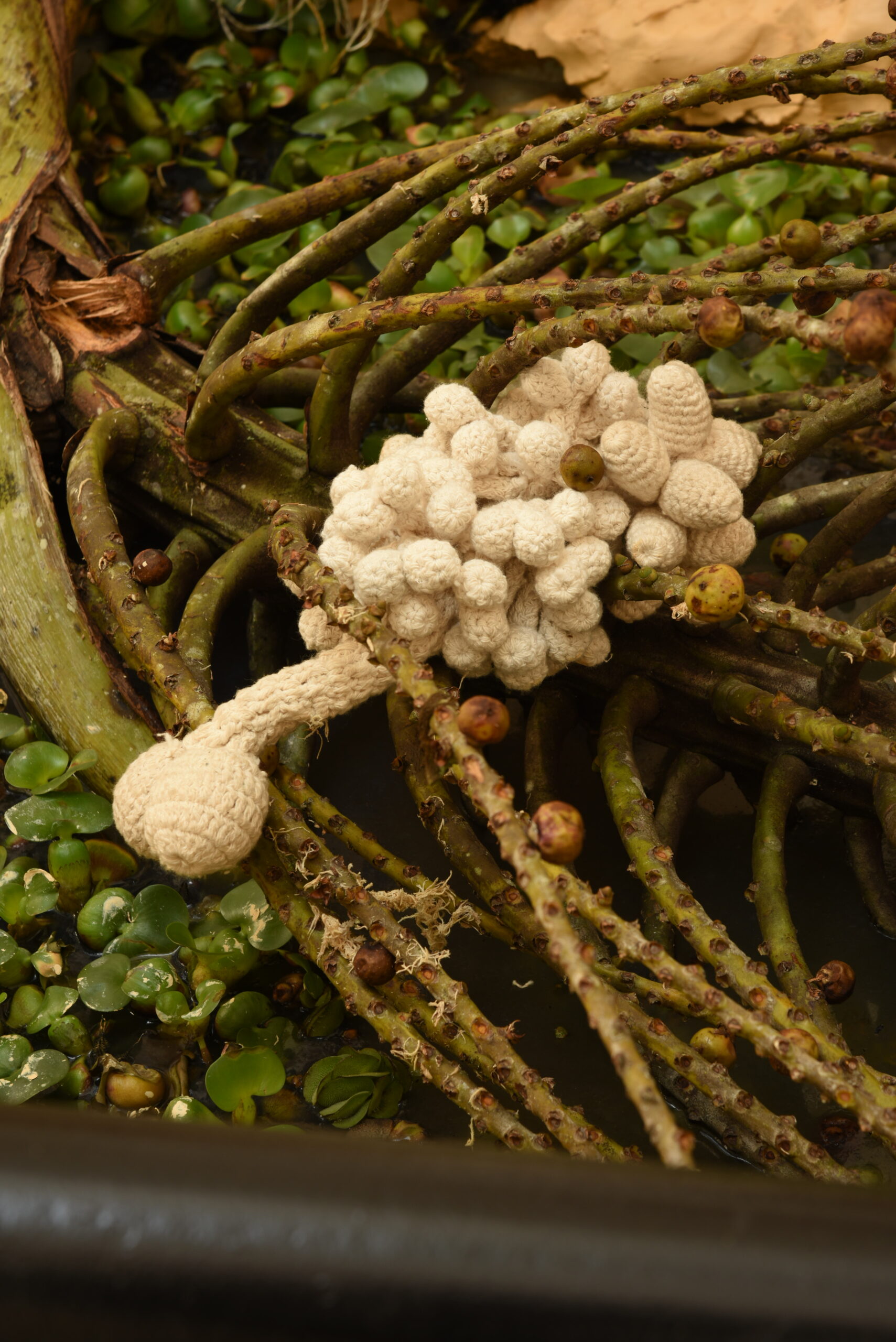
Technique and materials: Sculpture – Cotton in natural colour I Dimensions: 7.20 x 5.10 x 1.50
National Museum of the Republic – Brasília
2019
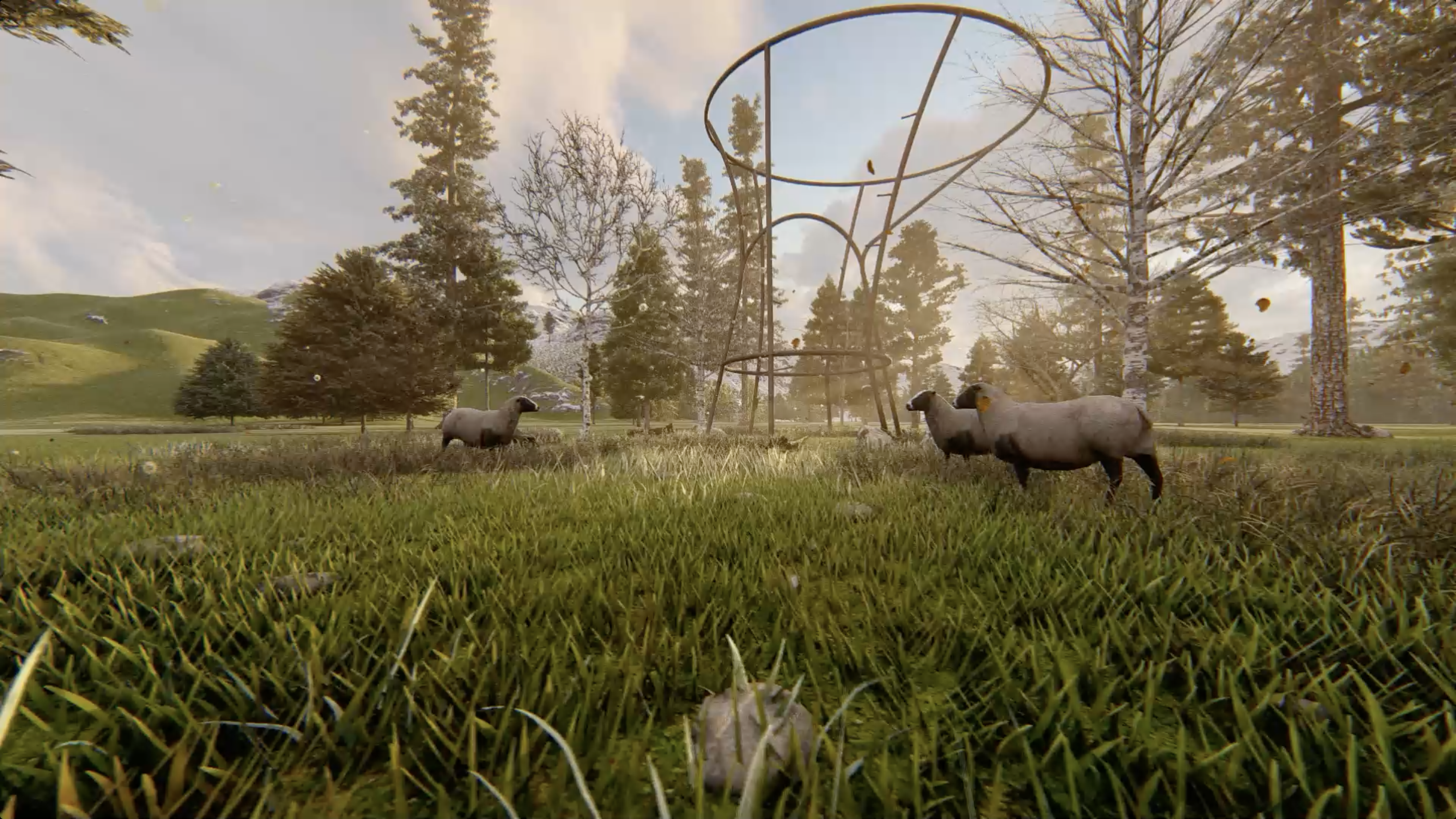
3D digital animation, digital
2021