

Leticia Lopes
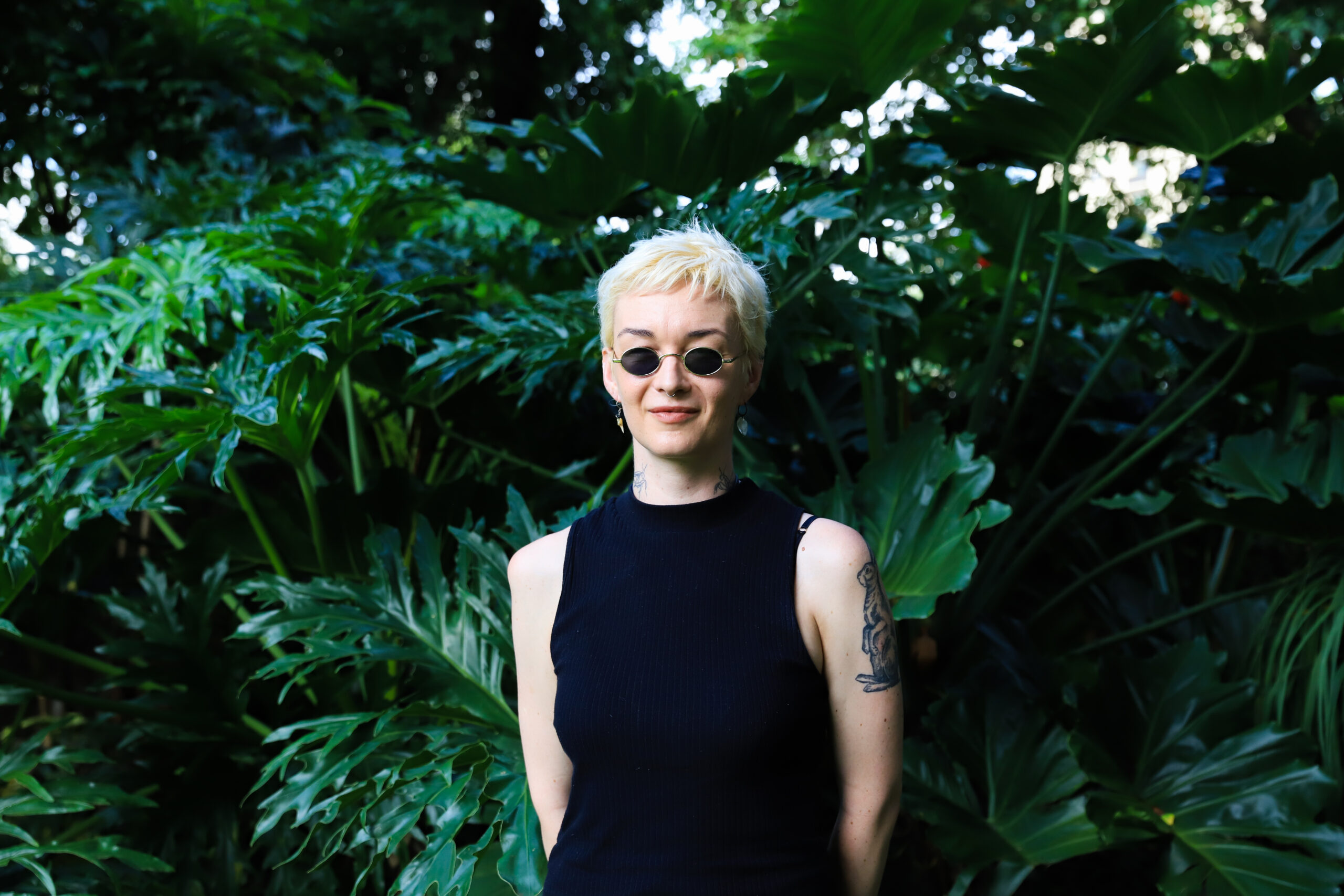
Leticia Lopes (Campo Bom, 1988) is a Brazilian visual artist born in the country’s south. She developed her painting language through collage and the influence of cinema and photography. Today, her interest permeates a field of restlessness in painting. In this interview, she explores the ambiguous character behind her compositions by investigating her inspirations in places, objects and realities that haunt her. Leticia faces the challenge of bringing these images to painting, revealing a fluid and open creative process where she follows the images that whisper in her mind and transforms them into paintings. Check it out:
Leticia, thank you very much for accepting this invitation. It’s a pleasure to talk to you and have you as part of this project. To begin, I’d like to ask you to introduce yourself. Introduce yourself to those who aren’t yet familiar with your practice.
I’d also like to thank you for inviting me! My name is Letícia Lopes. I was born in Campo Bom, in the interior of Rio Grande do Sul, near Porto Alegre. Sometimes people ask me: “Have you always wanted to paint? Have you always wanted to be an artist?” I always wanted to, without knowing exactly what it was. However, it was when I started studying film and history that my path, my language, unfolded into painting. But it also comes a lot from college. I would say that presenting myself within my profession, a visual artist emphasising painting, is understanding that it [painting] is never isolated. It’s always in dialogue, especially with cinema and photography, although it’s not apparent. I graduated from Porto Alegre, and now I’m living in São Paulo, and I’ve had some very important experiences abroad. Painting, for me, is very open. I envision something unsettling as if the world were expanding as I research painting.
And how did you arrive at painting as a medium for expressing yourself as an artist?
That was funny because I did two and a half years of design, and I didn’t have that contact there. It was the contact I had with people who showed me how cinema was developing as a language. A friend of mine who loved trash films introduced me to Tarantino. I began to understand a few things about the subtlety of knowing how to cut, place dialogue in a certain way and communicate through images without necessarily having to translate afterwards. Image and sound come very close together for me, and in those first understandings, I realised that image didn’t need sound. It was as if the idea of image regressed in my perception. At that moment, I realised that in painting, even though it is very old, there is still something. That something is made by hand, a material applied to a fabric as a support. Although I find cinema fascinating, I believe I wouldn’t be a good filmmaker, even though I’m an enthusiast, because I find it so complex and rich. In painting, I realised that my gaze suits that language. And so is the way I cross things in life.
It’s interesting to hear about your inspiration in cinema because your paintings have their history and images that go beyond the figurative. When we think, for example, about the beginnings of cinema, films like Nosferatu – the first horror film ever made – their work has an obscurity that challenges painting as a medium because the production of the painting is tangible, and its result is not tangible, although it is still figurative. Tell us a little about your inspiration and manipulation with painting.
The first time I saw a photo being developed, in the chemist’s, it was a portrait, and the process was very astonishing to watch. For me, the image was the great unknown. I managed to isolate my field of interest: first, the visual layer; then, sound; then, time, which is the essence of cinema. I kept thinking: what’s in between? What am I seeing? It was then that I realised what an image was. When I saw this image being developed for the first time, coming out of the water in an analogue way, it blew my mind. I feel it was revelatory, literally, pardon the metaphor (laughs). At that moment, it seemed that something came together with what I had eventually seen and dealt with in relation to painting throughout my life, and what came together was something very intimate and funny; I think it was because when I saw the transfiguration of a concept that was so objective for me in my field of study, that is, that image showing itself, exposing itself, something in the back hit, and that something was a reproduction of a painting of the house of a person of affection. After that, when I went to paint, I realised that some things developed very quickly. I’ve always paid attention to dreams, not because I’m a mystic, but because of the images. For example, I dream of holding a fox or an ermine. In the morning, while I’m doing my homework, a flash comes over me, as if I want to understand what I’ve dreamt, and the first thing that comes to mind is Leonardo da Vinci’s painting, “Lady with an Ermine”. I realised that I often did this with memories and dreams, and the first thing that came to mind was usually related to the painting. And this wasn’t because I came from a family of artists. I’d never had much contact with painting, and it was only when I saw a developed photo that I realised I was remembering a painting I’d seen somewhere.
Eu entendi que a pintura é esse lugar entre as coisas. Entre a minha memória e as coisas que imagino, como se imaginasse algumas imagens de coisas. Criar uma imagem é uma responsabilidade muito grande, e é um lugar muito interessante.
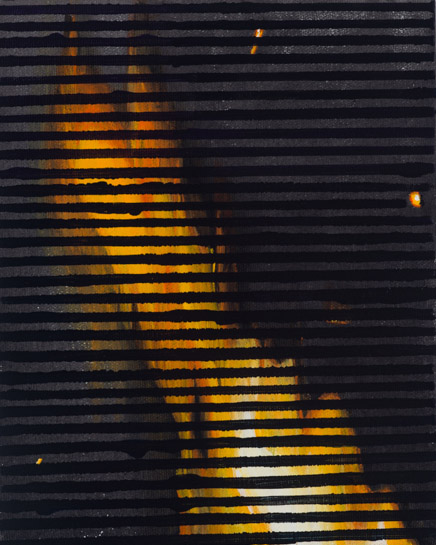
(Translation: I realised that painting is this place between things. Between my memory and the things I imagine, as if I were imagining images of things. Creating an image is a very big responsibility, and it’s a very interesting place). Some things (when I can understand what they are) I can also pass that image on and make a painting of it or with it. Then, I think, eventually, someone in the future will have a dream and perhaps remember that same painting I managed to make, as has happened to me several times. Chandeliers are always fatal; some friends have told me: “I had a dream that looked like your chandelier”.
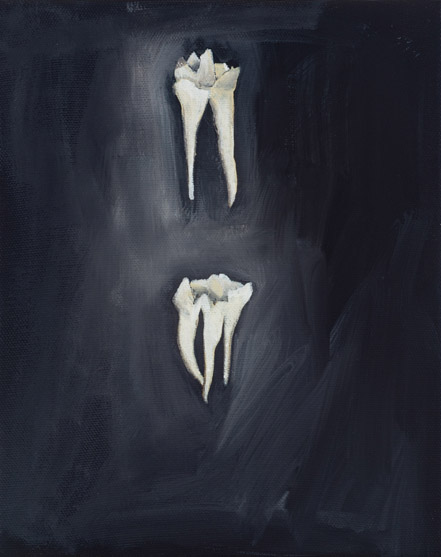
For me, it’s dogs. It’s an image that always comes back to me. When a painting connects with the viewer, it almost burns into your brain, and you can never forget it. You mentioned some examples that connect with our next question: where do you find inspiration?
I think inspiration comes more as a search for the rebound of something. At the time of the chandeliers, for example, what was haunting me were chandeliers. I didn’t necessarily visit places or go looking for images of chandeliers to get inspired. Still, there were some very prosaic things, like a person talking on the intercom in my building a person’s voice in the entrance hall, that transported me to a place, an environment with a kind of chandelier. It’s a kind of obsession that comes first, and then I go after it. My inspiration can be manifold, and wolves and lions very much populate it. One day, I was in Paulista, and there were many posters and images of animals, lions and lionesses. I don’t remember seeing them before, or maybe they were there, but I hadn’t realised. It’s always a conversation between the things I see, read and look for.
It seems to me that you find these inspirations and connections in various sources, but how does it all converge in an image? How does this process of realising the painting work?
I started with film photography, and I used to isolate a few frames of film or eventually take those same frames and prints from a catalogue to make a collage. I would do some research in the studio, which consisted of a bit more cutting and pasting from some encyclopaedia and paintings with some colour, and I would put them together with that print. I like the way the ink stays on some papers, and because they were old papers, the poor printing interested me a lot. I was looking for something that could have a space to enter as if I had to look at it and no longer see the printed figure. However, I am a person who needs the figure because I like it. I need to have that moment when it doesn’t feel like the picture I’m looking at is transparent. I need to remember that I’m looking at a picture and that I came from college. My work in the studio was to take all the images I found somewhere in the street or from someone who sent them to me and then stick them on the wall and trace these paths. Sometimes, I didn’t always have to paste one thing onto another; what was on the wall was already talking, and I would start something on the canvas. The brushstroke movement made me reflect and find a similarity in something. This guided me, and I ended up following that path. I’ve always enjoyed drawing and writing. In this writing process, I realised that the way I was writing invoked more specific images, and it was when I ventured to try drawing them that things started to work. There are works that I can stop at drawing because I feel they don’t necessarily need to be painted. Although I like to draw, I never realised now that I don’t necessarily need to turn the drawing into a painting.
Eu sempre vou para o lugar onde me sinto assombrada mesmo. Não é algo que estou inspirada, é diferente, é uma coisa que fica atrás do olho. Por isso também a minha visão tem uma paleta mais reduzida. É algo que sussurra. É o jeito que eu ouço as coisas que eu quero trazer para a pintura.
(Translation: I always go to the place where I feel haunted. It’s not something I’m inspired by; it’s different. It’s something that’s behind the eye. That’s also why my vision has a smaller palette. It’s something that whispers. It’s the way I hear the things I want to bring to the painting). For me, the painting is as if it’s coming from behind my ear and projecting forward. To bring it forward would be to emphasise it, to shout it out, to clarify it, to give it light. I don’t want to bring in all the light, but at the same time, I want to bring the painting in with a lot of respect. That’s why I think I add colour slowly.
And with that in mind, how does the completion of the painting work for you? The process of looking at the work and saying, “I’m done”?
There’s something about walking at night when you turn down a street with no light and need to do something different, and then you return. For me, painting has something similar when it’s finished. While doing it, I feel super conscious, like in a conversation. But at one point, there seems to be a blackout, and when I return to myself, I look at the image and say, “It’s done”. It’s as if there was a moment when the image should have said something. The image was ready when I realised it answered me while we were talking, and suddenly it was no longer me and her. It was the painting.
It’s fascinating how walking through a place at night can change our relationship with the city space. Although you can get to know a street by walking down it every day, walking at night, especially between 5 and 6 in the morning when it’s dark, makes you see the place differently. It reminds me of German photography from the 1990s, which captured cities in rare moments at 5 a.m. when there were fewer cars and nobody on the streets. It’s a real experience but surreal at the same time.
Exactly, and I think even in our own homes. When the lights go out, you discover your home all over again. Every detail, every corner, everything. You remember that you almost don’t live there because it’s so weird. It’s this moment that interests me. The unheimlich – a German term for something unfamiliar – is “something I almost know, but for some strange reason I don’t”. And perhaps one of the first places of this strangeness is light, and the other is sound when everything is silent. The painting is silent. It’s hovering.
What challenges have you faced throughout your career as an artist, either in a specific situation or in general?
Part of what makes me an artist is putting myself in a challenging situation or being challenged by a challenge. I’m very fond of this kind of test because it imposes a certain rhythm and makes me rethink certain places we sometimes underestimate. I’ll cite the first challenge I had as the biggest because it brought me to a part of my language that I wouldn’t have been able to reach if I hadn’t been faced with something that intimidated me at the time. I was graduating, still unable to write a proper final paper, and was asked to do an exhibition at Santander Cultural in Porto Alegre. The building has a large exhibition space. It was stretched out like a kind of corridor, almost like one of the sides of the atrium of a cathedral, but when I was called, I knew perfectly well that I had the energy to handle that space. At the time, that exhibition was very definitive for me. I had recently come from college, and although I was already familiar with the poetics of painting, I had to devise a strategy to capture a certain atmosphere of poetry in a place I had just discovered. Deep down, we know each other well enough to know whether or not we work well under pressure, and I had already realised that I worked well. When I managed to develop something – from the middle to the end of that production – I thought: “I think it’s going to be like this over time” because I’d do it all over again, I’d buy into that challenge again to get where I was. The exhibition’s title, “Sinister Presence”, referred to real presence. I understood that it was talking about making oneself present through painting.
It was a way for you to understand your language and explore this installation and exhibition aspect of painting. Painting, by definition, is a long and very personal process, which usually takes place in the studio. It’s a solitary and prolonged negotiation with the painting. In this case, it’s interesting to hear that you already knew it would be an outdoor production from the very beginning.
It’s always been like that. That’s the way I think about painting. I have to put it up because the way it’s put together and the way it’s there changes everything for me. If I place it one way, a little higher or a little lower, depending on who’s next to it, part of the issue is resolved right there.
What is your creative process like when creating your works, and how do you decide which materials and techniques to use?
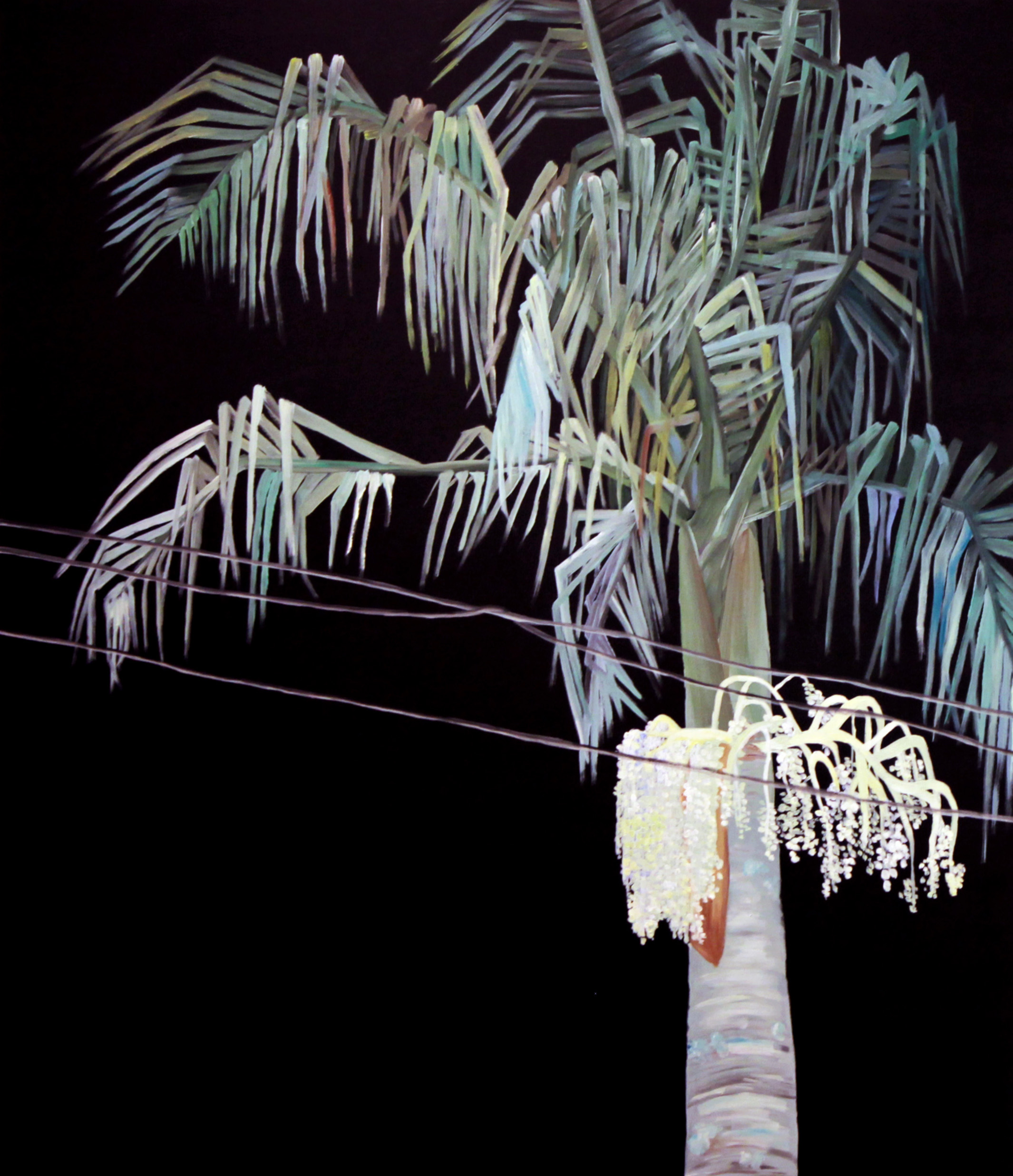
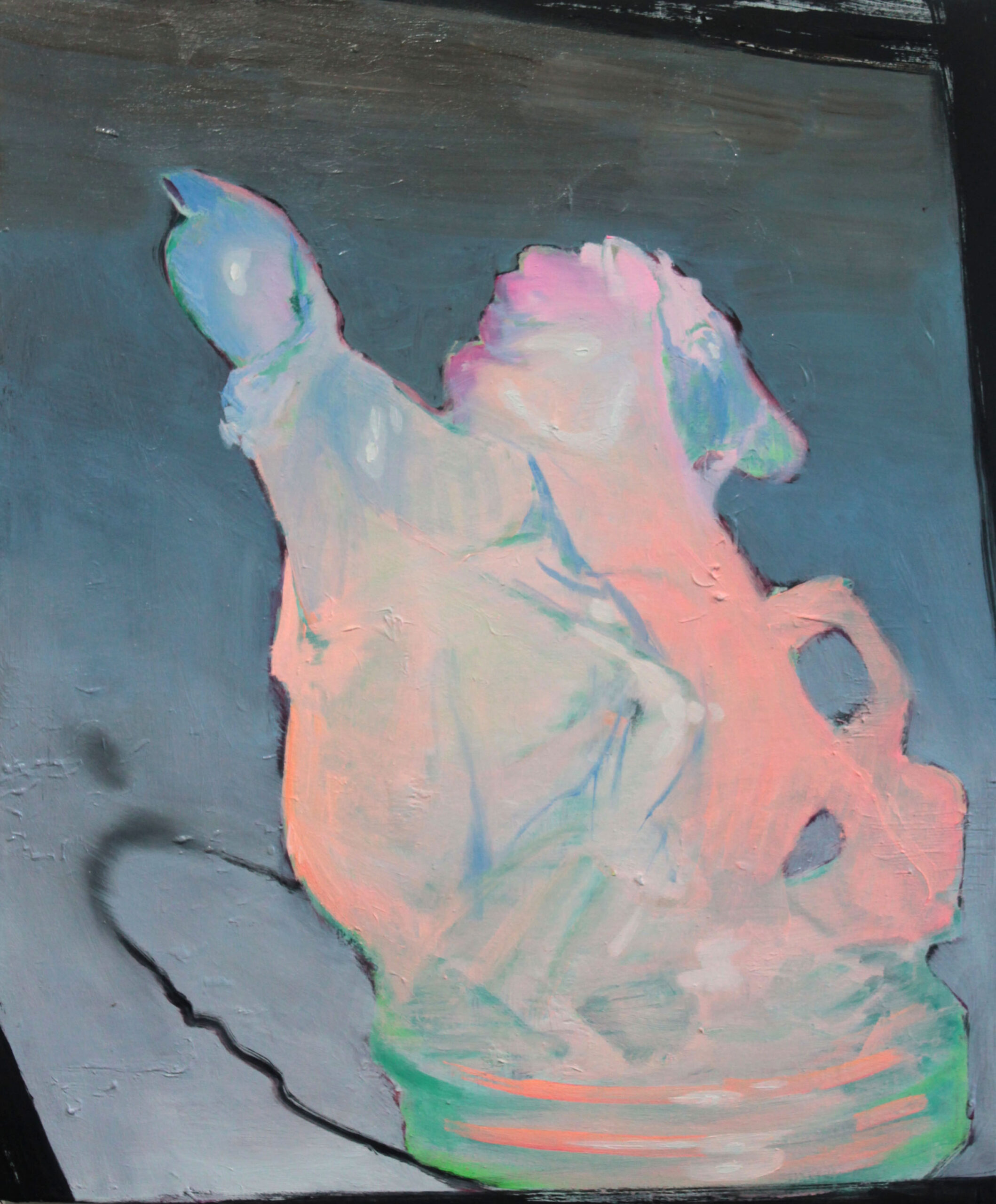
When I started making collages, I was very attached to the type of paper the images were printed on to choose my compositions. However, at the time, I hadn’t realised that there were three factors to consider: the material present, what is quoted, and certain images that, in my opinion, if they are there and I can observe them in a photo or print, are enough. Why is something in a photo already complete? Sometimes, I look at a photo and think there’s no need for a painting, and the thing is the photo. I started working with this and realised, unconsciously, how much materiality interested me, even though it wasn’t a frontal issue for my work at the time. I understood it in a slightly skewed way as if I always saw things out of the corner of my eye, and when I tried to look at them head-on, they ran away. In the collage, I put certain images together and felt the need to enlarge them. In this case, as I understood from the Santander exhibition, I wanted to make them more present and perhaps transform them into objects or a border zone between the object and something beyond. So I started with acrylics on canvases that weren’t very deep, alternating between one with the frame protruding from the wall and the other thinner. In those sets where some were a little further back from the eye and some further forward, I began to realise that I wanted to bring them all forward, but I was still working with acrylic and with little material. At this exhibition, I created one of the largest paintings I’d ever done: an almost life-size palm tree measuring 1.80 by 1.20 in acrylic. Before I knew it, I had made my first triptych, three canvases measuring 2 metres by 1.50 metres each, ending the exhibition with a six-metre triptych. In this triptych, I realised that there was yet another layer that painting could provoke in me and make me present. And to think about the material it is made of and the kind of effect that certain pigments and invoices could stretch – to provoke a kind of “pleasantness” in the eye. At the time, I only worked with acrylics, and I didn’t venture into oil painting because I found it rather bureaucratic and even archaic. To go to my old studio in Porto Alegre, I would always pass the Public Market, which has shops selling flora, candomblé and Umbanda objects. One day, passing through the market, I saw a sculpture of St. George, an image I’ve always loved. I decided to buy one of the sculptures, and after respectfully asking permission to handle it and bring it forward, I realised that acrylic painting didn’t seem to be enough, and that’s when I decided – around 2018 – that it was time to tackle oil, which has been my main technique ever since.
Eu sempre digo que é como se eu tivesse uma desculpa para ficar mais tempo olhando para as imagens que me dão tesão de olho e de cabeça. Pintar tem isso para mim também. É uma boa desculpa para ficar horas e horas na presença de um conjunto de imagens, uma atmosfera que se cria quando elas estão juntas.
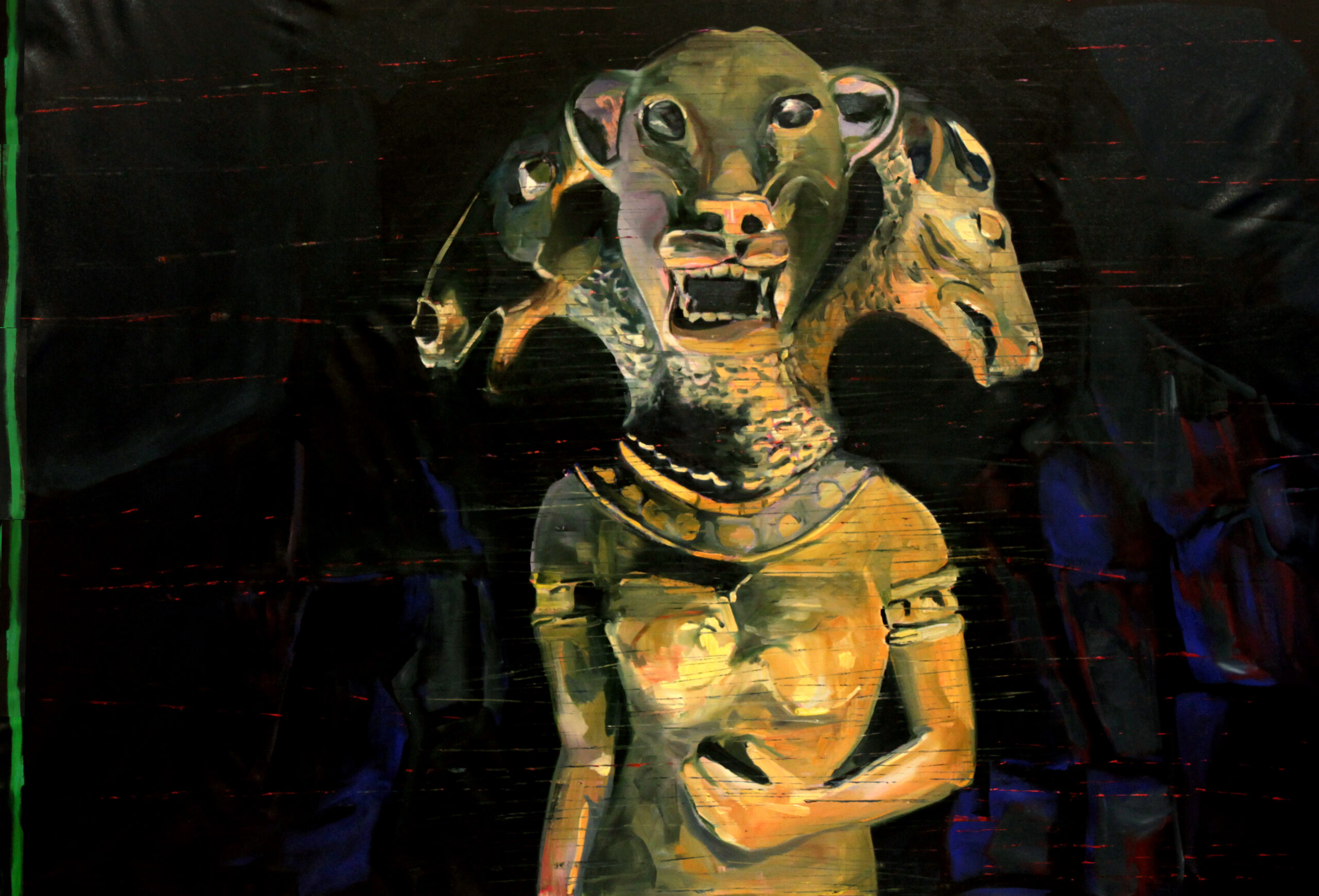
(Translation: I always say it’s as if I had an excuse to spend more time looking at the images that give me a hard-on. Painting has that for me, too. It’s a good excuse to spend hours and hours in the presence of a set of images, an atmosphere created when they are together). In 2019, I did a residency in La Rochelle, France, as part of the Alliance Française Contemporary Art Prize, and I made a painting of a Hecate, the goddess of the paths who has three heads: a lioness, a sheep and a she-wolf. It was on a prepared cotton canvas, and from that moment, there seemed to be a mismatch, and once you see it, there’s no getting away from it. From then on, I started working with linen, developing the technique more clearly and realising that the more I painted, the more I felt a “body to body” clash with the painting. The gesture called me to it. In some pictorial strategies, I use acrylic paint in some areas because sometimes I need to give a water bath in acrylic on a linen canvas first so that some vapours solidify and some shapes appear. But the technique I use most often is oil on linen.
I’m happy to hear your thoughts on the material and to understand better how you think about themes such as the sublime, this border zone and the space between. You explore this space in your works not only as inspiration, but also in how you handle and reason with these materials. Many artists tend to take extreme positions in relation to aesthetics or themes, but I appreciate how you move away from these rigid definitions in relation to the objects and materials you work with, allowing painting – and thinking about painting – to unfold in unusual ways.
Going towards an unknown place is what brings me to my studio every day. I can’t have anything definite. I have certain preferences for my current reading, and I believe these can be the basis for my choices because I often ask myself, “But what about that?”. This question is my first answer because I always try to respect a kind of knowledge that comes from body memory. I don’t impose my opinions on painting and how it should satisfy my cerebral cravings. After all, my hand has memory, and so does my eye.
Às vezes alguém diz “‘mas deve ser muito divertido” claro, só que a minha definição de diversão engloba desafio, desconforto, alguma frustração e depois algum êxito. Isso que me dá prazer, me diverte. E não só transitar de maneira leve em algum lugar. Isso pode até ser fácil e divertido, e é necessário, mas prazer mesmo pra mim é uma coisa muito mais a ver com a definição de prazer sexual. Tem a ver com se colocar diante de uma coisa que você não conhece muito bem, e entender como seu corpo responde para aquilo.
(Translation: Sometimes someone says, “But it must be a lot of fun”, of course, but my definition of fun includes challenge, discomfort, frustration and then some success. That’s what gives me pleasure; it amuses me. And not just travelling lightly somewhere. That can be easy and fun, and of course, it’s necessary, but pleasure for me has much more to do with the definition of sexual pleasure. It involves putting yourself in front of something you don’t know well and understanding how your body responds to it). If I came up with a closed practice, I’d just be replicating a kind of legitimisation that perhaps already exists, which doesn’t interest me in any way. It’s through blind exploration that things are built. I don’t like to insist on what doesn’t work like that, even for reasons such as the market, etc. Everything comes from something I’ve read [in text, image, or that my body has read without my eyes] and liked, but it also has to do with my respect for the work and the process. I’m very obsessed with artistic language, and I find this place very intriguing and attractive.
Interview conducted on 8 and 23 May 2023 remotely via Zoom.
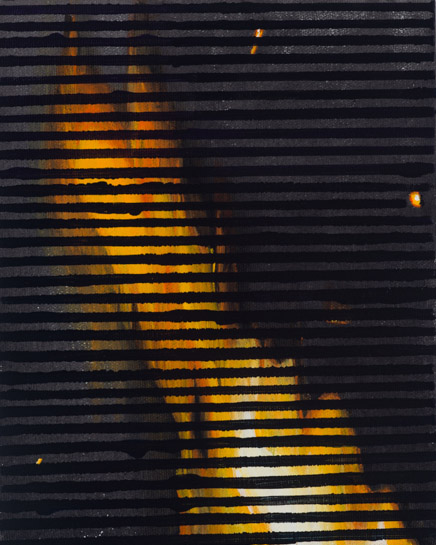
Triptych | Oil on canvas | 20 × 60 cm
2016
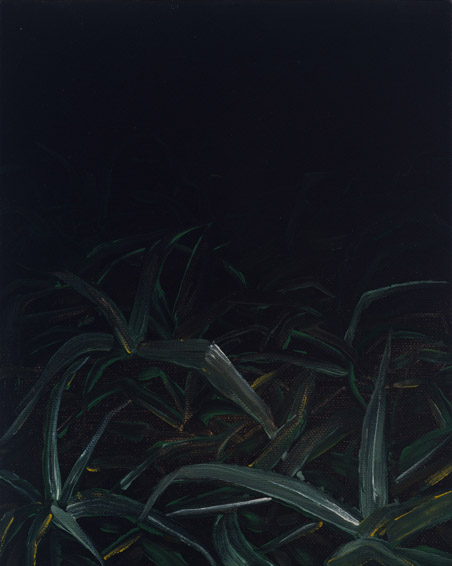
Triptych | Oil on canvas | 20 × 60 cm
2016
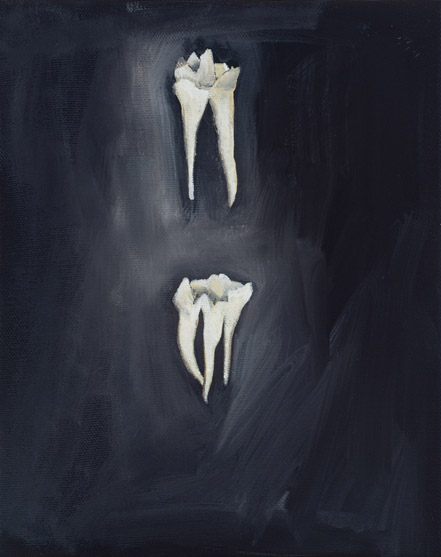
Triptych | Oil on canvas | 20 × 60 cm
2016
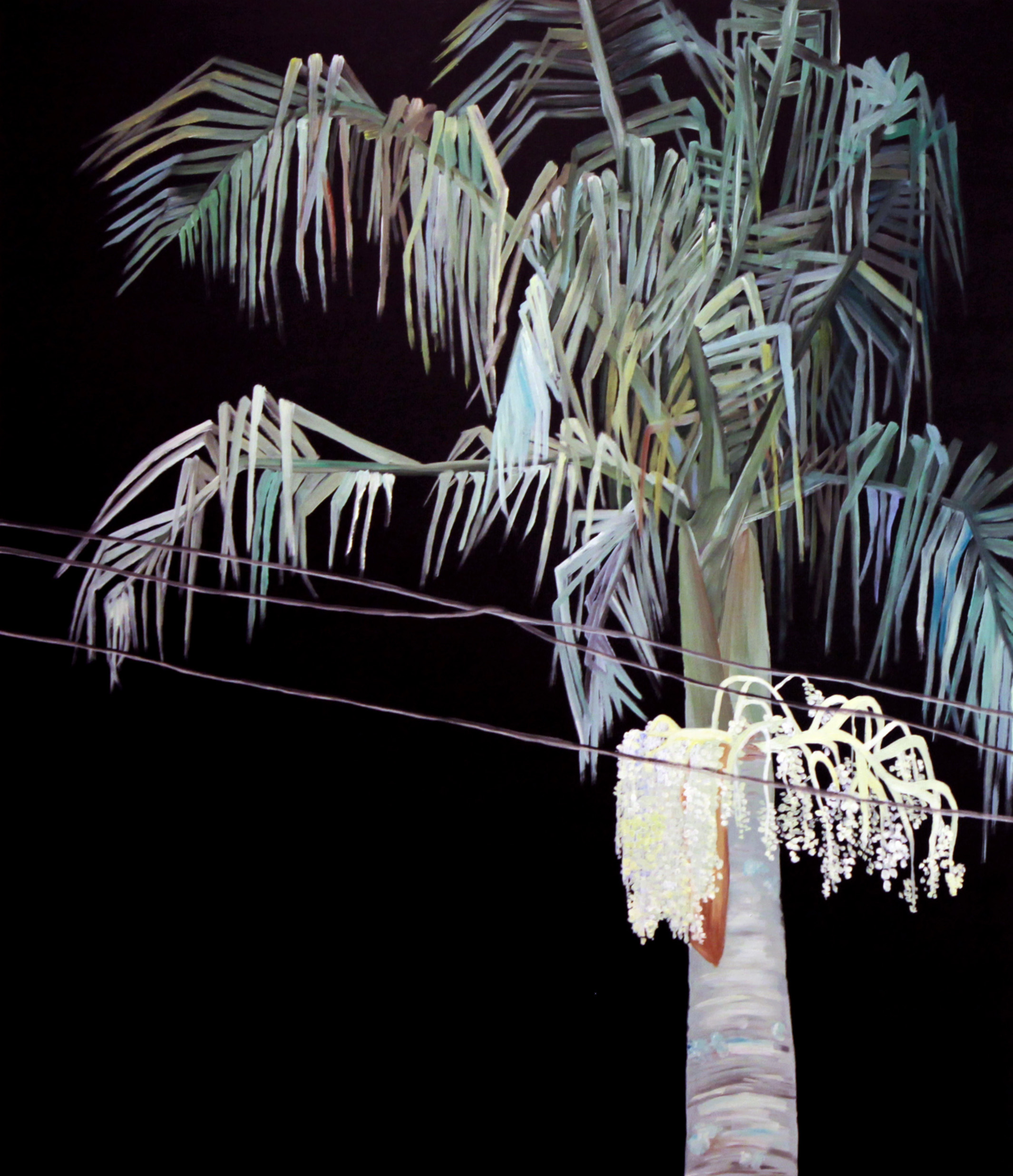
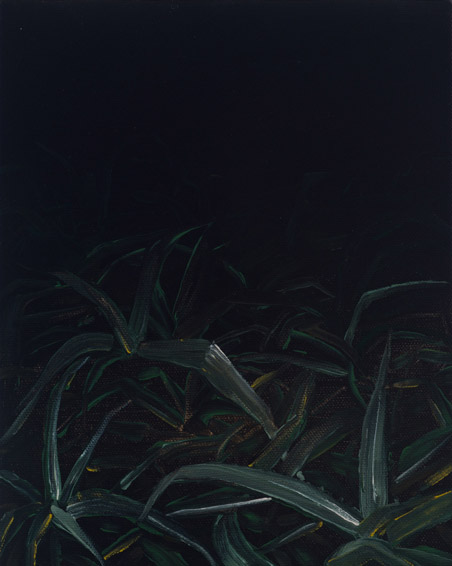
Oil on canvas
2016
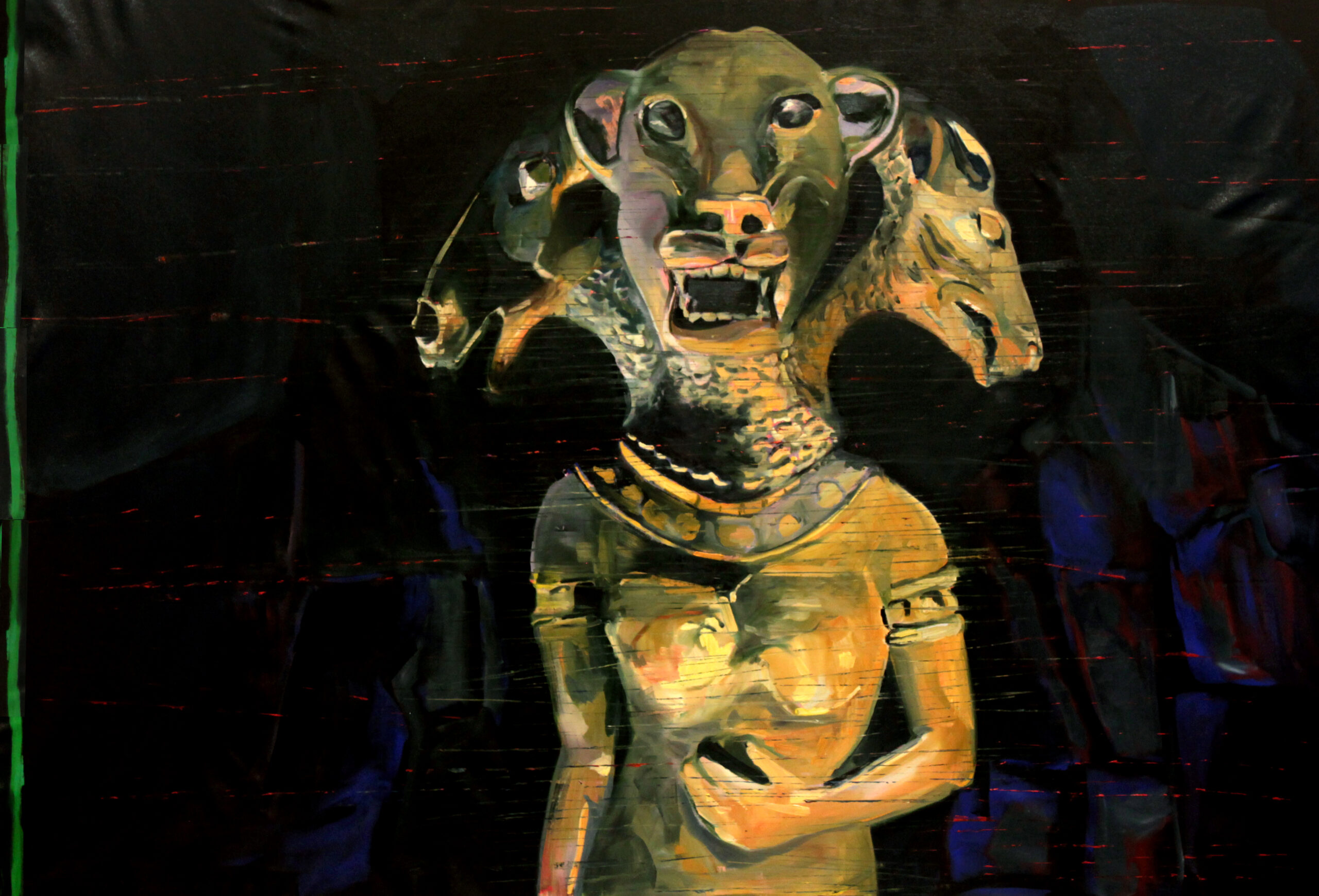
Oil on canvas I 200 × 150 cm
2019
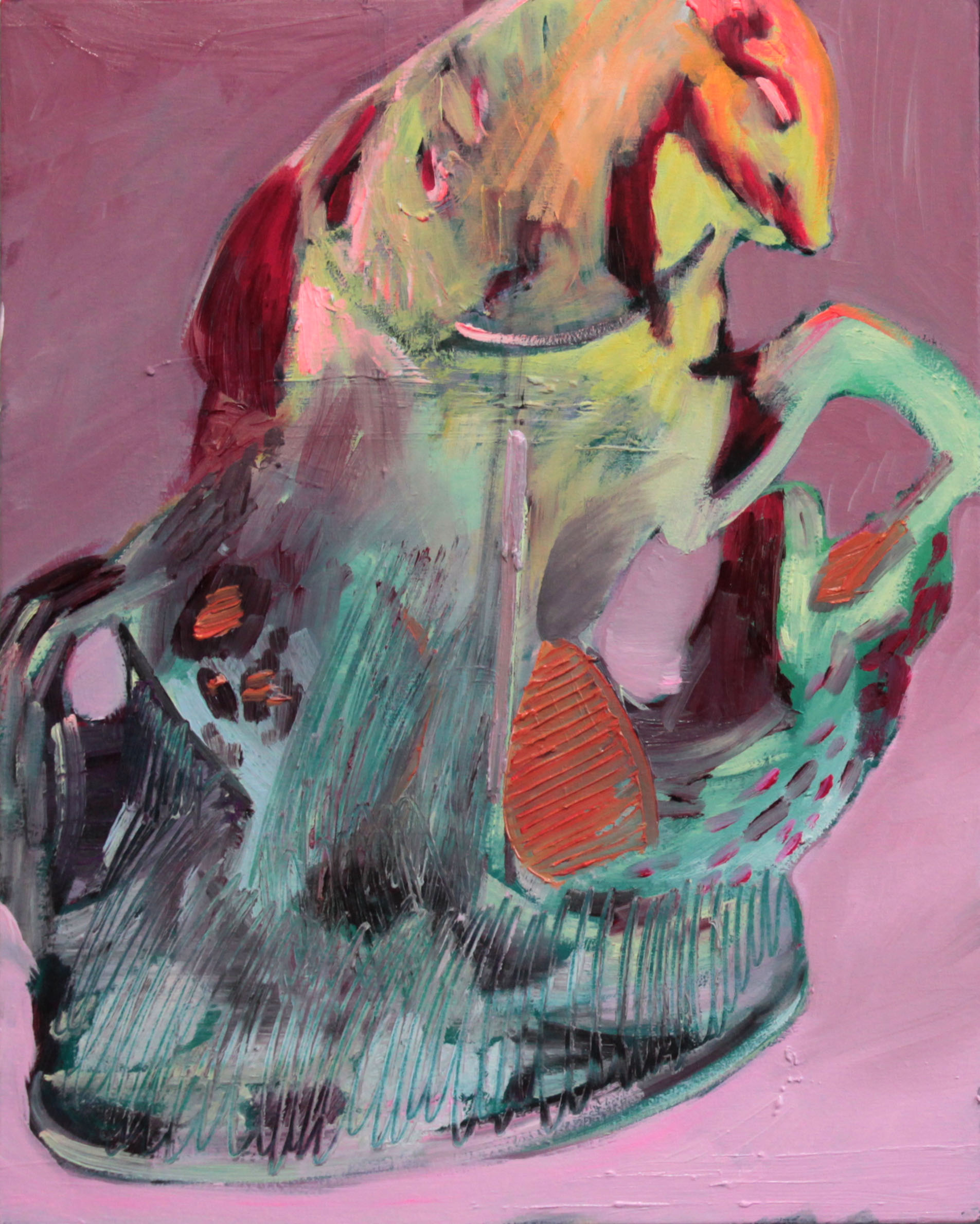
Oil on canvas I 50 × 40 cm
2019
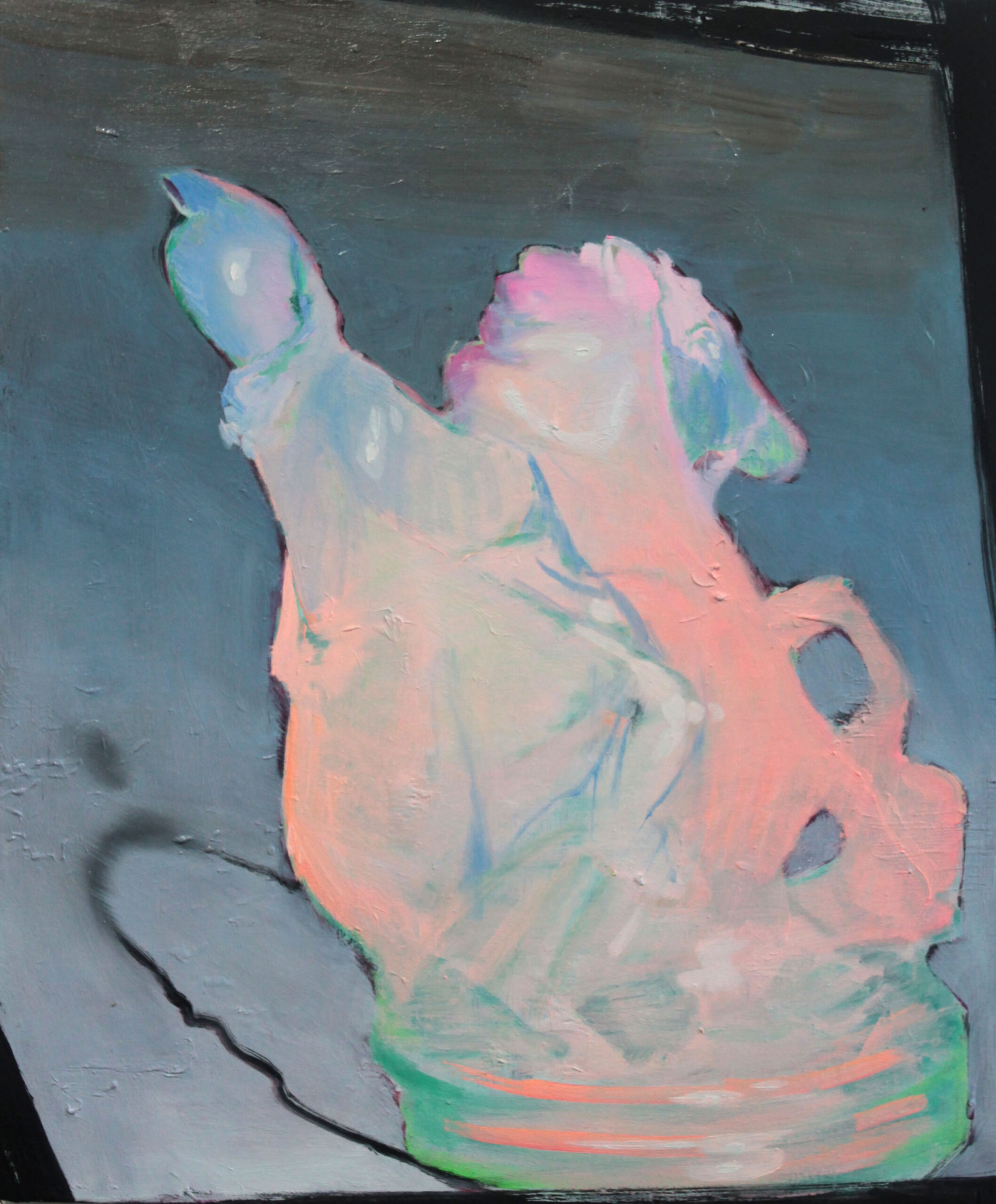
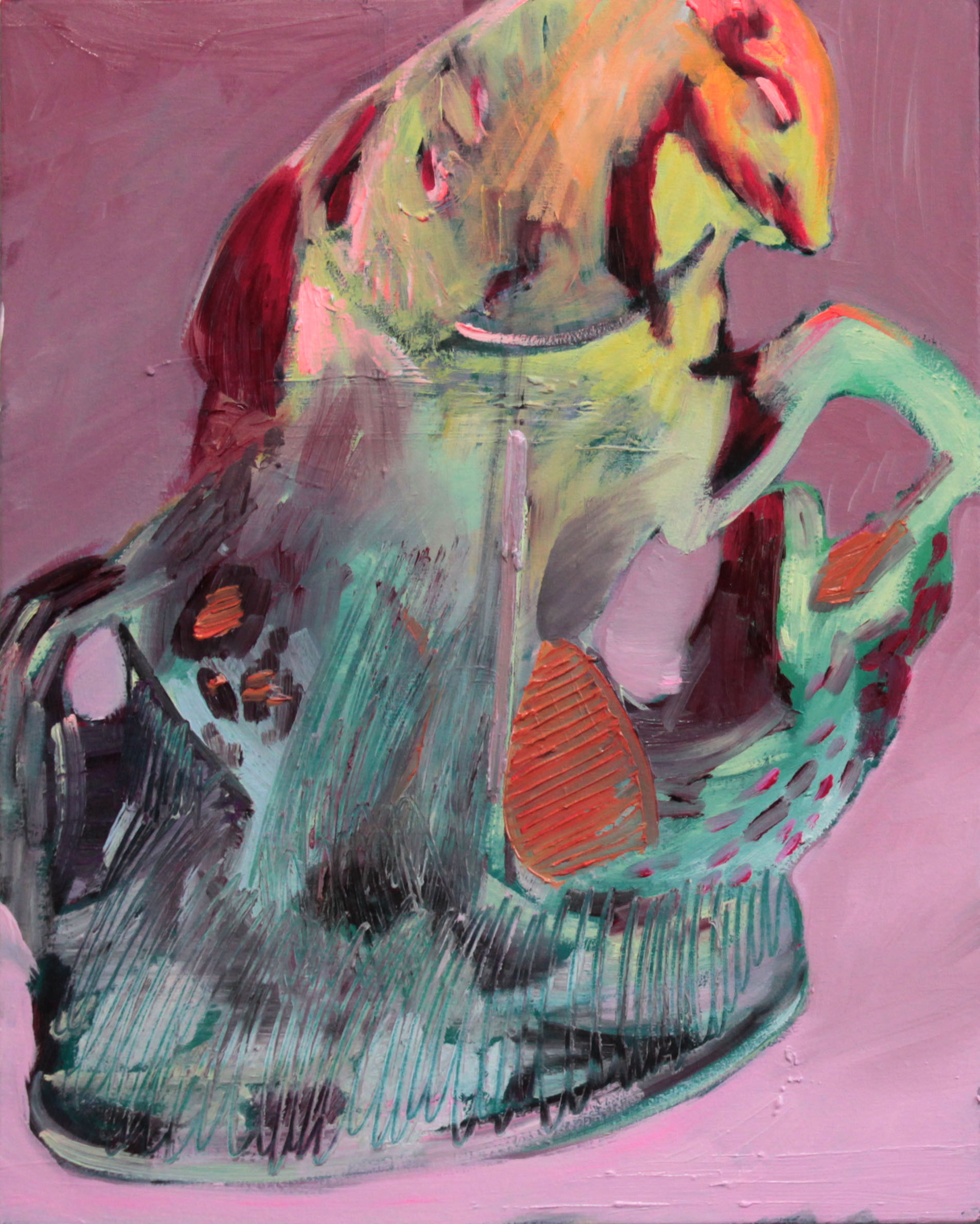
Oil on canvas I 50 × 40 cm
2019