

Randolpho Lamonier
Randolpho Lamonier (Contagem, 1988) began his artistic career in the theater, where he developed a deep interest in the body and physical expression. The transition to the visual arts occurred gradually, when the artist began experimenting with textile art and exploring new techniques in the three-dimensional, installation-based language that characterizes his current work. In the interview, Lamonier talks about his journey and the importance of materiality in his work, which can manifest itself through fabrics, everyday objects, or even his own body. Check it out:
I’d like to start by asking you to introduce yourself, with any information you consider relevant, to an audience that doesn’t yet know you or your artistic practice.
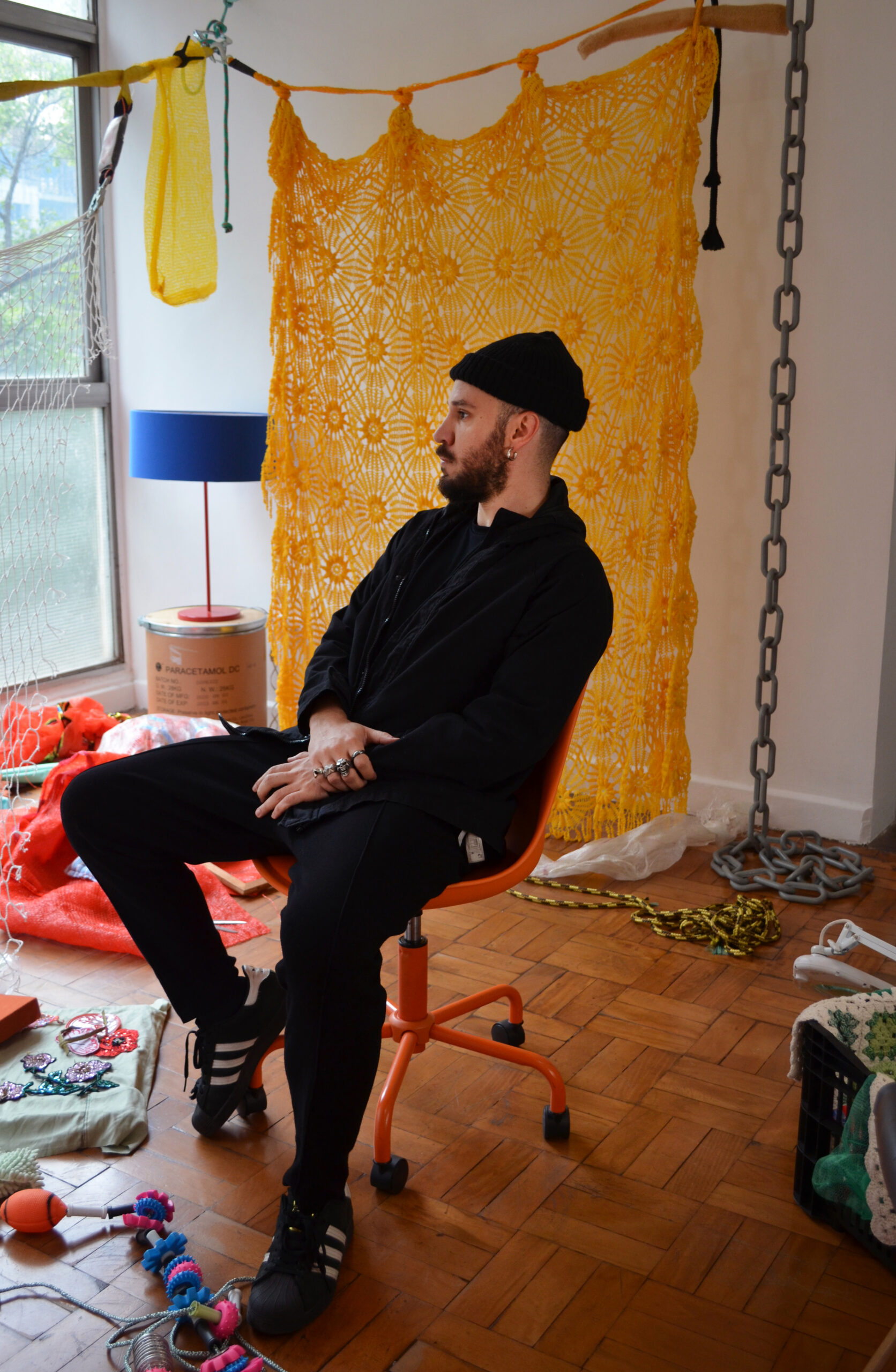
My name is Randolpho Lamonier, I’m 35 years old and I’m from Contagem, a city in the interior of Minas Gerais. Contagem is an industrial city on the outskirts, with many social problems, and I grew up in a family of laborers working in industry and construction. During my childhood, I had little or no access to art. Because my family worked a lot, I stayed at home and watched a lot of TV. This ended up having a big impact on my education, something that always comes back to me in my work. At the age of 16, when I was in high school, I began attending a theater course at a cultural center in the city. This course was a complete shock for me, as it broke with the cultural context I knew only from my family. They’re very religious, so we lived in a context of work and church. The place where I grew up is still a community with limited access – a neighborhood without even a central square. When I was introduced to the world of theater, it was a complete change for me. That’s when I discovered my love of theater. I joined an amateur theater group and, at the same time, started a painting course at that same city hall cultural center. I became totally involved. It was incredible. We did a show called A espera, which combined texts by authors from the Theater of the Absurd. This experience marked my way of thinking and of structuring my creative processes. I lived in Contagem until I was 23.
During the time I was doing theater, I had to work because my family didn’t have much money, and I wasn’t yet making any money from theater. I started working in commercial theater when I was 17. I worked for a company that provided services for SESC and other organizations that hired these shows. However, these were no longer research shows – it was different. I was involved in various types of theater – commercial, children’s theater, and education. It was something I did both for the money and for fun, because I was working with friends. After that, I started trying out different jobs, usually staying two to five months at each one because I couldn’t stand it. I worked in a factory, in a pet shop, I was a bus conductor, I handed out leaflets, I worked as a warehouse assistant, and even as a roadie for a band. I really did a lot of things and, in parallel with theater, I began to take an interest in the visual arts. It was through photography that I truly realized I also wanted to work as a visual artist. Photography served as an outlet when I started photographing my friends from the theater group. We were a “gang” of teenagers, actors, and we were very close. I started creating scenes with these friends, exploring places like abandoned factories in Contagem. Nowadays, these places are becoming increasingly scarce, replaced by condominiums and buildings but, back then, we would go to these places and create different scenarios. I used to shoot at home too. I was very connected to the idea of theater, to the notion of scenic representation. Behind each image there was a little story that I created. They were situations set up for the camera, especially when we were outdoors, particularly in factories, and that led me to understand that I didn’t really want to do theater.
O teatro foi a minha porta para o pensamento criativo e também para o entendimento do corpo, diferente do que eu tinha antes. O meu corpo mudou quando eu entrei para o teatro. Foi um processo de ter outras referências de comportamento e referências políticas também.
(Translation: Theater was my gateway to creative thinking and also to an understanding of the body, which was different from what I had before. My body changed when I joined the theater. It was a process of having other behavioral references and political references too.) It was a very rich formative process, even though it wasn’t a technical course.
Around the age of 18, I started studying theater at university and worked with Grupo Oficcina Multimédia, an important theater group in Belo Horizonte. They do scenic research into various elements, such as props, dance, scenography and costumes, where everyone builds everything. The theater’s director, Ione de Medeiros, noticed my inclination towards this area. She realized that I was always very involved with visual elements and suggested that this might be my true path. I then decided to leave the group and dedicate myself to visual arts at UFMG. I joined the university in 2012, aged 23, and it was a totally new period for me. I left my hometown and lived in various hostels until I found one where I lived with two great friends. We really became a family and started working together a lot. My entry into the visual arts course was very significant, although not so much for the study itself, since, to be honest, I wasn’t a very good student [laughs]. I didn’t study much because I was dying to produce. I knew I had a lot to learn. However, I quickly realized that my study method requires a lot of practice. I think with my hands and with my body, which is something I’ve brought from the theater. In theater, I never worked with text, except in commercial, corporate theater, where everything was more closed. You had a text, you memorized it, you made half a dozen scene markings, space markings, and you presented that text, but it wasn’t the kind of theater I made artistically, or critically. It was a different kind of theater, which was bodily, physical, process and political theater, which was very interested in social issues. So that was something I ended up incorporating into my creative process in the visual arts.
What was your experience like during your time at university?
I spent seven years there. My training took some time because, when I started university, I was quite inexperienced. I wasn’t very familiar with the visual arts; I’d never left Brazil, and I knew little about museums. Although I had a great desire to learn and a strong need to produce, I didn’t have many references. What’s more, the course was very elitist and full-time, which prevented me from working. I had no financial support from anyone, so I started working in an art gallery in my first term at university. I produced a lot and was very keen to understand how the market worked. I remember that, at school, several teachers said to me: “if you want to make a living from art, you’re in the wrong place, you’ve chosen the wrong profession, because you can’t make a living from art, the market doesn’t exist.” I didn’t accept that; it didn’t make sense to me. The market does exist, someone has access to it, and I wanted to be part of it because I needed money to live. I didn’t want to go back to being a bus conductor – I worked too much and didn’t have time to do my own thing. I’d heard people suggest that I could have a job and produce art at weekends, but that didn’t satisfy me. It was an emotionally challenging time, marked by ideological and religious ruptures, moving away from values that no longer represented me. At the same time, I was coming to understand myself as a gay man, in an environment favorable to exploring my identity. After all, I was at art college, surrounded by nice people, and I’d made lots of friends. So I really wanted to dedicate myself to my work and also have some time to myself. I wanted to understand what I wanted to do, to discover who I really was. In terms of language and narrative, especially language and form, I have this thirst for experimentation. That’s something I’ve never lost.
Your work is characterized by a variety of elements and media. What was the process like to integrate them and mold the artistic language you are developing today?
I started out working with painting and drawing. Photography was always part of my process, and, at a certain point, I plunged headlong into it. I came to think that photography would be my main vehicle, and, for a few years, it really was. Then I started exploring textile art. My mum, who is a seamstress and worked all her life for Fiat sewing car seats, was my first reference in this area. She developed problems in her arm due to repetitive strain injury, and I didn’t then have much interest in textile work. To this day, I can’t pinpoint the exact moment when this interest arose. The first things I made with fabric were little rugs, and I realized straight away that I could do them easily. My mum taught me how to use an industrial sewing machine when I started working and my grandmother showed me how to do some things by hand, but most of what I learnt was practical.
For some years now, textiles have become my main language, although I mix them a lot with other forms. I’ve been working with textiles in a three-dimensional and installation language. In the last two or three years, I’ve dedicated myself to creating intersections between different languages, such as textile, installation, and audiovisual. I’ve been working with video art and video installations since I was more dedicated to photography, and now I’m at this point where the languages are crossing. During my formative period at university, I realized that there really is a market. I won a scholarship during my time at school, which helped me a lot. For the first two or three years, I lived off this grant. I could survive, but I couldn’t invest in my work. Soon afterwards, I joined a group of artists represented by another gallery and started exhibiting. In the beginning, I took advantage of all the open calls to submit my projects. That was the way I found to get my work out to people. Belo Horizonte is still a small city, with a very restricted market and fragile cultural institutions. Any small economic or social upheaval can destabilize places, and people have limited access to many things. I realized, back in college, that I needed to find ways to show my work outside the city, and so things began to happen.
Listening to you, it seems to me that you joined the theater group without knowing what to expect and it turned out to be a transformative experience. On the other hand, the experience at university was almost the opposite. I imagine you went to university thinking, “I’m going to be with the people I want to be with, and everything is going to be great,” but in reality you encountered barriers and resistance, whether from teachers or fellow students.
That’s exactly what it was. In the theater, I was really hungry for anything creative. To my surprise, I had a very strong encounter with theater, and I really loved it. I was very happy doing theater at the time. But in college, where I started at an older age, I had already worked on a lot of things. This gave me a basis and a kind of trauma with the conventional labor market, working in things I didn’t like and where I wasn’t happy. I arrived at university already determined that I wanted to be a visual artist, knowing that I needed to enter the market because I didn’t see any other prospect. I’m easily distracted, so I knew that having a plan B could distract me. I try to focus on what I want to do in order to channel my energy and make things happen. It’s a challenge to build up a body of work and develop your own language; it can take years, even decades. Entering the market isn’t easy either. It’s very clear to me that the market can only accommodate a tiny group of artists. Unfortunately, the majority really won’t have space. It’s a savage situation, a challenging process. With that, I realized that I had to dedicate myself completely, otherwise things wouldn’t happen. I never doubted that I wanted to make art, and having that certainty helped me a lot. During university, I realized that everyone is discovering themselves, trying to understand who they are and what place they want to occupy in the world. Before that, I was already working with visual arts and had taken part in exhibitions in Contagem, but I think my first year of real work was in 2012, when I started university.
This emphasizes the fact that artistic practice needs to be resolved at the moment of production. In Germany, for example, there are many alternative, smaller spaces that focus on experimentation, unlike large galleries or museums, where the artist is expected to present a complete, coherent and finite work. In fact, these other spaces are open to experimentation and error, looking beyond the studio.
Absolutely. And that goes back to what I mentioned about how theater influenced my creation and my creative process in the visual arts. In the kind of theater I studied and practiced, you present yourself to the group and the directors with your whole being. You go on stage to explore the work with your body, voice, physical expression, props, and scenic elements. It’s an exercise in action, in which intellectuality happens in a practical, objective way, with weight, color, and smell. It was a bit of a shock for me at university, where everything was based on text and theory. I have nothing against it, I understand that many artists start out this way and I think it’s a totally valid way of working. However, it didn’t fit me, it wasn’t my way of finding what I needed in this process. When I start a new work, I start totally lost. Sometimes I stay lost for a long time, knowing that I’m in the process, that the work is happening and that it’s already there.
Mesmo quando ainda não consigo dar nome às coisas, ou entender onde as coisas estão estruturadas. É um exercício de coragem, de confiança, que se deve ter quando se está construindo, sem estar pautado em um texto ou em um conceito.
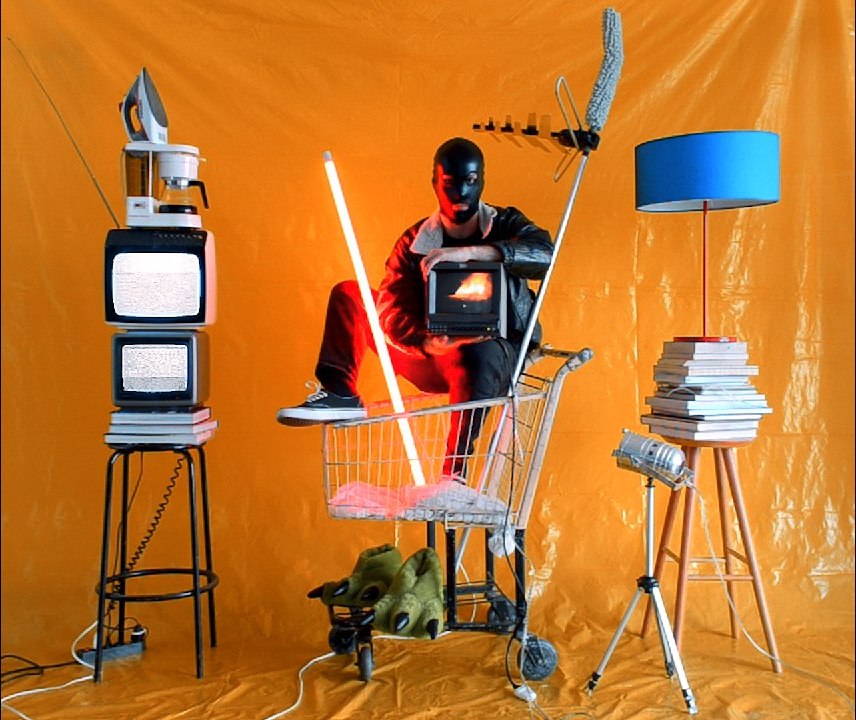
(Translation: Even when I still can’t name things or understand where things are structured, it’s an exercise in courage, in trust, which you have to have when you’re building without being guided by a text or a concept.) Even technically, I experiment a lot. It’s a real obsession, working with things I don’t know. And when I start to know too much, I usually move away from it [the technique]. I think that’s why I mix so many media. When I get too comfortable, as I did with textiles, I start to challenge the boundaries and create problems, as I’m doing now. I’ve started working with textile practice and it’s becoming three-dimensional, coming off the wall and incorporating heavier, luminous elements and everyday objects. I work a lot with banality.
Sometimes the work can be very exhausting, but I really like it when I have a project or program with a set deadline. It gives me a kind of structure, in that I have this space, and this proposed theme, this direction.
Eu tenho uma pesquisa com os materiais que, para mim, é muito importante. O corpo do meu trabalho é a materialidade em si. Às vezes, é o meu próprio corpo, claro, quando estou em cena, nos filmes, ou quando penso em algo que parte de uma relação do corpo com o espaço ou do corpo com o objeto, mesmo que o resultado final não seja um processo onde o meu corpo vai estar em primeiro plano em evidência, mas tudo parte dessa disponibilidade para o jogo com os materiais.
(Translation: I research into the materials, which is very important to me. The body of my work is the materiality itself. Sometimes it’s my own body, of course, when I’m on stage, in films, or when I’m thinking about something that starts from a relationship between the body and space, or the body and the object, even if the end result isn’t a process where my body is in the foreground, but it’s all part of this willingness to play with materials.)
When considering your observation about research at university, which usually starts with books and texts, there are really two ways of achieving this. One is research in books and texts, and the other is practice, the corporeal route. In the end, you reach the same goal, both aesthetically and ideally, but the starting points can be different. What was it like for you to finish university?
It was incredible, because I had already left [laughs]. I used to miss a lot of classes because, when I started working, I was eager to produce, experiment and hold exhibitions. I’ve always liked showing my work, but that doesn’t mean I don’t have insecurities. I have my doubts, I constantly question everything.
Para mim, o processo de trabalho é sempre um processo de crise, é uma crise constante. Mas eu jogo com a crise, eu não fujo dela, pois eu acho que é na crise que eu vou achando as coisas.
(Translation: For me, the working process is always a process of crisis, it’s a constant crisis, but I play with the crisis, I don’t run away from it, because I think it’s in the crisis that I find things.) Exposure is that moment when work goes out into the world and has to find its way. During university, I was eager to show my work and take part in artistic residencies. I wanted to travel, meet people and gain more experience. Because of this, I ended up missing a lot of classes. However, as I was producing a lot, I tried to combine what I was doing abroad with the subjects I was studying. I often presented work based on what I was doing outside of university. I received a lot of support from my teachers and had great meetings with them and my classmates. Even though I wasn’t an exemplary student, the teachers supported me. Finishing university was a relief, but I’m also very grateful for this experience, for the colleagues who became my work and life partners, people who were fundamental to my production.
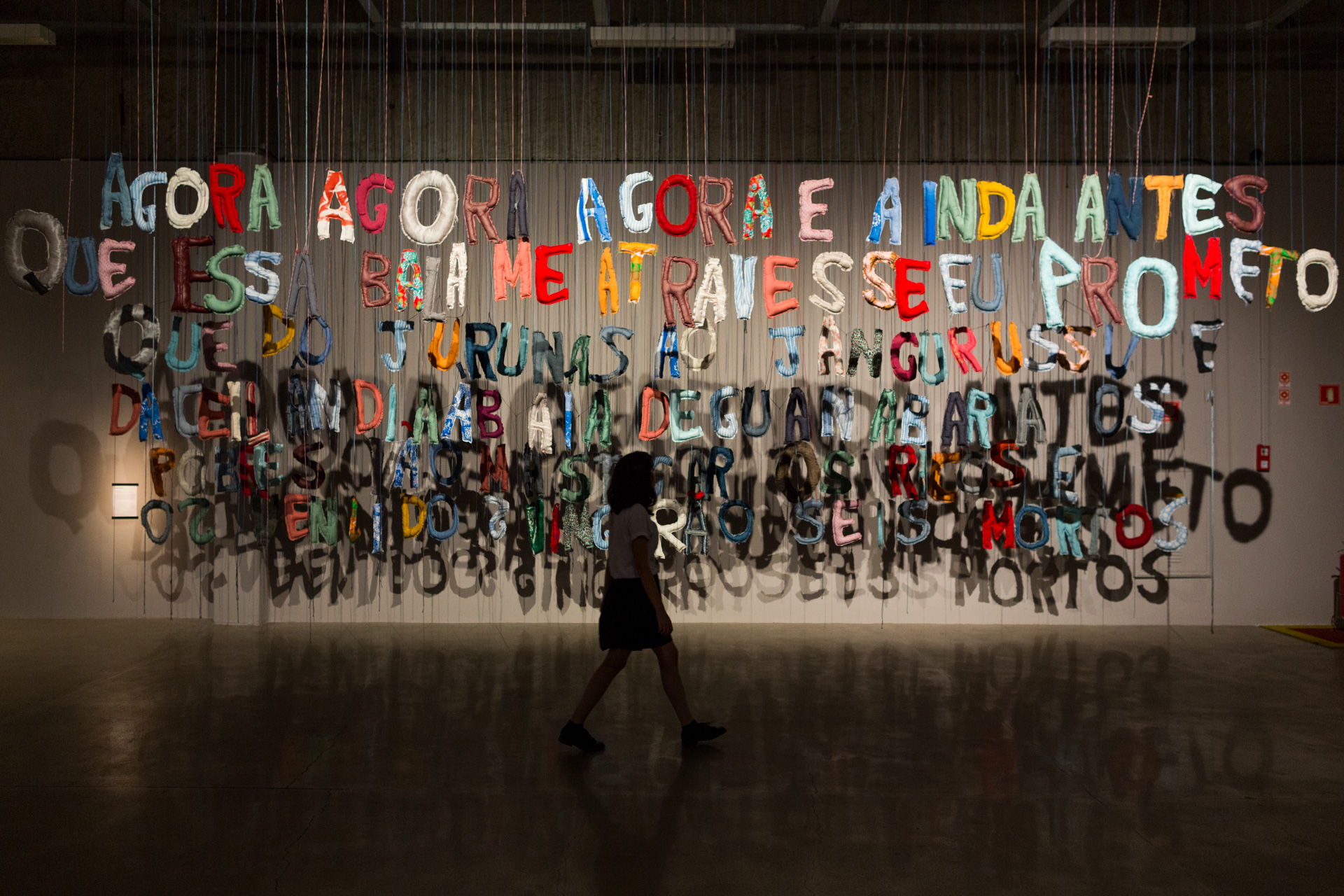
It was also a time when I was becoming more integrated into the institutional circuit and the market. I was able to alleviate my situation a little, because university was very difficult, especially financially. That’s why the family of friends we formed was essential, even for me to continue producing. We supported each other, helped each other, created group exhibitions, sold works and made contacts for each other with galleries. That’s when I started working with Mitre Galeria in Belo Horizonte. I spent around six years with them, until the beginning of 2023. After I left Belo Horizonte, I felt I had fully explored the city, not just in terms of accessing spaces, but I also felt the need for new references, new urban and social experiences. The fact is that, in Brazil, everything revolves around the Rio-São Paulo axis, so I felt isolated. The change came when I had an exhibition in São Paulo in 2018, curated by Júlia Rebouças, at Galpão Videobrasil, called MitoMotim [the exhibition ran from 12 April to 28 July 2018]. It was a very important exhibition, in which I presented a textile work called Prophecies (2018 – 2021). These were the first large textile pieces I created and that’s where I found the language I was looking for with the smaller works. When I expanded the scale, I realized I had found what I was looking for.
That first experience in São Paulo opened a lot of doors for me, and I started doing a lot of things, as well as having exhibitions in Rio too. In 2019, I had the chance to take part in the Lyon Biennale in France. It was a life-changing experience, as it was the first time I’d left Brazil and I was able to see things up close that I’d only seen in books. Seeing a work in person is a totally different experience. At the Bienal, I presented a multimedia installation called Brasil 2019 – partitura para fogo e metais pesados (2019), a film shown on three different channels, projected onto a huge space they had given me. There were textiles, photo projections, the film with a narrative and voice-over, sculpture. I think that with this work I realized how much I wanted to explore the spatial possibilities of occupying a given space. That’s when I started to interweave languages more. Although it’s a textile work, it’s also spatial and installation-based. It’s photography, but it’s video. It’s video, but it’s part of a sculpture. That’s what I’ve been exploring more now – these crossings.
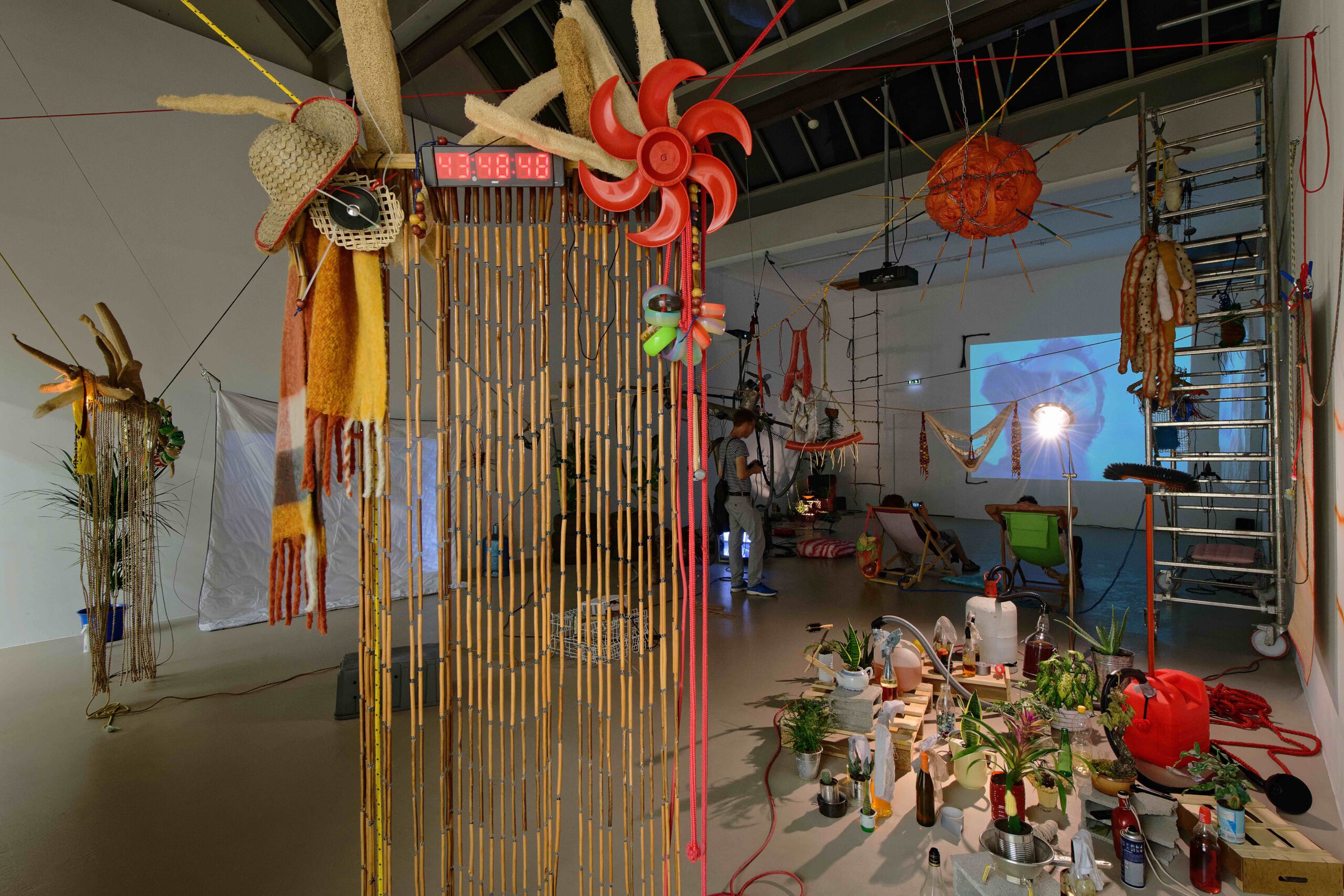
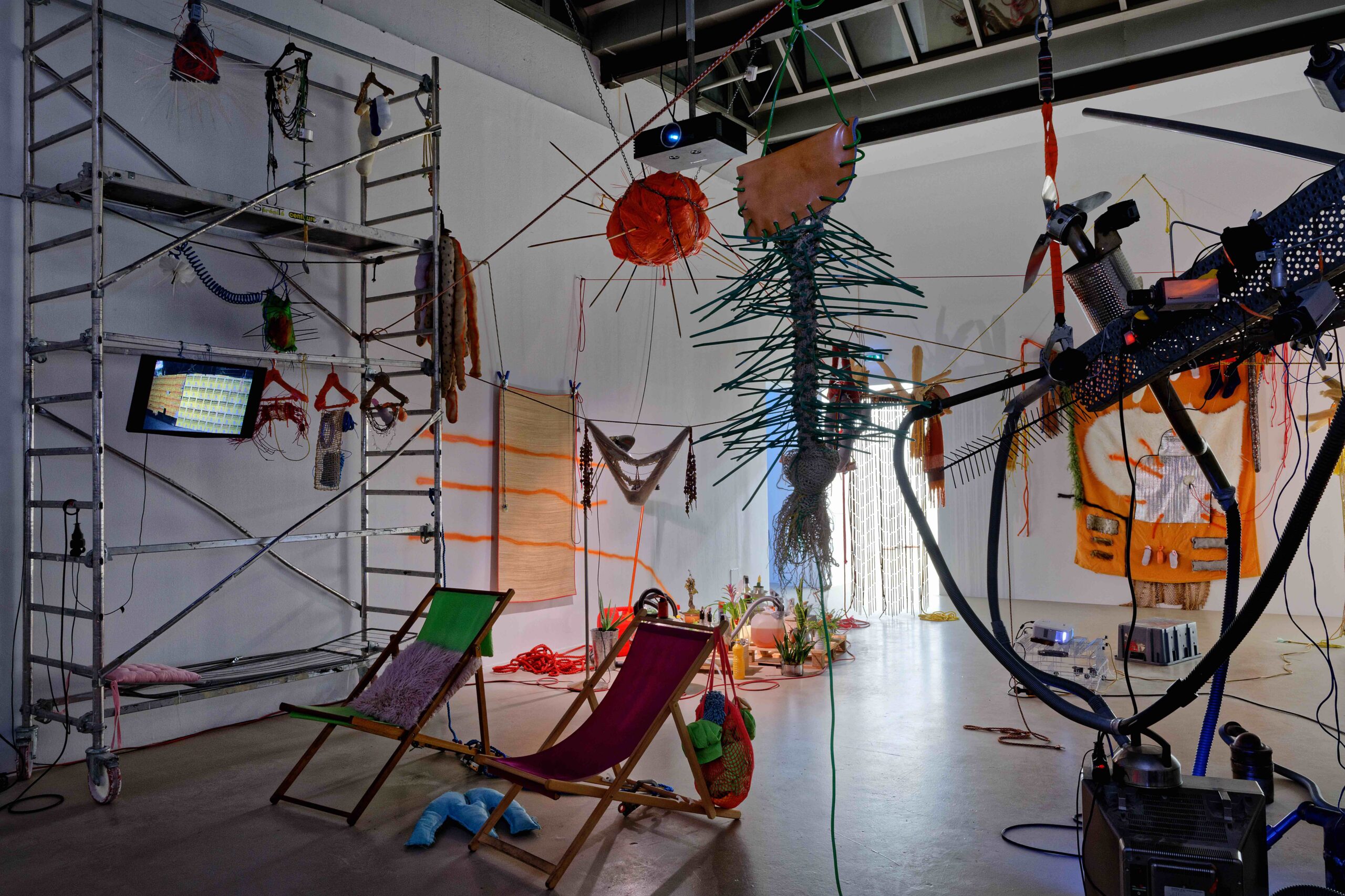
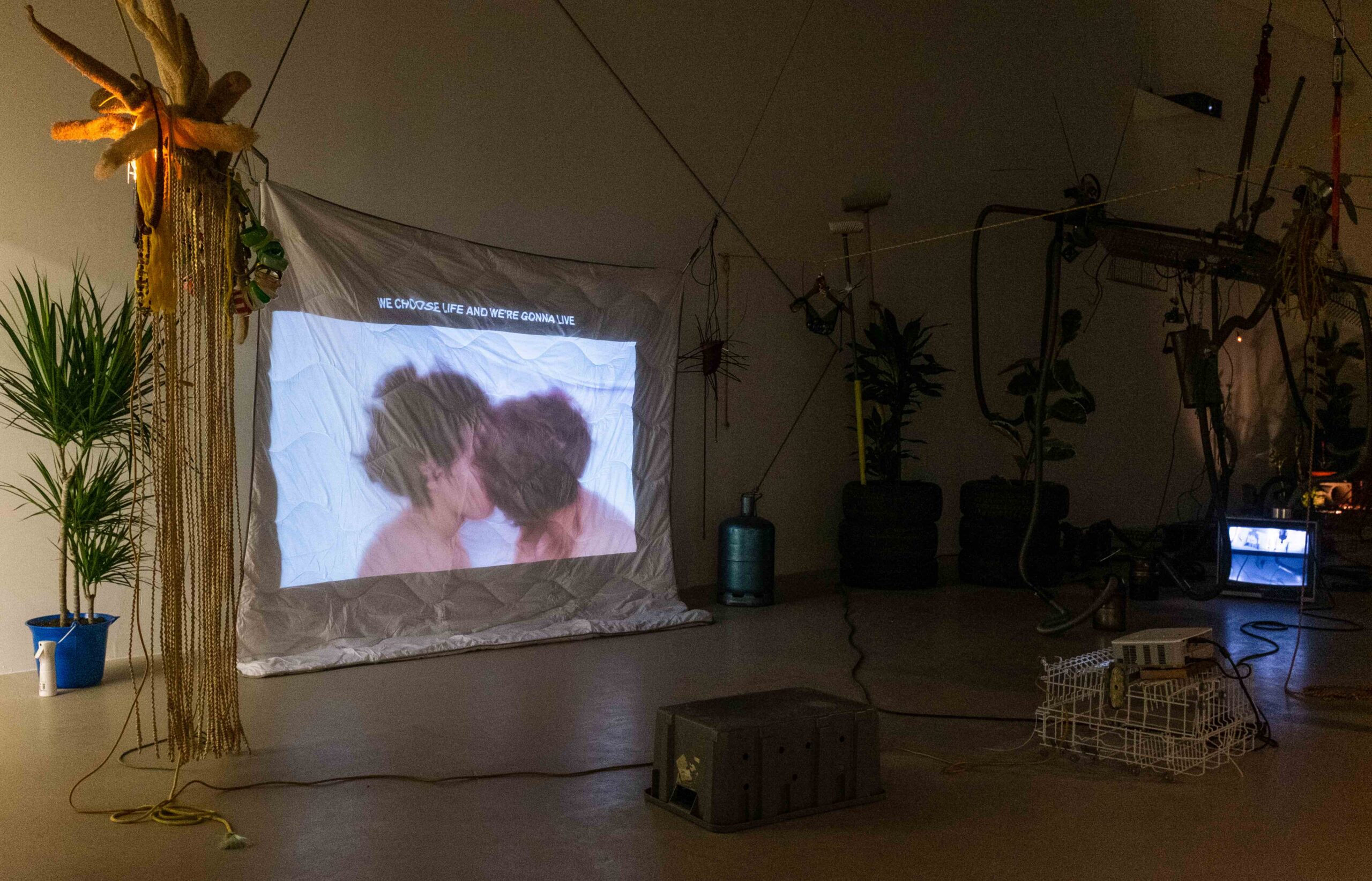
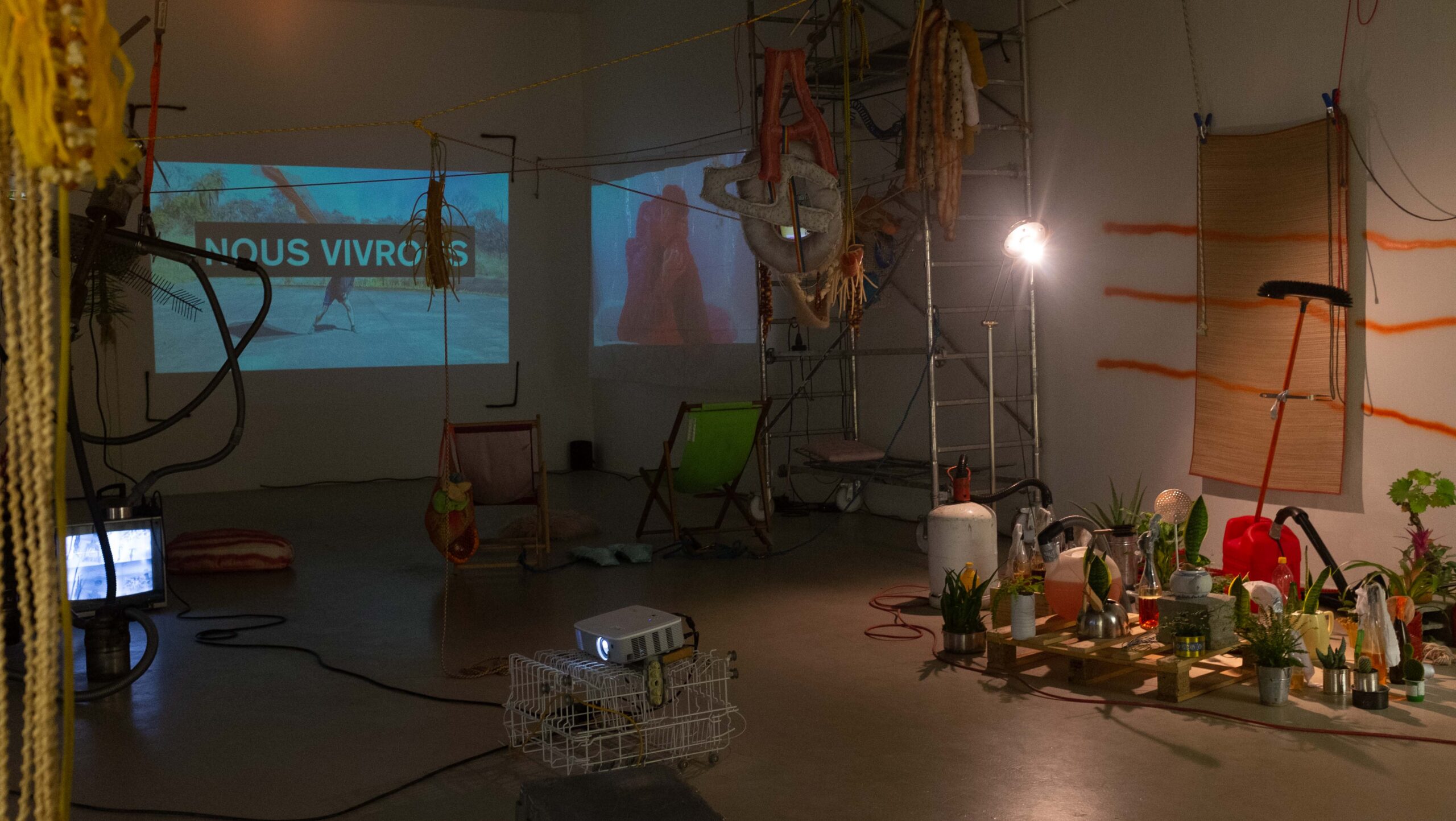
Considering the way you create your works and themes, do you carry out research into the subject and decide on the media you’re going to use, or do you respond to the space or a specific theme? Thinking about Prophecies, how did you decide to come up with these ideas and then incorporate other elements?
I’m not sure I can call it a concept, but there has always been an issue in my work that fascinates me: the idea of opposition. Sometimes it becomes a contradiction, a kind of confrontation. I started making Prophecies because I wanted to discuss sensitive issues. We were living through a coup, the attack on Marielle Franco. At the start of my career, I was very focused on Contagem. I talked a lot about this territory, about the process of trauma in an extremely violent city – not just urban violence, but the violence of the territory itself. My mother lives in a place where industries are her neighbors. She lives near the Fiat factory. It’s a brutal, enclosed urban experience. Initially, I spoke a lot about this place, a very intimate place that was able to connect with the public due to this social situation, but which always started from a personal perspective.
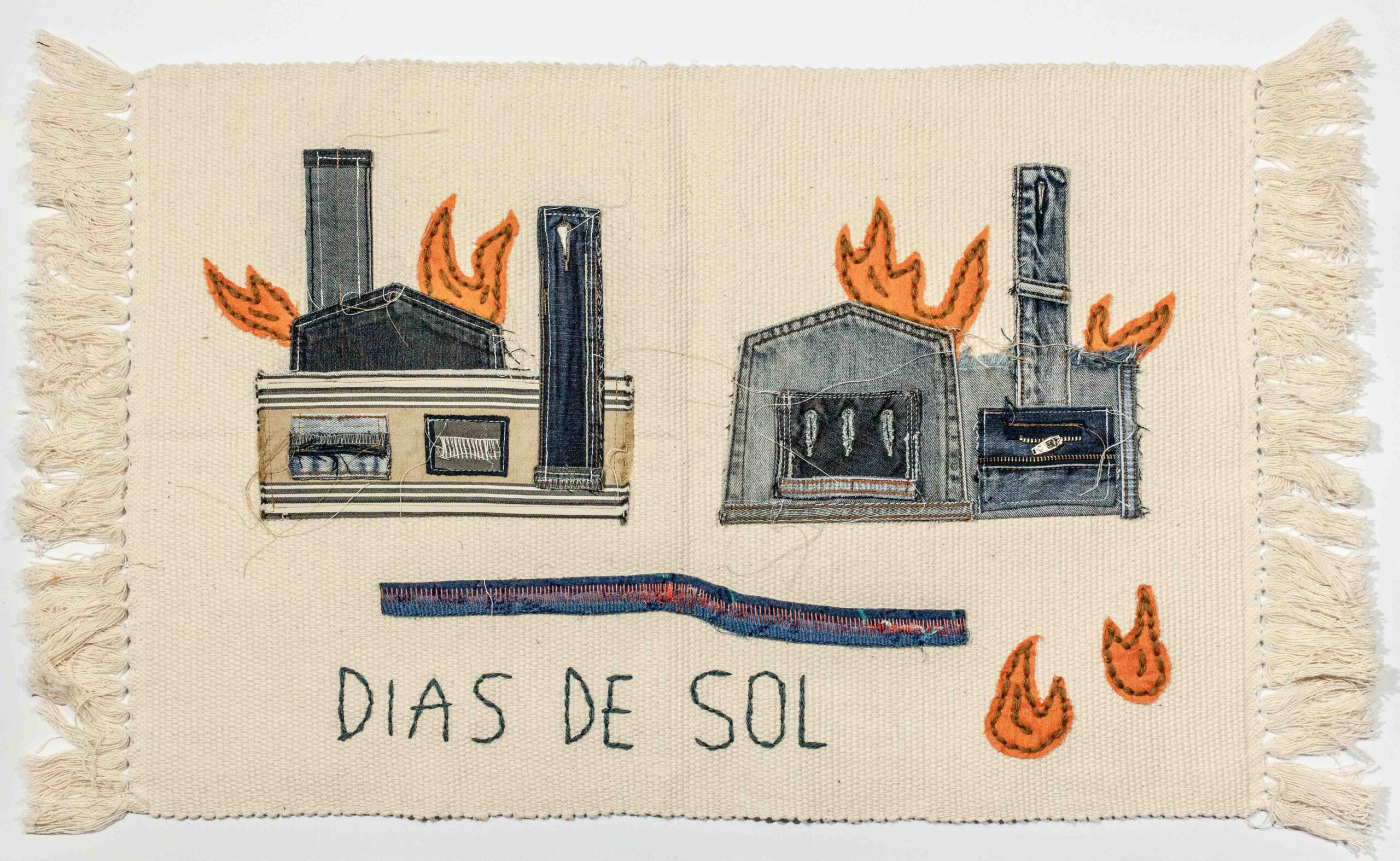
When Júlia Rebouças invited me to do this exhibition at Galpão Videobrasil, she really invited me to show my “little rugs,” which I call Crônicas de retalho (2016-ongoing). Some have text, others don’t, but I consider them to be visual chronicles. They’re like a minimal attempt to tell a narrative with a very simple representation; line drawings, a kind of representation that sometimes looks like a child’s drawing, which I also really like. She invited me to exhibit some work and, due to the political situation, I was quite restless. I asked if I could create something new, even though I didn’t have a concrete idea of what it would be. The deadline was tight for a new work, but I was itching to create something different, and she trusted me to do it. That’s when the idea of working with the themes I cover in Prophecies came up.
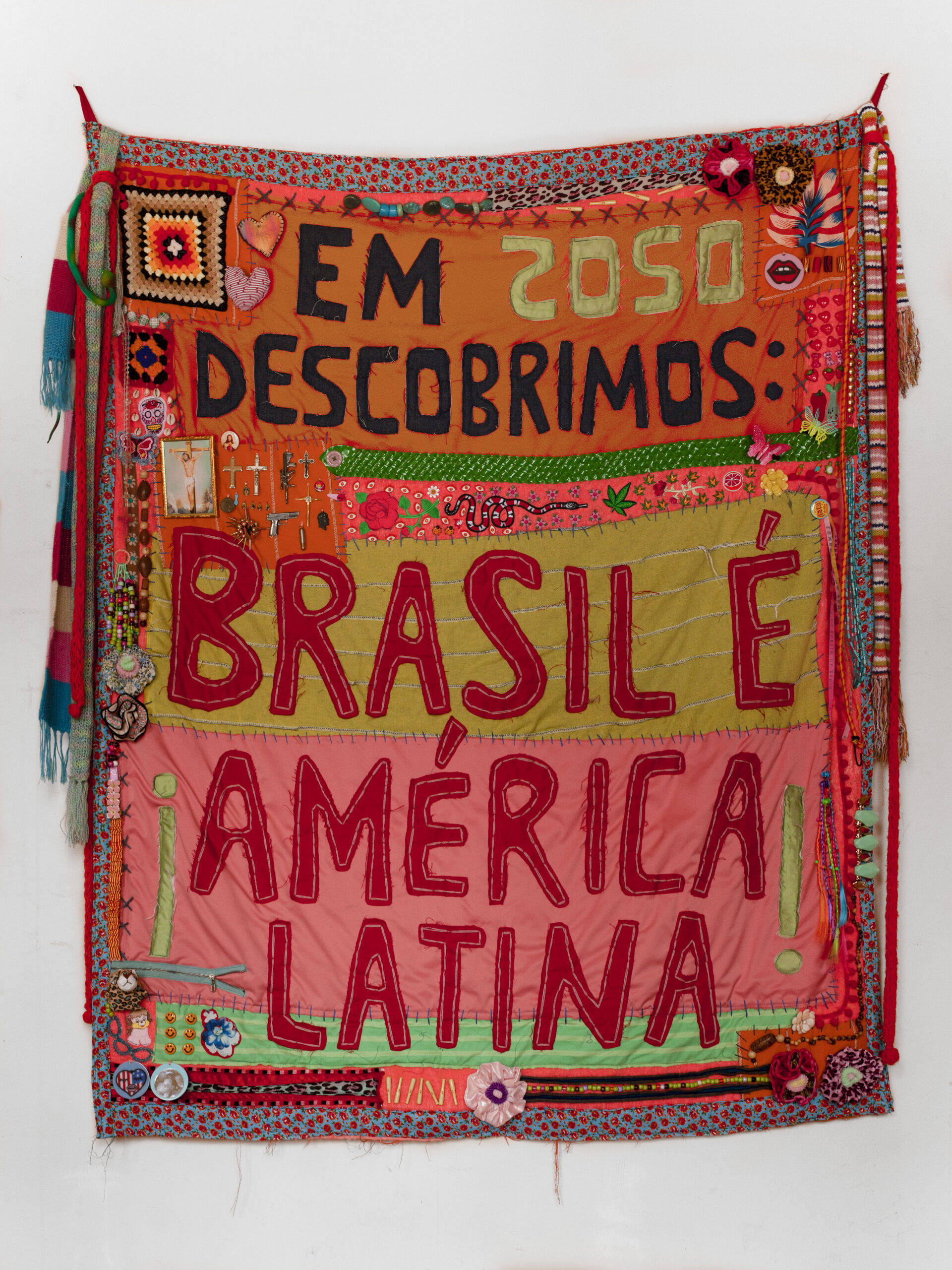
As they were complex subjects, I thought it would be useful to use the subtle language of textiles – cloth, sewing, embroidery, buttons, fabric scraps – as a kind of trap. You see a work in fabric, full of frills, ruffles and ruffles, and when you approach it, you end up getting hit. I like this opposition, where a medium that suggests a simple, delicate, and small gesture ends up delivering something strong. Sometimes it’s the other way round – I make a video work, a sculpture, an installation that has a form, a kind of brutal materiality, and I’m dealing with something extremely delicate, from the field of the sensitive, of affections that are sometimes quite subtle. It’s like a strategy of both softening and intensifying a kind of shock, which depends a lot on the process.
I usually start by following my intuition. It tells me what media is needed for that particular process, so it varies a lot. It’s common for me to work on projects where there’s a bit of everything. For example, I had an exhibition at the Denver Art Museum, curated by Raphael Fonseca [the exhibition “Who Tells a Tale Adds a Tail: Latin America and Contemporary Art” at the Denver Museum of Art ran from 31 July 2022 to 5 March 2023.] It was an installation that had a bit of everything and created an immersive experience for people who passed through the space. There was hanging fabric, film, and in one of the fabric works there were photos attached, so everything was mixed together. When I start a piece, the question I ask myself is: “What is my intuition now? Where do I think I should go?” And from there I go after the material. Sometimes I start something and realize it might be something else. I explore, experimenting as I go.
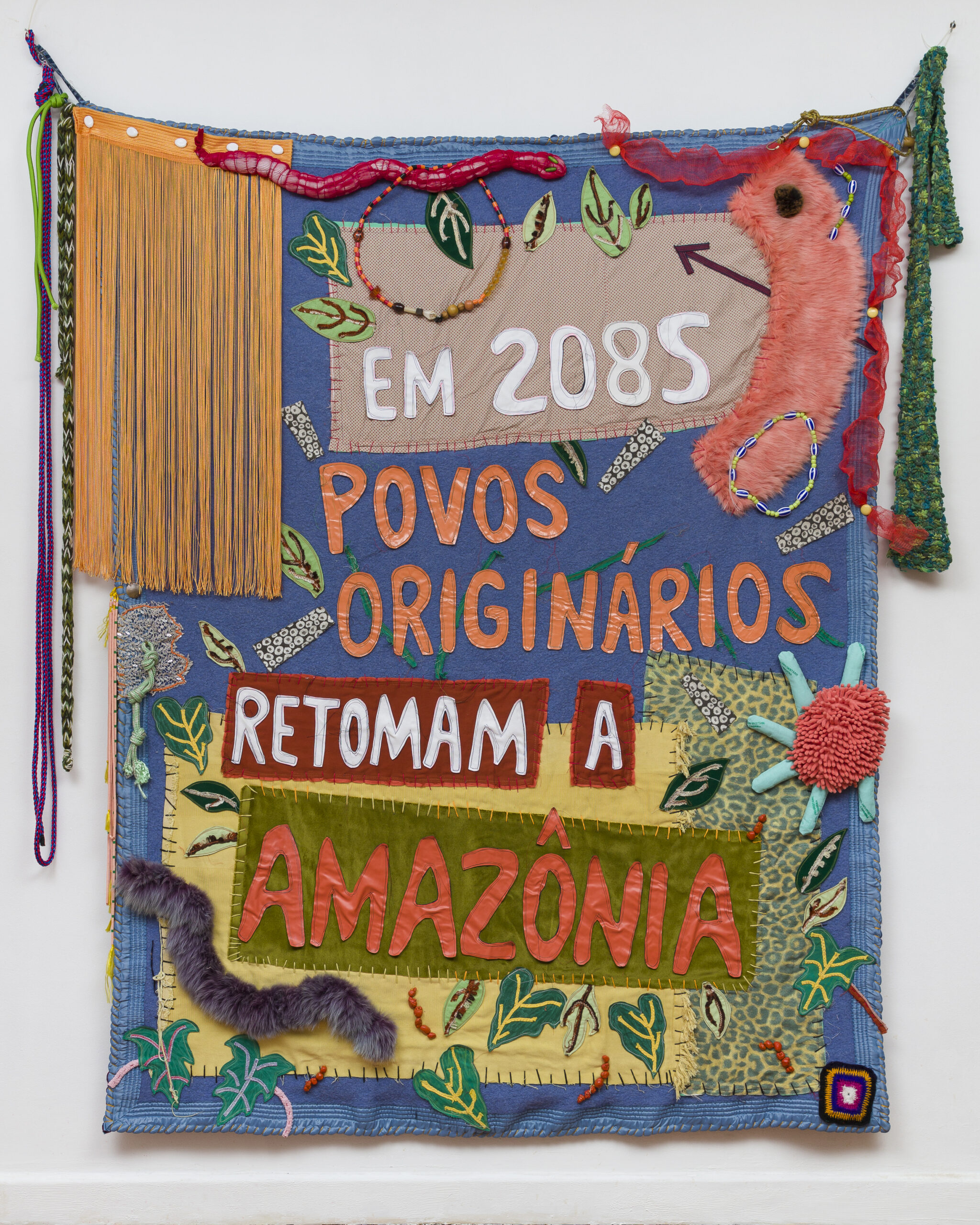
In the Denver exhibition, which included a work with text in English, how do you see the choice of language of the text in relation to the limitation of the audience, given that the text in Portuguese is understood by one group of people and the text in English is understood by another?
This is something I’m paying more attention to now. I started working with a gallery in New York at the end of 2020. They approached me and we started our partnership in 2021, and then I did an exhibition with them. The exhibition included textile works with words written in Portuguese. I realized that this was a limitation. I may be wrong, but I have the impression that this audience, perhaps because they are used to having everything already available in English, is quite self-centered, without much patience for looking for other information that isn’t readily accessible. Writing the text in Portuguese made it difficult for some people to understand. When I use a word, it’s because I really need it. Of course, sometimes I use it as a graphic resource, something that interests me a lot too, so, after that experience, I started to pay more attention to it. I lived in Paris for a year and ventured into French, even though I didn’t fully master the language. I want people to understand what is written, so I have to write in French, or at least in English. In the film I presented at the Biennale de Lyon, I made sure that everything was written in both English and French, which I believe brought the audience closer.
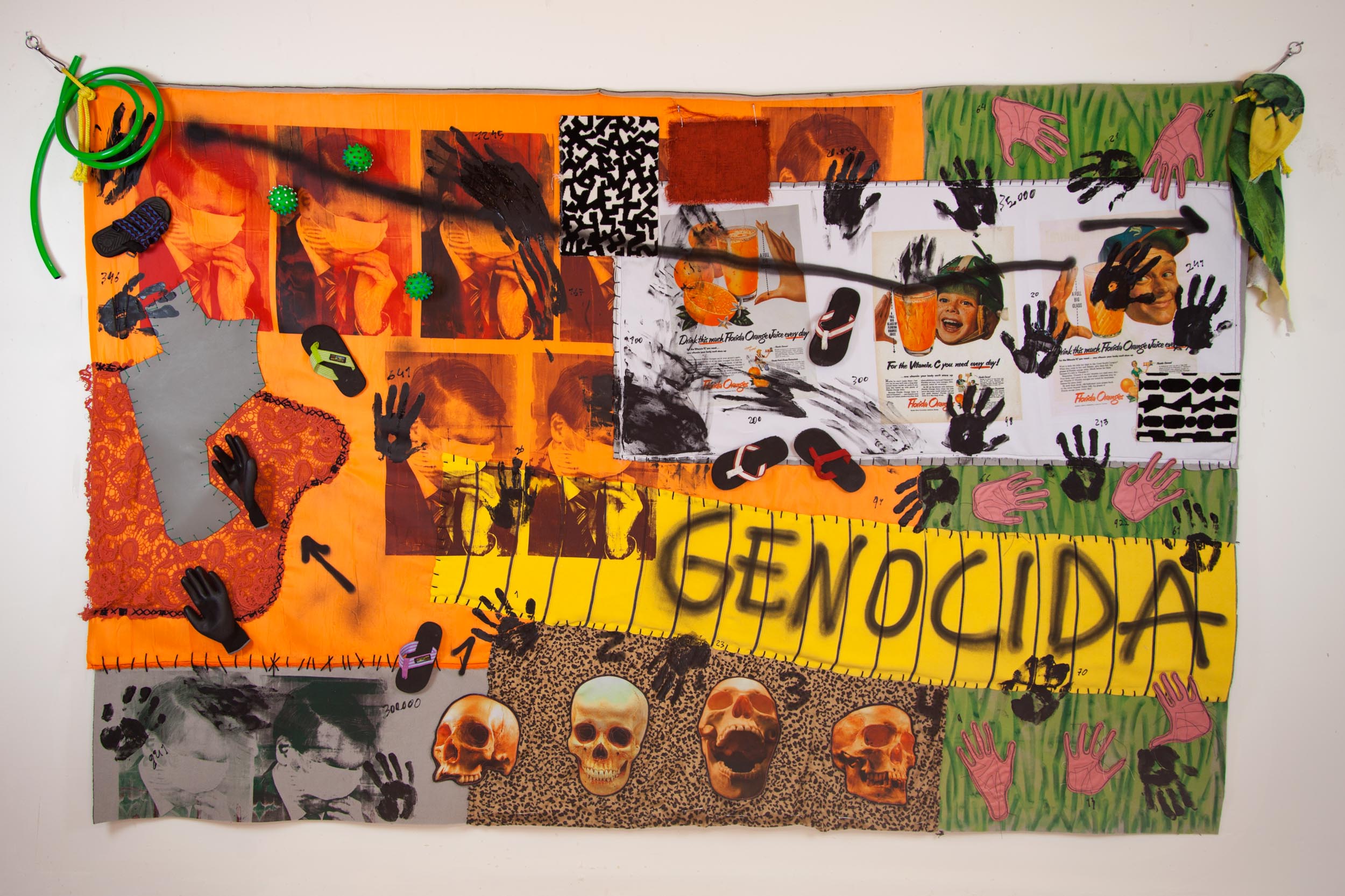
It’s interesting to note that language, from a political point of view, is part of the work in some pieces. For example, in O gabinete do Capitão Cloroquina amanheceu todo pixado (2021), the word “genocida” has an additional meaning in the Brazilian context, the sense of which goes beyond the isolated meaning of the word.
This work was part of the exhibition I did in 2021 [the exhibition “My Kind of Dirty”, at the Fort Gansevoort gallery in New York, took place between 1 April and 29 May 2021]. If I did it today, I would probably choose to write in English. All the works in that exhibition were made specifically for that show. Now that I’m representing the Fort Gansevoort Gallery in New York, I’m starting to reach out not only to the market, but also to institutions – it was a museum that acquired the largest work in the Denver exhibition. I’m going through a period of internationalization in my career, which is helping me to understand the right tone and language for each place. In the United States, for example, I’ve been very cautious in my approach. Mainly because I don’t fully understand the country, I avoid the risk of being unfair by dealing with topics I don’t have much depth of knowledge in. I always try to have as much legitimacy as possible in what I’m talking about in my work, which almost always comes from very personal and intimate places. Prophecies is perhaps the main work in which I move a little from this place. It was a challenge for me because Brazil is currently a powder keg in terms of conflicts. We’re very disconnected from each other. Dialogue is difficult and everything is very explosive. During this work, I was going through a complicated time, with absolute panic and despair, feeling a lot of fear and anger. I wanted to take a stand. It was the first time I stepped out of that comfortable place of telling my stories and broadened my perspective. It’s a work that was fundamental and gave me a lot of visibility in Brazil, I’m very grateful to it.
What are the main challenges, or any specific challenge, in your process at the moment – whether it’s in research, discovering new materials, finding a common theme or even language?
Some challenges remain the same, others change. In the beginning, for me, the biggest challenge was understanding my language, understanding my subjects and discovering my way of working. I had to find a methodology. As I’m very intuitive, it took me a while to understand that many of the things I was doing, which I thought were just chaotic and confusing, were actually the method. At the beginning of university, I struggled to adjust, thinking: “this work seems strange, I need to organize myself better.” In fact, I had always been organized, I just hadn’t realized it. After a while, I realized that this “mess” I was making was actually my process, my method. The first few years of university were also difficult because of financial issues. I saw a lot of people dropping out and getting ill. Without financial support it’s very easy to give up, because you live in cycles, processes, and moments. In some of them, you might be working on a big project that will bring in a lot of money. In others, you hold an exhibition and end up not selling anything, or even going through a pandemic.
As I’ve developed my work, the scale of what I do has also grown. I’m working on projects that are large, expensive, and complex to make, involving staff, planning, transport, storage space, production space and travelling. It’s still a challenge to get the kind of material support I feel is necessary to do this kind of work. Nowadays, I’ve certainly struggled a lot less, but I still have to rely on getting partnerships or a project that supports the magnitude of the production in terms of the number of elements involved in the process. In terms of language, I think I’m living my best moment. I feel calmer and happier. For example, I spent around three months creating small flowers on a sewing machine, without having any idea what I was actually creating. I started molding pieces of fabric into shapes that I later realized resembled leaves and petals. Today, I feel I’m still dealing with the risk of this methodology of experimentation, but with the peace of mind that time has given me. I want my work to be shown in places where the public will have free access. I have work on show at the Pinacoteca do Estado de São Paulo, MASP [Assis Chateaubriand Museum of Art of São Paulo], and other museums in Brazil, some private, but with free access days. I’m very focused on that now, on continuing to sell my work to private collections, but also on making it more accessible to the public.
Interview conducted on 29th November 2023 remotely via Zoom.
Têxtil (Técnica mista sobre tecido e plástico)
Dimensões variáveis (155 x 185cm – 180 x 200 m)
2021
Costura e bordado sobre tapetes
60 x 40 cm
2016
Têxtil (Técnica mista sobre tecido e plástico)
Dimensões variáveis (155 x 185cm – 180 x 200 m)
2021
em co-autoria com Victor Galvão
Frame
2022
Instalação (tecidos, espuma e lã)
10 x 6m aprxm
2018
Pintura, costura, couro, objetos e impressão fotográfica sobre tecido
280 x 180 cm
2021
Instalação [filme em três canais, som, esculturas, plantas, objetos encontrados, têxtil]
14x7x5 m
2019